March 20, 2026 · by Stachi · 3 min read
The April frost of 2024 — a story in five acts
I had all my tomatoes outside. My neighbour had two words for me.
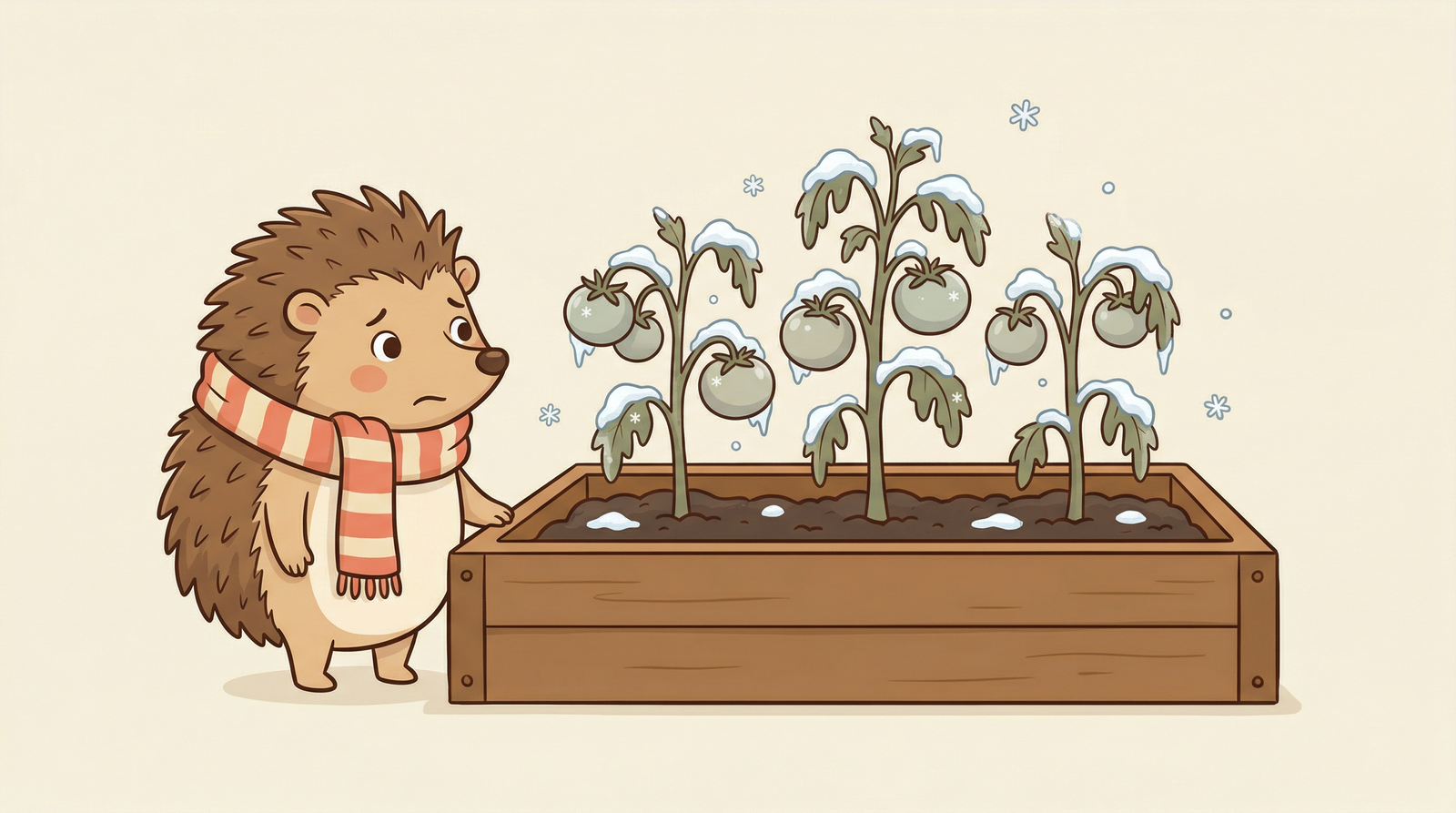
Act 1: The warm March
March 2024 was too beautiful to be true.
I don't know if you remember, but in the second half of March we had days on end at twelve, thirteen degrees. The crocuses were done, the blackbirds were singing, and in my garden in the Aargau I had this feeling: this year is early. The soil smelled like spring. I wanted to start at last.
Act 2: The confidence
I'd been raising my tomatoes from seed on the windowsill since February. Eight little plants, all knee-high, sturdy, happy. On the 28th of March I put them outside — just a few hours at first to harden them off. Then a whole day. Then two.
On the 2nd of April I planted them out. Along with cucumbers, zucchini, two peppers, and a basket of loose-leaf lettuce.
My neighbour Mrs. Schneider looked over the fence, sized up my bed, and said just two words: "The ice saints."
I laughed. The "ice saints" (Europe's traditional late-frost warning days in mid-May) were still six weeks away. I had plenty of runway.
Act 3: The weather app
On the 19th of April — I remember it exactly — my phone suddenly said frost warning. Overnight low: -2 °C.
At first I thought it was a bug. We'd had two weeks between ten and eighteen degrees. My tomatoes were in full glory. I grabbed everything I could find in the basement: two old bedsheets, three moving blankets, a plastic tarp.
Mrs. Schneider came over the fence again. She had a frozen look on her face. "I told you."
Act 4: The night
The night of the 19th to the 20th of April 2024 was the coldest April night in years. In the Aargau the temperature dropped to -3 °C.
I had covered everything as best I could. I thought: blankets insulate, that'll do. What I didn't know: tomatoes don't need blankets over them. They need air pockets. Blankets lying directly on the leaves draw the cold in and burn the cells just as badly as open frost.
On the morning of the 20th I took the blankets off. Half my tomatoes were black. The peppers were gone entirely. The zucchini had leaves drooping like patients after chemo. The loose-leaf lettuce — the only thing that came through — shrugged and kept growing.
Act 5: The lesson
I went to the supermarket and bought fourteen new tomato plants. Sixty francs. Plus peppers, zucchini, new lettuce for the gaps. One afternoon and almost a hundred francs later the bed was full again — but four weeks later than planned.
My 2024 tomatoes barely produced anything. They were too late for a proper season.
Ever since I've stuck to one single rule: the last frost is where the data says it is. Not where the current weather suggests it should be.
For 8965 Berikon (my village), the statistical last frost falls between 10 and 15 May. Doesn't matter how warm March was. Doesn't matter how green the blackbirds are singing. Doesn't matter how much I can't wait.
Why this is built into Erntezeit
For your postal code, Erntezeit pulls ten years of frost data from Open-Meteo and calculates the statistically safest date. No gut feeling. No "my grandma always planted on the 1st of May." Ten years of actual measurements from your region.
That sounds like very little. It's the difference between "my tomatoes were great this year" and "I had to buy a hundred francs worth of new seedlings in April."
🦔 Stachi
P.S. Mrs. Schneider later got some tomatoes from my bed as a gift. She didn't dare say "I told you so" a third time. Very kind of her.
More articles
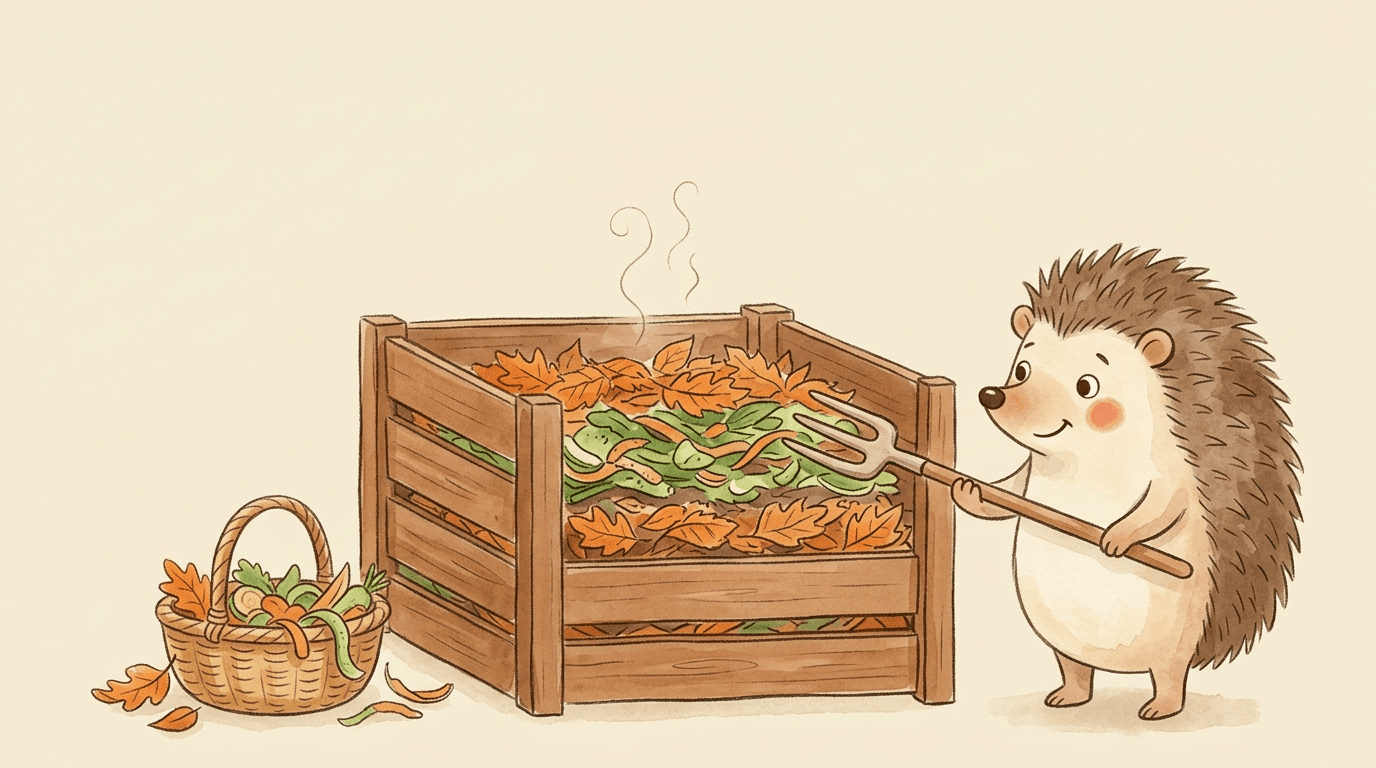
October 26, 2026 · 3 min read
Starting an autumn compost pile: 3 parts leaves, 1 part kitchen scraps
Frau Schneider's compost pile just sat there all winter. No steam on cold mornings, no warmth, no breakdown — just a heap of dry leaves that hadn't changed a bit by March. The problem wasn't patience. It was the mix.
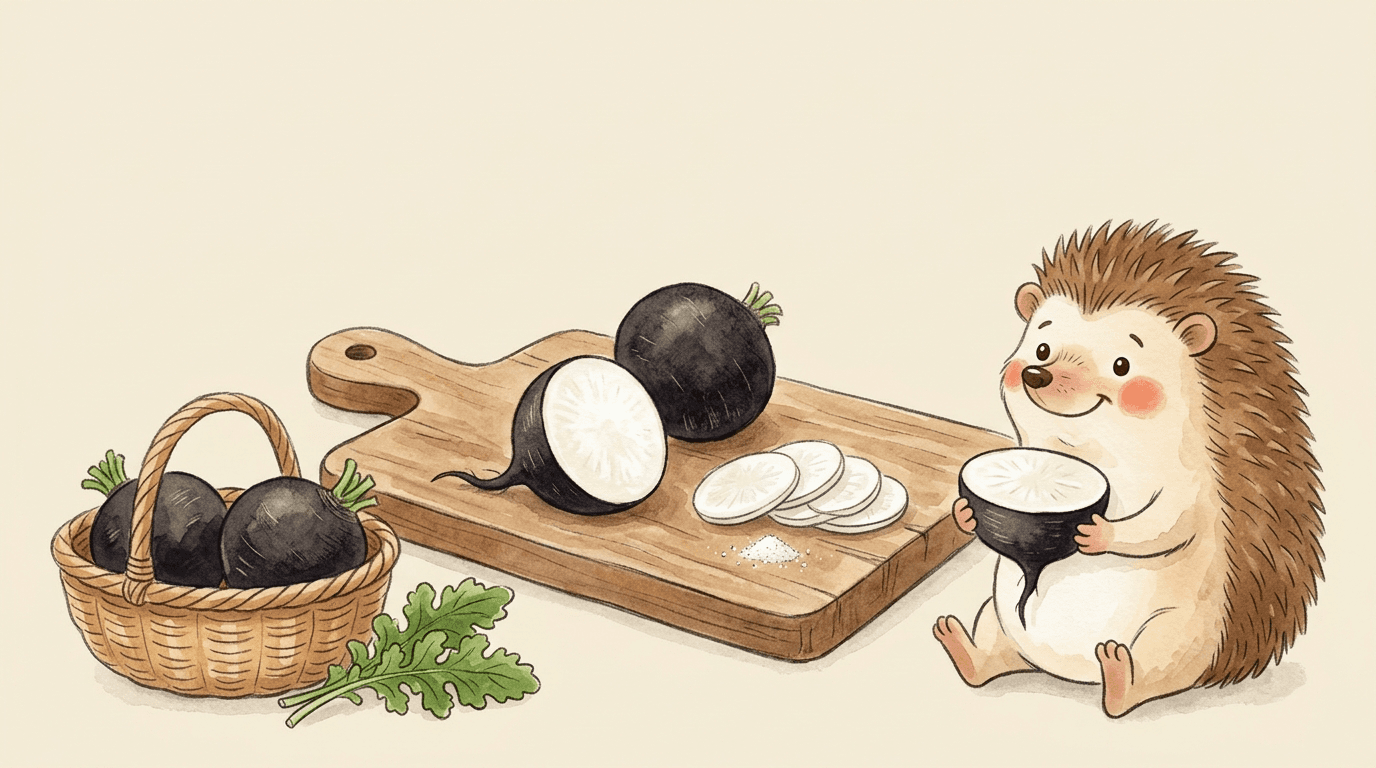
October 20, 2026 · 3 min read
Black radish: why you should let it rest before you bite in
Last year Frau Schneider bit straight into one, unsalted, fresh out of the ground, and spent the next two minutes coughing instead of talking. The problem wasn't the radish. It was the timing.
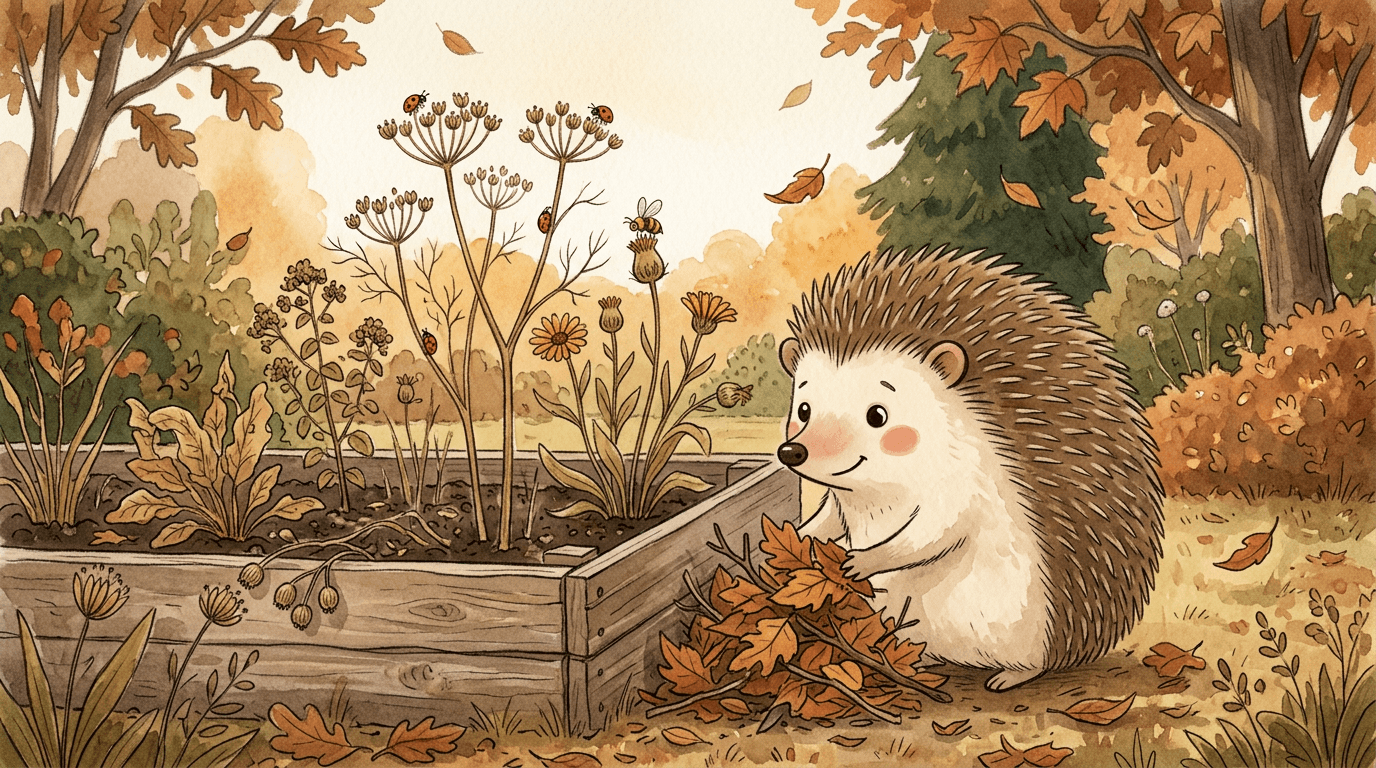
October 14, 2026 · 2 min read
Why I only tidy up half my raised bed in October
Mr Zimmermann cut his entire raised bed down to the ground in one afternoon — stalks, seed heads, leaves, all gone. I should have warned him beforehand: not everything, only half. Here's what should stay standing and what really needs to go.