March 28, 2026 · by Stachi · 3 min read
Why tomatoes love basil and hate cucumbers
Companion planting sounds like esoterica. It's actually just chemistry and biology — and you really need to know three rules.
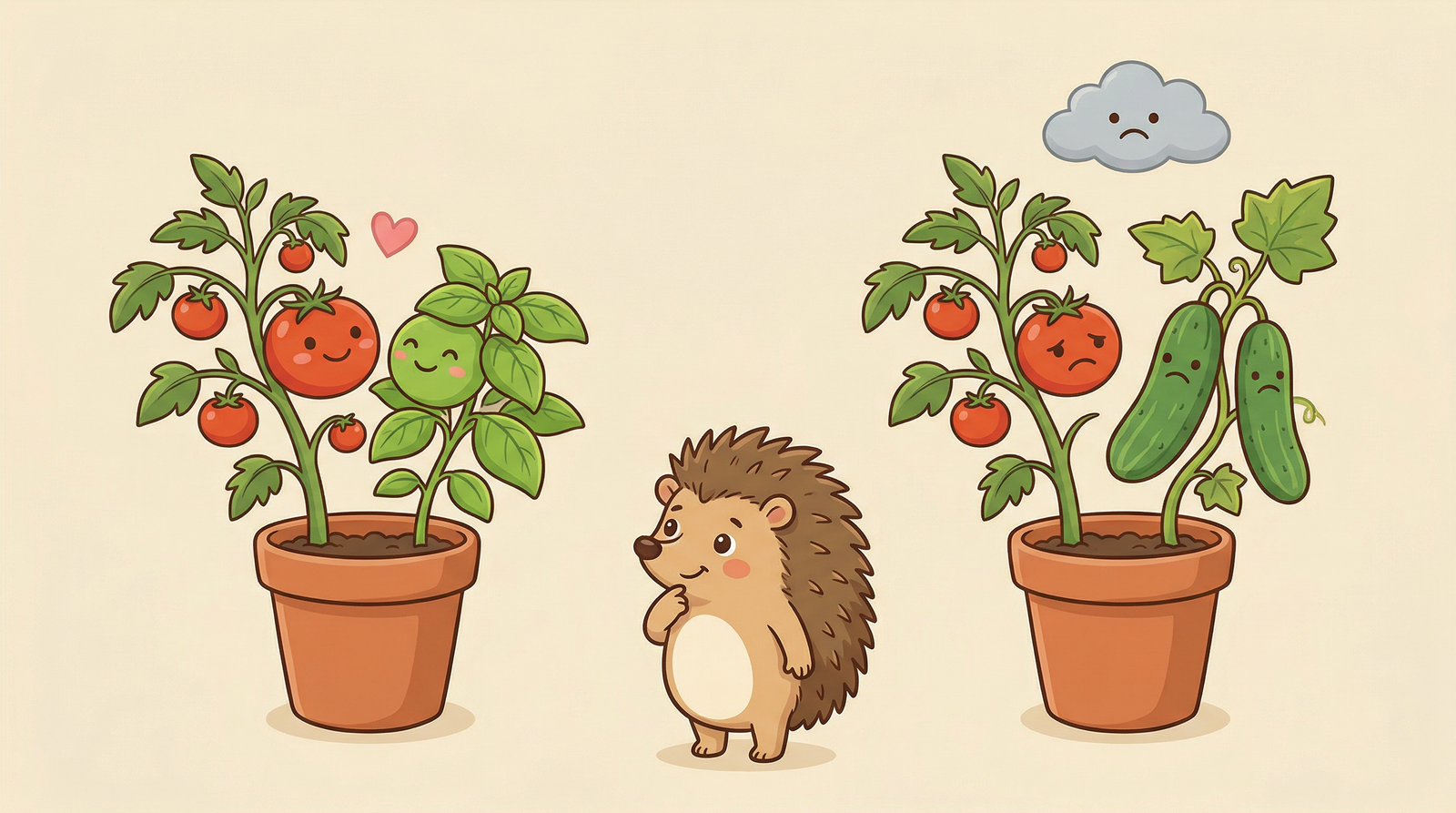
When I say "companion planting", most people think of moon phases, healing crystals, and cosy esoteric shops in Bern.
That's because companion-planting books are often written in that register. "The tomato loves the basil" — as if the tomato had feelings and sent little messages to the basil. No wonder rational gardeners skip that chapter.
But companion planting is neither esoteric nor mystical. It's plain chemistry and biology. And if you understand three rules, you can forget the rest.
Rule 1: Plants compete for the same nutrients
Every plant draws certain nutrients from the soil. Tomatoes are what you call heavy feeders — they consume a lot of nitrogen, potassium, and phosphorus. So do cucumbers. So do zucchini.
If you plant three heavy feeders side by side, they compete for the same food. Each one gets less, all of them grow worse. Not because they hate each other. Because there simply isn't enough for everyone in the soil.
Good combination: heavy feeder + light feeder. Tomato (heavy) + lettuce (light). The lettuce takes almost nothing, and better still — it grows low enough that the tomato shades it.
Rule 2: Some plants share the same diseases
That's the story with tomatoes and cucumbers. Both are susceptible to mildew and certain fungi. If you plant them side by side and one gets infected, it jumps straight across. No mysticism — just spore geography.
So: tomatoes and cucumbers never directly next to each other. At least one metre apart, with a plant from a different family in between (Swiss chard, lettuce, rocket).
Same applies to potatoes and tomatoes. Both nightshades, both prone to blight. If one gets sick, the other dies with it.
Rule 3: Some plants really do help each other
Now the part that sounds like esoterica — but is actually biology.
Tomato + basil: basil releases essential oils that keep certain pests (whiteflies, thrips) away. Tomatoes tend to attract those pests. That's not a "feeling", that's measurable chemistry in the air around the plants.
Carrot + onion: carrots get attacked by the carrot fly, onions by the onion fly. Both flies are confused by the smell of the other plant. Plant them together and you drastically reduce both pests.
Corn + bean + squash (the "three sisters"): beans fix nitrogen from the air and fertilise the soil. Corn provides a natural climbing trellis. Squash shades the ground and keeps weeds down. That isn't an indigenous myth — it's documented permaculture practice with 500 years of results behind it.
The most important "love-hate" pairs
Here's the practical short list for your next bed:
| ✅ Yes together | ❌ No together |
|---|---|
| Tomato + basil | Tomato + cucumber |
| Tomato + parsley | Tomato + potato |
| Carrot + onion | Onion + bean |
| Lettuce + radish | Cabbage + strawberry |
| Cucumber + dill | Cucumber + tomato (see above) |
| Zucchini + nasturtium | Zucchini + pumpkin |
That's not the whole list. But if you just remember these six pairs, you'll avoid 80% of the most common companion-planting mistakes.
Or — and this is the reason for Erntezeit —
Or you don't remember anything. You tell Erntezeit: "I want tomatoes, cucumbers, carrots and basil" — and Erntezeit automatically works out which ones can live side by side, which ones need distance, and where to position them in the bed.
The Erntezeit companion-planting database has over 300 pairs in it. Nobody should have to memorise that. That's exactly why computers are useful: they forget nothing.
🦔 Stachi
Related plants


More articles
October 10, 2026 · 2 min read
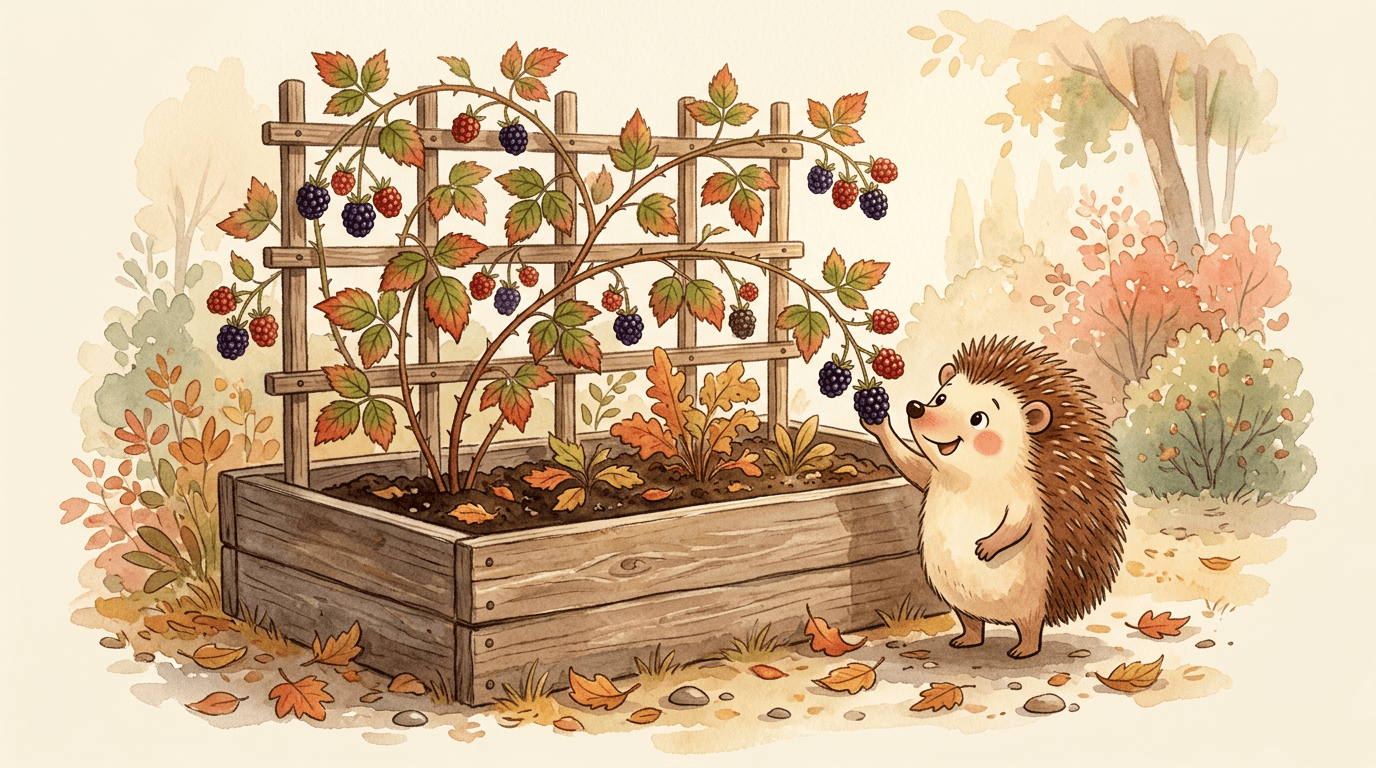
Planting blackberries in a raised bed this autumn: why one plant can already be too many
Frau Schneider ordered three thornless blackberry plants for her kids – all three meant for one single raised bed. I had to tell her that even one of them will outgrow it eventually. Here's what actually matters for an autumn planting.
October 9, 2026 · 2 min read
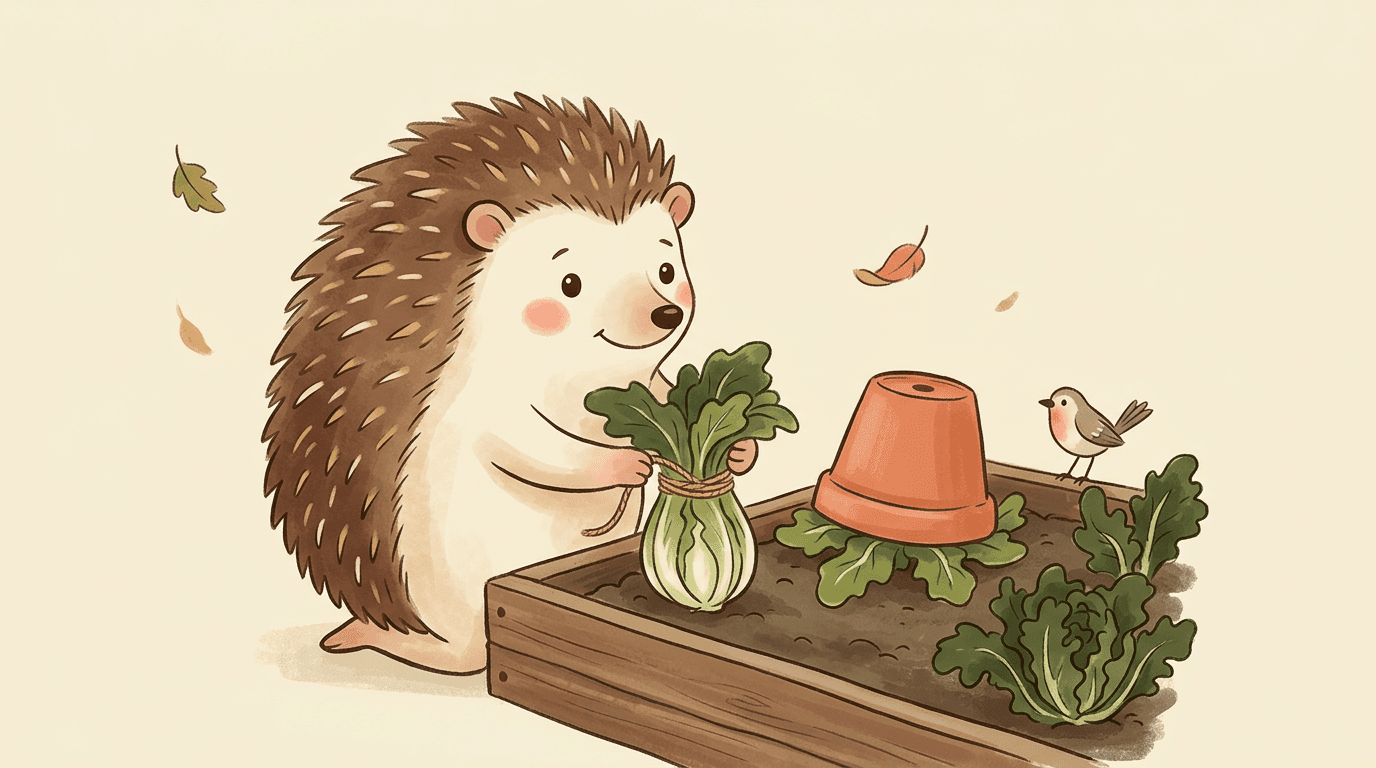
Blanching endive: the trick against bitterness – and where rot is lurking
Frau Schneider tied up her endive on a rainy afternoon because she didn't have time to wait. A week later the heart was brown and slimy instead of pale and tender. Here's what actually matters when you blanch it.
October 8, 2026 · 2 min read
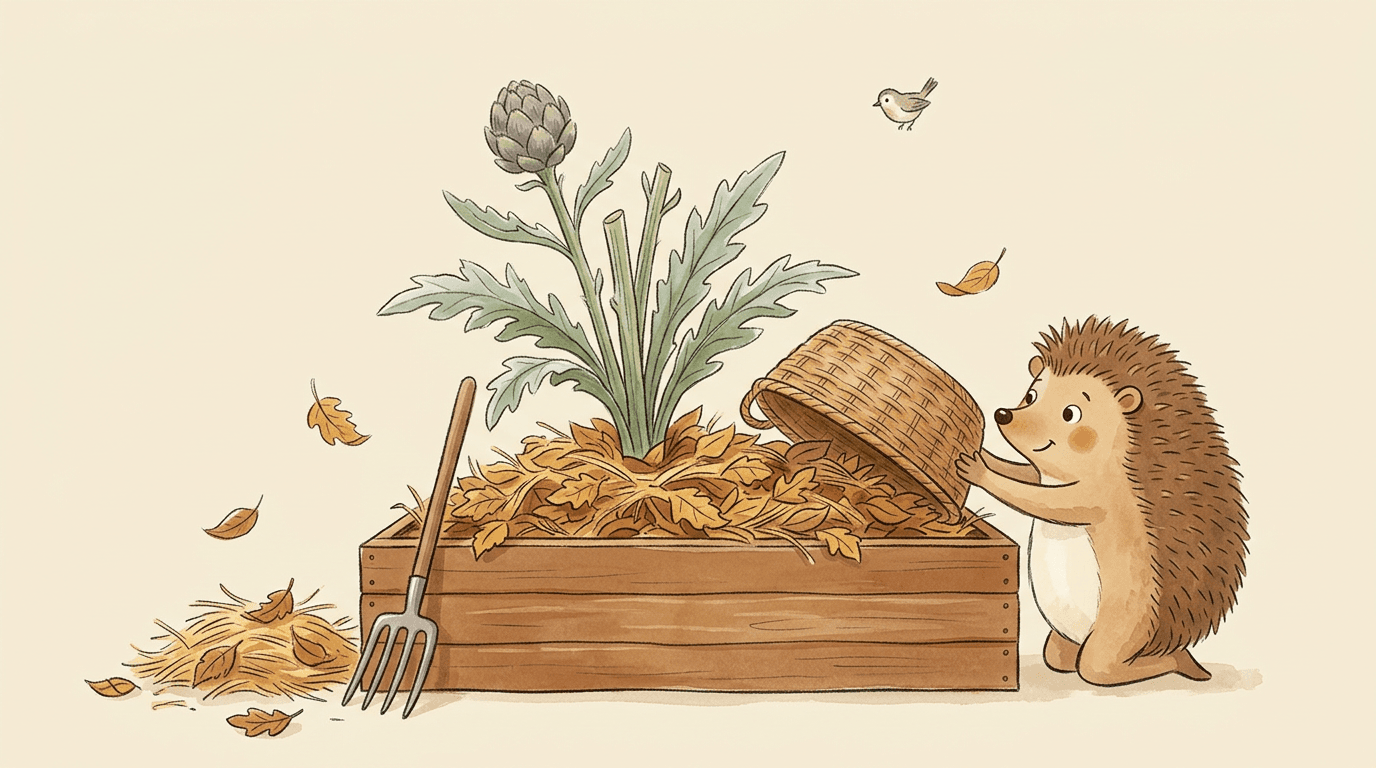
Overwintering artichokes: why they freeze faster in a raised bed than in open ground
Frau Schneider's artichoke grew real buds for the first time this summer – now she's worried the plant won't survive the first hard frost in her raised bed. She's right to worry: raised-bed soil freezes differently from garden soil. Here's how to protect the rootstock properly.