April 12, 2026 · by Stachi · 3 min read
How Erntezeit knows when your last frost is coming
We don't look into a crystal ball. We look ten years into the past.
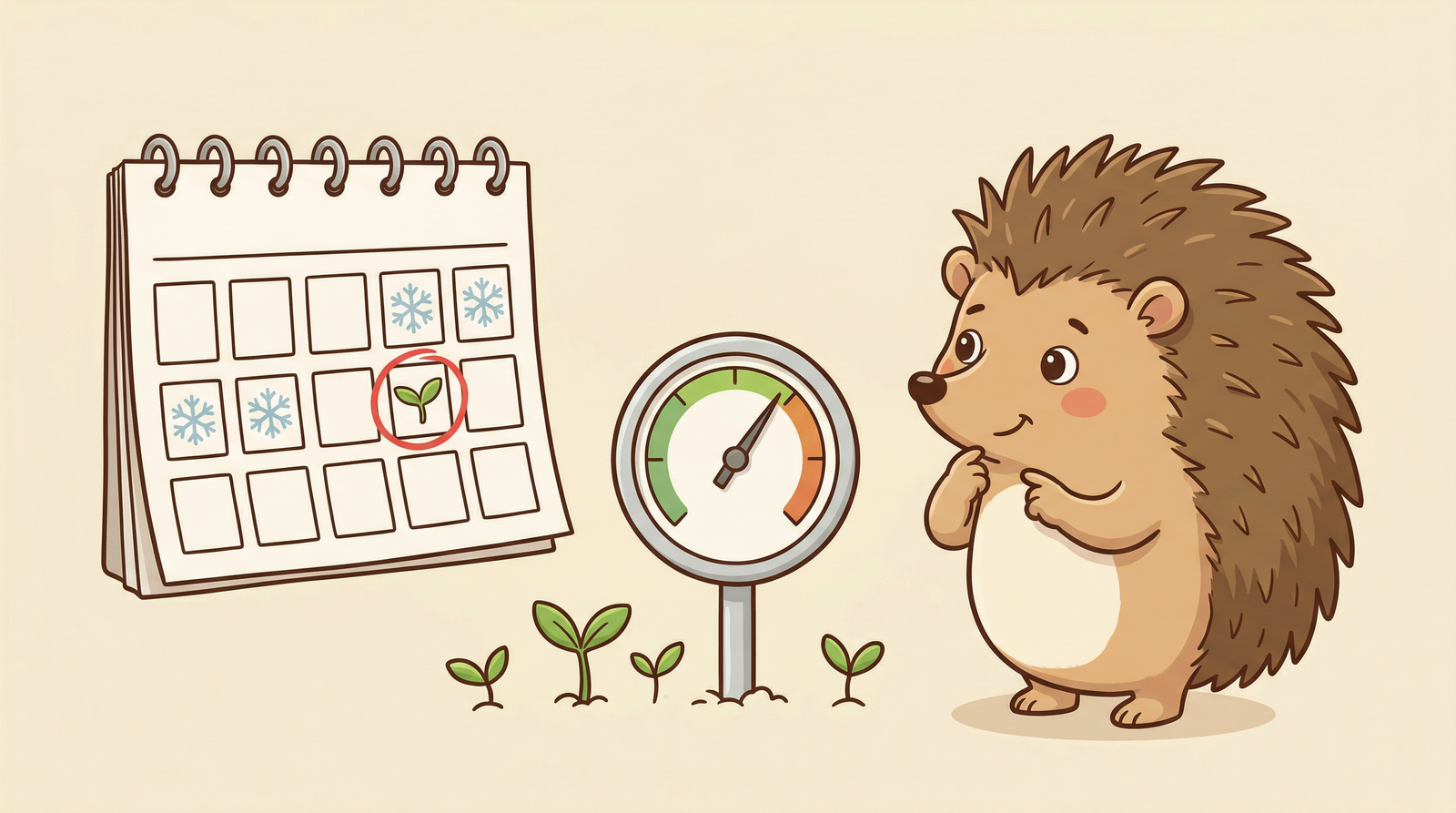
When is your last frost?
Ask five gardeners and you'll get five answers. "After the ice saints." "Round our way, more like late May." "With climate change, early May." "My grandma always said it's Cold Sophie, the 15th of May." "No idea, I just wait until the weather looks right."
The problem with these answers: they're either too rough (one date for an entire country), too romantic (the "ice saints" are a weather rule from the 16th century) or too vague ("looks about right").
Erntezeit does it differently. Like this:
Step 1: Your postal code becomes coordinates
You type "5024" or "8965" or "Berikon". We send that to the Open-Meteo Geocoding API — a free, publicly available service that converts place names into latitude and longitude.
For Berikon that gives us: 47.3539° N, 8.3701° E. That's now a
point on the earth's surface, not 80 km² of canton territory.
Step 2: Ten years of weather data
With those coordinates we query the Open-Meteo Archive API. It gives us the actually measured daily minimum temperatures for the last ten years at that exact point. Real measurements, not forecasts.
For Berikon, 2015-2024, we see something like this:
- 2015: last day with Tmin ≤ 0 °C: 21 April
- 2016: 1 May
- 2017: 24 April (with another -1.8 °C on 20 April)
- 2018: 18 April
- 2019: 15 May
- 2020: 13 April
- 2021: 20 May
- 2022: 2 May
- 2023: 23 April
- 2024: 20 April
Ten years, ten different dates. Earliest: 13 April. Latest: 20 May. 37 days of variation.
That's the real unpredictability that can wipe out your season.
Step 3: The 90th percentile
We don't take the average. Average would be dangerous — in half the years frost would come later, and you'd lose your tomatoes.
We take the 90th percentile. Meaning: in 9 out of 10 years the last frost was over by this date. Only 1 in 10 years has a late surprise cold snap afterwards.
For Berikon that works out to: 14 May.
That's our "last frost". Not the statistical average, but the safe side. Anyone who plants tomatoes on 14 May will lose nothing in 9 out of 10 years.
14 May happens to be almost exactly the day after Pancras, Servatius and Bonifatius — the "three ice saints" of European folklore. Sometimes the old peasant wisdom isn't wrong. But now we know why it's right, not just that it's right.
Step 4: Matching plants
Now it gets interesting. Every plant in the Erntezeit database is tagged with whether it's frost-sensitive or not.
- Tomato: yes → can't go out before 14 May
- Pepper: yes → can't go out before 14 May
- Basil: yes → can't go out before 14 May
- Zucchini: yes → can't go out before 14 May
- Radish: no → can go out from 15 March (soil-temperature rule)
- Spinach: no → can go out from 1 March
- Lettuce: mildly sensitive → can go out from 15 April
Every one of these rules is dynamic: it shifts with your region. If you're in Lugano, your last frost might be 25 April. If you're in Davos, it's 10 June. Erntezeit calculates it per location.
Why this is better than an app setting
Other gardening apps ask you once at setup: "What climate zone are you in?" You get to pick between 3 and 7 options ("Central Europe", "Alpine", "Mediterranean", etc.). That's imprecise, because your garden in the middle of Europe can sit anywhere between zone 6a and 7b depending on altitude and microclimate.
Erntezeit asks none of that. We take your postal code and calculate it. You don't need to know what a USDA zone is, or whether your village is "Nordic" or "Alpine". The computer does the maths. You do the gardening.
That's the whole magic
No AI. No machine learning. No crystal ball. Just real weather data from Open-Meteo, a statistical method (the 90th percentile), and a database of plant properties.
It's boring. And that's exactly why it works.
🦔 Stachi
More articles
October 26, 2026 · 3 min read
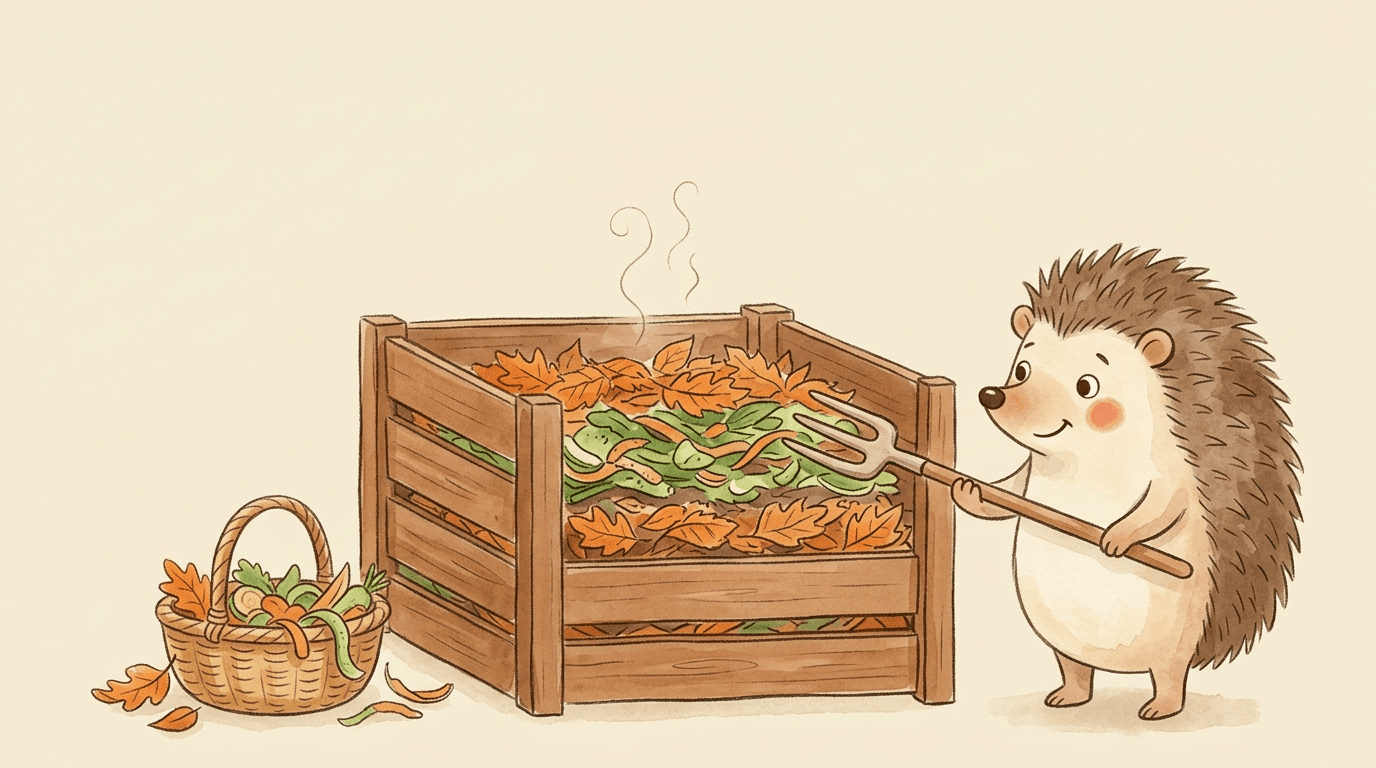
Starting an autumn compost pile: 3 parts leaves, 1 part kitchen scraps
Frau Schneider's compost pile just sat there all winter. No steam on cold mornings, no warmth, no breakdown — just a heap of dry leaves that hadn't changed a bit by March. The problem wasn't patience. It was the mix.
October 20, 2026 · 3 min read
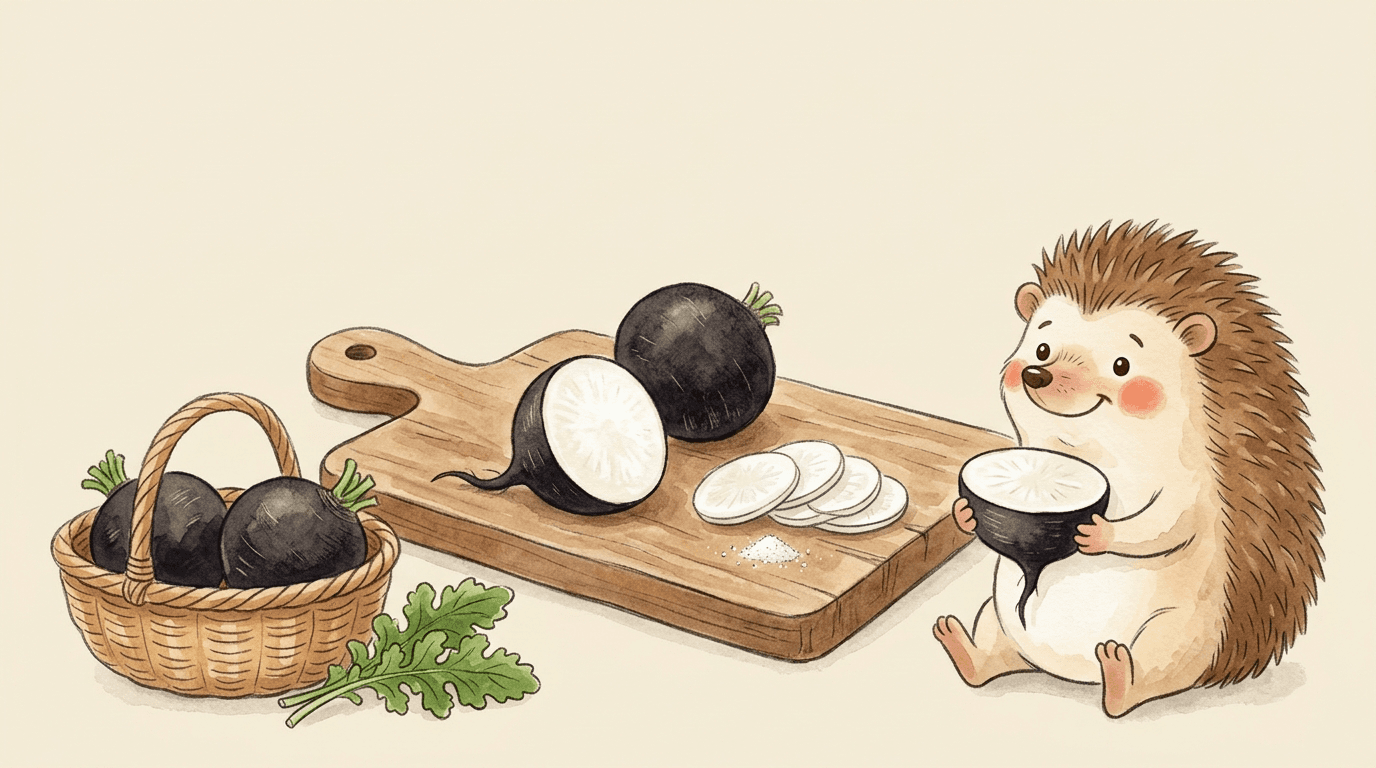
Black radish: why you should let it rest before you bite in
Last year Frau Schneider bit straight into one, unsalted, fresh out of the ground, and spent the next two minutes coughing instead of talking. The problem wasn't the radish. It was the timing.
October 14, 2026 · 2 min read
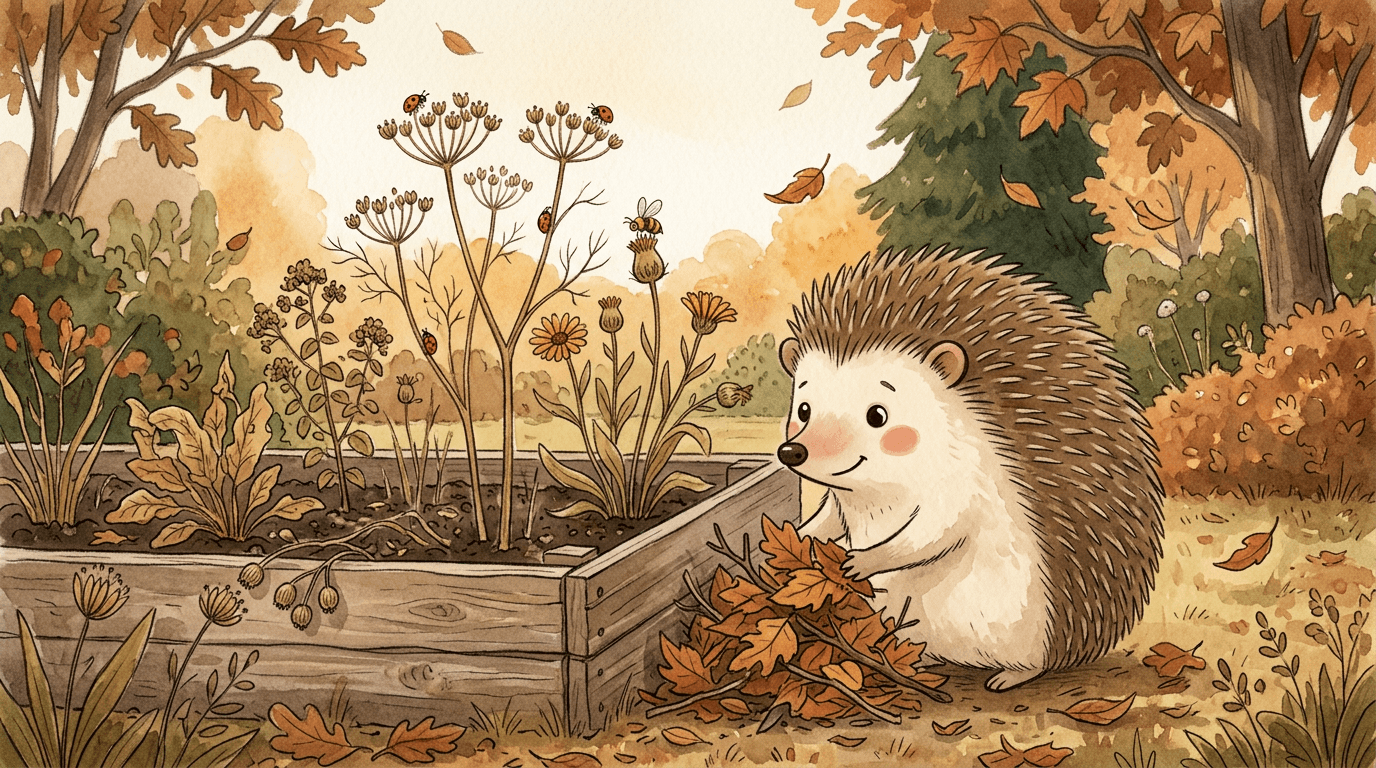
Why I only tidy up half my raised bed in October
Mr Zimmermann cut his entire raised bed down to the ground in one afternoon — stalks, seed heads, leaves, all gone. I should have warned him beforehand: not everything, only half. Here's what should stay standing and what really needs to go.