September 15, 2026 · by Stachi · 3 min read
Asian greens in the raised bed: sow tatsoi, mizuna and pak choi now
Tatsoi, mizuna, pak choi — these Asian greens are among the most robust autumn vegetables you can grow. Sow them now in September and you'll harvest fresh, mild leaves well into November, even through light frosts.
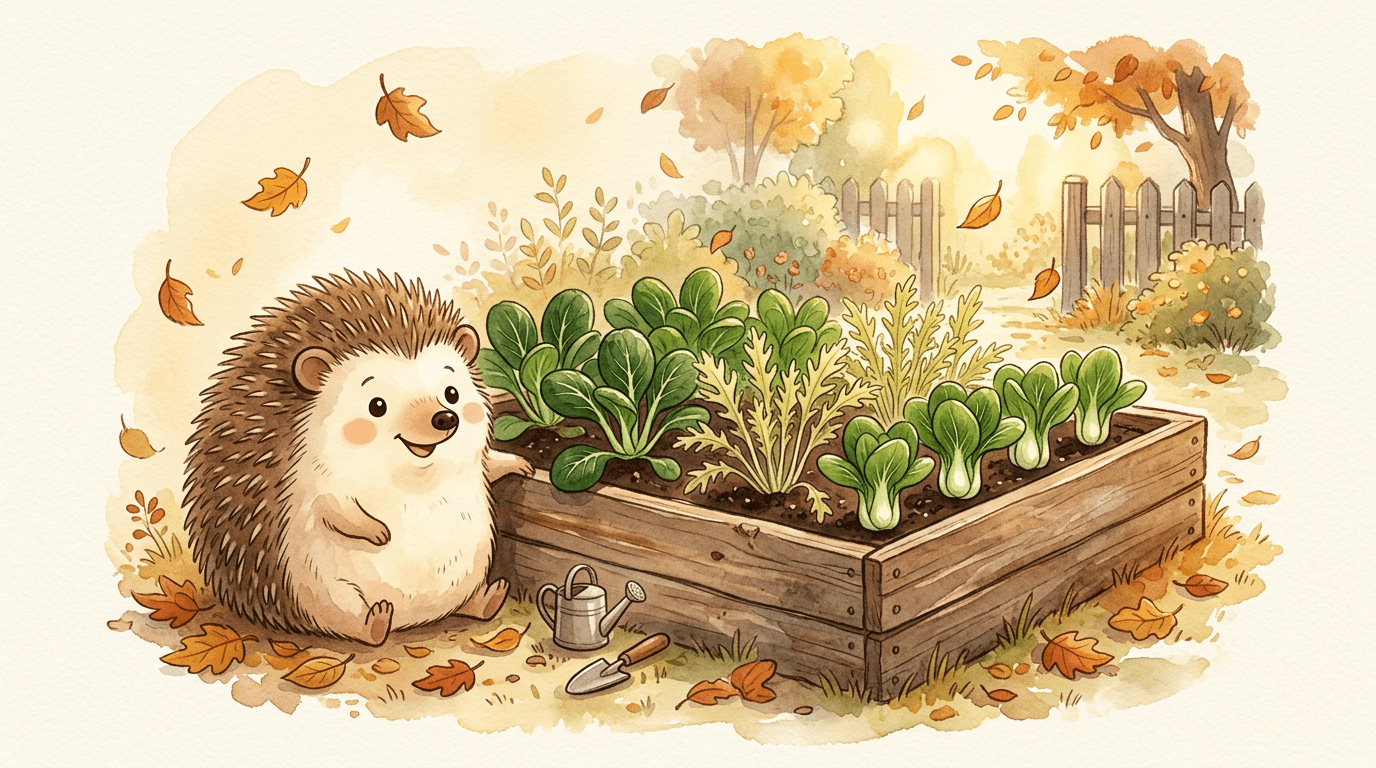
I have a soft spot for plants that don't make a fuss. Plants that just grow.
Asian greens are right at the top of that list.
What are Asian greens — and why now?
By "Asian greens" I mean three varieties in particular, still underrated across much of Europe:
Tatsoi — Dark green rosettes, almost heart-shaped leaves, very mild in flavour. Frost-hardy down to minus ten degrees. One of the most resilient autumn plants I know.
Mizuna — Feathery, pale leaves with a slightly peppery edge. Grows incredibly fast. You can cut it like chives and it grows back.
Pak choi — Most people know this one. Sown in September (not August), it produces compact, crunchy heads through to October — before it bolts.
What all three have in common: they love cool weather. Summer heat doesn't suit them. Autumn is their home.
The window is now — mid-September to end of September. Sow later and you risk the plants not being established enough before the first frost arrives.
How to sow them
No fuss required.
Soil: Loose, regular raised-bed compost. Asian greens are not fussy. If you have it, work in a handful of mature compost — but it's not essential.
Sowing depth: Half a centimetre to one centimetre. No deeper — the seeds are small.
Spacing:
- Tatsoi: twenty centimetres between plants (they form wide rosettes)
- Mizuna: fifteen centimetres (it can then be cut again and again)
- Pak choi: twenty to twenty-five centimetres (it needs room for the head)
If you sow all three together — which I'd recommend — sow more densely and thin later. The seedlings you pull out are your first microgreen salads. They taste better than their grown-up siblings, by the way.
Watering: Gently and evenly. The soil should stay moist but not waterlogged. In September, rainfall often does the job.
What happens next
After seven to ten days you'll see the first seed leaves. Small and unassuming — but they come up fast.
From mid-October: You can harvest the outer leaves of tatsoi and mizuna without destroying the plant. Simply cut the largest leaves, leave the heart alone. New leaves grow back as long as temperatures allow.
Frost: Tatsoi and mizuna are frost-hardy down to around minus eight to ten degrees. Pak choi a little less so, but it handles minus five without trouble. A light garden fleece extends the season by another two to three weeks if you want it — but it's not mandatory.
Harvesting pak choi differently: Pak choi is best left to grow as a whole head — don't harvest leaf by leaf. When the head is compact (usually four to six weeks after sowing), cut it just above the soil. It's much less prone to bolting in autumn than in summer, because the cooler temperatures slow growth right down.
A note on pests
Flea beetles. They like Asian greens. These tiny jumping beetles leave small holes in the leaves.
The pressure eases in September — flea beetles are mainly a summer problem. Still, a fine insect mesh placed directly over the bed after sowing is the best prevention. It also keeps out cabbage white butterflies, which love to lay eggs on pak choi.
If you don't have mesh: no drama. Small holes don't affect the flavour. Asian greens with flea-beetle holes taste just as good as without.
Why I recommend Asian greens for beginners
Many raised-bed newcomers struggle in autumn with the feeling that nothing is growing any more. That's true for many varieties — but not these.
Tatsoi, mizuna and pak choi are the opposite of demanding. They germinate quickly, grow without any indoor propagation, need no protection and deliver harvests during a period when the garden would otherwise be silent.
And they taste good. Mild, slightly bitter (tatsoi), slightly peppery (mizuna), crisp (pak choi). None of it is supermarket blandness.
One last thought
The raised bed in September isn't finished. It's just starting over — for a different set of vegetables that love the cold. Asian greens belong to that set. You won't need more than twenty minutes this afternoon.
And in October you'll have fresh leaves that aren't wilting in the fridge but waiting for you in the bed.
🦔 Stachi
Products mentioned in this post
- Plantura organic tomato seed set (10 varieties)Open-pollinated, good germination — robust for raised beds.
- Organic tomato seed set, 14 varieties
- Organic heirloom tomato seed set (Demeter, 12 varieties)
- Organic vegetable seed set, 10 varietiesCucumber, tomato, beetroot, broccoli, carrot, chard & more.
Related plants


More articles

October 10, 2026 · 2 min read
Planting blackberries in a raised bed this autumn: why one plant can already be too many
Frau Schneider ordered three thornless blackberry plants for her kids – all three meant for one single raised bed. I had to tell her that even one of them will outgrow it eventually. Here's what actually matters for an autumn planting.

October 9, 2026 · 2 min read
Blanching endive: the trick against bitterness – and where rot is lurking
Frau Schneider tied up her endive on a rainy afternoon because she didn't have time to wait. A week later the heart was brown and slimy instead of pale and tender. Here's what actually matters when you blanch it.

October 8, 2026 · 2 min read
Overwintering artichokes: why they freeze faster in a raised bed than in open ground
Frau Schneider's artichoke grew real buds for the first time this summer – now she's worried the plant won't survive the first hard frost in her raised bed. She's right to worry: raised-bed soil freezes differently from garden soil. Here's how to protect the rootstock properly.