September 22, 2026 · by Stachi · 4 min read
Plant Spring Flower Bulbs in September: Plan Spring in Your Raised Bed Now
September is the perfect time to plant tulips, daffodils, and crocuses. We show you how to get them into your raised bed and which bulbs will bloom most beautifully come spring.
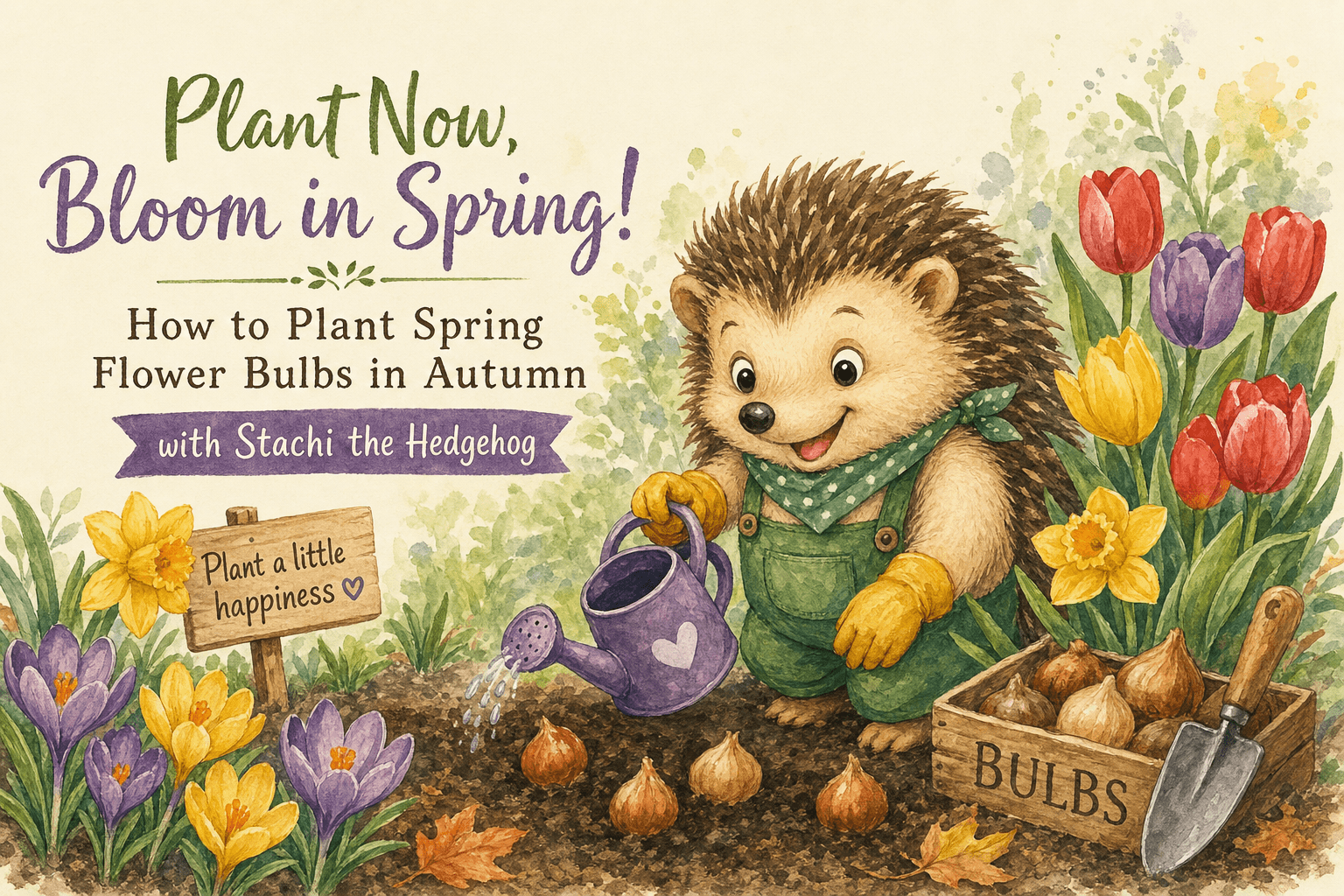
Summer is winding down, the garden grows quieter – but now is exactly the right moment to plant spring. Flower bulbs in a raised bed are not only stunning to look at; they bring your garden back to life as early as March and April when there's otherwise not much growing yet.
🦔 Stachi here – and I have to tell you: this is my favourite time of year for garden work. It's no longer blazingly hot, and somehow you already know that you're working towards something beautiful that you won't see until months later.
Why September and October?
The biological answer: Flower bulbs need cold. When you plant them now (before the hard frost arrives), they get the cooling phase they need to germinate in the first place. In spring – when it warms up – they then throw out their flowers. If you plant them too early in the year, you confuse the bulb (botanically: vernalisation).
The practical answer: Your raised bed is empty now. Summer vegetable stress is gone (or almost). It's a relaxed time to work slowly – and trust me, the result next spring will be pure joy.
Which bulbs are suitable for raised beds?
Large-flowered varieties (the "classics"):
- Tulips – come in red, pink, purple, white, yellow, orange. The bigger the variety, the more majestic. Tip: Buy tulips with at least 12 cm circumference; the smaller ones are often disappointments.
- Daffodils (narcissus) – yellow, white, or bicolour. Extremely robust; wild varieties (like English miniature daffodils) throw new flowers again and again.
- Hyacinths – intense fragrance, come in blue, pink, white. Caution: They need a fixed spot – don't keep digging them up.
- Crocuses (spring crocuses, not autumn crocuses) – small, delicate, often the first harbingers of spring. Perfect for small gaps in the bed.
Small-flowered varieties (for the "wild" corner):
- Snowdrops (Galanthus) – dainty, fragrant.
- Grape hyacinths – dark blue, charming, very low-maintenance.
- Glory of the snow (Chionodoxa) – pale blue, gets better year after year.
The practical rule of thumb: Buy bulbs that feel firm with no soft spots. Bigger = better. A small, dried-out bulb at the bottom of a crate is money wasted.
The planting depth – the secret
This is important: Bulbs like depth.
The rule goes "three times as deep as the bulb is tall":
- A tulip bulb 3 cm tall? Plant it 9 cm deep.
- A crocus 1 cm tall? Depth: 3 cm.
- A hyacinth 4 cm tall? Depth: 12 cm.
Why?
- They need cold and isolation from severe frost fluctuations.
- Depth protects against voles (yes, they love bulbs).
- The bulb then sends down a deeper root – making it stable.
Step-by-step: How to plant bulbs
Step 1: Dig a hole Use a bulb planter (dibbler). It's a handheld tool that looks like a tube with a handle – you push it in, twist the soil up, and presto, you've got a hole. Much less work than using a hoe.
Step 2: Bulb in Pointed end up! (Yes, this is really the most common mistake: planting bulbs upside down. Yes, the plant finds its way up anyway, but it costs energy.)
Step 3: Soil back, tamp down Fill the hole again, tap gently so there are no air pockets. Done.
The best arrangement idea: Clusters, not rows
Don't plant your bulbs in straight lines (boring). Make clusters:
- On a square metre, about 50–100 bulbs, but in groups. 5 tulips clustered here, 10 crocuses there, 3 hyacinths elsewhere.
- Come spring it looks naturally scattered – authentic, beautiful, not artificial.
When to plant?
Rule: When the soil is frost-free but the temperature is below 15 °C.
In Switzerland / Southern Germany = early October through late November. In England / Scandinavia = mid-September through November.
Don't wait too long! The earlier you plant, the better the root development before winter.
Mice and other visitors
The raised bed is a magical place – not just for you, but for voles too. They love freshly planted bulbs like chips.
Trick: Plant the bulb in a small rabbit-wire basket. It's a metal mesh just big enough to wrap around the bulb. The vole can't get in, the bulb still grows fine.
Or: Buy varieties that voles don't like. Allium (ornamental onion) and snowdrops are left alone by voles. Tulips, on the other hand, drive them crazy.
After that: What to do until spring?
Mulch over the top – 3–5 cm of straw or leaves. This insulates and gives slugs no reason to hang around.
Then: Wait. Water only if it hasn't rained for two weeks. Fertilising: not necessary. Weeds: if stubborn, pluck them out selectively.
Come spring (March/April) the first shoots appear. And then – oh my – the moment the first tulip opens. That is magic, friend.
🦔 Stachi here: Flower bulbs are one of the best feelings in gardening: you do work that hurts, gets you dirty, looks ungrateful – and months later you have colour and scent. That's not bad for half an hour's work in September.
If your raised bed is small: make a 10-tulip cluster in the corner. That's enough.
Much joy in planting – and even more in bloom!
🦔 Stachi
More articles

October 10, 2026 · 2 min read
Planting blackberries in a raised bed this autumn: why one plant can already be too many
Frau Schneider ordered three thornless blackberry plants for her kids – all three meant for one single raised bed. I had to tell her that even one of them will outgrow it eventually. Here's what actually matters for an autumn planting.

October 9, 2026 · 2 min read
Blanching endive: the trick against bitterness – and where rot is lurking
Frau Schneider tied up her endive on a rainy afternoon because she didn't have time to wait. A week later the heart was brown and slimy instead of pale and tender. Here's what actually matters when you blanch it.

October 8, 2026 · 2 min read
Overwintering artichokes: why they freeze faster in a raised bed than in open ground
Frau Schneider's artichoke grew real buds for the first time this summer – now she's worried the plant won't survive the first hard frost in her raised bed. She's right to worry: raised-bed soil freezes differently from garden soil. Here's how to protect the rootstock properly.