September 10, 2026 · by Stachi · 4 min read
Planting strawberries in September: the short window that decides next year's harvest
September is the best month to plant new strawberry plants — better than spring, better than October. Miss this short window and you'll wait a whole year for fruit.
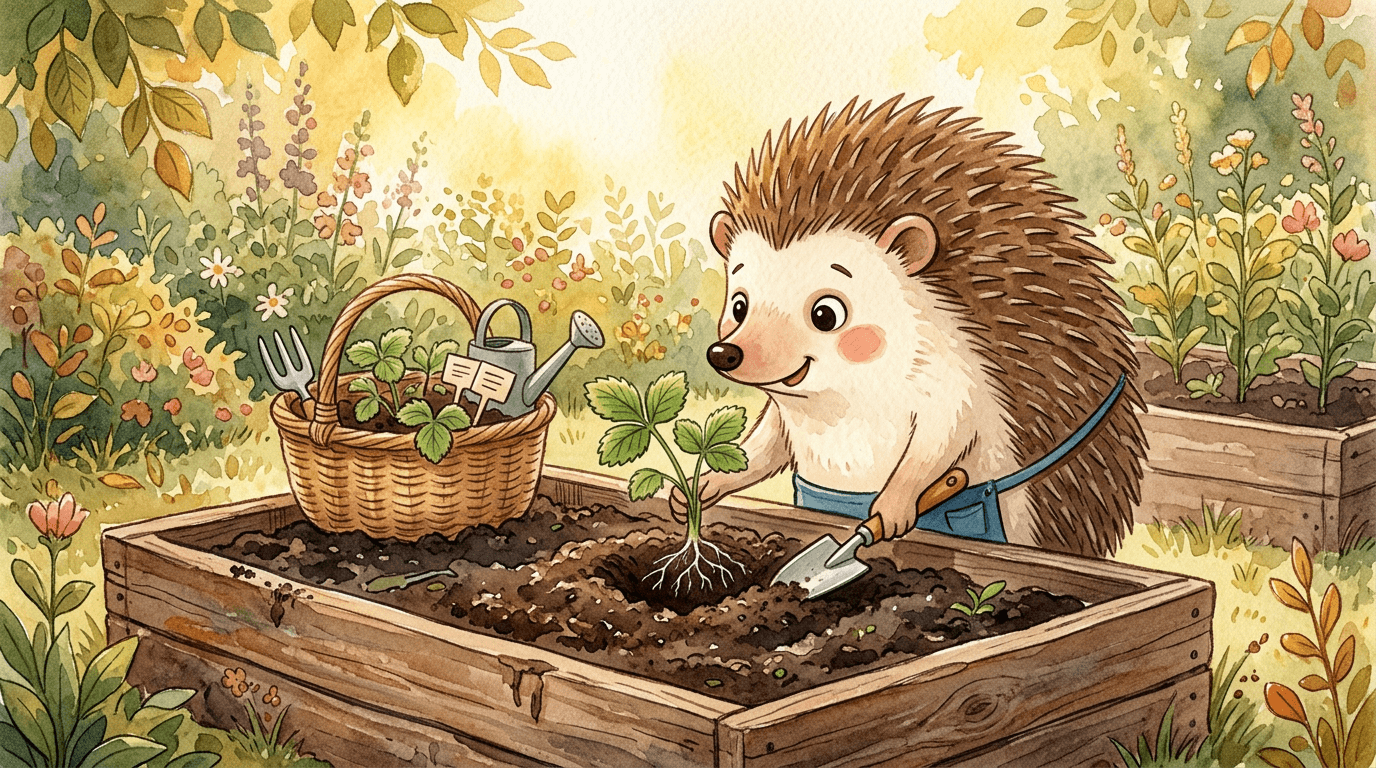
Mrs. Schneider planted new strawberries last spring. Mid-May, nice weather, great mood. I didn't say anything at the time — she was so excited.
Then in summer she wrote to me: "Stachi, everyone else has strawberries but mine barely bloomed. What did I do wrong?"
Nothing. She just planted in the wrong month.
Why September beats May
This sounds counterintuitive — spring feels like new beginnings, like planting and growing. September feels like an ending. But with strawberry plants it's exactly the other way around.
A September plant has six to eight weeks before the first frost to put down roots. The soil is still warm, the days are getting shorter — that drives the plant downwards rather than upwards. It builds roots. Lots of them. By February it sits rock solid in the ground, and when the first hours of spring sun arrive in March, it practically explodes.
A May plant, by contrast, has to immediately grow upwards — leaves, flowers, fruit — and the roots often can't keep up. That's why gardeners remove blossoms in the first year to let the plant build up strength. But not everyone knows this. And even then: after one year, the September plant still has better roots.
Another thing: in September, garden centres have fresh young plants in stock. That's no coincidence — they know exactly when the best planting window is.
What to buy
Certified young plants from a specialist nursery. That's not snobbery — it's prevention.
Older crowns from a neighbour's garden can carry viruses — particularly strawberry mosaic virus or the two-spotted spider mite — without any outward signs. The plants look healthy but never produce well. Certified young plants are tested virus-free. There's barely a price difference when buying, but over three years of harvests the difference in yield is enormous.
Popular varieties for central Europe:
- Elsanta: The classic for raised beds. Robust plant, large fruits, mid-season. Widely available.
- Mara des Bois: Quality over quantity — smaller fruits, but intensely aromatic. Ideal for raised beds with limited space since it produces fewer runners.
- Honeoye: Early variety, more cold-tolerant than many others. Good for higher altitudes or areas with late frosts.
- Senga Sengana: A tried-and-true, deeply aromatic variety. Not quite as large as modern cultivars, but fiercely loved by many gardeners.
If you're unsure: ask at the nursery for a variety that suits your altitude and soil. Good nurseries know this.
How to plant
Raised beds are ideal for strawberries — they drain well, warm up quickly, and the back-friendly working height doesn't hurt either.
Spacing: Thirty to forty centimetres between plants. Strawberries need room, not just for themselves but so that air can circulate between leaves — wet, densely packed leaves are an open invitation for grey mould.
The most important thing when planting: The crown — the thickened part from which new leaves grow — must sit at soil level. Not below (it'll rot), not above (it'll dry out). Exactly at the surface. This is the most common mistake when planting strawberries, and it makes a huge difference.
- Dig a hole slightly deeper than needed.
- Fan out the roots gently, don't compress them.
- Fill in the soil and check that the crown sits at soil level.
- Press lightly, water well.
Water thoroughly after planting — not next Friday, but immediately, so the soil closes around the roots.
What happens in the first year (and what you should do)
In spring, your new plants will flower. And you'll be tempted to harvest the first strawberries.
Don't.
Remove the first flowers. Relentlessly. It sounds harsh, but it's the best thing you can do for your plant — it invests its energy in roots and leaves instead of fruit. From the second year onwards you'll have a strong, established plant with a full yield instead of a weak one with a few meagre berries.
Exception: if by late August you already have a vigorous, well-rooted September plant, you can actually harvest fruit in the second year. But when in doubt: remove flowers in the first year. Future you will be grateful.
What to do with old plants
Strawberry plants have their best harvest years in the second and third year. After that, yield declines — the plants become woodier, flower less, and the fruits get smaller.
If you know you have plants that are four or five years old: replace them. Not all at once if you have a large bed — that would mean no harvest for a year. Swap them out in stages: a third this year, a third next year.
Old plants go to the compost or the bin — don't replant them in the same soil without first refreshing it. Strawberries don't like soil where strawberries have already grown. This is called soil fatigue, and it's real.
One sentence for today
September is the month when most gardeners already write off the raised bed mentally — "there's not much to do now". Not true. Plant strawberries today and next summer you'll have the best strawberries in years. Wait until May and you'll be watching another year go by.
The window is now. In two weeks it's still okay. By the end of October it's too late.
🦔 Stachi
Products mentioned in this post
- Plantura organic tomato seed set (10 varieties)Open-pollinated, good germination — robust for raised beds.
- Organic tomato seed set, 14 varieties
- Organic heirloom tomato seed set (Demeter, 12 varieties)
- Organic vegetable seed set, 10 varietiesCucumber, tomato, beetroot, broccoli, carrot, chard & more.
Related plants


More articles

October 10, 2026 · 2 min read
Planting blackberries in a raised bed this autumn: why one plant can already be too many
Frau Schneider ordered three thornless blackberry plants for her kids – all three meant for one single raised bed. I had to tell her that even one of them will outgrow it eventually. Here's what actually matters for an autumn planting.

October 9, 2026 · 2 min read
Blanching endive: the trick against bitterness – and where rot is lurking
Frau Schneider tied up her endive on a rainy afternoon because she didn't have time to wait. A week later the heart was brown and slimy instead of pale and tender. Here's what actually matters when you blanch it.

October 8, 2026 · 2 min read
Overwintering artichokes: why they freeze faster in a raised bed than in open ground
Frau Schneider's artichoke grew real buds for the first time this summer – now she's worried the plant won't survive the first hard frost in her raised bed. She's right to worry: raised-bed soil freezes differently from garden soil. Here's how to protect the rootstock properly.