September 23, 2026 · by Stachi · 2 min read
Garden Closeup in September: Final Prep Work Before the Frost
September is nearly over — time to prepare your garden for winter. Here's what you should do now to make sure your raised bed doesn't sit empty when the cold comes.
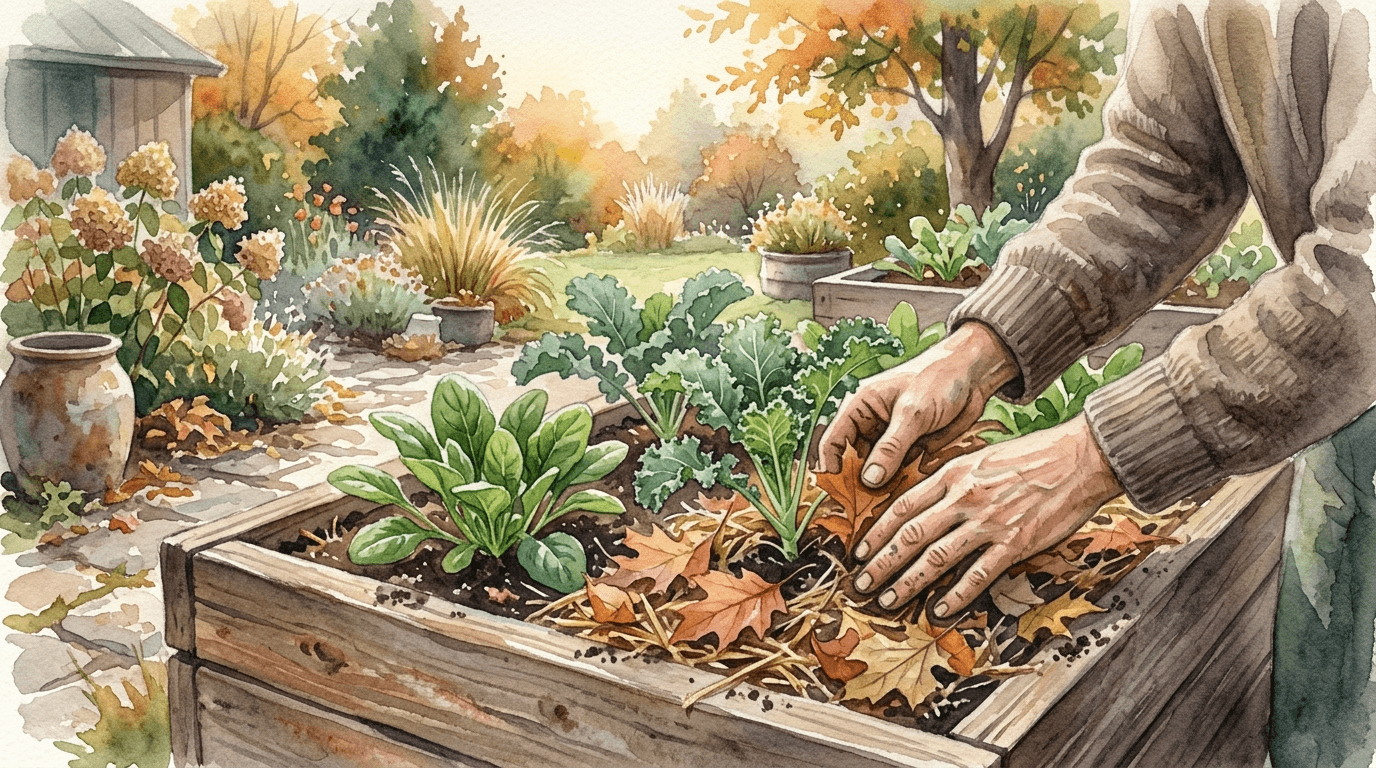
Autumn comes faster than you think.
Three weeks ago, the raised bed was full summer — tomatoes, cucumbers, basil, everything wanted picking. And now? End of September. The evenings grow cool, and by mid-October, it's over — the first frost arrives.
That's not a tragedy. It's just time to clean up.
What comes out — and what stays?
Out now:
- All frost-sensitive plants (tomatoes, peppers, eggplants, basil, marjoram). They won't come back. Compost them — but only if they're healthy. Illness stays in the cycle otherwise.
- Dead leaves, weeds. Remove them, don't leave them.
What stays and even gets better:
- Everything you sowed three to four weeks ago: spinach, corn salad, Asian greens, kale. They just need rest now and will slowly become tenderer. First harvest mid-October.
- Root vegetables still in the ground: carrots, turnips, black salsify. Frost makes them sweeter — a poison that tastes good.
Preparing the raised bed itself
Step one: Clean the surface
After you've ripped out the summer crops, there are crumbs everywhere. Pick out the big leaf fragments (into the compost), but leave the soil itself. That's your working surface for the next few weeks.
Step two: Work in compost
This is when you hopefully get mature compost and spread it across the bed. Two to three centimetres is enough. This happens every year: the old compost mixes with the soil, loosens it, feeds the microbes that will feed your tomatoes next summer.
No mature compost? No problem. Wait until next spring. The bed will run without it. The soil just won't be loosened — but that's no disaster.
Step three: Mulch
It's optional, but worth doing: a thin layer (two to three centimetres) of straw or leaves over the bed. Why?
- The soil won't freeze as fast.
- Winter vegetables (spinach, corn salad) love the insulation.
- In spring, the layer rots and becomes humus.
Leave the mulch until March. Then rake it away.
The raking rule
Whoever rakes too much in autumn ruins next spring's soil.
Once you've mulched the bed, leave it. No more raking. Soil structure needs to regenerate. Earthworms need a stable environment to do their thing. Raking ruins that.
What you don't do yet
Next spring:
- Fresh compost, new seeds — but only from early April when the soil has warmed up.
Not now:
- No new seeds, except winter-keepers (garlic, onions — but there's still time until October).
- Don't fertilize. That triggers growth, which then freezes. Pointless.
The final coffee
Make yourself a coffee and look at your raised bed. You've earned it.
For the next four to five months, you don't need to do much. Snow falls, rain comes, and the most important work happens under the soil — without you.
Garden closeup in September isn't the end. It's the rest before the next crescendo.
More articles

October 10, 2026 · 2 min read
Planting blackberries in a raised bed this autumn: why one plant can already be too many
Frau Schneider ordered three thornless blackberry plants for her kids – all three meant for one single raised bed. I had to tell her that even one of them will outgrow it eventually. Here's what actually matters for an autumn planting.

October 9, 2026 · 2 min read
Blanching endive: the trick against bitterness – and where rot is lurking
Frau Schneider tied up her endive on a rainy afternoon because she didn't have time to wait. A week later the heart was brown and slimy instead of pale and tender. Here's what actually matters when you blanch it.

October 8, 2026 · 2 min read
Overwintering artichokes: why they freeze faster in a raised bed than in open ground
Frau Schneider's artichoke grew real buds for the first time this summer – now she's worried the plant won't survive the first hard frost in her raised bed. She's right to worry: raised-bed soil freezes differently from garden soil. Here's how to protect the rootstock properly.