September 16, 2026 · by Stachi · 3 min read
Kale in the raised bed: plant it now in September
Kale needs frost to taste its best. Plant it now in September and you'll have a tough, harvest-ready crop from November onward — no starting from seed, no stress, no tricks.
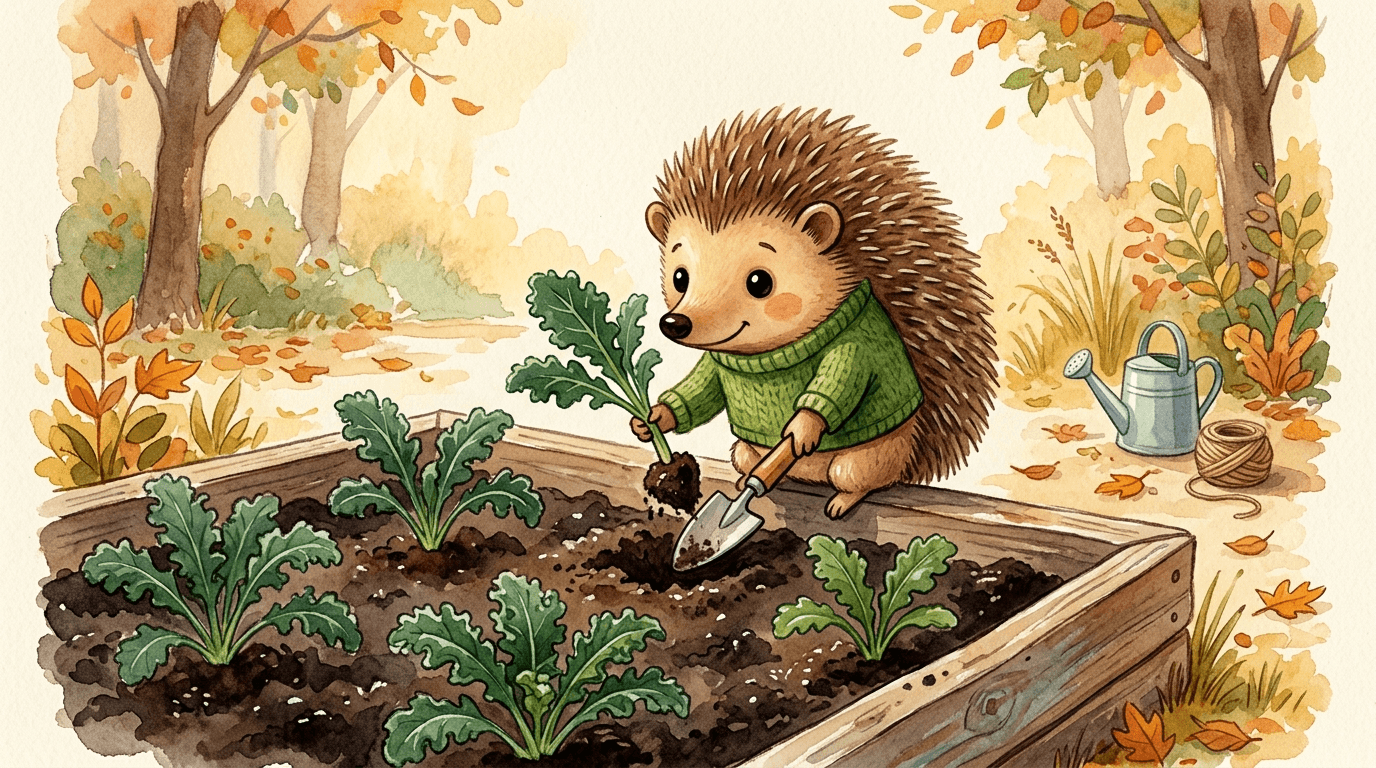
There's one vegetable in the raised bed that's at its absolute best exactly when almost everything else has stopped growing.
Kale.
It needs frost. Not despite the cold — because of it. The cold triggers a process where the starches in the leaf convert to sugars. Before the frost: bitter, tough. After the frost: mild, almost nutty. That's not marketing. That's chemistry.
And September is the last sensible moment to get it planted.
Why September and not earlier
Kale is classically sown or planted out in June or July. That's the standard route.
But many raised-bed gardeners are deep in summer planting mode in June — tomatoes, cucumbers, courgettes. No space. No problem. If you buy kale transplants now, in mid-September, and get them in the ground, you still have plenty of time for a solid autumn harvest.
The plants grow more slowly than in summer. But they do grow. And from October onward, as the nights cool down, the leaves change. The first proper frost — usually mid-October to early November in the Swiss Mittelland — makes all the difference.
What you should NOT do: sow kale from seed now. That's too late for direct sowing. Buy ready-to-plant seedlings from the garden centre or market.
Which variety suits a raised bed
Most garden centres carry a handful of standard varieties. For raised beds, I recommend compact types that don't get enormous:
Cavolo nero (Lacinato kale) — dark, almost black-green, strap-shaped leaves. Mild, earthy flavour. Very cold-hardy.
Westländischer Winter — compact, reliable, good yield even in small spaces.
Red Russian kale — more tender leaves, slightly reddish tinge in autumn, milder flavour. Looks beautiful in the bed.
For a one-square-metre raised bed, two to three plants fit comfortably. Kale gets large — sixty to ninety centimetres tall and nearly as wide.
Planting it out
Soil preparation: Kale is a heavy feeder. It wants nutrient-rich soil. If your raised bed has been in use for a while, work in a handful of mature compost before planting.
Planting: Dig a hole slightly deeper than the root ball. Set the plant so the lowest leaves sit just above the soil surface. Planting slightly deeper than it grew in the pot helps anchor it.
Spacing: At least fifty centimetres between plants. Sixty to seventy is better. Kale needs airflow.
Watering in: Generous but not waterlogging. Keep it consistently moist for the first couple of weeks until the plant finds its feet. After that, autumn rain usually handles it.
What you harvest from October to December
Kale demands almost no attention. It just stands there.
From October: Harvest leaves from the outside in. Never take more than a third of the leaves at once — the plant needs to keep growing. Start with the outermost, darkest leaves. Protect the growing centre.
After the first frost: Harvest quality goes up noticeably. The leaves become softer, sweeter, more aromatic. This is what you've been waiting for.
December: In mild areas (climate zone 7–8, like the Swiss Mittelland) kale keeps growing well into December. A fleece cover extends the season a bit further.
Where the limit is: Kale rarely survives minus fifteen degrees. Minus ten, if things warm up again quickly — it gets through. In most of the areas where you're reading this, that's not a concern.
Why kale is underrated
Frau Schneider, one of my neighbours, had no interest in kale for years. "That's diet food," she said.
Then in November she tasted freshly harvested kale from a neighbour's raised bed. Wilted briefly with olive oil, garlic, lemon. One bite and the conversation was over.
Raised-bed kale in November is not the same vegetable as the watery frozen stuff from the supermarket. It's a completely different experience.
What I usually do with fresh raised-bed kale: three or four leaves from the bed, roughly torn, tossed for a minute in olive oil with garlic. Salt, lemon, done. No long cooking required.
One last thought
The raised bed in September looks like it's wrapping up. Tomatoes are finished. Courgettes too. But it's not an ending — it's a transition.
Kale is made exactly for this transition. It needs what autumn has to offer: cool air, rain, frost. It takes care of itself, as long as you plant it.
This afternoon. Twenty minutes.
🦔 Stachi
Products mentioned in this post
- Plantura organic tomato seed set (10 varieties)Open-pollinated, good germination — robust for raised beds.
- Organic tomato seed set, 14 varieties
- Organic heirloom tomato seed set (Demeter, 12 varieties)
- Organic vegetable seed set, 10 varietiesCucumber, tomato, beetroot, broccoli, carrot, chard & more.
Related plants


More articles

October 10, 2026 · 2 min read
Planting blackberries in a raised bed this autumn: why one plant can already be too many
Frau Schneider ordered three thornless blackberry plants for her kids – all three meant for one single raised bed. I had to tell her that even one of them will outgrow it eventually. Here's what actually matters for an autumn planting.

October 9, 2026 · 2 min read
Blanching endive: the trick against bitterness – and where rot is lurking
Frau Schneider tied up her endive on a rainy afternoon because she didn't have time to wait. A week later the heart was brown and slimy instead of pale and tender. Here's what actually matters when you blanch it.

October 8, 2026 · 2 min read
Overwintering artichokes: why they freeze faster in a raised bed than in open ground
Frau Schneider's artichoke grew real buds for the first time this summer – now she's worried the plant won't survive the first hard frost in her raised bed. She's right to worry: raised-bed soil freezes differently from garden soil. Here's how to protect the rootstock properly.