October 6, 2026 · by Stachi · 3 min read
Fallen leaves in your raised bed: the best winter blanket that costs nothing
While the neighbours stuff their leaves into bags for the green-waste collection, mine all go straight into the raised bed. Three ways to turn fallen leaves into winter protection, mulch, or fine humus for next year.
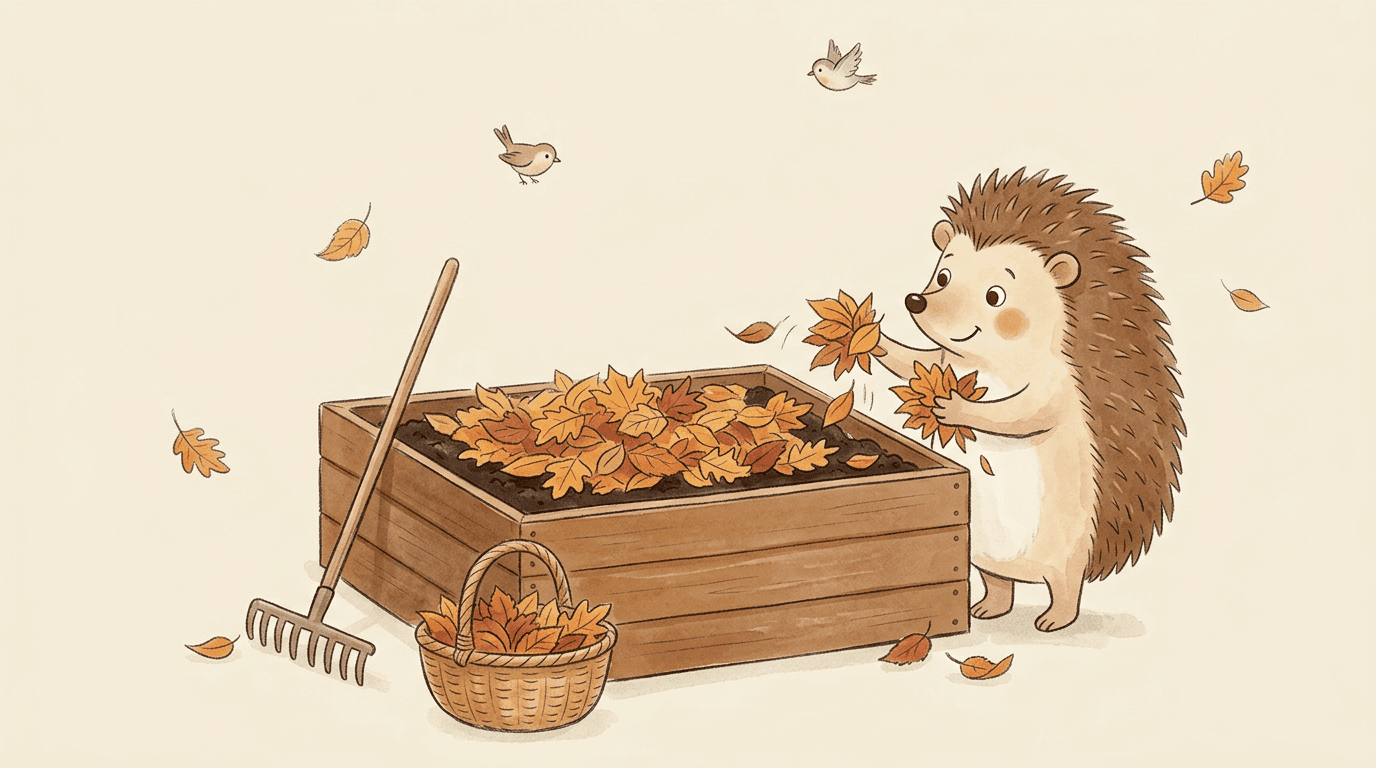
Frau Schneider was standing at her garden gate last Saturday with three full bags of leaves, ready for Monday's green-waste collection. I asked her for one bag. She thought that was odd at first — what does a hedgehog need leaves for? — until I showed her what I actually do with them: straight into the raised bed.
Fallen leaves are the one free material October reliably drops out of the sky. And depending on how you use them, they can do three completely different jobs.
Not all leaves are equally useful
Before you sweep the whole garden path and dump it all into your bed, a quick check:
- Thin, fast-rotting leaves — birch, fruit trees, hazel — can go in straight away. They break down on their own over winter.
- Thick, waxy leaves — oak, horse chestnut, plane — take longer. Either mow over them first to shred them, or set them aside for the separate leaf pile (see below).
- Avoid walnut leaves. They contain juglone, which suppresses growth in some young plants. Put those in the municipal compost instead.
- No leaves from diseased trees. Apple scab or tar spot survive in fallen leaves and will reinfect new growth come spring.
Three ways to use leaves in a raised bed
1. A direct mulch layer over frost-sensitive roots. A 5 to 10 cm layer over a strawberry row, over freshly planted garlic cloves, or over a divided rhubarb crown acts like a blanket — it buffers frost and keeps moisture in the soil. I did exactly this on Frau Schneider's freshly divided rhubarb last week: those root pieces need protection right now, until they've grown new roots of their own.
2. Shredded into the top layer of soil. One pass with the lawnmower over a leaf pile shreds them in minutes. Shredded leaves rot down noticeably faster than whole ones, and you can work them loosely into the top 5 cm of any empty bed section — a small compost-starter right inside the raised bed, no separate compost bin needed.
3. A separate leaf pile behind the bed. Anything too thick or too slow to break down goes into its own pile or a jute sack with a few air holes. After a year or two of resting, it turns into leaf mould — a fine, dark humus you can mix into next spring's planting soil.
What not to do
Pressing leaves straight up against the wooden wall of your raised bed isn't a good idea. Wet leaves trap moisture against the wall, which speeds up rot, especially with spruce or untreated wood. Leave a small gap from the inner wall, or pile the leaves over the roots in the middle of the bed rather than along the edge.
Why now, not in November
The first weeks of October are the best moment, because the leaves still fall dry and loose. Once the first sustained rain arrives, they mat down into a heavy, soggy layer that barely lets air through — at that point, the "mulch" does more rotting than protecting. Dry leaves collected now spread easily and stay loose enough for weeks that air and water can still get through.
Frau Schneider's three bags of leaves never made it to the green-waste collection last Saturday. Two are now a mulch blanket on her strawberry bed, one is waiting as a leaf pile behind her raised bed for next year. She's already told me she's not buying leaf bags again — she's got a hedgehog for that now.
🦔 Stachi
Products mentioned in this post
- Gardena Classic planting trowelQuality steel, corrosion-protected — bed all-rounder.
- Gardena flower trowel, large
- Bosch hand fork, stainless steel
- Draper sturdy hand fork, stainless steel
Related plants


More articles

October 10, 2026 · 2 min read
Planting blackberries in a raised bed this autumn: why one plant can already be too many
Frau Schneider ordered three thornless blackberry plants for her kids – all three meant for one single raised bed. I had to tell her that even one of them will outgrow it eventually. Here's what actually matters for an autumn planting.

October 9, 2026 · 2 min read
Blanching endive: the trick against bitterness – and where rot is lurking
Frau Schneider tied up her endive on a rainy afternoon because she didn't have time to wait. A week later the heart was brown and slimy instead of pale and tender. Here's what actually matters when you blanch it.

October 8, 2026 · 2 min read
Overwintering artichokes: why they freeze faster in a raised bed than in open ground
Frau Schneider's artichoke grew real buds for the first time this summer – now she's worried the plant won't survive the first hard frost in her raised bed. She's right to worry: raised-bed soil freezes differently from garden soil. Here's how to protect the rootstock properly.