September 30, 2026 · by Stachi · 4 min read
Pruning currants and gooseberries now: two shrubs, two completely different rules
Blackcurrants want a hard renewal cut every single year. Redcurrants, whitecurrants and gooseberries fruit on the same branches for years. Prune them the same way and you cut away half your 2027 harvest.
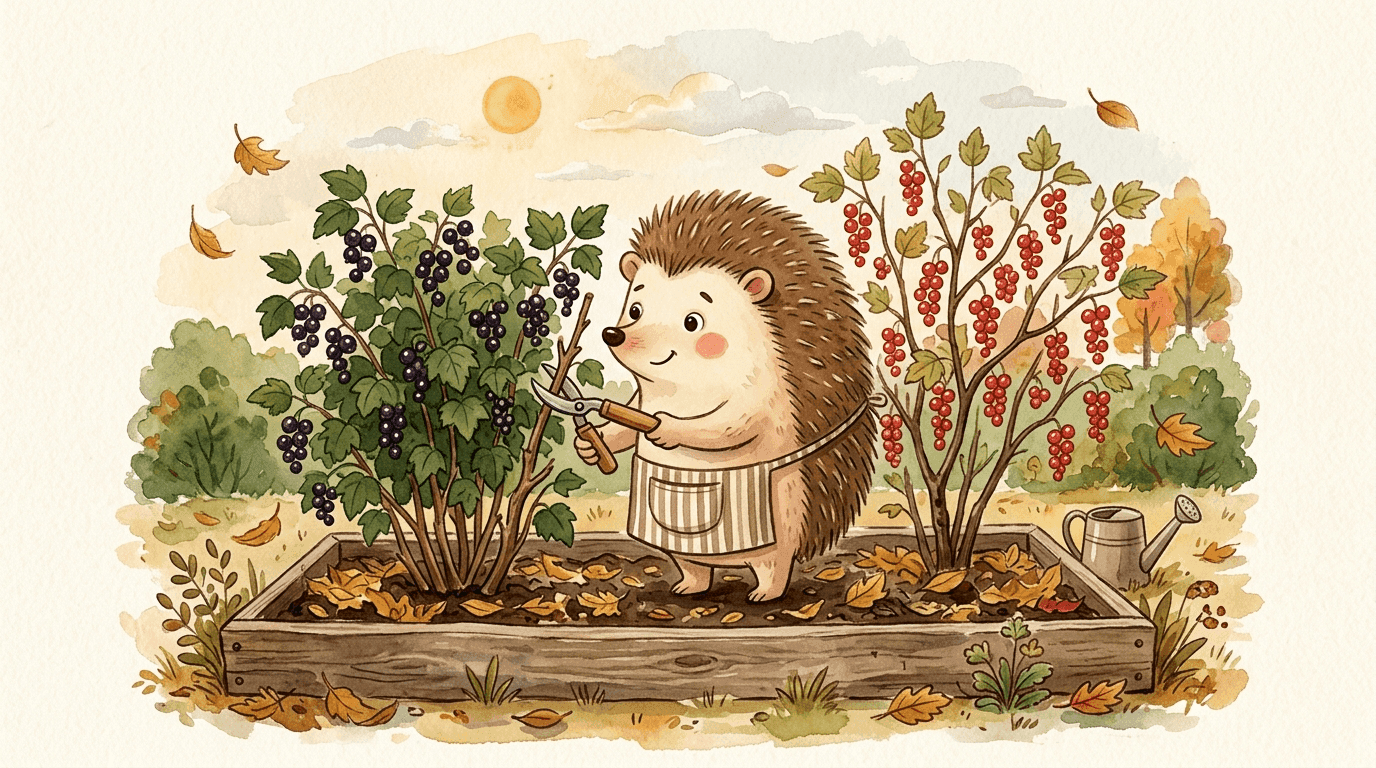
Two years ago, Frau Schneider pruned her blackcurrant and her redcurrant exactly the same way. Both cut back to the same height, both thinned by a third, with the good feeling of having done tidy garden work. The blackcurrant rewarded her the following year with the best harvest in years. The redcurrant barely produced half its usual crop.
She hadn't pruned badly. She'd just treated two different plants as if they were one. They aren't.
The difference that decides your harvest
Blackcurrants fruit best on one-year-old wood — shoots that grew this year. Older wood still produces something, but noticeably less and smaller berries. So the plant wants to start fresh every year: old shoots out, so fresh wood keeps coming from the base.
Redcurrants, whitecurrants and gooseberries work the opposite way. They build a permanent framework of main branches and fruit on short side shoots — called spurs — that keep producing for three or four years running. Cut that framework back hard and you remove exactly the branches that were meant to carry next year's crop.
Same family, same season to prune, completely different shears.
Blackcurrant: renew it hard, every year
- Find the darkest, thickest, most cracked-looking stems — that's the oldest wood, usually four years or more.
- Cut about a third of these old stems right out at the base. Don't shorten them, remove them entirely, flush with the ground.
- Leave the pale, smooth young shoots from this year completely untouched — those will carry most of next year's crop.
- Also remove any shoots growing inward or crossing each other. An open, airy centre lets air through and dries the leaves faster after rain, which keeps the powdery mildew away that blackcurrants attract so easily.
Follow this pattern for a few years and you'll never have more than three or four age classes in the bush, and every one of them still fruits well.
Redcurrant, whitecurrant and gooseberry: keep the framework, just thin it
- Keep six to eight strong main branches as your framework — the load-bearing stems you leave standing for years.
- Remove only wood older than four years: grey, often slightly flaking bark, barely any new side growth left. This wood barely fruits anyway and makes room for a fresh main branch from the base.
- Cut the short side shoots on the main branches back to two or three buds. It looks like a lot to remove, but that's exactly what builds the fruiting spurs for the next few years.
- Cut away any branches hanging low near the ground. Berries that touch the soil rot faster and attract slugs.
- For gooseberries specifically: open up the centre generously. A dense gooseberry bush is miserable to harvest with all those thorns — an open one isn't, and American gooseberry mildew loves exactly the dense, poorly ventilated bushes.
Why now and not in February
Both pruning windows work — autumn after leaf-fall, or late winter before bud break. The difference is in the detail: prune now, while the leaves are actually dropping, and you take fungal spores with you that would otherwise overwinter in the old wood and flare up again in spring. Wood pruned in February carries open wounds through the entire winter; wood pruned in autumn has the whole winter to heal cleanly before the sap starts moving again.
One thing matters here: wait until most of the leaves have genuinely fallen on their own, not just turned yellow. As long as there's still green in the leaf, the plant is still pulling reserves out of it and back into the wood — cut back hard too early and that last supply for next year is gone. Here in Zurich-Affoltern that's rarely before early, usually mid October. Watch the bush, not the calendar.
The side effect almost nobody uses
In the Erntezeit plant database, the autumn planting window for currants and gooseberries runs from week 40 to 45 — exactly the weeks you're already standing in the bed with secateurs in hand. If you spot a gap in the framework that pruning alone won't fix, or you want a third variety: now is the best moment to plant a bare-root or potted bush right next to it. Roots still establish well in October's mild soil before the frost arrives, so come spring the plant starts with a head start instead of having to root from scratch in March.
Don't forget the tools
Disinfect the blade between shrubs, especially when you're cutting out diseased wood — a cloth with high-proof alcohol does the job. Currant mildew and gooseberry mildew jump from bush to bush through a dirty pair of shears with remarkable reliability.
Clippings from healthy bushes can go on the compost. Branches with a white, powdery coating or clear spots: bin them, don't compost — the spores survive most home compost heaps without much trouble.
Frau Schneider has only thinned her redcurrant since then, never cut it back hard again. This autumn, for the first time, it out-produced the blackcurrant standing right next to it. "I could've just asked," she told me. Yes. She could have.
🦔 Stachi
Products mentioned in this post
- Gardena Classic planting trowelQuality steel, corrosion-protected — bed all-rounder.
- Gardena flower trowel, large
- Bosch hand fork, stainless steel
- Draper sturdy hand fork, stainless steel
Related plants


More articles

October 10, 2026 · 2 min read
Planting blackberries in a raised bed this autumn: why one plant can already be too many
Frau Schneider ordered three thornless blackberry plants for her kids – all three meant for one single raised bed. I had to tell her that even one of them will outgrow it eventually. Here's what actually matters for an autumn planting.

October 9, 2026 · 2 min read
Blanching endive: the trick against bitterness – and where rot is lurking
Frau Schneider tied up her endive on a rainy afternoon because she didn't have time to wait. A week later the heart was brown and slimy instead of pale and tender. Here's what actually matters when you blanch it.

October 8, 2026 · 2 min read
Overwintering artichokes: why they freeze faster in a raised bed than in open ground
Frau Schneider's artichoke grew real buds for the first time this summer – now she's worried the plant won't survive the first hard frost in her raised bed. She's right to worry: raised-bed soil freezes differently from garden soil. Here's how to protect the rootstock properly.