August 5, 2026 · by Stachi · 4 min read
Sow carrots in August: your second chance for an autumn harvest
Most people think of carrots as a spring crop. August is your second window — with a real upside: autumn carrots taste sweeter than summer ones. But only if you start right now.
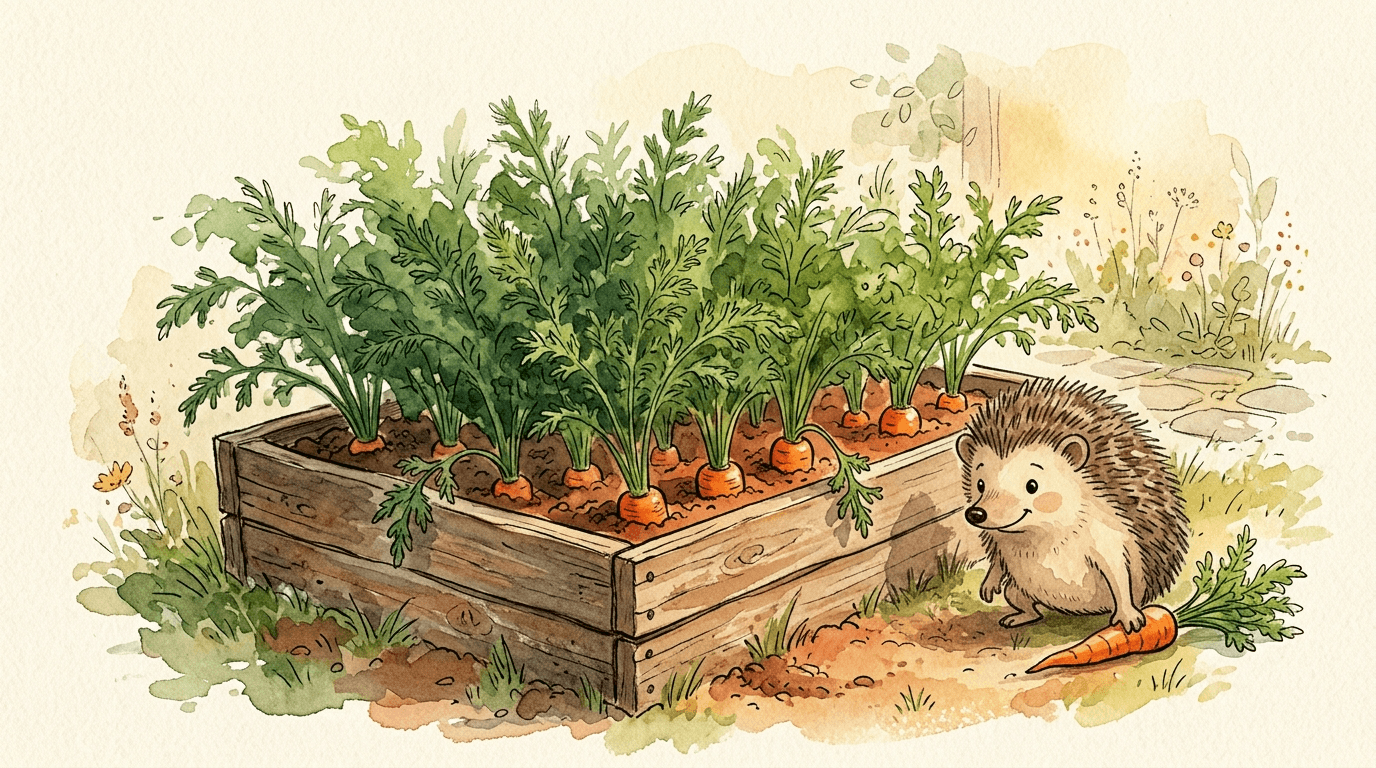
Frau Schneider asked this week whether it was too late for carrots.
She sowed in May, but the top layer of soil dried out during a heatwave before the seeds could germinate. The rows stayed empty, and now, at the start of August, she is looking at a half-empty raised bed.
"Stachi, is there any point? Have I missed my chance?"
You haven't missed anything. August is the second window — and for an autumn harvest, it might even be the better one.
Why autumn carrots taste sweeter
This sounds like marketing, but it's biology.
When temperatures drop in September and October, carrots convert some of their stored starch into sugar. It's a survival mechanism: a higher sugar concentration in the cell sap lowers the freezing point, so the roots are protected from frost damage. The plant is protecting itself.
A carrot pulled from the ground in late October tastes noticeably different from a summer one — distinctly sweeter, less earthy. That's not imagination. That's chemistry.
Frau Schneider will notice on the first bite.
The sowing window
In the Swiss Midlands — Zürich, Berne, Lucerne, the Berikon area — sow by 10th to 15th August at the latest. Earlier is better.
Carrots need 70 to 90 days to mature depending on the variety. Sow in early August and you'll be harvesting from early to mid-October. Sow by the 15th and you'll be harvesting in late October — when the first night frosts arrive. A simple fleece cover handles that without any trouble.
In warmer areas like the Rhine Valley or southern Switzerland: you have another two to three weeks. Early September is still possible there.
Why raised beds suit carrots so well
Carrots don't like obstacles. When the soil is too compacted, too stony, or too shallow, they grow around the problem. The result is forked, branching roots — amusing to look at, but annoying in the kitchen.
In a raised bed this rarely happens. The soil is deep, loose, and well-aerated. Carrots can grow straight and long with nothing in their way.
Depth matters: at least 25 to 30 cm of loose soil. If the bed is relatively new and the fill is still loose, you're in good shape. If the soil has settled over the years, it's worth loosening it with a fork first and working in some fresh growing medium.
Don't put fresh compost directly under the seeds. Too many nutrients right below the seed makes carrots fork — the roots grow outward chasing the nutrient gradient. Well-rotted older soil without extra fertiliser is better.
How to sow
Carrots are sown in shallow rows, not in individual holes.
Draw a groove about one centimetre deep with your finger or a stick. Drop seeds in every one to two centimetres. Press the soil down lightly, then water well.
Row spacing: at least twenty centimetres.
Now the critical part — the one that goes wrong most often in summer: the germination phase. Carrots germinate slowly, seven to twelve days. During this time, the top layer of soil must never fully dry out. In August that means: water in the morning, check at noon, water again in the evening if needed.
A light-coloured garden fleece laid loosely over the surface holds moisture and shades off some heat. Not a black fleece — that heats the soil, which carrots really don't like.
This is what went wrong for Frau Schneider in May: not enough water in the first ten days. This time she knows what to focus on.
Thinning — even when it feels wrong
When seedlings are about five centimetres tall, thin them to five to six centimetres apart.
I know it feels strange. You've waited ten days for these seedlings and now you're pulling most of them out. But closer spacing means the carrots crowd each other, stay thin and small, and none of them develop properly.
The thinned seedlings are edible. They taste of delicate carrot with a slight bitterness — good in salad.
Watering until it turns cold
Once the plants are well established, carrots don't need daily watering, but they do need it to go deep. Watering thoroughly once or twice a week is better than a little every day at the surface. Deep watering encourages deep root growth.
As October arrives: a fleece cover protects the foliage down to around minus four or five degrees Celsius. The carrots in the soil can take even more — earth is a good insulator. Leaving them in the ground and harvesting after the first frost gives the sweetest result.
What Frau Schneider is doing now
I told her: one row, maybe two, wherever there's space. Loosen the soil. Draw a shallow groove. Drop in the seeds. Water well. Keep it moist for ten days.
"And what if nothing comes up again?" she asked.
I explained: this time it's all about water. Carrots in summer heat only germinate if the top layer never properly dries out. That's the one trick.
She'll write to me at the end of October.
🦔 Stachi
Products mentioned in this post
- Plantura organic tomato seed set (10 varieties)Open-pollinated, good germination — robust for raised beds.
- Organic tomato seed set, 14 varieties
- Organic heirloom tomato seed set (Demeter, 12 varieties)
- Organic vegetable seed set, 10 varietiesCucumber, tomato, beetroot, broccoli, carrot, chard & more.
Related plants


More articles
October 10, 2026 · 2 min read
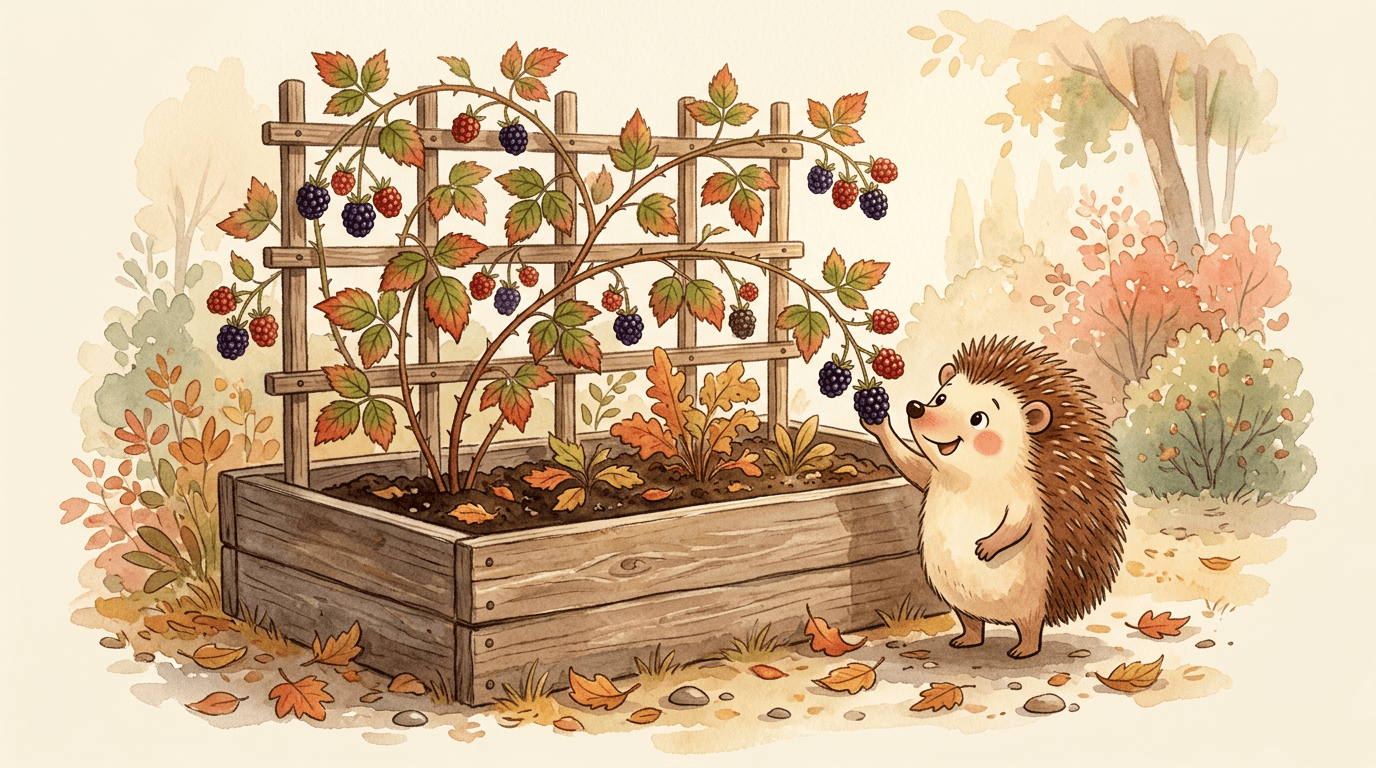
Planting blackberries in a raised bed this autumn: why one plant can already be too many
Frau Schneider ordered three thornless blackberry plants for her kids – all three meant for one single raised bed. I had to tell her that even one of them will outgrow it eventually. Here's what actually matters for an autumn planting.
October 9, 2026 · 2 min read
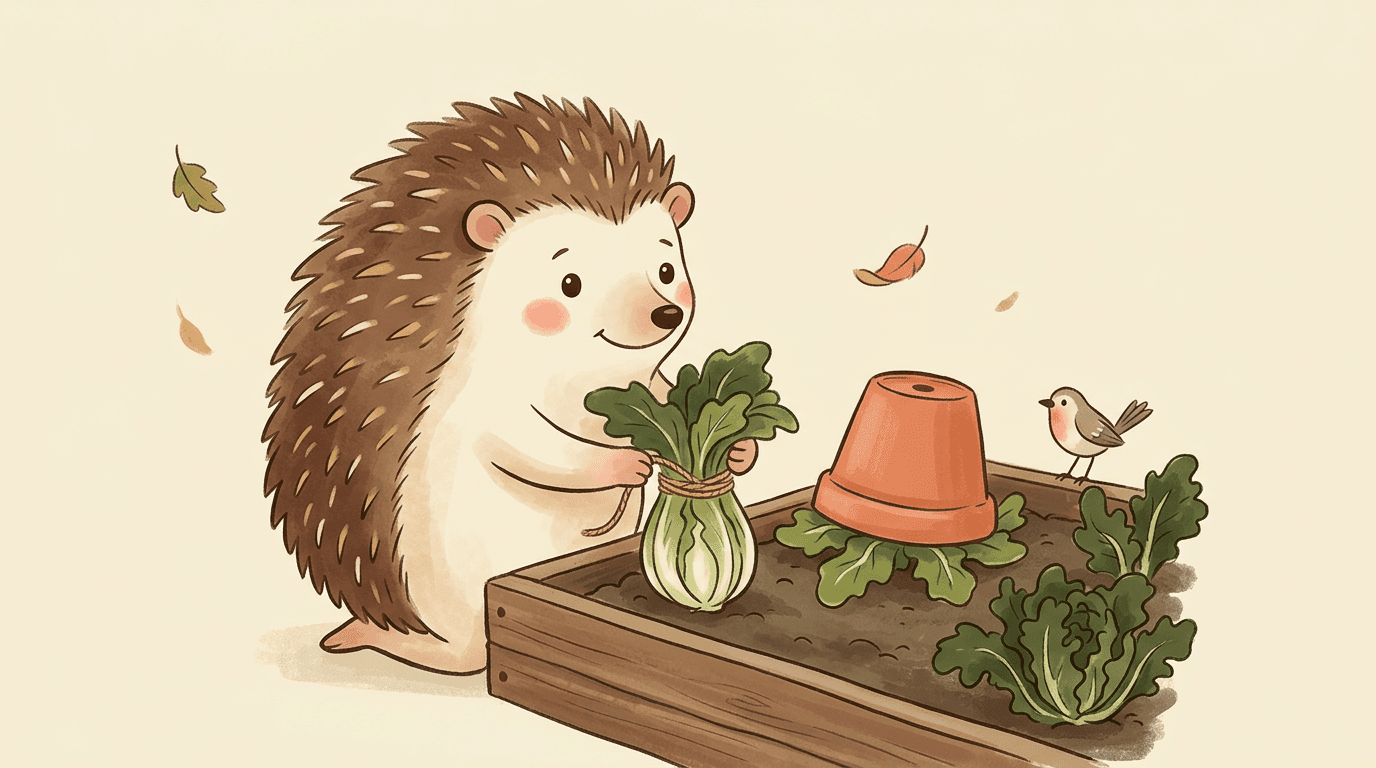
Blanching endive: the trick against bitterness – and where rot is lurking
Frau Schneider tied up her endive on a rainy afternoon because she didn't have time to wait. A week later the heart was brown and slimy instead of pale and tender. Here's what actually matters when you blanch it.
October 8, 2026 · 2 min read
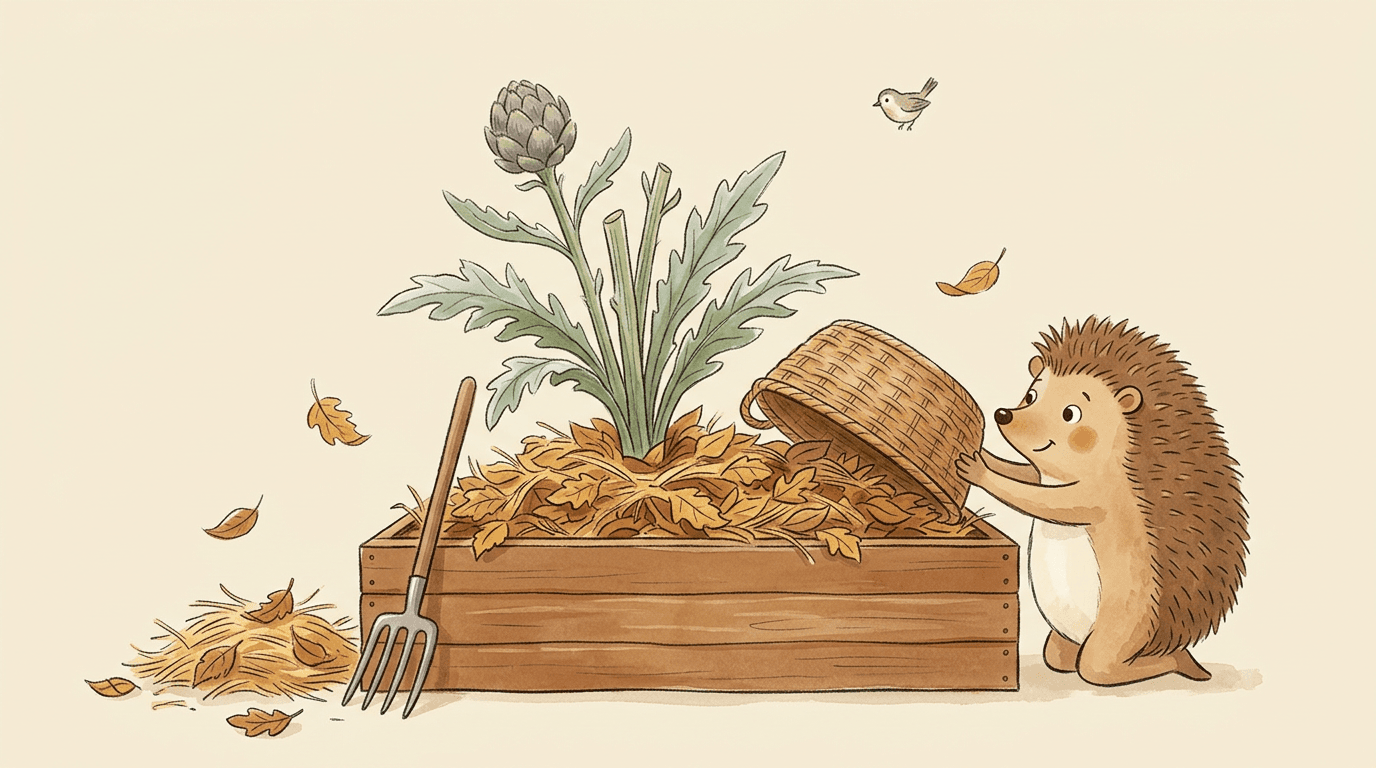
Overwintering artichokes: why they freeze faster in a raised bed than in open ground
Frau Schneider's artichoke grew real buds for the first time this summer – now she's worried the plant won't survive the first hard frost in her raised bed. She's right to worry: raised-bed soil freezes differently from garden soil. Here's how to protect the rootstock properly.