September 17, 2026 · by Stachi · 5 min read
Autumn carrots: why frost makes them sweeter — and when to pull them
Carrots that have been through the first frost taste noticeably sweeter than summer carrots. That's not a gardening myth, it's chemistry. And there's a specific window in September and October where you get both: sweetness and good keeping quality.
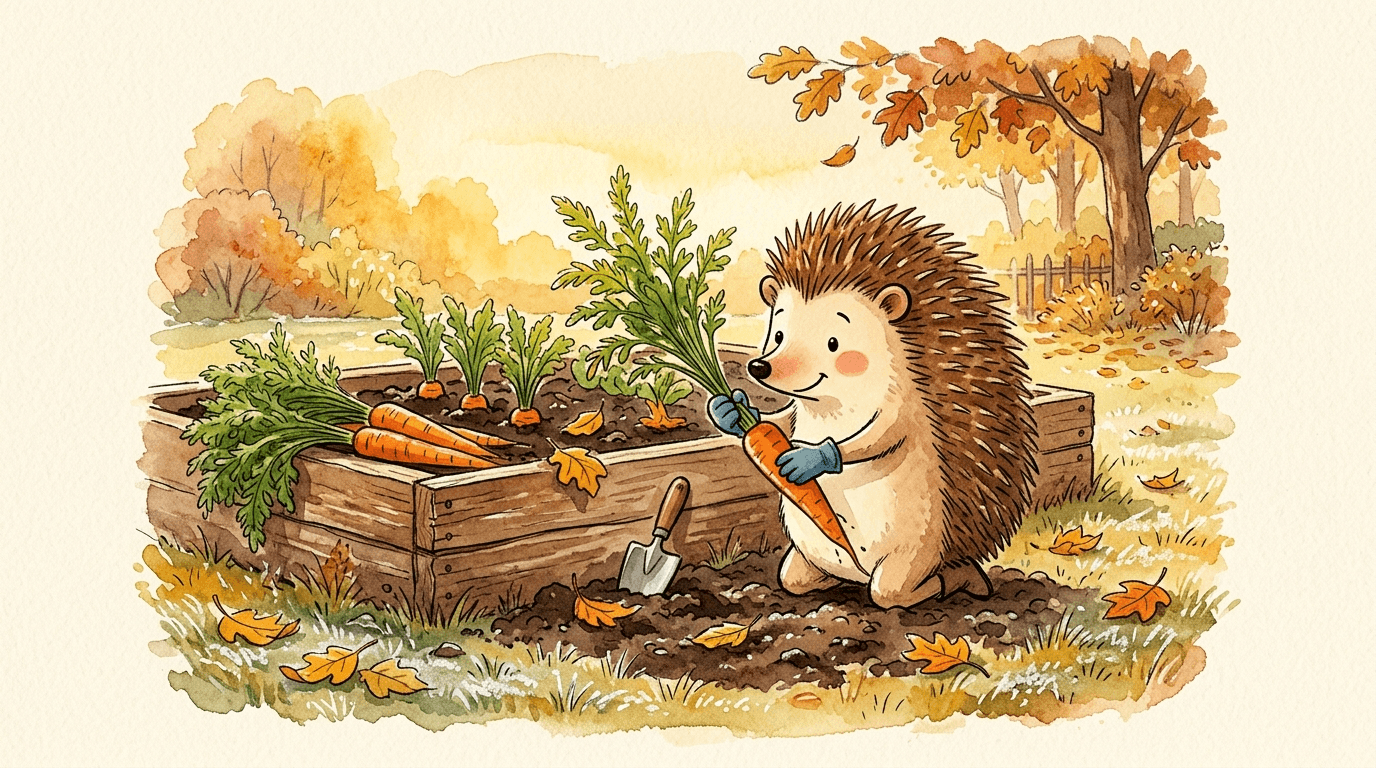
In mid-August I told Mrs. Schneider she should sow some more carrots. She did. Now, in mid-September, she has healthy little carrot plants, and she's asking: "Stachi, when do I pull them?"
Not yet.
Autumn carrots have a secret that sets them apart from summer ones — and that secret is frost.
Why cold makes carrots sweeter
A carrot stores energy as starch. In autumn, as the nights cool down, the plant starts converting that starch into sugar. This isn't unique to carrots — many vegetable plants do it when the temperature drops. It's a survival mechanism: sugar lowers the freezing point inside the cells, protecting the plant from cold damage.
For us gardeners, this means: autumn carrots that have been through one or two overnight frosts taste noticeably sweeter and more flavourful than their summer counterparts. The sugar concentration rises measurably. This isn't a myth — it's been demonstrated in laboratory tests.
But: this conversion takes time and the right temperature. Soil temperatures between four and ten degrees drive the process. At minus five degrees or below, the carrot itself can be damaged — and then quality drops quickly.
The optimal window: October into early November, after the first gentle frosts, but before the hard ones.
What this means for your September carrots
If you sowed in August, you now have carrot plants that aren't yet large enough to harvest. That's normal — carrots need twelve to sixteen weeks depending on the variety.
Early to mid-October is when August-sown carrots are typically ready. Perfect timing: the first overnight frosts in middle elevations usually arrive around mid-October, giving the carrots enough time to start the sweetening process — and you can still get them out cleanly before the ground freezes.
If you sowed in July, you can start harvesting now. Carrots that are already eight to twelve centimetres long can be pulled. Taste one: if it's still starchy and a little flat, leave them another two or three weeks. If it's aromatic and sweet, harvest.
How to tell when your carrots are ready
The most reliable test is not what you see from above — it's what you pull out.
Pull one carrot. Yes, sacrifice one. Look at the thickness: for most varieties, one to one and a half centimetres in diameter is about right. Too thin — too early. Too thick and showing cracks or rough skin — a little late, but still fine to eat.
Taste it. Raw, straight from the soil. Starchy and slightly bland means: wait a little longer. Sweet, crisp, aromatic means: the others are ready too.
With autumn carrots, also check the shoulder — the part just above the soil. A slightly green or purple tinge? Normal, cosmetic, no problem. Soft and smelling of rot? Waterlogging has got to it — pull it immediately and check the others.
How to harvest carrots in autumn
In a raised bed this is easier than in open ground because the soil is looser. Still: don't yank sharply — instead push a garden fork or spade in next to the carrot, loosen the soil, then pull. Otherwise the carrot snaps and the bottom stays in the ground.
After harvest: cut the tops off, leaving about a centimetre of green. Otherwise the tops draw moisture out of the carrot. Brush off soil, but don't wash them — washed carrots keep less well.
Leaving them in the ground to overwinter: possible, but with conditions
Carrots can overwinter in the soil — this works in mild locations where the ground doesn't freeze solid. In many central European valleys that's fine well into December. Advantage: you harvest as needed, fresh and firm.
The condition: frost must not penetrate deeper than around minus eight degrees into the soil, and the carrots need to be covered with straw or horticultural fleece when temperatures drop below minus five. In higher elevations or an especially hard winter, it's better to harvest everything at once.
A second issue: in a raised bed, soil freezes through faster than in open ground, because the bed is exposed to cold on all sides. For raised beds the rule is: at the latest before the first hard frost — below minus five to minus seven — pull all the carrots and store them in the cellar.
Storing carrots properly
Harvested and in the cellar: carrots keep for three to five months if you do it right.
The conditions:
- Cool: one to four degrees is ideal. A cellar is good if it isn't too warm.
- Moist: carrots dry out. Store them in damp sand, in a container lined with moist newspaper, or simply wrapped in a damp hessian cloth.
- Dark: light makes them shrivel faster.
- Away from apples: apples give off ethylene, which makes carrots turn bitter. This rule is actually true — not just a gardening myth.
Alternatively: freeze them. Blanch briefly (three minutes in boiling water), cool, freeze. They keep for six months easily but lose some crunch — good for soups, less ideal for raw eating.
A brief note on varieties
Not all carrots are equal for autumn harvest. Classic varieties for autumn and winter: Nantes (cylindrical, even, sweet), Berlicum (long, excellent keeping), Autumn King (robust, good for cooler locations). Chantenay varieties are shorter and thicker — ideal for shallower raised beds where long varieties tend to bend.
If you sowed with a summer variety back in August, it still works. It's just that truly winter-hardy varieties keep better in storage.
The moment is now — or soon
Mid-September is the right time to start watching your August carrots and checking them regularly. Not daily, but weekly. Pull a sample, taste it. From October the first frosts will come and the carrots will get sweeter. And at the latest when the first hard frost is forecast, get everything out — and store them in the cellar through deep into winter.
Mrs. Schneider will report back in late October about how her carrots turned out. I'm looking forward to the photo.
🦔 Stachi
Products mentioned in this post
- Gardena Classic planting trowelQuality steel, corrosion-protected — bed all-rounder.
- Gardena flower trowel, large
- Bosch hand fork, stainless steel
- Draper sturdy hand fork, stainless steel
Related plants


More articles

October 10, 2026 · 2 min read
Planting blackberries in a raised bed this autumn: why one plant can already be too many
Frau Schneider ordered three thornless blackberry plants for her kids – all three meant for one single raised bed. I had to tell her that even one of them will outgrow it eventually. Here's what actually matters for an autumn planting.

October 9, 2026 · 2 min read
Blanching endive: the trick against bitterness – and where rot is lurking
Frau Schneider tied up her endive on a rainy afternoon because she didn't have time to wait. A week later the heart was brown and slimy instead of pale and tender. Here's what actually matters when you blanch it.

October 8, 2026 · 2 min read
Overwintering artichokes: why they freeze faster in a raised bed than in open ground
Frau Schneider's artichoke grew real buds for the first time this summer – now she's worried the plant won't survive the first hard frost in her raised bed. She's right to worry: raised-bed soil freezes differently from garden soil. Here's how to protect the rootstock properly.