August 6, 2026 · by Stachi · 3 min read
Pak choi in August: sow now for your autumn harvest
Pak choi bolts in summer — too much heat, too much light, and it starts making seeds instead of heads. August is the turning point: cooler nights, shorter days, and it finally does what you want. The window lasts four weeks.
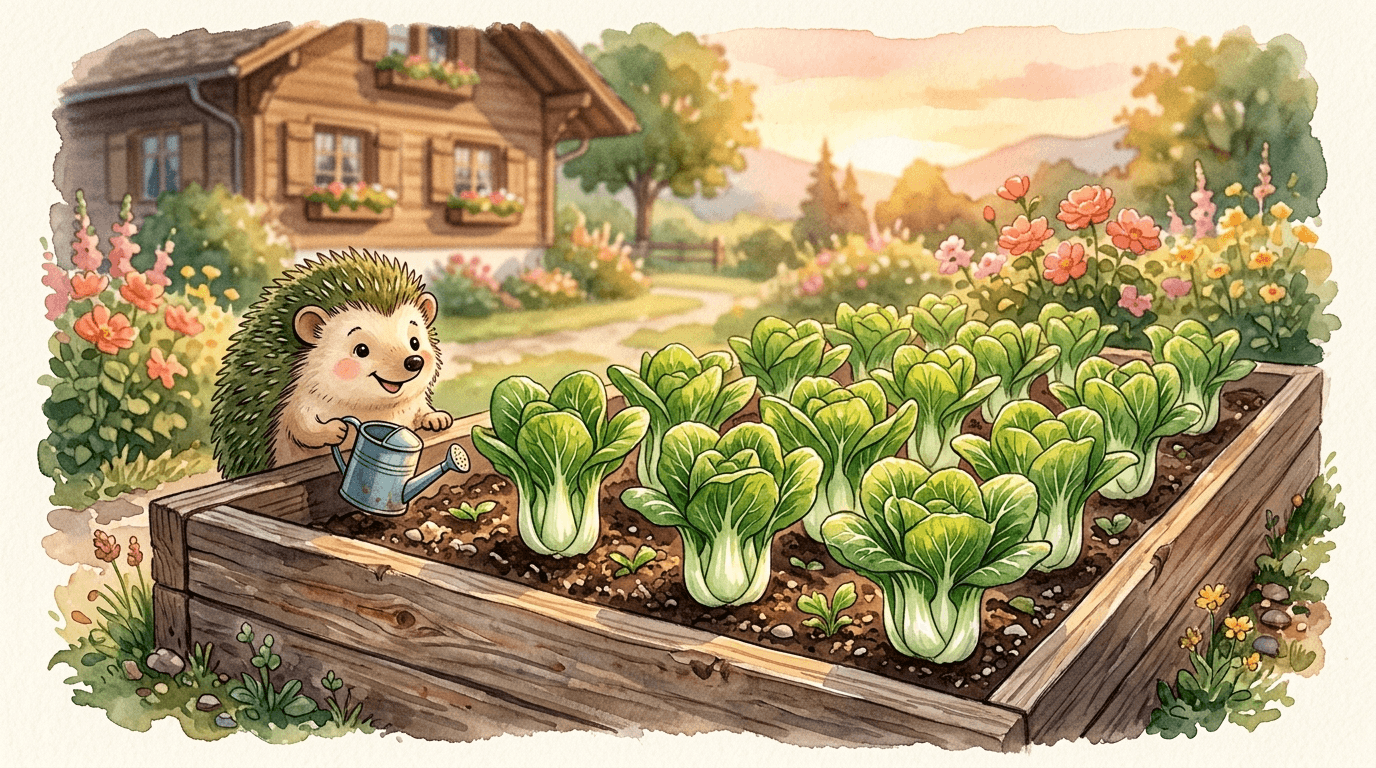
Mrs Schneider tried growing pak choi in her raised bed back in June. The seedlings came in beautifully, stood nice and upright for ten days, then shot straight into flower. No heads, no harvest — just long, thin flower stalks pushing out of the centre.
"The pak choi ran away on me," she messaged.
That wasn't a bad start. That was the wrong time. And now, in early August, the right time has arrived.
Why pak choi barely works in midsummer
Pak choi comes from temperate Asia, where it grows in spring and autumn — never during the summer heat. What it hates: days with more than 14 hours of daylight and temperatures above 25°C. Both at once, and it decides it's time for seeds, not heads. It bolts before it's grown.
In August, that changes. The days get shorter. In Zürich, we still have 14.5 hours of daylight on 1 August — right at the threshold. By the end of August, it's down to 13 hours. Nights cool to 14–16°C. Pak choi relaxes, grows steadily, and forms heads.
The autumn-sowing window: roughly 1–20 August at mid-elevation in central Switzerland (Zürich, Bern, Lucerne). In warmer valleys or lower elevations you have until mid-September.
How to sow
Direct sowing is simplest. One centimetre deep, one seed every 10 cm. When they're up — four to five days in warm soil — thin to 20–25 cm apart. The thinnings are tender and excellent raw in a salad.
Alternatively: start a few pots and transplant after two weeks. That gives you flexibility if other crops are still using the space. Pak choi handles transplanting well as long as the roots aren't too disturbed — moisten the pot, ease the root ball out, plant directly, water immediately.
Row spacing: 20 cm. Pak choi stays more compact than head lettuce.
What it needs
Pak choi wants consistently moist soil. Not waterlogged, not dry — the middle ground that sometimes needs daily adjustment in August. I water in the morning and check in the afternoon whether the top layer has dried out again. From September on, every other day is usually enough.
It doesn't need much fertilising for the autumn crop. Your raised bed's compost filling is sufficient. If the space had a heavy summer, a small handful of compost at sowing time is all it needs.
Slugs are the one serious problem — and a genuine one. Pak choi draws slugs like nothing else. A round of slug pellets on the day of sowing and after the first heavy rain protects well. Without this step I've lost my August sowing in Zürich twice.
When to harvest
At around 35–45 days you'll see whether heads are forming. Compact varieties like 'Joi Choi' or 'Canton White' are faster than larger types. Heads are ready when the base has closed up tightly and the outermost leaves pull away cleanly.
You can harvest leaf by leaf — removing the outer leaves one by one while the plant regrows. Or cut the whole head five centimetres above the soil. Many varieties resprout afterwards, giving you a second, smaller harvest.
Pak choi handles frost down to about minus three degrees Celsius. With a light fleece over it, it keeps going into mid-November — that's four to six extra weeks for your autumn bed, depending on where you are.
What Mrs Schneider is doing now
She's sowing next week. Three rows, direct sow, in the middle of the raised bed where space is opening up between her thinned carrots. She knows the slugs now — the pellets are already waiting.
Her last message: "This time I'm waiting with the pak choi until it's cooler. You only learn that once."
Exactly.
If you have your yearly plan in Erntezeit, you can see at a glance which space opens up and when — pak choi fits nicely into the gaps that garlic, onions, or early beans leave behind.
🦔 Stachi
Products mentioned in this post
- Plantura organic tomato seed set (10 varieties)Open-pollinated, good germination — robust for raised beds.
- Organic tomato seed set, 14 varieties
- Organic heirloom tomato seed set (Demeter, 12 varieties)
- Organic vegetable seed set, 10 varietiesCucumber, tomato, beetroot, broccoli, carrot, chard & more.
Related plants


More articles
October 10, 2026 · 2 min read
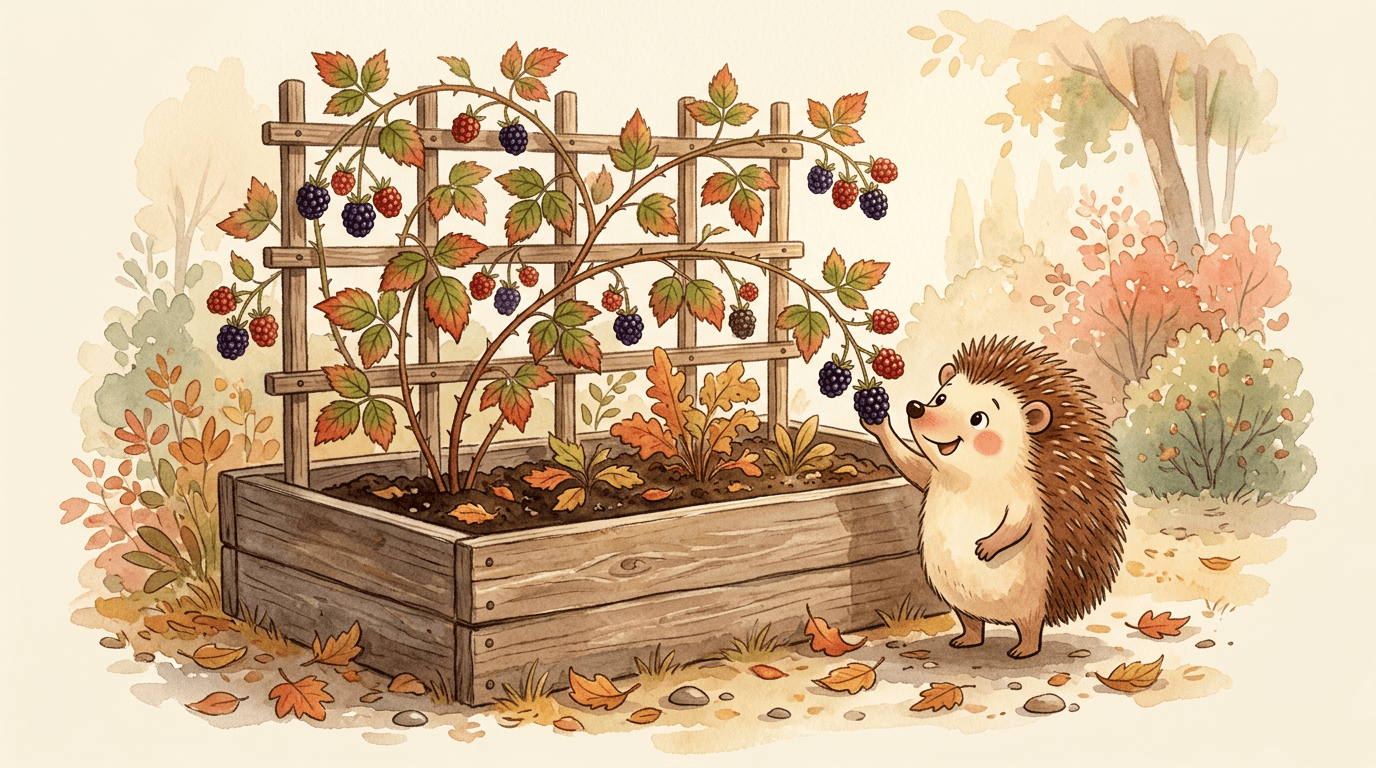
Planting blackberries in a raised bed this autumn: why one plant can already be too many
Frau Schneider ordered three thornless blackberry plants for her kids – all three meant for one single raised bed. I had to tell her that even one of them will outgrow it eventually. Here's what actually matters for an autumn planting.
October 9, 2026 · 2 min read
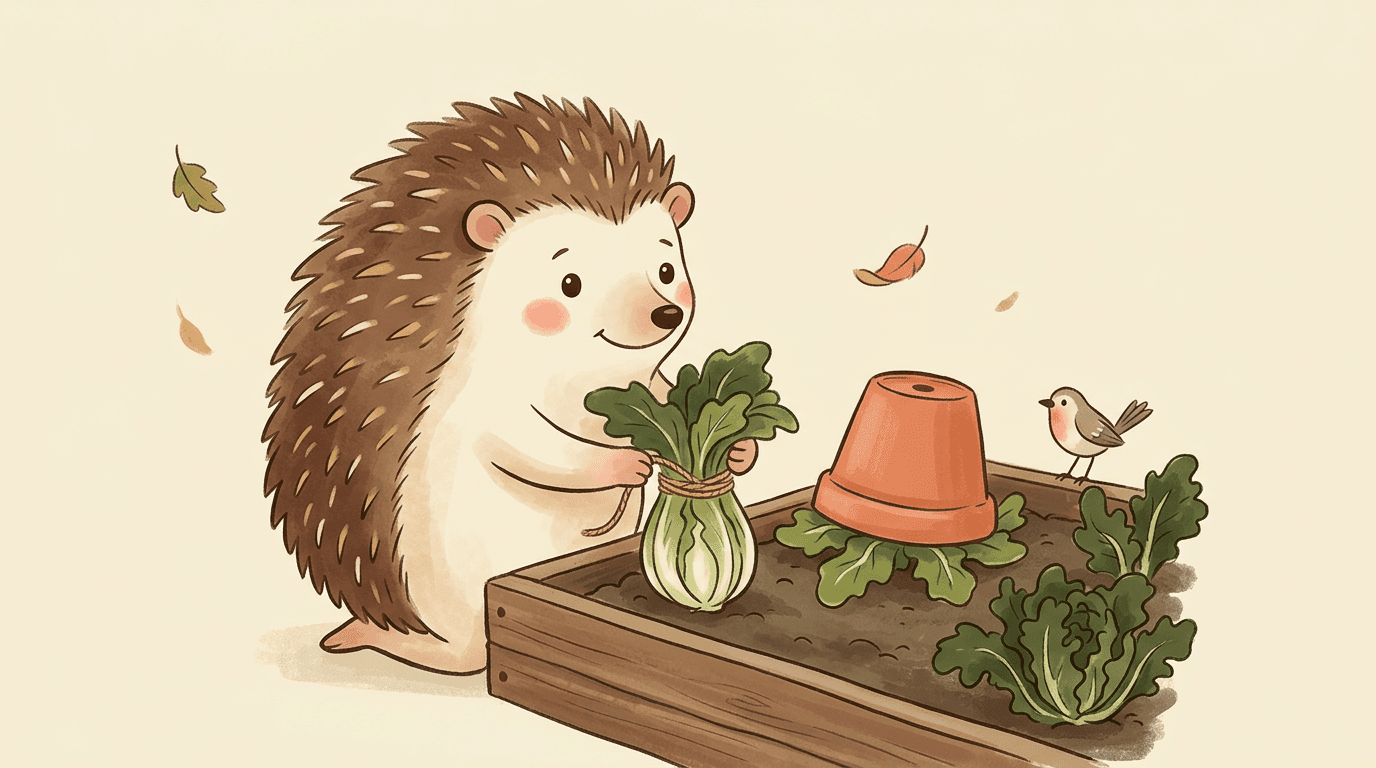
Blanching endive: the trick against bitterness – and where rot is lurking
Frau Schneider tied up her endive on a rainy afternoon because she didn't have time to wait. A week later the heart was brown and slimy instead of pale and tender. Here's what actually matters when you blanch it.
October 8, 2026 · 2 min read
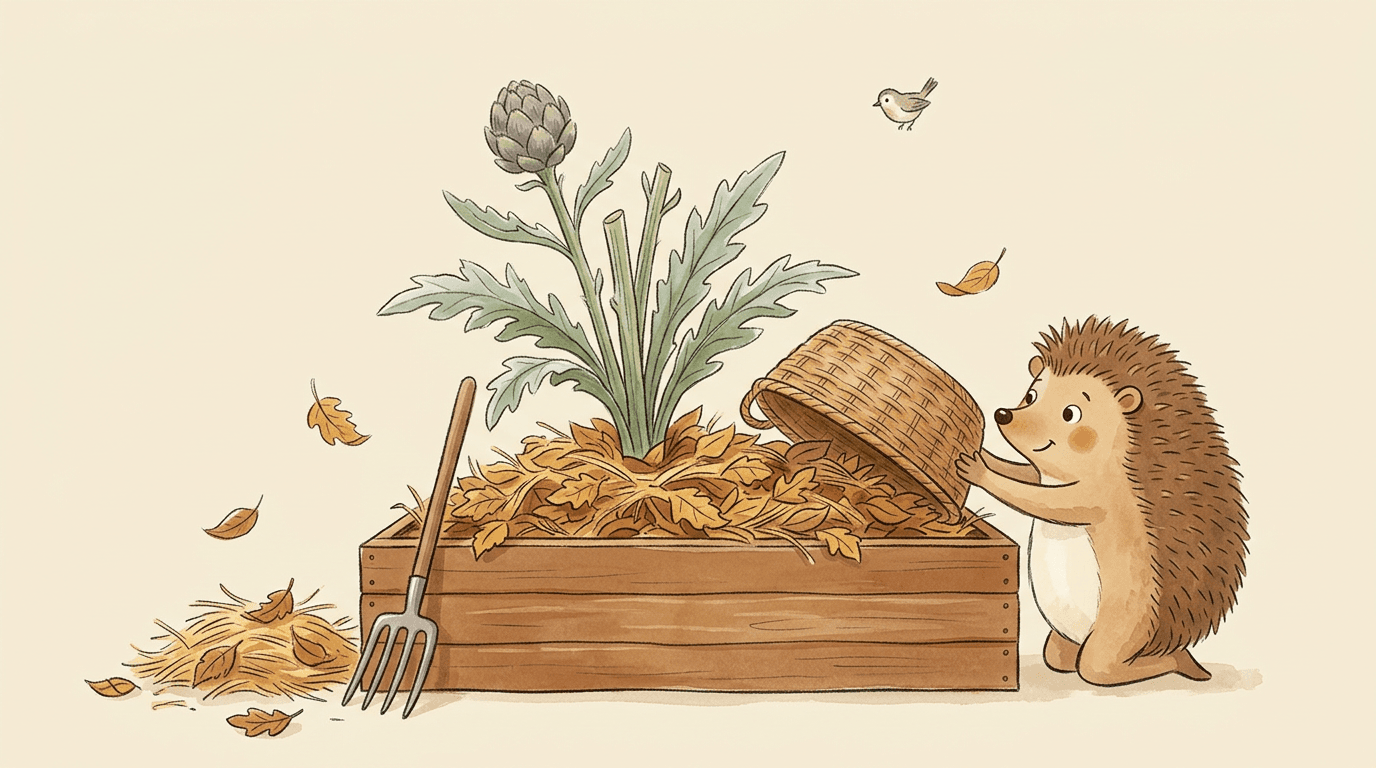
Overwintering artichokes: why they freeze faster in a raised bed than in open ground
Frau Schneider's artichoke grew real buds for the first time this summer – now she's worried the plant won't survive the first hard frost in her raised bed. She's right to worry: raised-bed soil freezes differently from garden soil. Here's how to protect the rootstock properly.