September 18, 2026 · by Stachi · 4 min read
Peppers and chillies in September: harvest now, ripen indoors, or overwinter the plant?
The nights are getting cooler and your raised bed still has green peppers and chillies hanging on. Now's the time to decide what to do — including whether it's worth overwintering the plant.
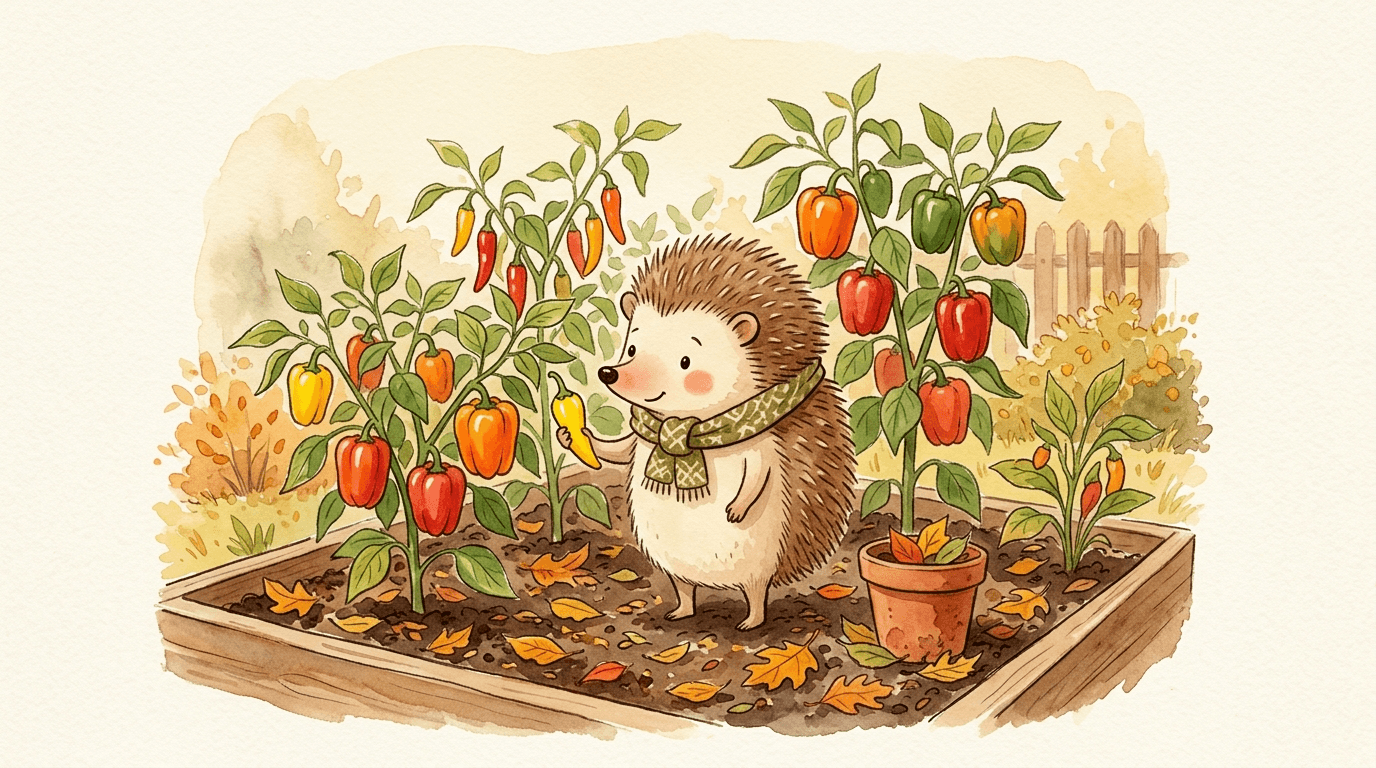
Mid-September in the raised bed is a strange moment.
The tomatoes are nearly done. The courgettes look exhausted. But the peppers and chillies are still loaded — often with a mix of red, orange, and stubbornly green fruits. And that first genuinely cold night may have already happened.
So, what now?
Why peppers and chillies dislike the cold
Peppers and chillies come from Central America. They like warmth. Below ten degrees Celsius they barely grow; below five degrees they begin to suffer — even without frost. A proper frost at zero degrees destroys them immediately.
This sets them apart from tomatoes, squash or kale: peppers react to cool temperatures, not just to frost. One night at four degrees won't wreck a pepper visually — but it stresses the plant, and almost no further sugar will develop in the fruit after that.
That's why now is the time to act.
Decision: when should I harvest?
Rough rules for Central European conditions:
Harvest immediately when:
- Overnight temperatures below eight degrees are forecast
- Fruits are already partly coloured (starting to turn red, showing orange)
- You're in a higher elevation or your bed is exposed to wind
Wait a bit longer when:
- The next seven days have consistent minimums above twelve degrees
- The fruits are still very young and small (they won't develop further outside anyway)
- Your location is sheltered and warm (south-facing, urban microclimate)
Green peppers that are already full-sized will ripen perfectly well indoors. Small green ones that are still tiny are unlikely to make it.
Ripening green peppers indoors
This works really well — and many people don't know it.
Take full-sized green peppers (firm, no soft spots or rot), bring them inside and set them on a countertop at room temperature. No direct sunlight needed. No trick. They keep ripening.
Timeline: Ten days to three weeks, depending on variety and ripeness. Check daily. As soon as the colour turns and the skin gives slightly when you press: eat them.
Chillies ripen even faster indoors — sometimes within just a few days. Red chillies that aren't quite fully coloured can simply be laid out on a cloth in a bright room.
What doesn't work: very immature, hard mini-peppers. Left indoors they go soft and mouldy without ever ripening. Compost those.
Is it worth overwintering the plant?
Yes. Often very much so.
Peppers and chillies are perennial plants — in their native habitat they live for years, sometimes decades. In our climate we treat them as annuals, but there's no reason we have to.
An overwintered pepper plant is productive much earlier in the following summer than a seedling. It has a larger root system, breaks dormancy sooner, and can carry more fruit. With rare chilli varieties in particular, overwintering is doubly worthwhile.
When overwintering makes sense:
- The variety is rare, expensive, or you sourced the seeds specially
- The plant is healthy and has been producing well
- You have space on a windowsill or in a cool, bright room
When it's not worth it:
- The plant has pests (spider mites, aphids) — they'll overwinter with it
- The plant is weak or woody without any healthy new growth
- You have no suitable space — light is non-negotiable
Preparing the plant
Timing: Now, in September, before temperatures drop below eight degrees.
- Carefully dig the plant out of the bed or remove it from its container.
- Cut it back hard — to roughly a third of its height. Drastic, but necessary. The plant needs this to go dormant properly.
- Pot it up in free-draining compost, in a not-too-large pot. Peppers like to be slightly root-bound.
- Check for pests before bringing it indoors. Inspect the undersides of any remaining leaves carefully.
Getting through winter
Peppers overwinter best somewhere cool and bright: ten to fifteen degrees, as little dry heating air as possible, a bright windowsill. A cellar is too dark; a heated living room is too dry.
Watering: Very sparingly. The plant is dormant. A small amount every ten to fourteen days — the compost should stay barely moist, never wet. Waterlogging kills overwintering peppers quickly.
From mid-March, as the days lengthen, the plant will start putting out new growth by itself. Only then increase watering and begin hardening it off for outdoor life — but only once it's genuinely warm outside.
What Frau Schneider is doing
Frau Schneider grew her first chilli plant in the raised bed this year — a 'Lemon Drop', started from a seedling she found at the organic shop in May. Small, bright yellow pods, quite hot.
She asked whether she could just throw the plant away when autumn came.
No.
The Lemon Drop is going onto her kitchen windowsill now. In spring it goes back outside. In two years, when it's a proper established plant, Frau Schneider will have more chilli than she knows what to do with.
🦔 Stachi
Products mentioned in this post
- Gardena Classic planting trowelQuality steel, corrosion-protected — bed all-rounder.
- Gardena flower trowel, large
- Bosch hand fork, stainless steel
- Draper sturdy hand fork, stainless steel
Related plants


More articles

October 10, 2026 · 2 min read
Planting blackberries in a raised bed this autumn: why one plant can already be too many
Frau Schneider ordered three thornless blackberry plants for her kids – all three meant for one single raised bed. I had to tell her that even one of them will outgrow it eventually. Here's what actually matters for an autumn planting.

October 9, 2026 · 2 min read
Blanching endive: the trick against bitterness – and where rot is lurking
Frau Schneider tied up her endive on a rainy afternoon because she didn't have time to wait. A week later the heart was brown and slimy instead of pale and tender. Here's what actually matters when you blanch it.

October 8, 2026 · 2 min read
Overwintering artichokes: why they freeze faster in a raised bed than in open ground
Frau Schneider's artichoke grew real buds for the first time this summer – now she's worried the plant won't survive the first hard frost in her raised bed. She's right to worry: raised-bed soil freezes differently from garden soil. Here's how to protect the rootstock properly.