September 25, 2026 · by Stachi · 5 min read
Parsnips in the raised bed: wait a little longer – frost is what makes them great
If your parsnips are still in the ground in late September, don't pull them yet. Only once the first frost arrives does the starch turn to sugar – and an ordinary root vegetable becomes something genuinely excellent.
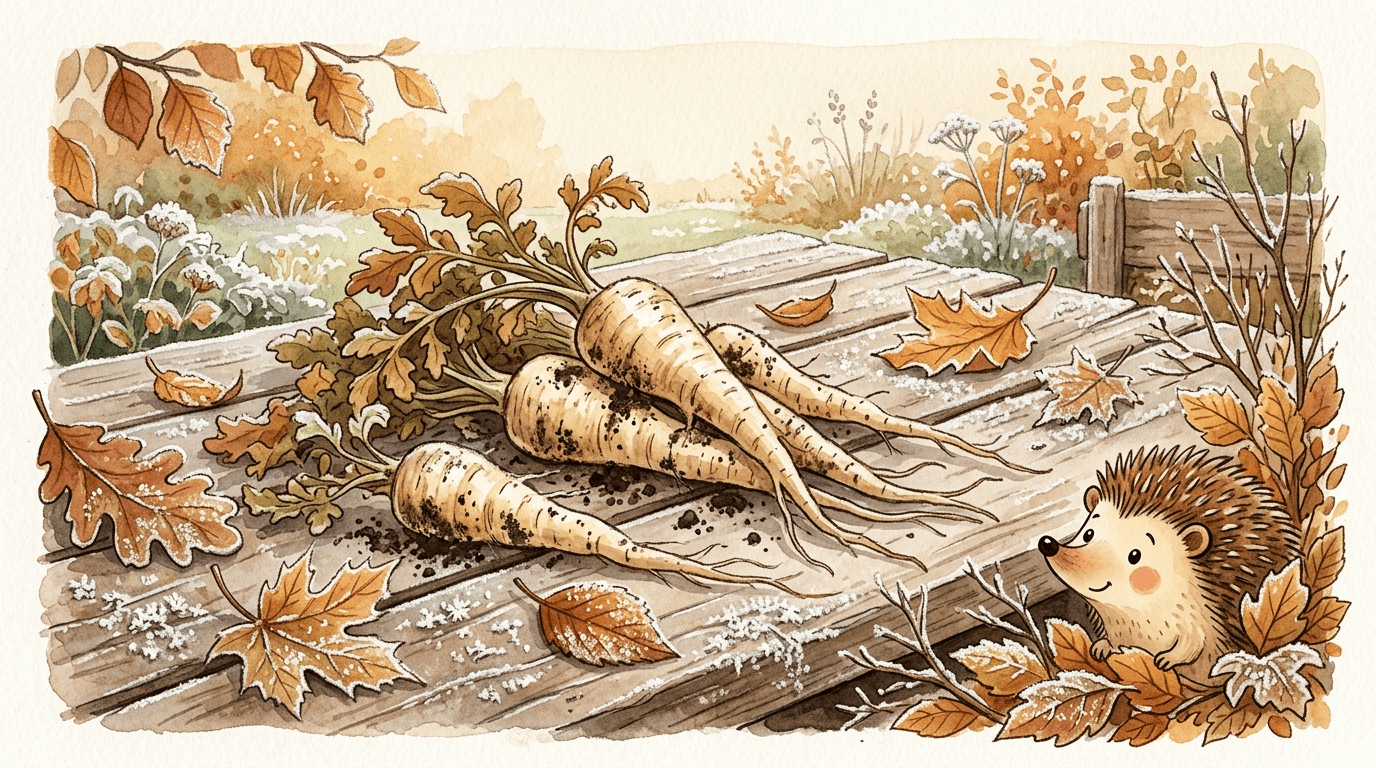
Mrs. Schneider sowed parsnips in her raised bed back in late April. Through the summer there were lovely, bushy plants with their characteristic feathery leaves. Now, at the end of September, she looks at the row and asks: "Stachi, they look ready to me – can I pull them?"
No. Not yet.
Parsnips are probably the most patient vegetable in the whole bed. They grow slowly, demand almost no attention – and then, just when you think they're done, they need one more thing. Cold. Real cold.
Why frost turns a good parsnip into an excellent one
The principle is the same as with carrots or Brussels sprouts: when the temperature drops, root vegetables convert their stored starch into sugar. It's a biological antifreeze mechanism – sugar lowers the freezing point inside the cells, protecting the plant from frost damage.
In parsnips, this effect is particularly pronounced. A parsnip that hasn't experienced frost tastes mild, slightly nutty, but a little flat. A parsnip that's been through two or three frosty nights tastes sweet, nutty, almost caramelised – a completely different vegetable.
Chefs who love parsnips (and there are many of them) insist on ones harvested after the first frost. Not out of sentimentality, but because the difference in flavour is measurable.
The ideal harvest window: October through November, after the first gentle frosts. In the Swiss Mittelland around Berikon, that means from around mid-October onward.
What's happening to your parsnips right now in September
By the end of September the roots are usually fully grown. The plants have done their work – but the sugar isn't there yet. Leave them.
The leaves are starting to yellow and die back. This is completely normal and not a sign of disease or nutrient deficiency. The plant is pulling its energy down into the root. That's exactly what you want.
What you can do now: cut the stems back to about ten centimetres. This makes harvesting easier later and stops slugs from hiding in the autumn foliage that will rot on the bed.
How to tell when your parsnips are ready to harvest
The first clue comes from above: when the leaves have fully died back and only a small stub sticks out of the ground, the parsnip is ready.
But the most reliable test is digging. Loosen the soil from the side – no parsnip will simply pull out by hand, you'll always need a fork. Then look at the root:
- Length: Depending on the variety, ten to thirty centimetres. 'Guernsey' and 'Gladiator' develop large, broad shoulders – up to eight centimetres across at the top.
- Colour: Creamy to light beige. No black patches (waterlogging), no soft spots.
- Smell: Fresh, faintly sweet and spicy. If it smells sour or rotten, moisture has caused damage.
If a parsnip looks and smells good, taste it raw. Sweet, nutty, still slightly starchy – after the first frost, all the others will be ready too.
Harvest technique in the raised bed
Parsnips hate being broken. They're longer than you'd think, and the tip loves to stay in the ground. If you yank the root upward sharply, you'll snap it in two – the tip stays in the soil and begins to rot.
Here's how to do it properly:
- Push a garden fork or sturdy spade ten to fifteen centimetres into the soil to the side of the parsnip.
- Lever the soil upward to loosen it all around the root.
- Grip the parsnip as low as possible, turn it gently, and pull it out steadily.
- If it sticks: loosen the soil again from another side, never yank sharply.
The soil in a raised bed is looser than in an in-ground bed, which helps. Still: ten seconds of extra patience beats a snapped root every time.
Harvest on a dry day. Wet parsnips bring wet soil with them, which moulds in storage.
Leaving parsnips in the ground through winter
The great thing about parsnips: they're hardier than carrots. You can leave them in the ground until December or even January and harvest as needed – this works well in mild to moderate climates.
Condition: When sustained frost below minus eight to ten degrees Celsius is forecast, cover the bed with fleece or a thick layer of straw. This keeps the soil just frost-free enough to protect the roots and still be accessible when you want to harvest.
In a raised bed the soil freezes faster than in an in-ground bed, because the bed is exposed to cold from all sides. In a hard winter: if frost below minus eight degrees persists for more than a few days, harvest everything at once.
A good strategy: harvest half in October/November and leave the other half to overwinter. That way you have fresh parsnips well into winter.
Storing parsnips
Harvested and in the cellar: parsnips are surprisingly good keepers.
Ideal: Cool (one to four degrees), moist, dark. In the cellar in a container of damp sand, a parsnip keeps easily for two to three months. Alternatively, in a box with damp newspaper – works just as well.
Not suitable: Room temperature. In the warmth, parsnips go soft and shrivelled within ten to fourteen days.
Freezing: Peel, cut into pieces, blanch for three minutes, cool down, freeze. Keeps for six months but loses some texture – great for soups, less ideal for roasting.
Fridge: In the vegetable drawer parsnips keep for four to six weeks – technically too warm, but fine as a short-term solution.
A brief note on varieties
For raised beds, compact to medium varieties work best:
- Guernsey: Classic, broad shoulder, intensely sweet. A favourite with chefs.
- Gladiator: F1 hybrid, more uniform shape, less disease-prone.
- Tender and True: Old English variety, very large – only for deep raised beds.
- Dagger: Compact, short root, ideal when the bed isn't very deep.
If you sowed this year and don't know the variety, that's fine. All common varieties benefit from frost, and all can overwinter in the ground.
The autumn plan for parsnips in brief
Late September: cut leaves back, protect the bed with fleece if needed. Leave them.
October: first frosts arrive. Dig a test parsnip and taste it. From now on, harvesting is worthwhile.
November: main harvest, leave the rest to overwinter.
If hard frost sets in: harvest everything, store dry.
Mrs. Schneider is going to wait until October. And I'm fairly sure she'll message me in November to say how nutty-sweet the parsnips were in her soup.
🦔 Stachi
Products mentioned in this post
- Gardena Classic planting trowelQuality steel, corrosion-protected — bed all-rounder.
- Gardena flower trowel, large
- Bosch hand fork, stainless steel
- Draper sturdy hand fork, stainless steel
Related plants


More articles

October 10, 2026 · 2 min read
Planting blackberries in a raised bed this autumn: why one plant can already be too many
Frau Schneider ordered three thornless blackberry plants for her kids – all three meant for one single raised bed. I had to tell her that even one of them will outgrow it eventually. Here's what actually matters for an autumn planting.

October 9, 2026 · 2 min read
Blanching endive: the trick against bitterness – and where rot is lurking
Frau Schneider tied up her endive on a rainy afternoon because she didn't have time to wait. A week later the heart was brown and slimy instead of pale and tender. Here's what actually matters when you blanch it.

October 8, 2026 · 2 min read
Overwintering artichokes: why they freeze faster in a raised bed than in open ground
Frau Schneider's artichoke grew real buds for the first time this summer – now she's worried the plant won't survive the first hard frost in her raised bed. She's right to worry: raised-bed soil freezes differently from garden soil. Here's how to protect the rootstock properly.