October 7, 2026 · by Stachi · 3 min read
Harvesting salsify: why your hands turn black – and what else actually matters
Frau Schneider dug her first salsify harvest without gloves and had dark brown fingertips for three days straight. The sap is harmless but stubborn — here's what actually matters when digging, peeling, and storing it.
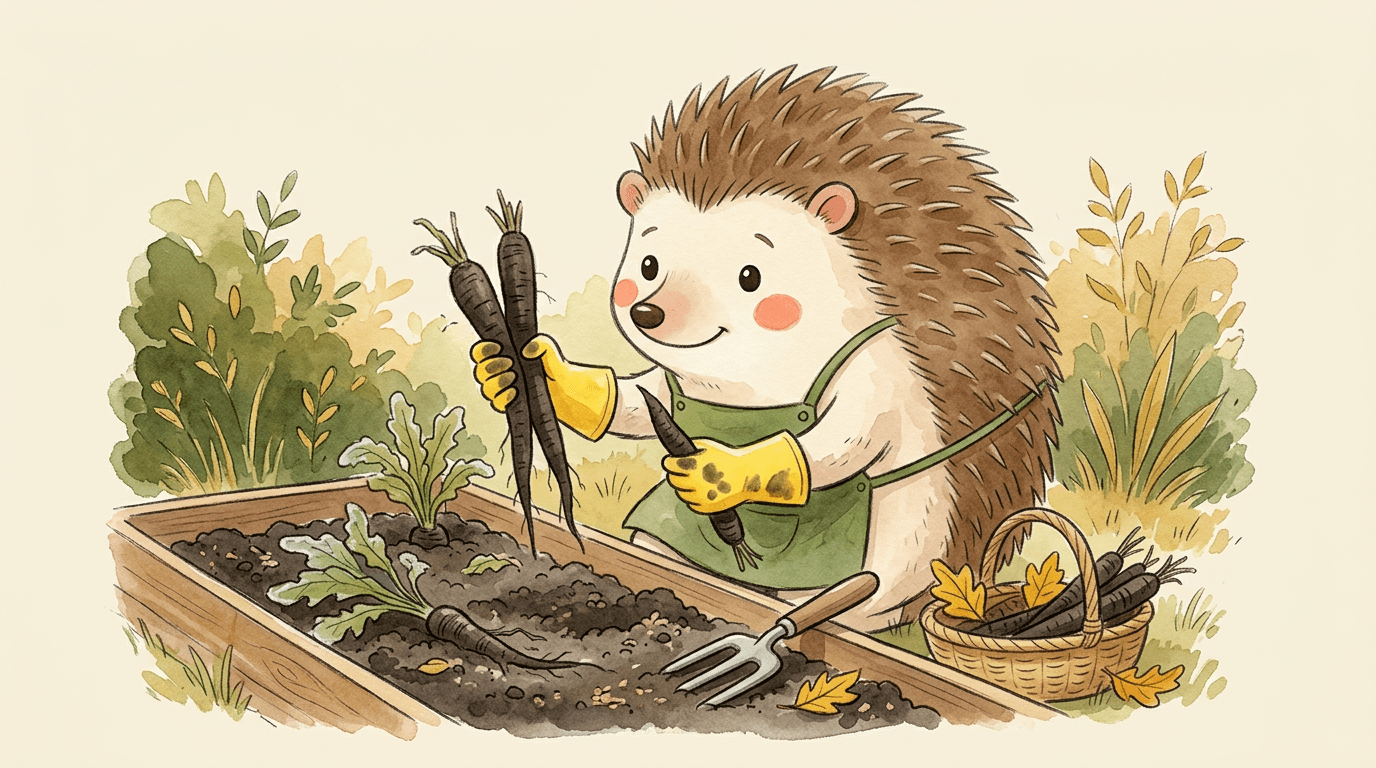
Frau Schneider dug her first black salsify last week, no gloves, because "it's just a root." Three days later her fingertips were still dark brown, almost black, no matter how much soap she scrubbed on. The milky sap that leaks out the moment the root breaks while digging is harmless on skin. It just sinks so deep into the creases of your hands that regular soap can't shift it. She asked me afterwards what to do differently next time.
Why your hands turn black
Salsify gets its German name ("black root") from its dark, almost black skin, but the real culprit is what's underneath. The moment you crack the root, a sticky, whitish sap leaks out that oxidises to brown-black within seconds in the air. That sap is exactly what stains hands, fingernails, and cutting boards. Rubber or latex kitchen gloves aren't a luxury here, they're the only thing that genuinely helps. Old gardening gloves let the sap through the seams anyway.
Why the first frost is the right harvest moment
Salsify is fully frost-hardy and reacts to cold much like parsnip or Jerusalem artichoke: before the first real frost, it tastes bland, sometimes even faintly bitter. Once the nights turn cold, the plant converts its starch reserves into sugar, and that's exactly what gives it the nutty-sweet flavour behind its nickname "winter asparagus." In the Erntezeit plant database, the harvest window opens around week 40 (early October) and stretches well into March — the root sits in the ground all winter without issue, as long as the soil doesn't freeze solid.
How to dig it without snapping it
This is where most people fail. Salsify roots grow 30 to 40 cm long, straight down, and they snap the moment you pull them out like a carrot. What actually works:
- Dig a spade-deep trench parallel to the row, about a hand's width to the side of the roots, not directly above them.
- Loosen the soil from the side, working the fork in at an angle under the roots and tipping the soil sideways rather than levering it straight up.
- Only pull the root once it's free along its whole length. Every centimetre still stuck in firm soil snaps off when you pull.
- On heavy, stony soil, even experienced gardeners snap off half of them. That's normal, not a sign you did something wrong. Just use broken pieces right away, they don't keep long.
Peeling without everything going brown
The flesh under the black skin is white, but it oxidises within minutes in the air, almost like an artichoke heart. Peel the root right before cooking, with rubber gloves on, and drop the peeled pieces straight into water with a splash of vinegar or lemon juice. Skip that step and they turn grey-brown and look unappetising, even though the flavour is completely fine.
Storage: the simplest option is not to harvest it at all
Because salsify survives winter in the ground, the easiest approach is to dig only what you need for the next few days and leave the rest in place, ideally under a layer of mulch against hard frost. Harvested roots keep for several weeks, unwashed and packed in slightly damp sand in a cool cellar, much the same as beetroot or celeriac.
Frau Schneider has since grabbed a pair of rubber gloves from her kitchen drawer and dug two whole rows in one go. This time her hands stayed clean, and she told me the roots tasted sweeter than anything she's ever bought at the shop.
🦔 Stachi
Products mentioned in this post
- Gardena Classic planting trowelQuality steel, corrosion-protected — bed all-rounder.
- Gardena flower trowel, large
- Bosch hand fork, stainless steel
- Draper sturdy hand fork, stainless steel
Related plants


More articles

October 10, 2026 · 2 min read
Planting blackberries in a raised bed this autumn: why one plant can already be too many
Frau Schneider ordered three thornless blackberry plants for her kids – all three meant for one single raised bed. I had to tell her that even one of them will outgrow it eventually. Here's what actually matters for an autumn planting.

October 9, 2026 · 2 min read
Blanching endive: the trick against bitterness – and where rot is lurking
Frau Schneider tied up her endive on a rainy afternoon because she didn't have time to wait. A week later the heart was brown and slimy instead of pale and tender. Here's what actually matters when you blanch it.

October 8, 2026 · 2 min read
Overwintering artichokes: why they freeze faster in a raised bed than in open ground
Frau Schneider's artichoke grew real buds for the first time this summer – now she's worried the plant won't survive the first hard frost in her raised bed. She's right to worry: raised-bed soil freezes differently from garden soil. Here's how to protect the rootstock properly.