September 14, 2026 · by Stachi · 4 min read
Sowing spinach in September: plant now for winter and spring
Sow spinach now in September and you'll harvest in autumn — then again in March, long before the first spring crops are ready. The short mid-September sowing window is one of the most useful in the whole gardening year.
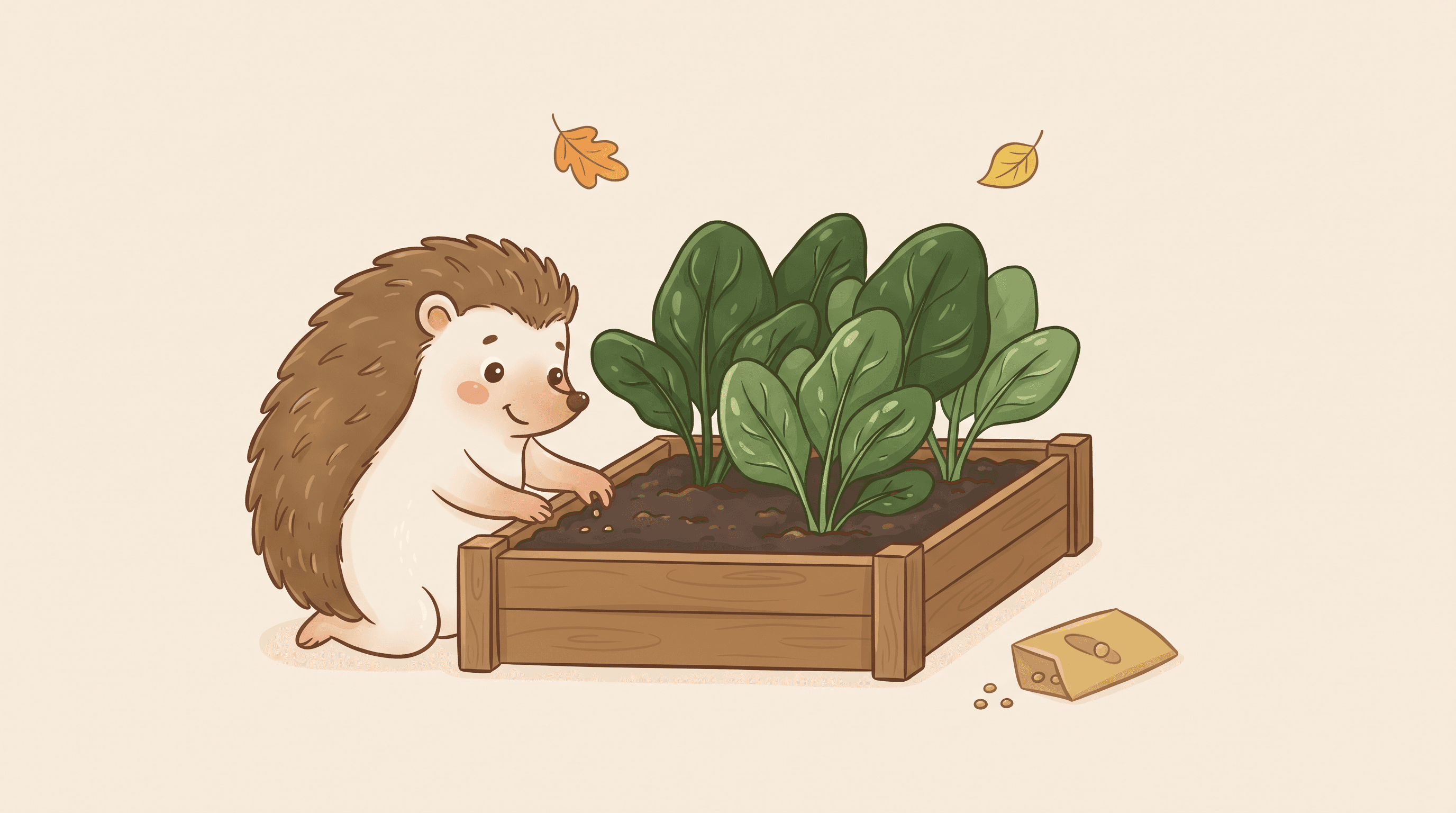
Last week Mrs. Schneider wrote to me: "Stachi, I've still got space in my raised bed and I don't know what to put in it at this point. It's nearly too late now, isn't it?"
Not quite. For spinach, the timing is exactly right.
Why September works — and October often doesn't
Spinach germinates best at soil temperatures between five and fifteen degrees. September hits that window almost perfectly. The soil is still warm from summer, but the nights are cooling down — and spinach plants love that. They grow more slowly than in spring, but more reliably.
Wait until early October and you risk the plants not having enough time to establish before frost. Then they overwinter poorly, or not at all.
The window is mid-September to end of September. Sow today and you're right on time.
Two harvests from one sowing
This is the clever thing about autumn spinach: a single sowing now gives you two harvest phases.
Phase 1 — autumn: Once the plants have grown through to mid-October, you can harvest the outer leaves without pulling the whole plant. The spinach keeps on giving until the first proper frost arrives — usually mid to late November in most central European locations.
Phase 2 — spring: Well-established spinach plants overwinter reliably as long as they've had enough time to root before frost. In March, when the first longer days arrive, they pick up exactly where they left off. You can harvest from late March — sometimes even earlier — long before any spring sowings are ready.
Two harvest phases. One sowing. That's the deal with autumn spinach.
What you need
Not much.
A patch of loose soil in your raised bed. Spinach doesn't like waterlogging — if your soil clumps and sticks when you press it, loosen it a little first. Otherwise spinach is undemanding.
Seed: Choose a variety described specifically as "winter-hardy" or "for autumn sowing". Reliable varieties for central Europe: 'Monstrueux de Viroflay' (robust, large leaves), 'Matador' (tried-and-tested, slow to bolt), 'Bloomsdale' (curly-leaved, holds up well in frost). Ordinary summer spinach varieties bolt faster in autumn — you don't want that.
Sowing depth: One to two centimetres. No deeper.
Spacing: Five to ten centimetres between seeds in the row, twenty centimetres between rows. Spinach needs air circulation between plants — sow too densely and it moulds.
Sowing step by step
- Loosen and level the soil in your raised bed.
- Mark your rows — draw a shallow furrow about one and a half centimetres deep using a stick or your finger.
- Place seeds individually in the furrow, five to ten centimetres apart.
- Cover with soil and press gently.
- Water — carefully, not with a full jet, or you'll wash the seeds out.
Done. No propagation trays, no pots, no cold frame. Straight into the soil, right now.
What happens next — and what to watch for
In one to two weeks you'll see the first seed leaves. Small, yellowy-green, heart-shaped. That's your spinach.
Thinning: When the plants are five to six centimetres tall, thin them out. Keep the strongest plants, remove the weaker ones. Aim for twenty centimetres between the remaining plants. The pulled seedlings are edible, by the way — toss them in a salad.
Watering: September usually brings more rain. Watch the soil: spinach needs consistent moisture but mustn't sit in standing water. In a raised bed, waterlogging is rarely a problem because of the good drainage — but keep an eye on it anyway.
Frost: When the first frosts arrive, the plants will pause. You don't need to do anything — just leave them. No fleece, no cover needed, unless you're in a very exposed spot with temperatures below minus eight degrees. In that case a light fleece can help.
Why spinach is better than its reputation suggests
Many gardeners avoid spinach because of oxalic acid. True — spinach does contain oxalic acid, especially in summer. But autumn spinach contains considerably less than summer spinach: the cooler temperatures slow its production.
And cooking (a quick wilt in the pan or a brief blanch) significantly reduces the oxalic acid content anyway. Those who prefer raw spinach in salads should go for young leaves — they have less oxalic acid than mature ones.
Nutritionally, spinach is genuinely impressive: iron, calcium, folic acid, vitamin C. The iron is less readily absorbed than was once thought (the Popeye myth came from a decimal-point error in an old study), but overall spinach is a serious vegetable.
One last thought
Many gardeners mentally write off the raised bed in September. But for spinach, September isn't an ending — it's a beginning. Sow now and you'll harvest in autumn, then start again in March, long before spring has really made up its mind.
The window is now. Not the day after tomorrow.
🦔 Stachi
Products mentioned in this post
- Plantura organic tomato seed set (10 varieties)Open-pollinated, good germination — robust for raised beds.
- Organic tomato seed set, 14 varieties
- Organic heirloom tomato seed set (Demeter, 12 varieties)
- Organic vegetable seed set, 10 varietiesCucumber, tomato, beetroot, broccoli, carrot, chard & more.
Related plants


More articles

October 10, 2026 · 2 min read
Planting blackberries in a raised bed this autumn: why one plant can already be too many
Frau Schneider ordered three thornless blackberry plants for her kids – all three meant for one single raised bed. I had to tell her that even one of them will outgrow it eventually. Here's what actually matters for an autumn planting.

October 9, 2026 · 2 min read
Blanching endive: the trick against bitterness – and where rot is lurking
Frau Schneider tied up her endive on a rainy afternoon because she didn't have time to wait. A week later the heart was brown and slimy instead of pale and tender. Here's what actually matters when you blanch it.

October 8, 2026 · 2 min read
Overwintering artichokes: why they freeze faster in a raised bed than in open ground
Frau Schneider's artichoke grew real buds for the first time this summer – now she's worried the plant won't survive the first hard frost in her raised bed. She's right to worry: raised-bed soil freezes differently from garden soil. Here's how to protect the rootstock properly.