October 5, 2026 · by Stachi · 2 min read
Storing carrots, beetroot, celeriac: how to keep them dry through winter
Last year Frau Schneider let her whole carrot harvest go mouldy in the cellar because she packed everything damp into a plastic bag. The sand-box method takes 10 minutes and keeps them good until March.
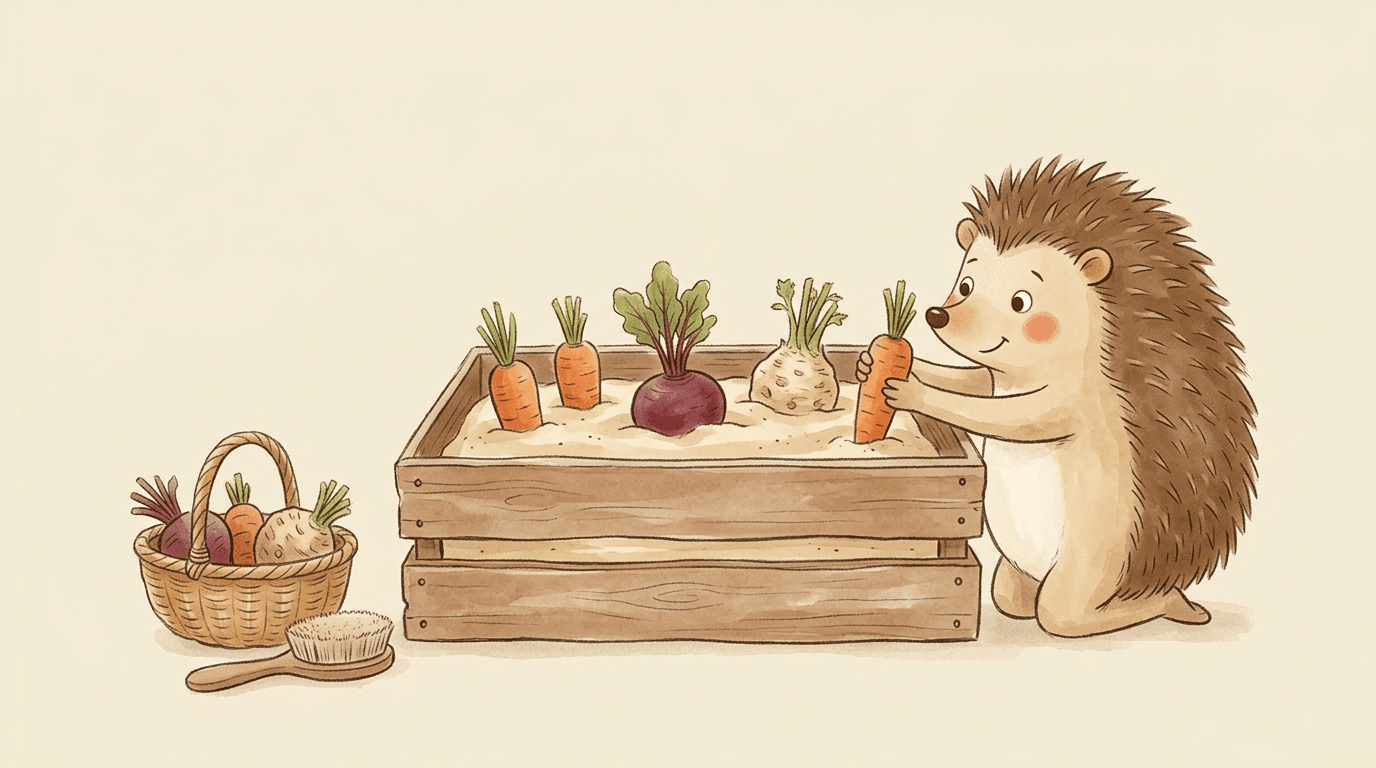
Last October, Frau Schneider packed her entire carrot harvest into a plastic bag, still damp from rinsing them off with the garden hose, and put it in the cellar. Three weeks later: white fuzz on half the carrots, and the rest tasted like the cellar itself. This year she asked me first, before throwing anything else away.
Storing root vegetables needs the opposite of what feels intuitive: dry, not wet. Air in the right place, not sealed shut.
The sand-box method
This is the classic approach, and it works because it solves two things at once: holding moisture without the roots sitting directly in water.
- Brush off the soil, don't wash it. Water on the skin is the first step toward mould. Rubbing off dry soil with your hand or a soft brush is enough.
- Remove all the leaf growth. Cut carrots right above the crown; leave beetroot and celeriac with 1 to 2 cm of stem. Otherwise the leaves keep pulling moisture and nutrients out of the root.
- Layer them in a box of slightly damp sand. A layer of sand, a layer of roots with gaps between the pieces, then sand again. They shouldn't touch each other — one rotting root will take its neighbours down with it.
- Store cool and dark. 2 to 5°C, an unheated cellar or garage is enough. Too warm and the roots start sprouting again, too cold and they freeze.
What's different per vegetable
- Carrots easily keep in the sand box until March, sometimes longer. They even get a bit sweeter over time, as they convert starch into sugar.
- Beetroot is tougher than carrots and tolerates a bit of soil you missed while brushing. Still, let any cut surfaces from harvesting dry out for a day before boxing them.
- Celeriac rots fastest of the three, because its skin is thinner than it looks. Cut away any damaged spots generously at harvest time rather than hoping they'll be fine.
The no-cellar alternative
No sand box, no cool room? Carrots and beetroot can hold up surprisingly well left right in the raised bed, as long as the soil doesn't freeze solid. A thick mulch layer over the row, and you simply dig out whatever you need in December or January. This works far more reliably in milder zones (zone 7 and warmer) than anywhere the ground stays hard-frozen for weeks.
Frau Schneider's carrots are now sitting in an old wine crate filled with hardware-store sand, down by her cellar steps. She wrote to me last week that she nearly forgot it was October while pulling them out — they tasted as fresh as the day she picked them.
🦔 Stachi
Related plants


More articles

October 10, 2026 · 2 min read
Planting blackberries in a raised bed this autumn: why one plant can already be too many
Frau Schneider ordered three thornless blackberry plants for her kids – all three meant for one single raised bed. I had to tell her that even one of them will outgrow it eventually. Here's what actually matters for an autumn planting.

October 9, 2026 · 2 min read
Blanching endive: the trick against bitterness – and where rot is lurking
Frau Schneider tied up her endive on a rainy afternoon because she didn't have time to wait. A week later the heart was brown and slimy instead of pale and tender. Here's what actually matters when you blanch it.

October 8, 2026 · 2 min read
Overwintering artichokes: why they freeze faster in a raised bed than in open ground
Frau Schneider's artichoke grew real buds for the first time this summer – now she's worried the plant won't survive the first hard frost in her raised bed. She's right to worry: raised-bed soil freezes differently from garden soil. Here's how to protect the rootstock properly.