October 20, 2026 · by Stachi · 3 min read
Black radish: why you should let it rest before you bite in
Last year Frau Schneider bit straight into one, unsalted, fresh out of the ground, and spent the next two minutes coughing instead of talking. The problem wasn't the radish. It was the timing.
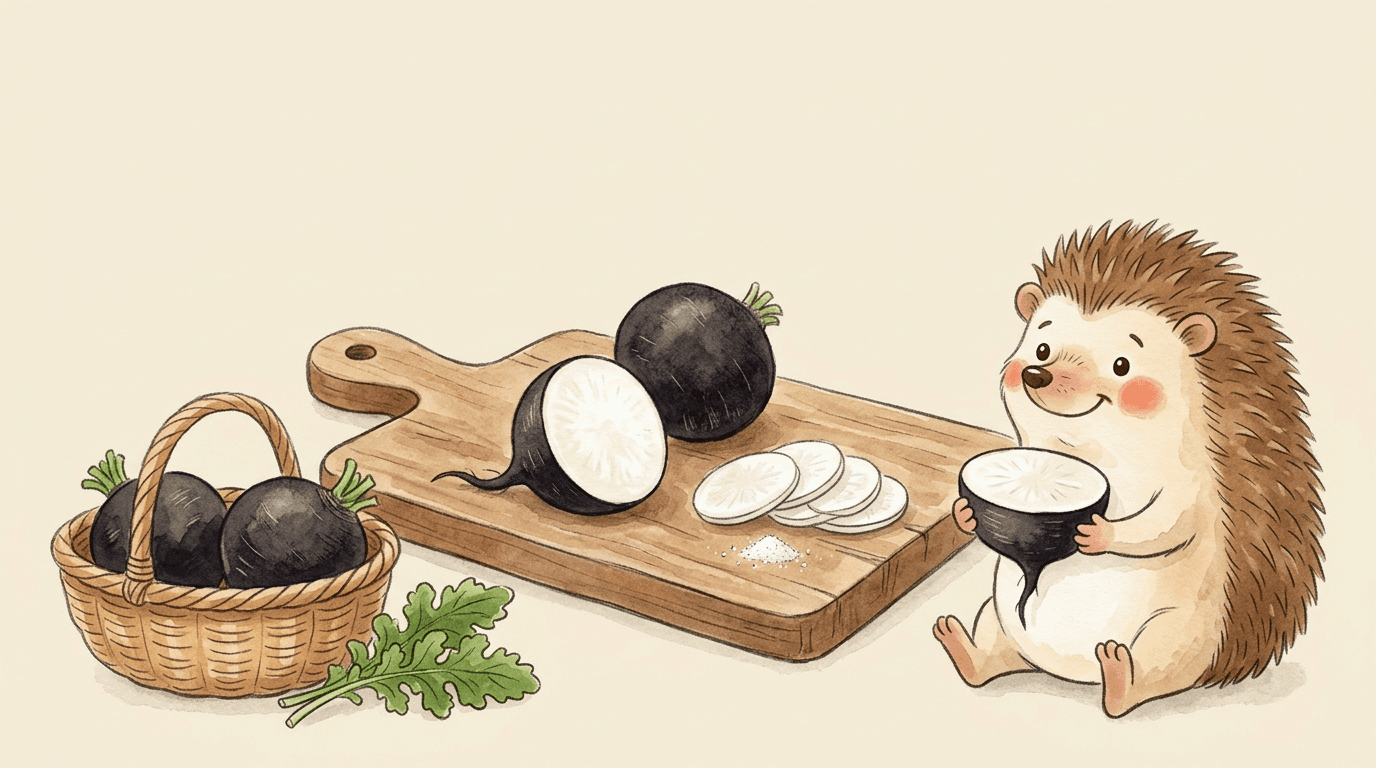
Last October, Frau Schneider proudly showed me her first homegrown black radish — fist-sized, pitch-black, straight out of the soil. Then, without asking me first, she cut off a piece and bit in. The next two minutes were just coughing and a desperate search for water. Black radish fresh from the ground is a different league from its mild pink cousin most people know as the salad radish.
Right now is the window
In Erntezeit's plant database, the harvest window for black radish runs from ISO week 37 to 46. We're right in the middle of it, and that's no coincidence: the root actually handles a light frost well, mellowing rather than sharpening with cooler nights, and right now — just before the first hard frost — it's hit full size without turning woody yet.
How to tell it's ready
Black radish gives itself away at the shoulder: once the diameter above the soil hits about 6 to 8 cm, pull a test root. Waiting longer doesn't automatically mean more harvest. It means a root that turns pithy inside — small hollow pockets instead of firm flesh — while also tasting sharper, because the mustard oils concentrate as the root grows. The rule that works for me: better to pull a week too early than a week too late.
The trick Frau Schneider didn't know
Fresh out of the ground, black radish is at its sharpest, because digging and cutting release mustard oils that haven't had time to dissipate yet. The classic Bavarian way of eating it — known there as "Radi" — turns that same sharpness down on purpose:
- Slice it thin or spiralize it (a mandoline, spiralizer, or just a sharp paring knife will do).
- Salt it generously and toss briefly.
- Let it rest for 30 to 60 minutes. The salt draws out liquid, and with it a good share of the sharpness. Pour off whatever drains out.
- Squeeze gently before serving. What's left is crunchy and noticeably milder than the hit that caught Frau Schneider off guard.
Resting isn't a nice-to-have — it's the difference between a vegetable everyone happily eats and one people try once and never touch again.
What to do with the rest
Whatever you don't use right away doesn't need to go straight to the cellar. Black radish has a much thicker skin than carrots or beetroot and often keeps for several weeks in a cool, dark spot — an unheated garage, say — with no sand box at all. If you want it to last longer, the same sand-box method used for other root vegetables works here too: trim the leaves right above the crown, brush off dry soil instead of washing it, then layer the roots in slightly damp sand. If your raised bed sits in a milder winter zone (zone 7 and up), you can also just leave the last roots in the ground under a layer of mulch and dig them up as needed, as long as the soil doesn't freeze solid.
Frau Schneider pulled her second harvest last week, sliced it thin, salted it, let it rest an hour. This time she handed a piece to her neighbour without any warning — and afterwards just asked why she hadn't done it properly last year.
🦔 Stachi
Products mentioned in this post
- Gardena Classic planting trowelQuality steel, corrosion-protected — bed all-rounder.
- Gardena flower trowel, large
- Bosch hand fork, stainless steel
- Draper sturdy hand fork, stainless steel
Related plants


More articles
October 14, 2026 · 2 min read
Why I only tidy up half my raised bed in October
Mr Zimmermann cut his entire raised bed down to the ground in one afternoon — stalks, seed heads, leaves, all gone. I should have warned him beforehand: not everything, only half. Here's what should stay standing and what really needs to go.
October 10, 2026 · 2 min read
Planting blackberries in a raised bed this autumn: why one plant can already be too many
Frau Schneider ordered three thornless blackberry plants for her kids – all three meant for one single raised bed. I had to tell her that even one of them will outgrow it eventually. Here's what actually matters for an autumn planting.
October 9, 2026 · 2 min read
Blanching endive: the trick against bitterness – and where rot is lurking
Frau Schneider tied up her endive on a rainy afternoon because she didn't have time to wait. A week later the heart was brown and slimy instead of pale and tender. Here's what actually matters when you blanch it.