September 28, 2026 · by Stachi · 3 min read
Celeriac: get it out of the ground before the first hard frost hits
With parsnips and carrots, the rule is: wait for frost. With celeriac, it's the opposite. Leave it in the ground too long and you risk soft, rotten spots on the bulb – here's what to watch for on timing.
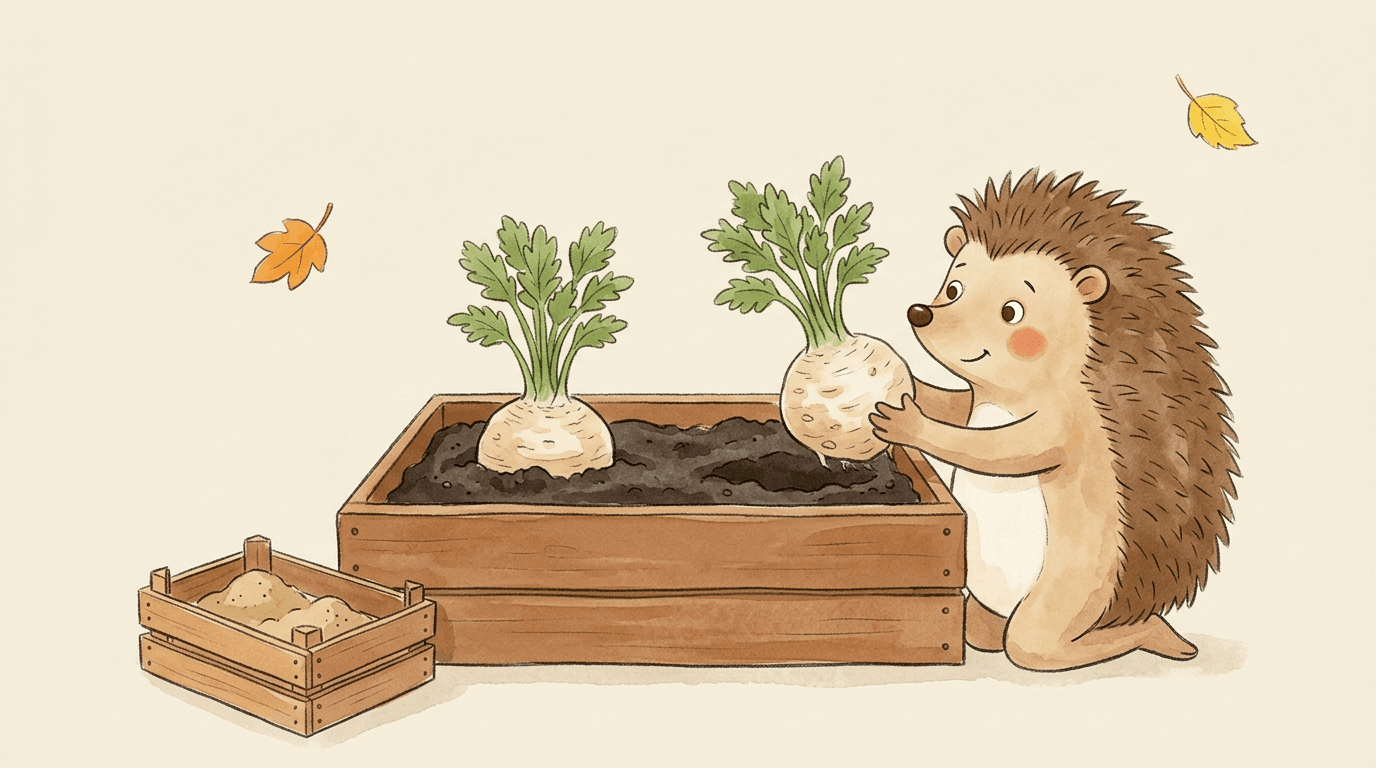
Mrs. Schneider read my parsnip advice last week and applied it straight to her celeriac. "Frost makes everything sweeter, right?" I had to stop her there. Not with this one.
It's the mistake I see most often once autumn arrives: treating every root vegetable the same. Carrots, parsnips and beetroot really do get better after frost. Celeriac doesn't – not in the same way.
Why celeriac plays by different rules
Carrots and parsnips sit entirely underground. The soil insulates them, so when frost hits above, the root barely feels it – until eventually it does, and responds by turning starch into sugar.
Celeriac grows differently. Over the season it pushes itself partway out of the soil, ending up roughly half above ground, with the leaf base and crown fully exposed to the air. That crown is the weak point. A single light frost usually does no harm. But a harder frost – somewhere around minus three or four degrees Celsius over several hours – damages the tissue at the top of the bulb. The spot turns soft and dark, and that's exactly where rot starts once you put it into storage. You often only notice it weeks later in the cellar, when a bulb that looked perfectly firm at harvest has suddenly turned to mush.
The right window
In the Erntezeit plant database, the harvest window for celeriac runs from week 36 to week 48 – early September through late November. That's deliberately generous, because the bulb can simply sit in the bed for weeks without getting worse. The point isn't "as early as possible" – it's "out before the first real frost."
For Berikon and similar mid-elevation locations, that means keeping an eye on the second to third week of October. One or two light frosts around 0°C are no drama at all – the bulb handles those fine. But once the forecast calls for a night at minus three or colder, that's your signal to harvest that same day.
How to harvest it properly
- Loosen the soil all around with a garden fork instead of pulling on the leaves. Pull directly and you'll often tear off part of the fine roots, leaving small open wounds on the bulb that rot in storage.
- Ease the bulb up carefully until you can lift it out by hand.
- Cut the leaves about two centimetres above the bulb with a knife. Don't cut flush against the bulb itself – that small stump of leaf stalk protects the growing point during storage.
- Knock off the loose soil, but don't wash the bulb. Moisture on the skin is exactly the breeding ground for the rot you're trying to avoid.
- Check each bulb briefly for soft or dark patches. Use damaged bulbs first rather than putting them into storage.
Storage
In a crate of slightly damp sand, in a cool cellar at 0 to 4°C, celeriac keeps for two to four months. Loose in a cool room without sand, more like three to four weeks. In the fridge crisper drawer, loosely wrapped in a damp cloth, you're looking at around three weeks – plenty for most raised-bed quantities.
Good and bad neighbours in the bed
Celeriac doesn't like standing next to celery, parsley, carrots, parsnips or fennel – all umbellifers that compete for the same nutrients and make each other more prone to disease. Leek, onions, shallots and garlic are good neighbours instead; they root at a different depth and barely interfere.
Mrs. Schneider pulled her three bulbs yesterday, just before the first cooler night arrived. I told her to get the sand crate ready in the cellar – it outlasts any plastic bag in the vegetable drawer.
🦔 Stachi
Products mentioned in this post
- Gardena Classic planting trowelQuality steel, corrosion-protected — bed all-rounder.
- Gardena flower trowel, large
- Bosch hand fork, stainless steel
- Draper sturdy hand fork, stainless steel
Related plants


More articles

October 10, 2026 · 2 min read
Planting blackberries in a raised bed this autumn: why one plant can already be too many
Frau Schneider ordered three thornless blackberry plants for her kids – all three meant for one single raised bed. I had to tell her that even one of them will outgrow it eventually. Here's what actually matters for an autumn planting.

October 9, 2026 · 2 min read
Blanching endive: the trick against bitterness – and where rot is lurking
Frau Schneider tied up her endive on a rainy afternoon because she didn't have time to wait. A week later the heart was brown and slimy instead of pale and tender. Here's what actually matters when you blanch it.

October 8, 2026 · 2 min read
Overwintering artichokes: why they freeze faster in a raised bed than in open ground
Frau Schneider's artichoke grew real buds for the first time this summer – now she's worried the plant won't survive the first hard frost in her raised bed. She's right to worry: raised-bed soil freezes differently from garden soil. Here's how to protect the rootstock properly.