July 23, 2026 · by Stachi · 3 min read
Basil is flowering: what to do right now — and why the flowers aren't the enemy
When basil starts flowering in July, most people think: it's done for. It's not. Two minutes and one cut — and the plant carries on. What's happening inside the plant and what I've learnt from it.
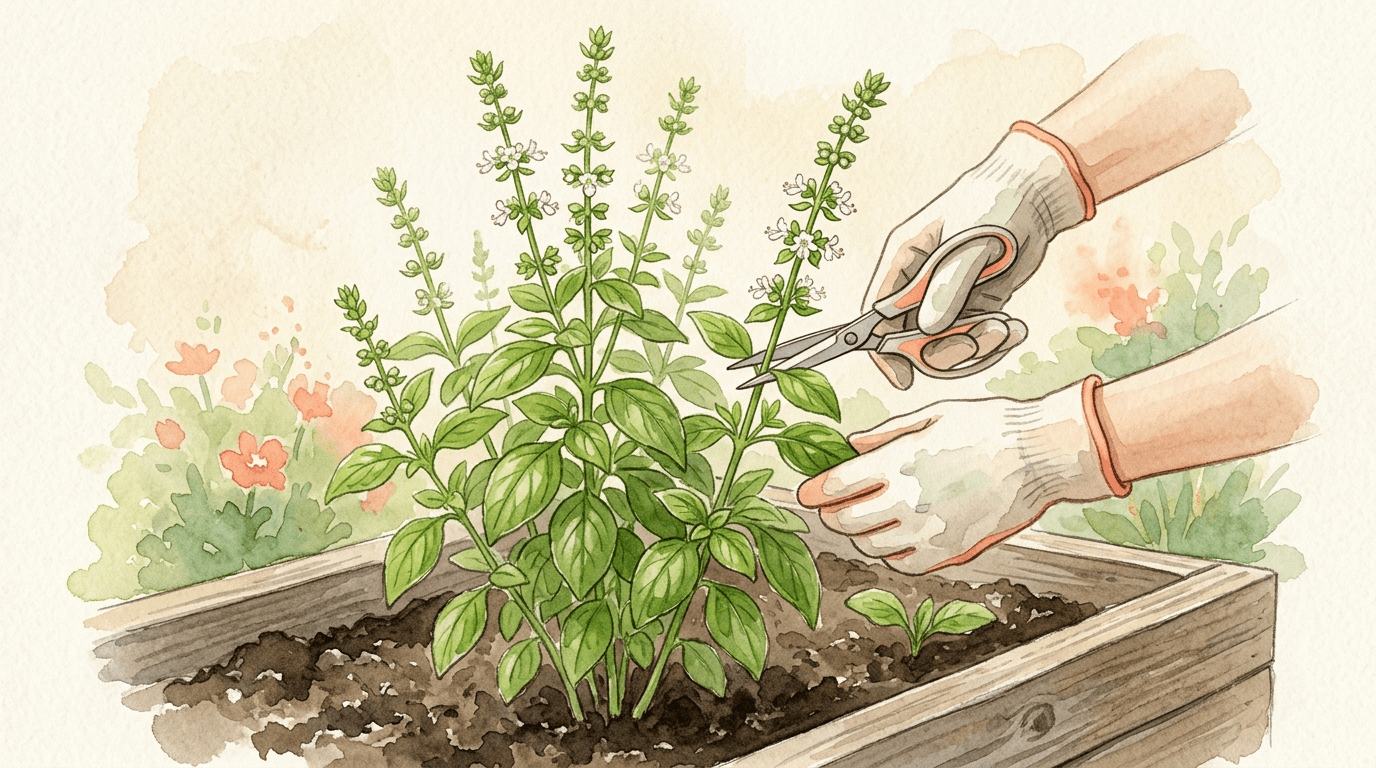
My neighbour Frau Schneider told me in early July that my basil looked "done". Instead of compact green bushes: long spindly stems, tiny leaves at the top, and between those leaves the unmistakable small white flower buds.
I reassured her. This isn't a problem, it's a signal.
What's happening when basil flowers
Basil is an annual with a clear plan: grow, set seed, done. In midsummer, when days are long and nights are still warm, the plant decides the moment has come. It sends energy into forming flowers rather than into new leaves.
The result: new leaves become smaller, the flavour shifts. Leaves below the flowers still taste good — sometimes even more intense. Leaves right at the flowering tips: slightly bitter, sharper. Not inedible, but not what you want for a caprese.
That sounds like a problem. But it's 80 percent fixable, and it takes two minutes.
What to do right now
Cut off the flowering tips. Snip the flowering shoot tips off just above the next pair of leaves. Don't pull or tear — scissors or a clean fingernail, a clean cut.
The plant responds with side shoots. Within a week, new growth appears left and right of the cut. It's bushy, the leaves come back bigger, the flavour returns.
The principle: basil always grows towards seed. If you interrupt that direction, it starts again. Not forever, but another two to four weeks — and that's enough to see you through tomato season.
Here in Zurich-Affoltern I go through all my pots every ten days. A quick pass, anything flowering or about to flower comes off. That keeps the plant in the leaf-growing phase.
When it's already too late
If most of the plant has become woody, the lower leaves are going yellow and the flowers are fully open, the moment to continue has passed. Then I'd harvest the whole plant, use everything that still looks good, and plant a new one.
Basil seedlings are still available in garden centres through July. Some varieties — Greek basil, the fine-leaved types — start flowering noticeably later than large-leaved varieties. That's not coincidence, it's a real biological difference worth knowing.
What to do with the flowers
Don't throw them away. The flowers taste lightly of basil, only brighter and more delicate. Frau Schneider scatters them over salads. Last week I put them on burrata with olive oil and fleur de sel — looked like a restaurant dish, tasted like one too.
You can also let the plant form seed: if you deliberately leave one or two shoots to flower through and let the seed pods dry, you'll have your own basil seeds in September. They germinate well and are genetically identical to your plant. I do this every year with at least one shoot.
Why heat speeds it up
Long days plus high temperatures equal a signal for many herbs to move into seed ripening. In basil this mechanism is particularly pronounced. That's why you barely see flowers in June and then by the end of July everything seems to be flowering at once.
What you can do about it: give basil pots a little shade in the early afternoon to reduce heat stress. A garden umbrella, a reed mat, a taller pot casting shadow — this noticeably slows down the flowering reflex. In a raised bed it's trickier, but you can tuck the plant between larger neighbours that cast shade.
What Erntezeit does for basil
Your garden plan shows exactly which week basil enters its main harvest phase at your location, and when the summer heat is likely to trigger flowering. For Zurich-Affoltern that's typically weeks 28 to 30 — mid to late July. In Geneva it happens a week earlier; in St. Gallen sometimes not until early August.
You'll also see how basil works as a companion plant next to tomatoes — the plan covers both at once.
My basil in Zurich is sitting there after its trim. New side shoots are already coming. Frau Schneider has admitted she doesn't actually mind the flowers on her fresh cheese toast. Progress.
🦔 Stachi
Related plants


More articles
October 26, 2026 · 3 min read
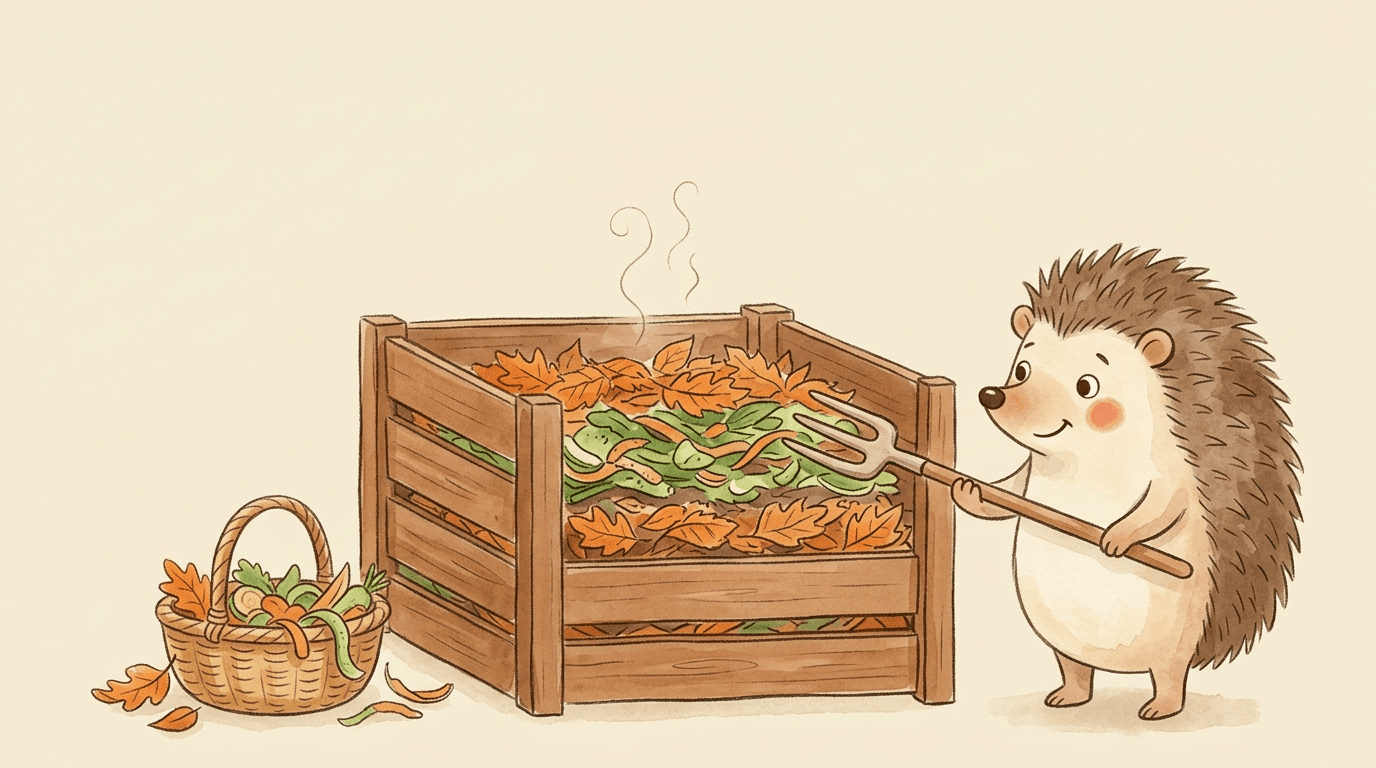
Starting an autumn compost pile: 3 parts leaves, 1 part kitchen scraps
Frau Schneider's compost pile just sat there all winter. No steam on cold mornings, no warmth, no breakdown — just a heap of dry leaves that hadn't changed a bit by March. The problem wasn't patience. It was the mix.
October 20, 2026 · 3 min read
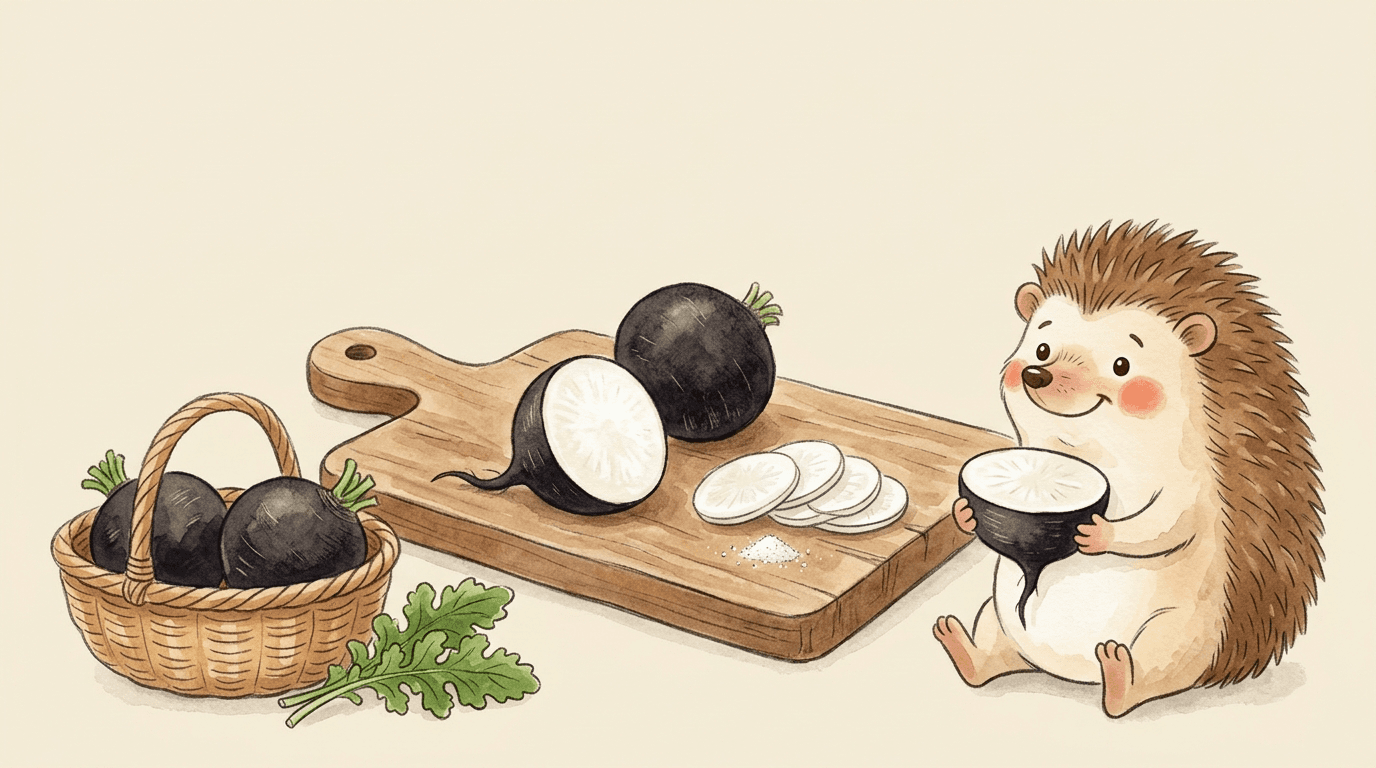
Black radish: why you should let it rest before you bite in
Last year Frau Schneider bit straight into one, unsalted, fresh out of the ground, and spent the next two minutes coughing instead of talking. The problem wasn't the radish. It was the timing.
October 14, 2026 · 2 min read
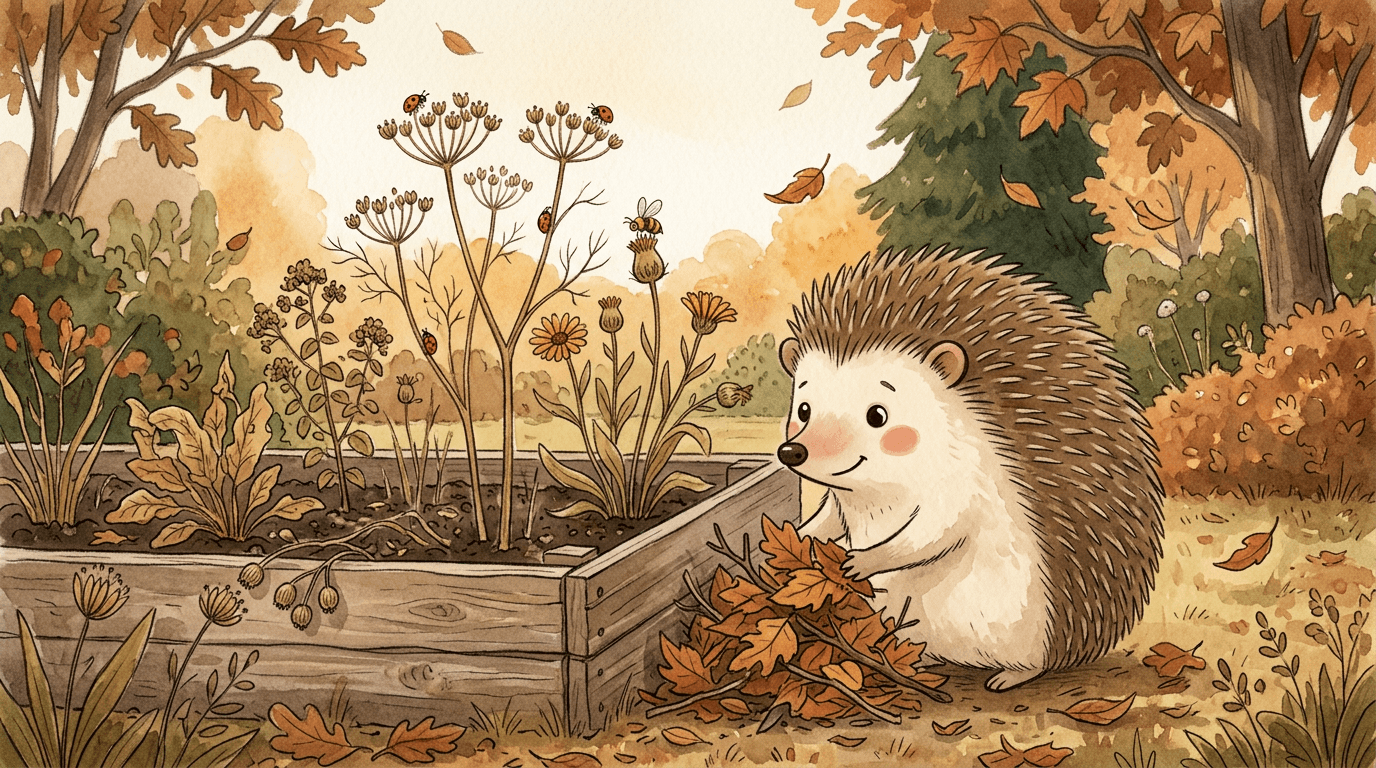
Why I only tidy up half my raised bed in October
Mr Zimmermann cut his entire raised bed down to the ground in one afternoon — stalks, seed heads, leaves, all gone. I should have warned him beforehand: not everything, only half. Here's what should stay standing and what really needs to go.