
August 25, 2026 · by Stachi · 3 min read
Plant broccoli in August: still time for an October harvest
Anyone who puts broccoli seedlings in now will be harvesting in October. The window is tight — but it's enough. Broccoli actually makes more sense in autumn than in spring: fewer pests, firm heads, better flavour in the cold.

Mrs Schneider wrote to me from the raised bed this week. Her tomatoes are still going, the courgettes are starting to flag, and between the rows there's more and more free space. "Should I put something else in, or wait until next year?"
Don't wait. Not now.
Broccoli. With seedlings, not seeds.
Why autumn is better for broccoli than spring
Broccoli is difficult when it gets hot. Planted in May or June, it fights cabbage white butterfly caterpillars, whiteflies and summer heat. The heads often stay small or bolt before you can cut them.
In August everything changes. Temperatures drop from September. The days get shorter. That's exactly what broccoli likes.
A head that forms in cool weather — below 18°C, with nights around ten degrees — stays firm, compact and more aromatic than a summer harvest. Cold slows cell division, giving the head more time to build up nutrients. That's measurable, not just an impression.
And pest pressure in August is significantly lower. Cabbage white caterpillars are still around, but far fewer than in June. Whitefly season is winding down.
The window: seedlings only now
From late August onwards, only ready-made seedlings will do. Anyone sowing seeds now needs five to six weeks until planting out — that would be mid-October, too tight for a good harvest before hard frost.
Buy seedlings. Garden centres often still have broccoli transplants until early September — check quickly now. Alternatively order online; many suppliers ship small packs of six.
What to look for: plants with four to six true leaves, sturdy, dark green, not stretched and spindly. Pale plants happen too — they just need a little longer.
Good autumn varieties: 'Montop', 'Calabrese', 'Parthenon'. All three form firm heads quickly — important when you want to harvest by October.
Planting out: how to do it
Spacing: 40 to 45 centimetres in all directions. Broccoli needs room. In a raised bed one metre wide you fit two to three plants — no more.
Depth: bury the stem right up to just below the lowest leaves. Broccoli forms extra roots along the stem when planted deep. That makes it more stable, especially when the autumn wind arrives.
Water well after planting. Water daily for the first five days until the roots settle in. After that, every two to three days is enough.
Add a handful of ripe compost to the planting hole if the bed hasn't been freshly filled. Broccoli is a heavy feeder — it needs nitrogen for the big leaves and head formation. If you have an organic vegetable fertiliser, a small application right after planting works well.
The one pest to watch
The cabbage white butterfly. More precisely: its caterpillar. It eats all brassicas, and broccoli is a brassica.
In autumn there are fewer butterflies than in midsummer — but some are still laying eggs. You spot the clutches as small yellow clusters on the underside of leaves. The caterpillars are green with a yellow stripe, perfectly camouflaged.
Anyone who doesn't want to check daily: put a fine-mesh crop protection net directly over the plants after planting out. That protects reliably without any intervention needed. No insecticide required.
When and how to harvest
Six to eight weeks after planting — so mid to late October.
You recognise the right moment like this: the head is still compact, the small florets still tightly closed and dark green. When the florets start to open and turn yellowish: harvest immediately.
Better a day too early than a day too late. Open flowers make the broccoli woodier and less aromatic.
Cut: main head with a sharp knife, leaving ten to fifteen centimetres of stem. Afterwards the plant usually forms several small side shoots. This second harvest comes three to four weeks later and sometimes runs into November — especially if you put a light fleece over the top.
What Mrs Schneider is doing now
I told her: three seedlings, where the courgette has finished. Keep good spacing, plant deep, water well.
"And if I can't find any at the garden centre?"
Order online. Or ask the neighbours — anyone growing vegetables sometimes has a few spare.
Her comment: "I thought new planting was done for this year."
With broccoli, not yet. That's for October.
If you have your bed plan in Erntezeit, you can see exactly which area is freed up after summer and which autumn plants fit in — broccoli then appears as a suggested succession crop.
🦔 Stachi
Products mentioned in this post
- Plantura organic tomato seed set (10 varieties)Open-pollinated, good germination — robust for raised beds.
- Organic tomato seed set, 14 varieties
- Organic heirloom tomato seed set (Demeter, 12 varieties)
- Organic vegetable seed set, 10 varietiesCucumber, tomato, beetroot, broccoli, carrot, chard & more.
Related plants



More articles
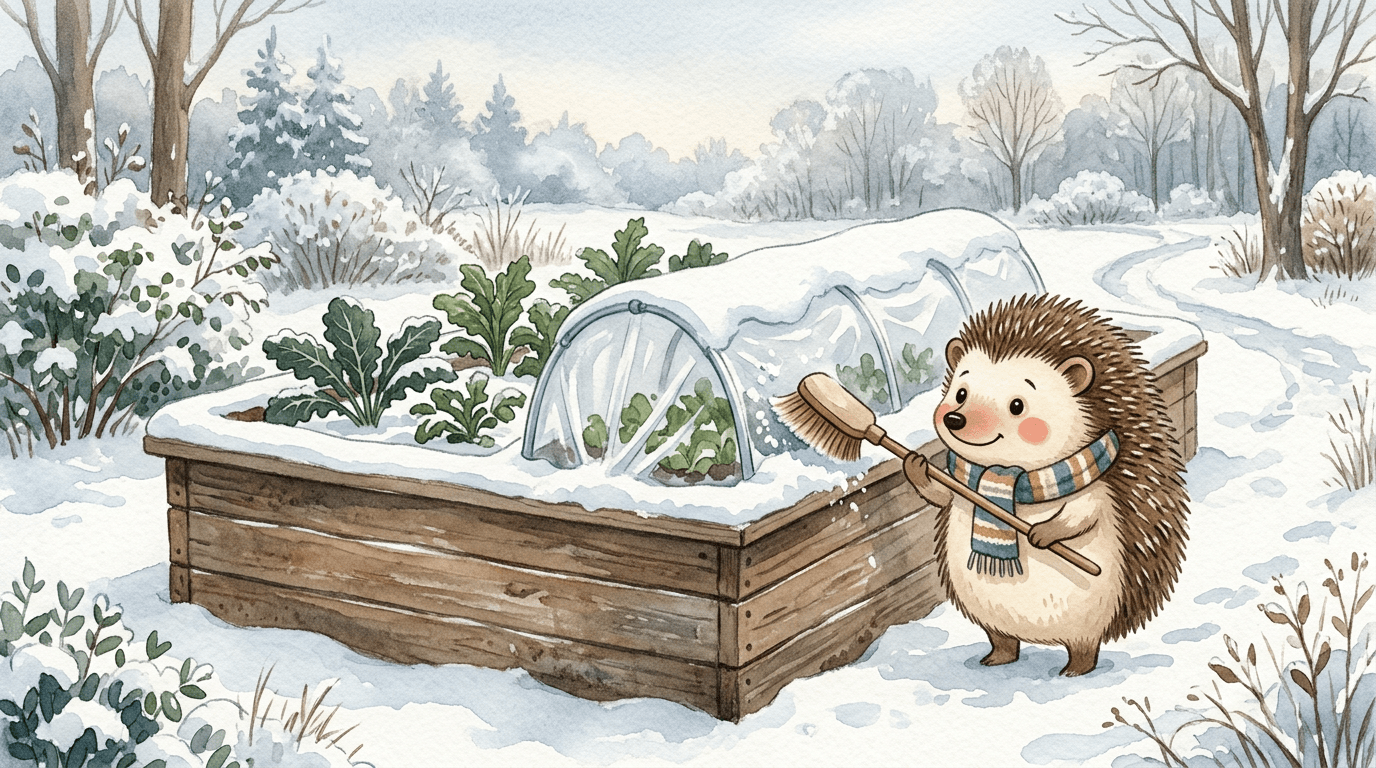
November 15, 2026 · 4 min read
Snow on the raised bed: when it protects, and when it snaps a hoop
Two years ago I walked out one morning and my hoop tunnel over the kale had collapsed flat into the bed, two hoops snapped, the fleece underneath torn. The snow itself wasn't the problem — the exact same amount sat right next door on open soil and did exactly the right thing there. The only difference was whether it landed on earth or on a frame.
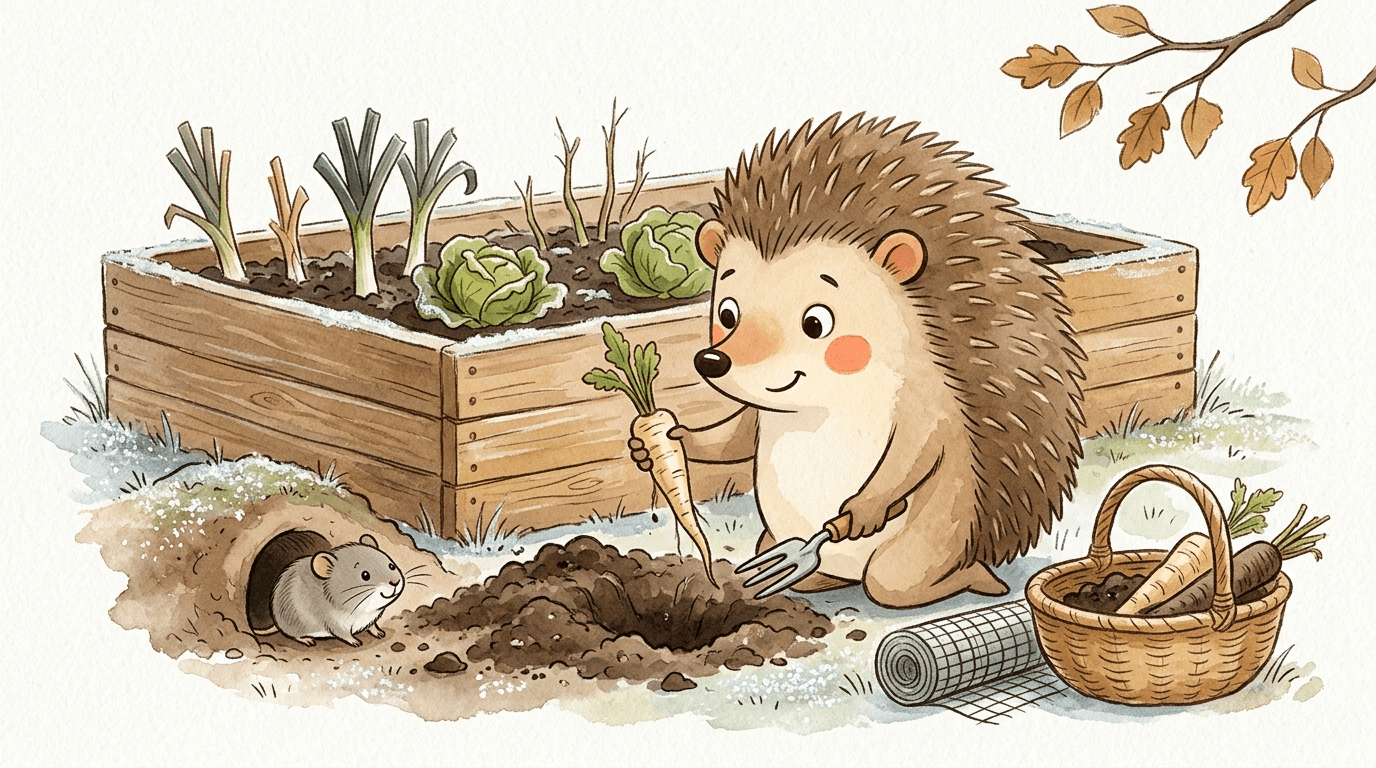
November 10, 2026 · 4 min read
Voles in the winter raised bed: protecting what's still in the ground
Last December I went to dig up my parsnips and found mostly holes. No parsnip, no mound of earth, nothing — just a tunnel system, as if someone had sucked the roots out from underneath. Someone had, almost. Here's what matters right now, while root vegetables are still sitting in the bed.
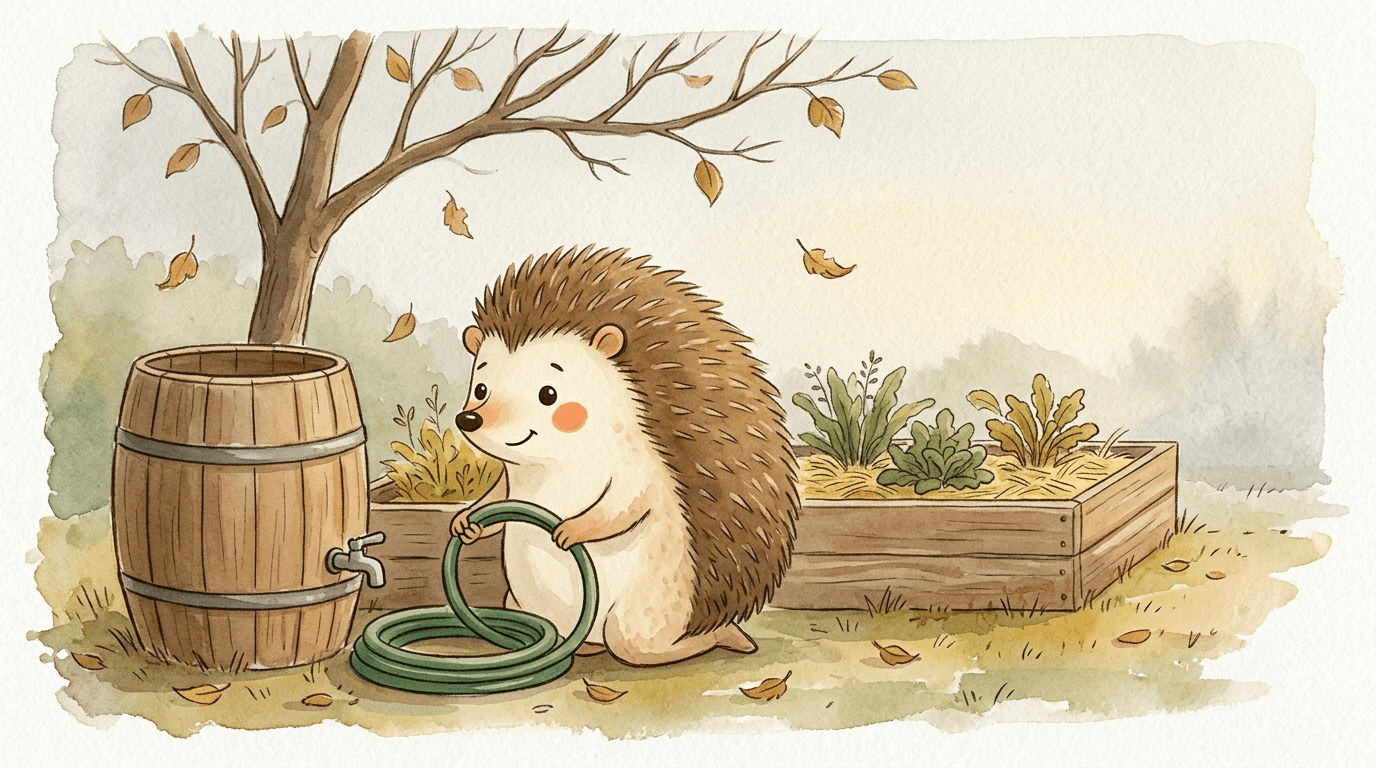
November 5, 2026 · 4 min read
Winterising your rain barrel and hose before the first frost hits
Two winters ago I left my rain barrel standing in December, full to the brim, tap closed. In January there was a crack running the whole side wall, finger-wide, low on the left — exactly where you never look. Here's the 15-minute round I now do every year to stop that: barrel, hose, outdoor tap.