September 8, 2026 · by Stachi · 5 min read
Sow corn salad in September: the hardiest winter salad for your raised bed
Corn salad is the only salad that survives real frost and stays tender. September is the last good sowing window — wait any longer and you'll go without fresh salad until spring.

I underestimated corn salad for a long time. It looks small, grows slowly, and doesn't make much of a show. No large leaves, no fast growth, no striking colours.
But it does something no other salad in the raised bed can: it survives real frost.
Minus five, minus eight, even minus twelve degrees Celsius with established plants under a little snow — corn salad survives it. Not under fleece, not inside a tunnel. Just like that, because it's built exactly for this. And if you sow it now in September, you'll be eating it from November through March. It's the only raised-bed crop that delivers fresh, tender leaves in the middle of winter.
Miss this window, and you'll be buying plastic-cup supermarket salad until April.
Why September is the right moment
Corn salad germinates best at soil temperatures between ten and eighteen degrees Celsius. September hits this window almost perfectly — the soil is still warm enough from summer, but germination runs calmly and evenly, without July's heat problems or October's cold risks.
Sow in August and you get larger plants before frost — but also more problems with mould during late-summer rain spells. Sow in October and you risk poor germination.
September, first to second week: that's the ideal window.
I'm writing this on 8 September. If you haven't sown yet, you can do it this weekend — and you'll probably have five to six weeks of growing time before frost. That's enough.
What corn salad needs — and what it doesn't
Corn salad is undemanding. That's its greatest advantage.
It needs:
- Semi-shaded to sunny spot (autumn sun is plenty)
- Loose, not too nutrient-rich soil — after tomatoes or courgettes, corn salad is ideal
- Consistent moisture during germination
- About seven to fifteen centimetres between plants
It doesn't need:
- Fertiliser (too much nitrogen makes it soft and more susceptible to fungus)
- Much water once established — autumn rain is usually enough
- Warmth — frost is no problem, quite the opposite
Preparing the soil: When you remove a summer crop — tomatoes, courgettes, peppers — it's enough to lightly rake the surface. Corn salad's fine roots work their way through on their own. No deep digging, no fresh compost.
Sowing: denser than you'd think
Corn salad is sown directly into the bed, not started in pots. This is important: it doesn't transplant well and always develops better when it stays in one place from the start.
Method:
- Draw shallow drills about one centimetre deep, with ten to twelve centimetres between rows.
- Sow more densely than other crops — about every two to three centimetres. Germination rate is often below eighty percent; sowing densely compensates for that.
- Cover with soil, press gently.
- Water with a fine rose — not forcefully, or the tiny seeds will wash away.
- Keep lightly moist until germination. In autumn warmth, corn salad germinates in seven to fourteen days.
Thinning: Once seedlings are around ten centimetres tall, thin to about fifteen centimetres apart. The thinned seedlings are edible — tiny salad for a first taste.
No fleece, no tunnel — really
I'm often asked: does corn salad need protection from frost?
The answer is no — at least not down to minus ten degrees or so. Corn salad naturally lies flat against the ground, with small, thick leaves that buffer frost much better than the large, sensitive leaves of other lettuces. It also accumulates sugars as antifreeze — after a frosty night it often tastes sweeter than before.
What really harms it: standing water. If snow lies and then thaws quickly, saturating the raised bed, leaves can begin to rot. A well-drained raised bed is far more important than fleece.
If you expect a long, particularly hard winter (below minus ten), you can lay a single fleece sheet over it. But for most locations in the Swiss Midlands — not necessary at all.
Harvesting: outside in
Corn salad grows as a rosette. Harvesting works two ways:
Leaf by leaf: You cut or snap off the outer leaves and leave the inner ones to keep growing. The plant regrows multiple times — you can harvest it through the entire winter.
Whole rosette: You cut the plant just above the ground as a one-time harvest. Better for cooking salads or when you need larger quantities quickly.
I recommend leaf by leaf: you get fresh salad again and again over months, rather than a lot at once and then nothing.
When to start? Once rosettes are about twelve to fifteen centimetres across. With September sowing, typically from mid-November. In a very mild autumn, it can be earlier.
What you can plant alongside it
Corn salad is an excellent gap filler. It needs little space, grows flat, and barely bothers its neighbours.
Good combinations:
- Spinach: similar timing, similar site requirements. Spinach grows a little faster, corn salad lasts longer.
- Radishes (September sowing): you'll have eaten the radishes by mid-October — after that, corn salad grows into the gaps.
- Pak choi: cold-tolerant autumn classic, a good partner.
Not a good combination: fresh compost or nitrogen fertiliser nearby. Corn salad doesn't like it — it goes soft, becomes more susceptible to fungus, and loses its nutty flavour.
Mrs. Schneider's first corn salad experience
Mrs. Schneider sent me a message last November. On my recommendation she had sown a small patch of corn salad in September — about thirty by twenty centimetres.
"Stachi, I harvested salad today. In November. It's minus three outside and I have fresh salad from the raised bed. It feels surreal."
I replied: welcome to the corn salad experience.
Most raised-bed gardeners think the season ends in October. Those who sow corn salad extend it to March. That's not a small difference — it's a completely different relationship with your own bed. A bed that has something to offer even in winter doesn't feel like abandonment. It feels like continuity.
Now, on 8 September, this is the last good sowing window of the year. Next Friday will probably still be fine. Mid-September will be cutting it close. Late September brings the risk that germination won't get properly started.
So: today or this weekend.
🦔 Stachi
Products mentioned in this post
- Plantura organic tomato seed set (10 varieties)Open-pollinated, good germination — robust for raised beds.
- Organic tomato seed set, 14 varieties
- Organic heirloom tomato seed set (Demeter, 12 varieties)
- Organic vegetable seed set, 10 varietiesCucumber, tomato, beetroot, broccoli, carrot, chard & more.
Related plants


More articles
October 26, 2026 · 3 min read
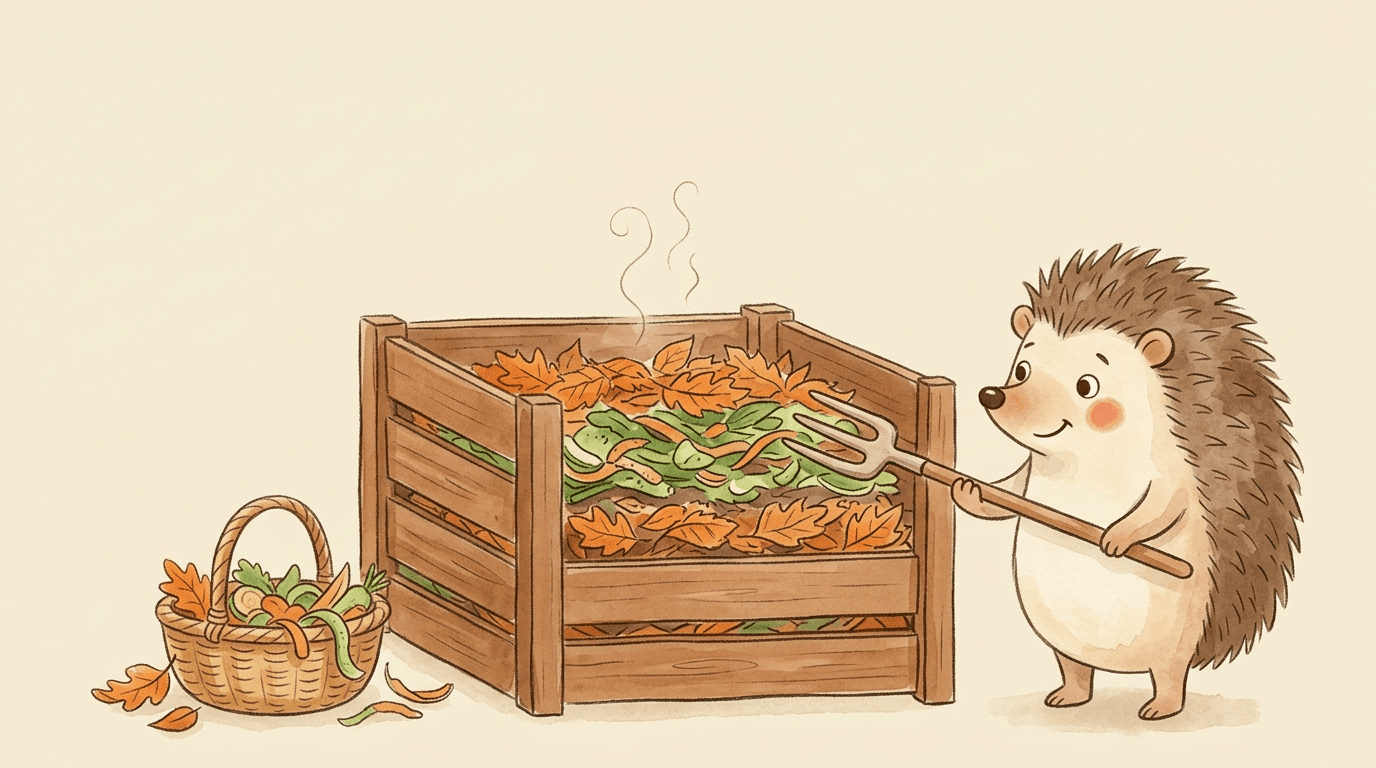
Starting an autumn compost pile: 3 parts leaves, 1 part kitchen scraps
Frau Schneider's compost pile just sat there all winter. No steam on cold mornings, no warmth, no breakdown — just a heap of dry leaves that hadn't changed a bit by March. The problem wasn't patience. It was the mix.
October 20, 2026 · 3 min read
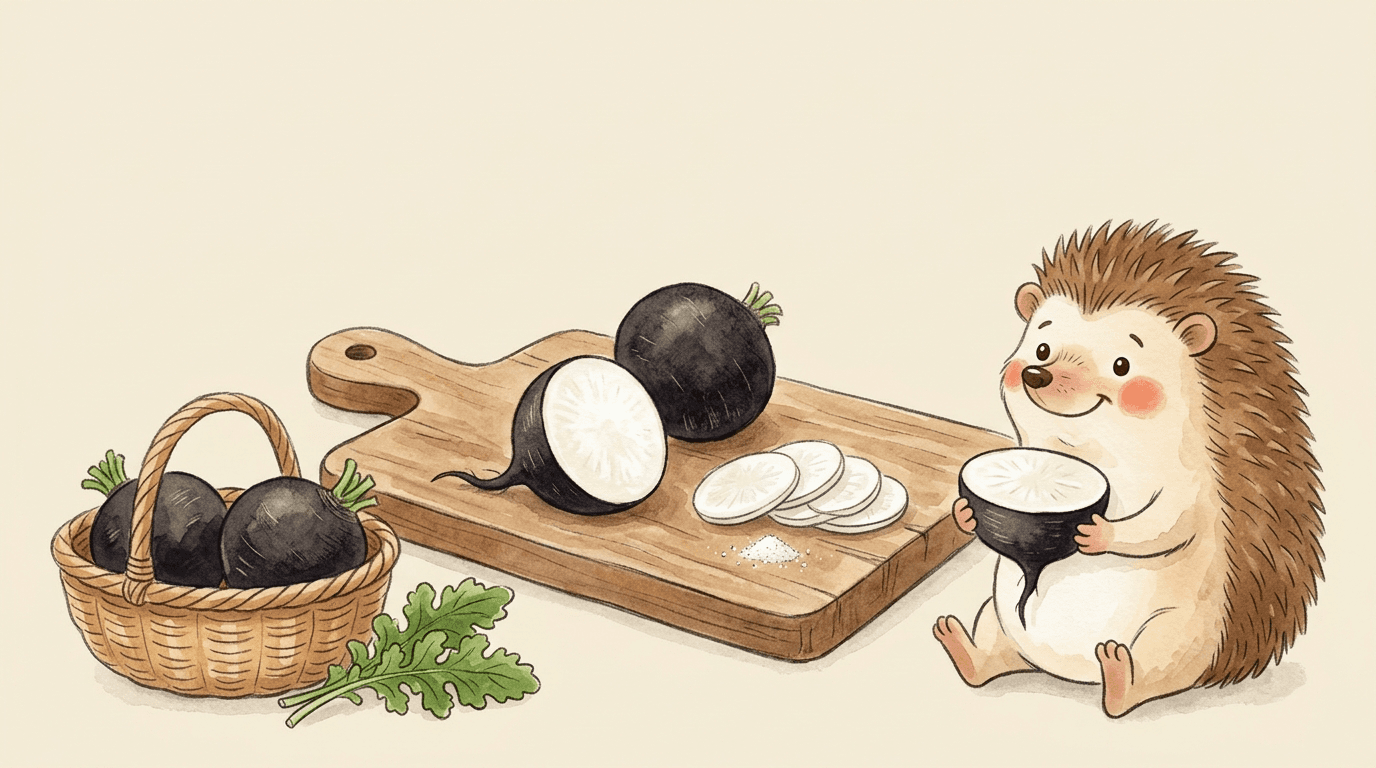
Black radish: why you should let it rest before you bite in
Last year Frau Schneider bit straight into one, unsalted, fresh out of the ground, and spent the next two minutes coughing instead of talking. The problem wasn't the radish. It was the timing.

October 14, 2026 · 2 min read
Why I only tidy up half my raised bed in October
Mr Zimmermann cut his entire raised bed down to the ground in one afternoon — stalks, seed heads, leaves, all gone. I should have warned him beforehand: not everything, only half. Here's what should stay standing and what really needs to go.