April 8, 2026 · by Stachi · 4 min read
Frost-free planting — when exactly is exactly
One day too early and four tomato seedlings are gone. Three weeks too late and your season is half over. Here's the logic I use to pick the date.

There's this moment late April when it's been 18°C for seven days straight, you drive to the garden centre, load up five tomato seedlings, get home, look at the bed, and think: "Honestly, I could put these in now."
Don't listen to that moment. The moment is lying.
But fair enough — if the moment is lying, what is the truth? Which day is "the first proper planting day"? Here's the logic I use. It's undramatic, but it has saved me a lot of stomach clenching over the past few seasons.
"Frost-free" isn't a number, it's a probability
When someone tells you "around here the last frost is 14 May", that's lying in two ways:
- "Around here" is usually way too coarse. A climate zone easily spans 50 km, and 50 km can mean weeks of difference. Lake Geneva and the Jura highlands are both "western Switzerland" — but for frost-date purposes, they're two different worlds.
- "The last frost" isn't a date. It's a probability distribution. In 9 of 10 years, the last frost falls before date X. But in 1 of 10, it comes after. Which year you'll get, nobody knows.
In other words: every "safe planting day" is actually a bet. You're betting that this year isn't the one-in-ten.
The 90th percentile — my rule of thumb
Here's the maths. I take the last 10 years of weather data (Open-Meteo Archive for your exact location) and look at the last day with a min temp ≤ 0°C in each year:
2015: 21 April
2016: 1 May
2017: 24 April
2018: 18 April
2019: 15 May     ← late
2020: 13 April
2021: 20 May     ← the one
2022: 2 May
2023: 23 April
2024: 20 April
If I sort the dates and take the 9th of 10 (the date by which the last frost was through in 9 of 10 years), I land on 15 May.
That's the 90th percentile. "After this date you're safe in 9 of 10 years."
If I took the mean instead, I'd get 1 May. That would be wrong — I'd run into frost roughly every other year.
Comparing the two risks
You're really only choosing between two errors:
Error A: planting too early.
- Probability of losing seedlings: 30-40%
- Damage: 4-8 seedlings at €4-6 each, so €16-48
- Plus: frustration, season-pinch (mid-May garden centres are also empty)
Error B: planting one week too late.
- Probability: 100% (you do it on purpose)
- Damage: ~5-7 days later harvest start
- For a 90-day tomato: 6% shorter season
- Plus: nothing. Tomatoes harvest just as well in late August as early August.
The maths is clear: better one week too late than one day too early.
But don't let your seedlings rot in their pots
While you wait, your seedlings spend their time in the plastic trays from the garden centre. That's not ideal — roots spiral, soil dries quickly, and the plant stresses because it wants out.
What you can do:
- Repot into bigger containers (at least 1L, ideally 2L) and put them in a sheltered spot outside. Outdoors during the day, inside at night if you don't trust the forecast.
- Hardening off: add 1-2 hours of outside time each day for 5-7 days. Garden-centre seedlings are "greenhouse babies" who need to meet the sun and wind gradually.
- Have fleece ready. If a warm late-April day tempts you to plant earlier anyway, you'll need a frost-protection fleece on hand for the night.
Concrete planting dates for DACH and beyond
Erntezeit calculates this for any location, but here are some examples from the system:
- Berikon (5024): 14 May
- Hannover: 12 May
- Munich: 11 May
- Vienna: 8 May
- Lugano: 28 April
- Davos: 9 June
- Bregenz: 15 May
- Stuttgart: 9 May
If you don't live in any of those — Erntezeit does it for your exact point. And for each of your plants individually.
The list you actually need
Frost-sensitive plants (wait until after your 90th-percentile date): tomato, pepper, eggplant, basil, courgette, cucumber, bean, squash, sweetcorn, pak choi.
Robust plants (out from mid-March / April, depending on region): radish, spinach, lettuce, kohlrabi, peas, chard, chives, parsley, strawberry (perennial, but new seedlings in April).
Semi-robust (mid-April with fleece backup): carrot (direct sow), leek, broccoli, chard, beetroot.
What Erntezeit does for you
When you build your plan, you give us your location. We pull 10 years of weather data, calculate the 90th percentile, and mark in your year-plan the earliest planting day for each plant — with a small frost-warning note where it matters.
You don't need to know what the 90th percentile is. You don't even need to know about the ice saints. You type your location, we do the maths, you plant on the right day.
Try the bed planner — we'll let you know when Erntezeit can do the maths for you.
🦔 Stachi
Related plants


More articles
October 26, 2026 · 3 min read
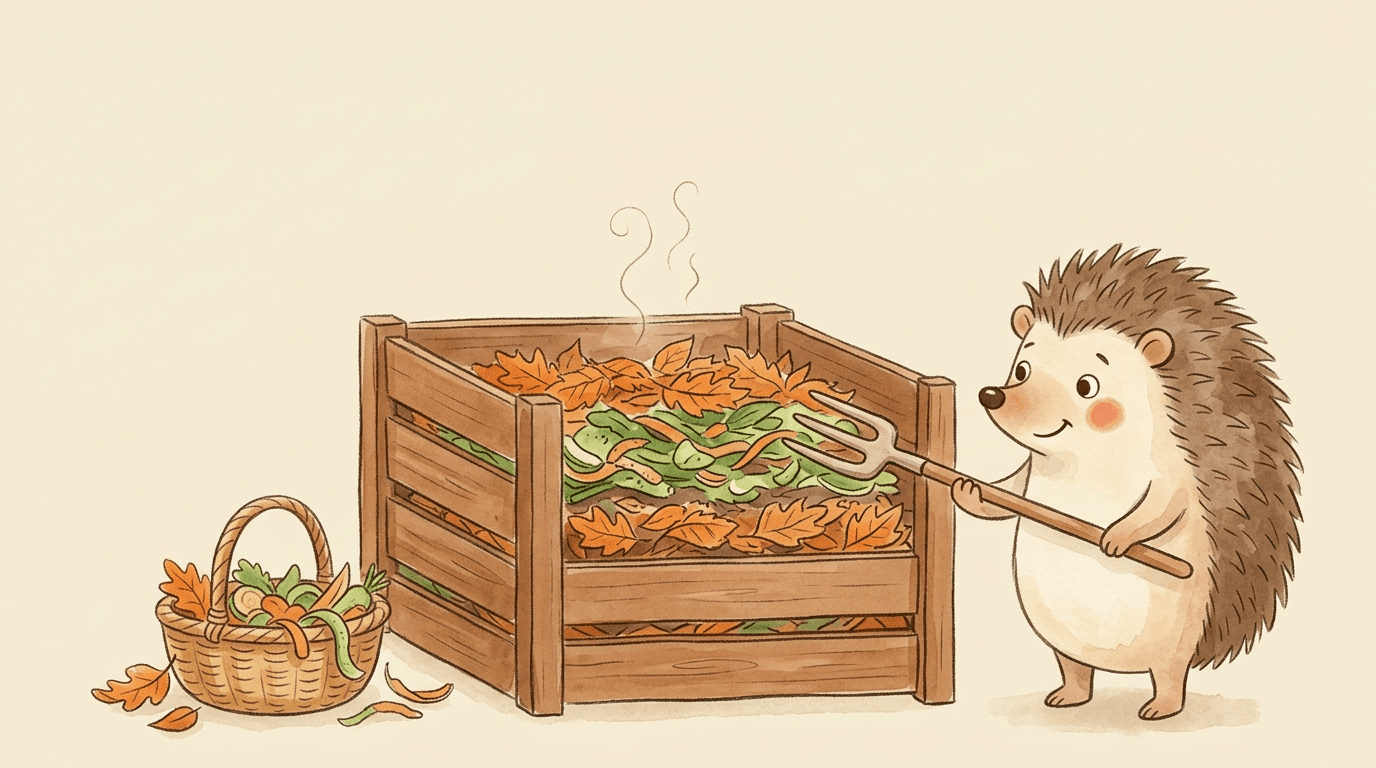
Starting an autumn compost pile: 3 parts leaves, 1 part kitchen scraps
Frau Schneider's compost pile just sat there all winter. No steam on cold mornings, no warmth, no breakdown — just a heap of dry leaves that hadn't changed a bit by March. The problem wasn't patience. It was the mix.
October 20, 2026 · 3 min read
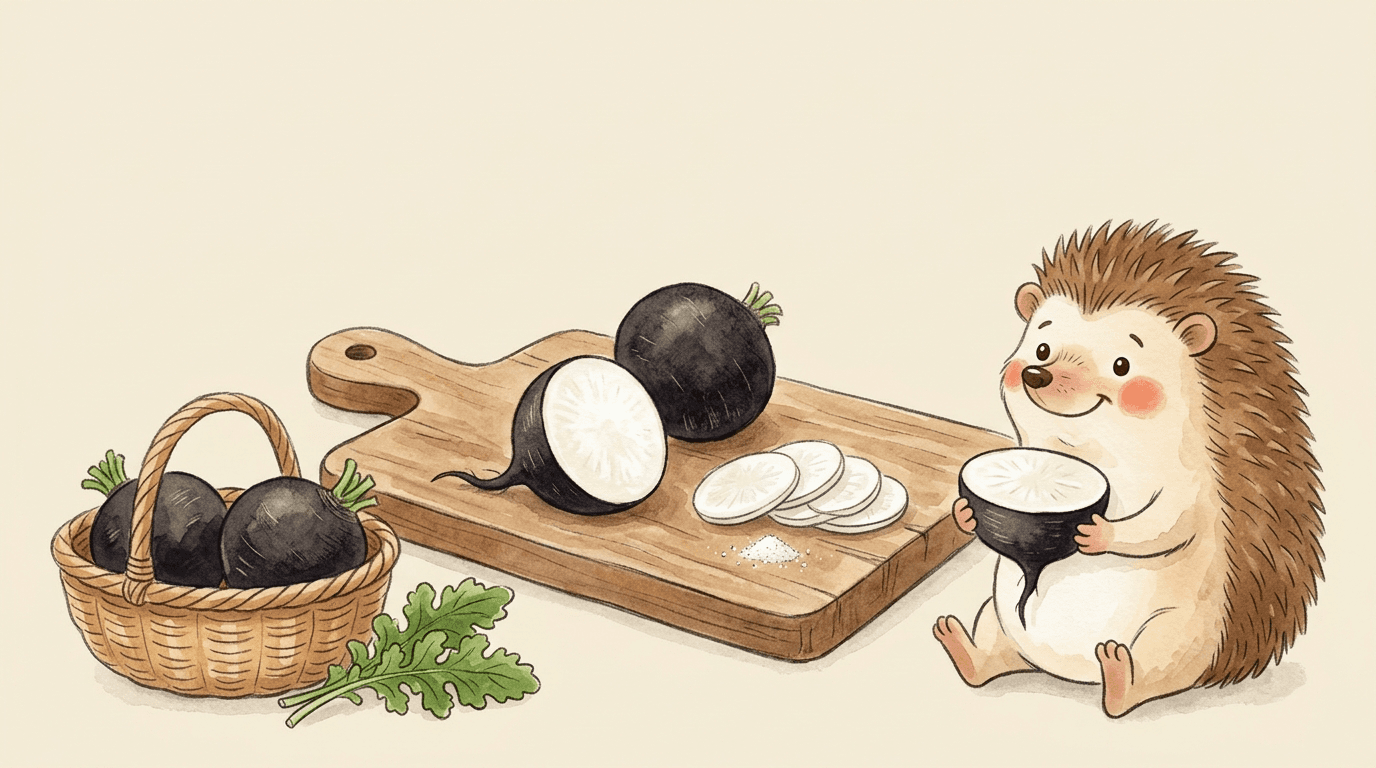
Black radish: why you should let it rest before you bite in
Last year Frau Schneider bit straight into one, unsalted, fresh out of the ground, and spent the next two minutes coughing instead of talking. The problem wasn't the radish. It was the timing.
October 14, 2026 · 2 min read
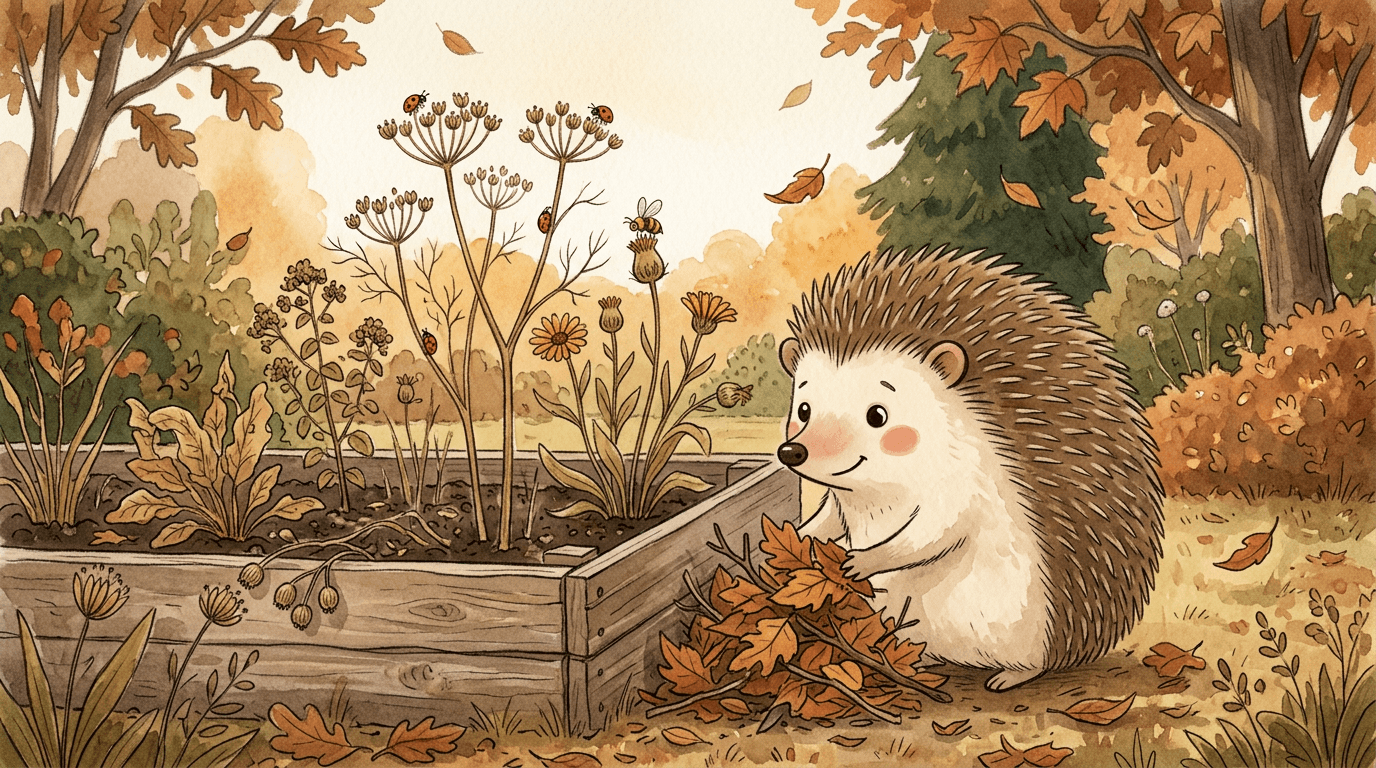
Why I only tidy up half my raised bed in October
Mr Zimmermann cut his entire raised bed down to the ground in one afternoon — stalks, seed heads, leaves, all gone. I should have warned him beforehand: not everything, only half. Here's what should stay standing and what really needs to go.