May 10, 2026 · by Stachi · 3 min read
Winter vegetables in the raised bed — what really lasts
Long after the tomatoes have given up, the raised bed still has things growing. Which varieties make it through winter — and which ones to skip.
When I look at my bed in November, it isn't empty. It's just quieter. The tomatoes are done, the basil bowed out before the first frost. But between the straw remnants, things are still growing. And that's what winter gardening is really about — not heroic harvests under the snow, but knowing which crops are so unfussy they just keep going.
Three categories of winter-survivors
There's no binary "winter-hardy" or "not winter-hardy." There are three tiers, and knowing them saves you a lot of February sadness:
Genuinely winter-hardy — keeps growing under snow, lets you harvest right through. This means lamb's lettuce, spinach, some cut-and-come-again lettuces, chard and leek. Sow in October, harvest through March — as long as your raised bed isn't sitting in a wind tunnel.
Survives winter, comes back in spring — visibly retreats over winter, returns in March. Classics: garlic (cloves planted in October), most perennial herbs, chives (dies back completely, returns reliably), rhubarb.
Frozen by deep winter but gives a late autumn harvest — the late-late crops: pak choi, Asian salads, winter radish varieties, the last carrot batches. You plan for a finish-line harvest, not for overwintering.
Why raised beds beat ground beds in winter
Raised beds have a winter advantage few people exploit: better drainage. Winter veg rarely dies from cold. It dies from standing moisture combined with frost. If your raised bed is properly layered, the top is drier in winter than a ground bed sitting on compacted clay.
That's the difference between "the lamb's lettuce made it" and "everything turned to mush." Raised-bed winter is, on balance, friendlier.
The fleece trick
You don't need a polytunnel, a cold frame, or a heated cover. You need a piece of garden fleece (50-60 g/m²) for a few euros. Drape it on, weight it down with stones or wood, done.
The fleece holds back 3-4 °C. That's not much, but it's enough to turn -8 °C outside into -4 °C under the fleece — and that's the difference between "lamb's lettuce survives" and "lamb's lettuce dies." In March, off comes the fleece, and you keep harvesting.
What to skip
Some plants just aren't winter-bed material, no matter how loudly the gardening blogs scream "hardy!"
- Lettuce seedlings bought in October. If the plant hasn't rooted properly, it won't make it. You need to have sown by early September at the latest.
- Freshly sown parsley. Parsley is biennial, but young plants die in frost. Established ones survive most years.
- Freshly planted leeks. They need a full season's head start. Plant in April, then they're thick enough in November to overwinter.
My minimum winter plan
If you only do one thing: sow lamb's lettuce in wide bands in September, cover with fleece in November, harvest between December and March. It's the easiest winter trick in gardening, and the one with the highest joy-per-effort ratio — homegrown lamb's lettuce in January is a quiet triumph.
If you want a bit more, combine with spinach (sow September), garlic (cloves October), and chives (if already in the bed, leave them).
All four are described in our plant library — with sowing windows, harvest periods, and companion-planting partners. If you use the Erntezeit planner and pick these in step 3, Stachi builds the plan automatically — including the right dates for your climate zone.
What actually happens under the snow?
Common question: do plants keep growing when the snow is on top? Honest answer: barely. At 0-4 °C, plant metabolism is nearly frozen. What you harvest, the plant made in October and November. Winter is more of a preservation mode: the plant holds still, you draw down the reserve.
In February it picks back up. Once the days get longer and a few warm hours sneak in, lamb's lettuce and spinach actually grow again. By April you have a "second season" — before the summer sowings kick in.
Winter gardening isn't heroic. It's just less drama than summer gardening. Fewer pests, less watering, less fussing. Sow in September, cover in November, harvest until March. That's all the raised bed asks of you.
I'm heading out now to nudge a fleece stone back in place. The lamb's lettuce is already showing.
🦔 Stachi
More articles
October 10, 2026 · 2 min read
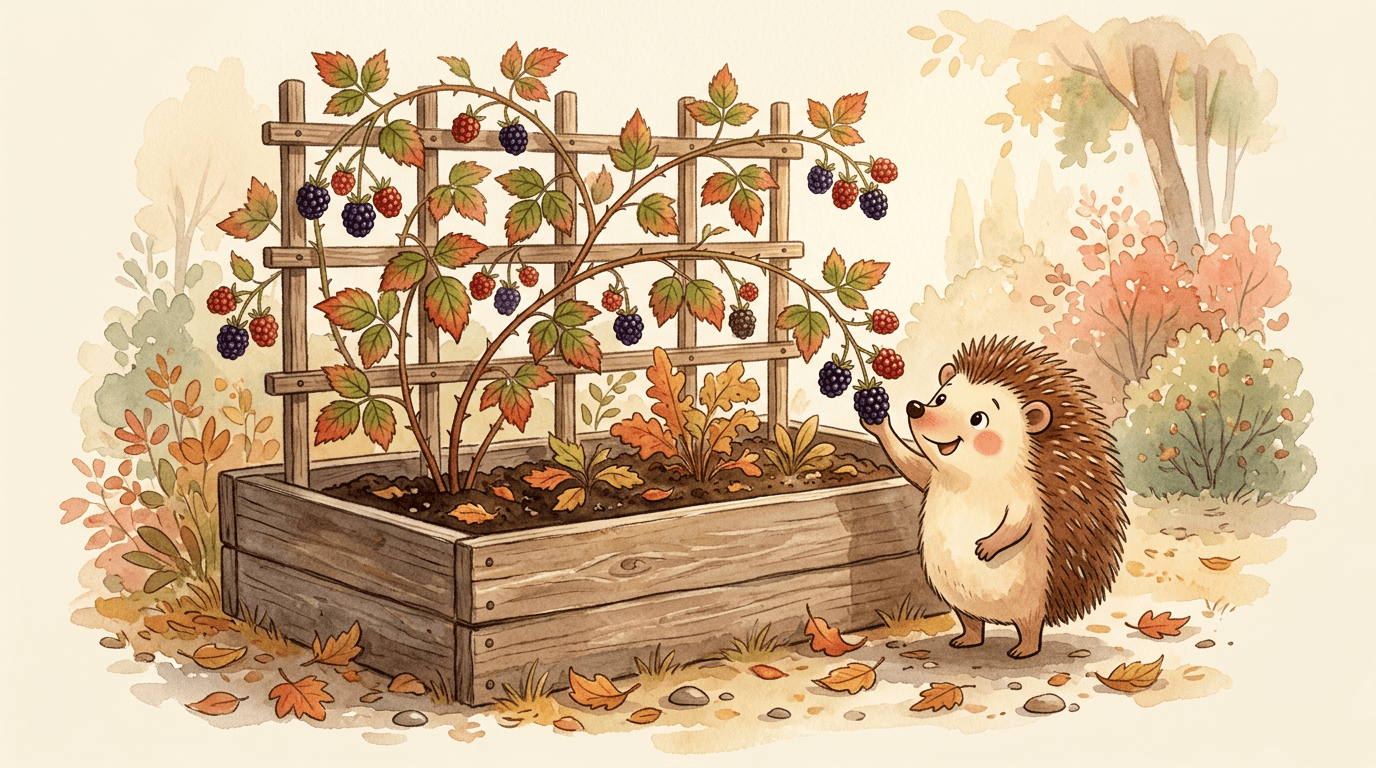
Planting blackberries in a raised bed this autumn: why one plant can already be too many
Frau Schneider ordered three thornless blackberry plants for her kids – all three meant for one single raised bed. I had to tell her that even one of them will outgrow it eventually. Here's what actually matters for an autumn planting.
October 9, 2026 · 2 min read
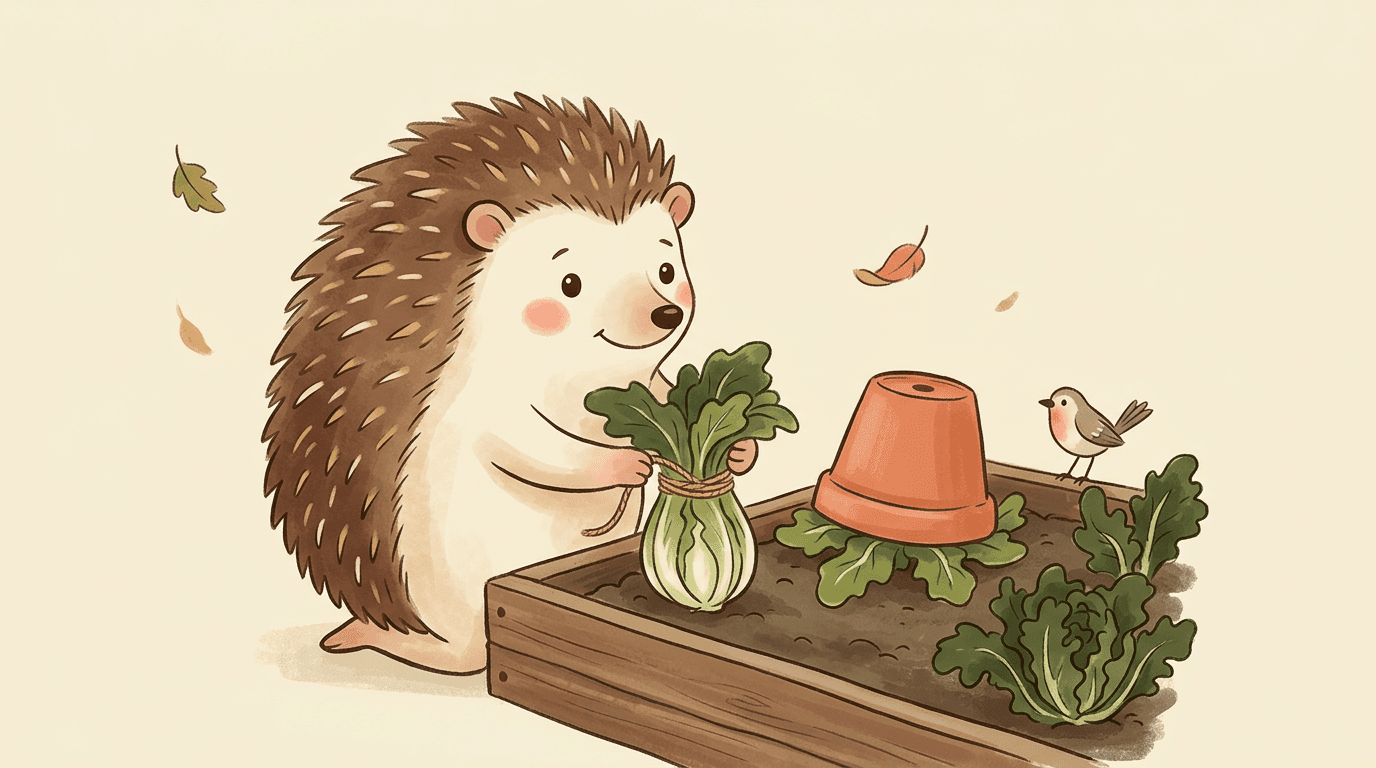
Blanching endive: the trick against bitterness – and where rot is lurking
Frau Schneider tied up her endive on a rainy afternoon because she didn't have time to wait. A week later the heart was brown and slimy instead of pale and tender. Here's what actually matters when you blanch it.
October 8, 2026 · 2 min read
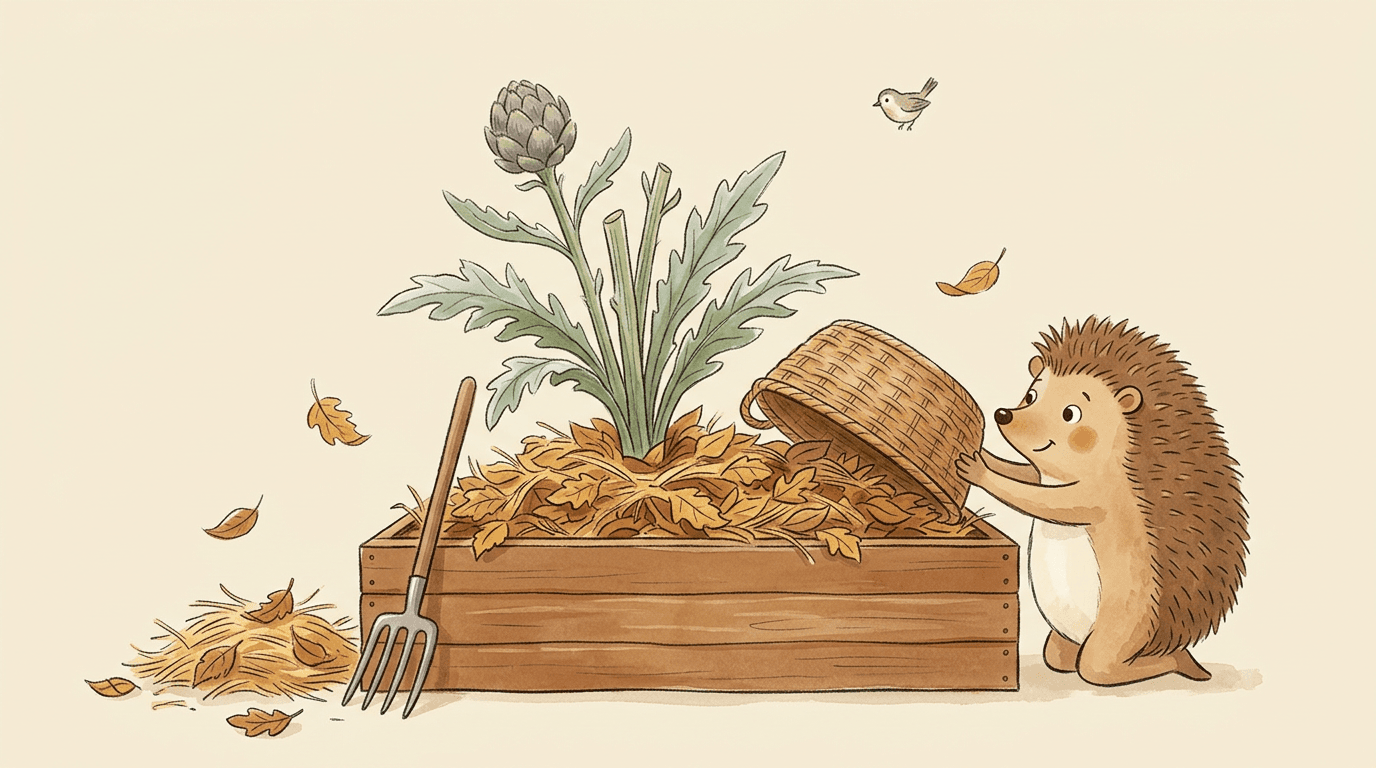
Overwintering artichokes: why they freeze faster in a raised bed than in open ground
Frau Schneider's artichoke grew real buds for the first time this summer – now she's worried the plant won't survive the first hard frost in her raised bed. She's right to worry: raised-bed soil freezes differently from garden soil. Here's how to protect the rootstock properly.