May 11, 2026 · by Stachi · 4 min read
Perennial herbs in the raised bed — plant once, harvest for years
Most herbs are actually lazy. They want one spot, and then years of being left alone. Which perennials really stay in a raised bed — and which to skip.
Herbs have a reputation that isn't quite fair. People say they're demanding: not too wet, not too dry, not too much nitrogen, the right pH. In reality, that applies only to annual herbs like basil and dill — those you have to plant and coddle every single year.
The perennials are the opposite. They want one spot, and then years of being left alone. And the raised bed is particularly good for them, because the drainage is right and the soil isn't too rich.
Six perennials that really stay
After 4 seasons of testing, these are the ones I genuinely recommend:
Rosemary — Mediterranean origin, wants sun and well-drained soil. In a sunny raised bed it usually lasts 5-7 years. Frost-sensitive below -8 °C — in mild zones it stays outdoors, in harsh ones cover with fleece or move pots indoors.
Thyme — toughest of the Mediterranean herbs. Takes frost down to -15 °C once established. Wants poor soil — do NOT add compost to its corner of the bed, or it'll grow lush but flavourless.
Sage — spreads wide, needs 60 cm in every direction. Lasts 4-6 years, then turns woody — a spring prune delays that. Frost-hardy to -10 °C.
Oregano — self-seeds, becomes a ground-cover in the raised bed. Plant it at the edge or it takes over. Fully winter-hardy.
Chives — the only non-Mediterranean on this list. Wants more water, more nitrogen. After 3-4 years when the clump gets dense, dig up in spring, divide, replant — then it lasts another 3-4 years.
Mint — warning: spreads underground and takes over the whole bed. Plant in a pot that you sink into the raised bed (cut the bottom off the pot, keep the walls). Otherwise in 3 years you have only mint.
Why the raised bed beats the ground bed
Mediterranean herbs in the garden die for one reason: winter moisture. Clay soil holds standing water, freezes around the root, and bursts the plant. In a raised bed, the top layer drains in hours — even after days of rain it's dry again on the next sunny day.
That's the difference. Rosemary in a ground bed might survive two winters; in a raised bed (with some sand mixed into the top layer) it can easily go eight.
Where to plant what in the bed
Not all herbs want the same conditions. Rule of thumb:
Sunny end, poor soil: Rosemary, thyme, sage, oregano, lavender. Don't fertilise this corner, mix in sand.
Middle, normal soil: Chives, parsley (biennial), tarragon, salad burnet.
Part-shade, slightly moister corner: Mint (in a pot!), lemon balm, lovage. The latter grows 1.5 m tall — don't put it in the middle.
Skip these
Three herbs sold as "perennial" that usually disappear after one season in a raised bed:
- Perennial basil (African shrub basil). Won't survive even the first frost outdoors. Pot indoors, window sill, outside only May–September.
- Chamomile — self-seeds, but the mother plant dies after one season. So functionally annual.
- Bay laurel — theoretically perennial, but freezes back at -8 °C. In most temperate regions it's a pot variety overwintered in the stairwell.
My mini-plan: 5 herbs, one corner
If you want to add herbs and don't know where to start: reserve an 80×40 cm corner on the sunniest side. Plant:
- Rosemary in one corner
- Thyme in front of it (creeping, pretty in bloom)
- Sage in the other corner
- Oregano as ground-cover in front
- Chives in the middle — vertical, adds height
These 5 grow well together because they all want similar conditions (sun, poor soil, drought-tolerant). A companion-planting flat-share where nobody's high-maintenance.
In our plant library you'll find detail pages for each with sowing windows, harvest periods, and companion-planting partners. And in the companion table you can see at a glance which combinations work.
When to harvest, when not
Mediterranean herbs taste strongest when the plant is under mild stress — drought, full sun. Meaning: harvest in late summer, not in May. May-rosemary tastes of water; August-rosemary tastes of rosemary.
Never cut deeper than 2/3 of the plant, or it'll struggle to re-grow from the woody part. Chives are the exception — cut almost to the ground, they re-sprout from the bulb.
Perennial herbs are the opposite of tomato-care. You plant once, you remember them twice a year (spring prune, summer harvest), and they stay. If you want a garden that doesn't have to start over every spring — begin with perennial herbs.
I'm going to check on the rosemary now. It's 4 years old and looks better than any tomato I've ever grown.
🦔 Stachi
More articles
October 26, 2026 · 3 min read
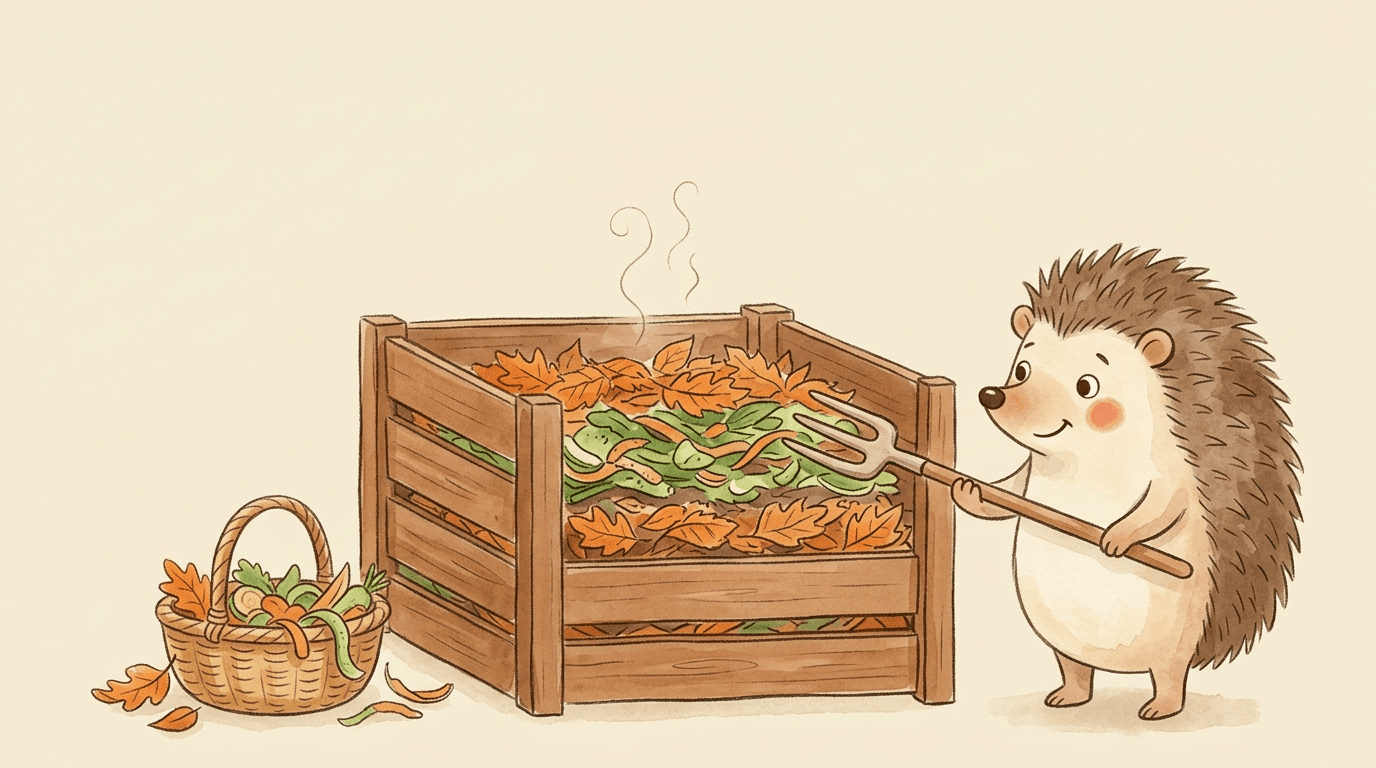
Starting an autumn compost pile: 3 parts leaves, 1 part kitchen scraps
Frau Schneider's compost pile just sat there all winter. No steam on cold mornings, no warmth, no breakdown — just a heap of dry leaves that hadn't changed a bit by March. The problem wasn't patience. It was the mix.
October 20, 2026 · 3 min read
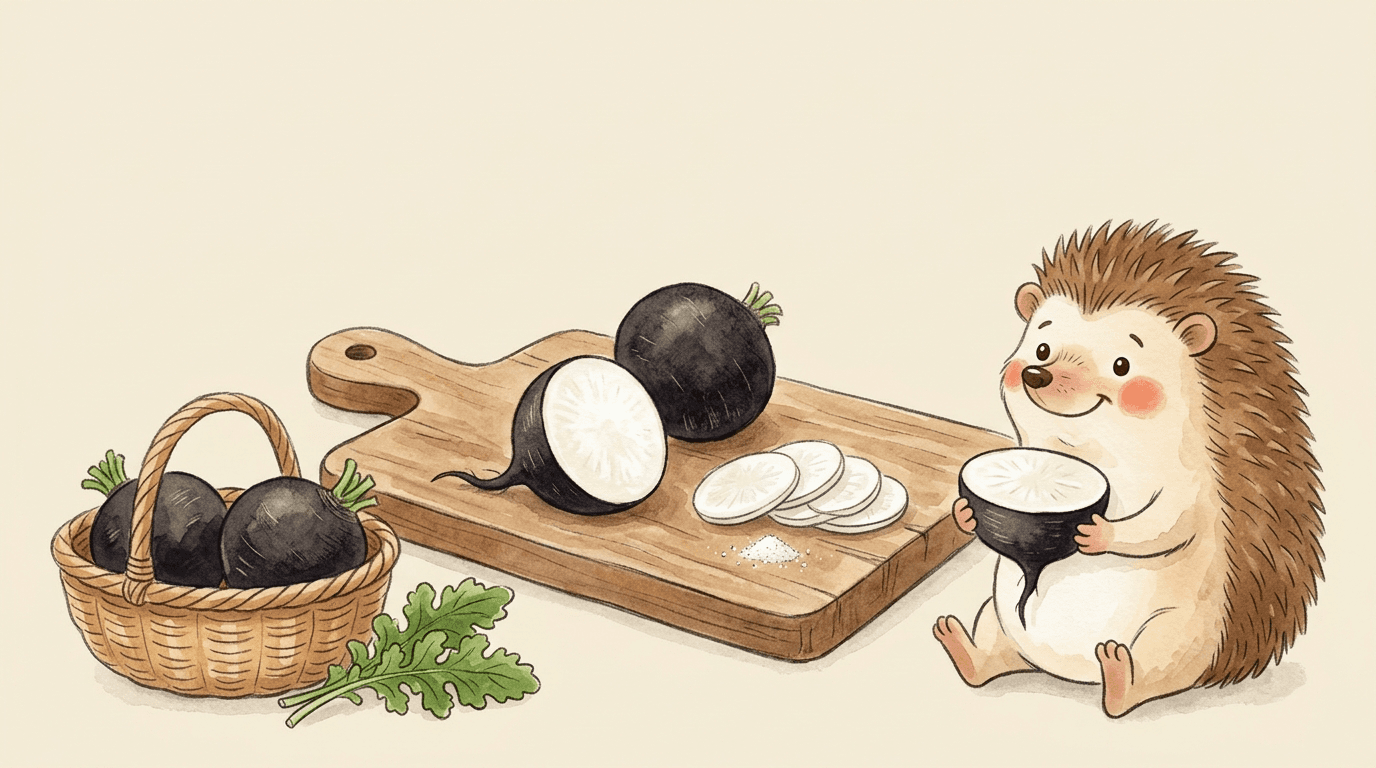
Black radish: why you should let it rest before you bite in
Last year Frau Schneider bit straight into one, unsalted, fresh out of the ground, and spent the next two minutes coughing instead of talking. The problem wasn't the radish. It was the timing.
October 14, 2026 · 2 min read
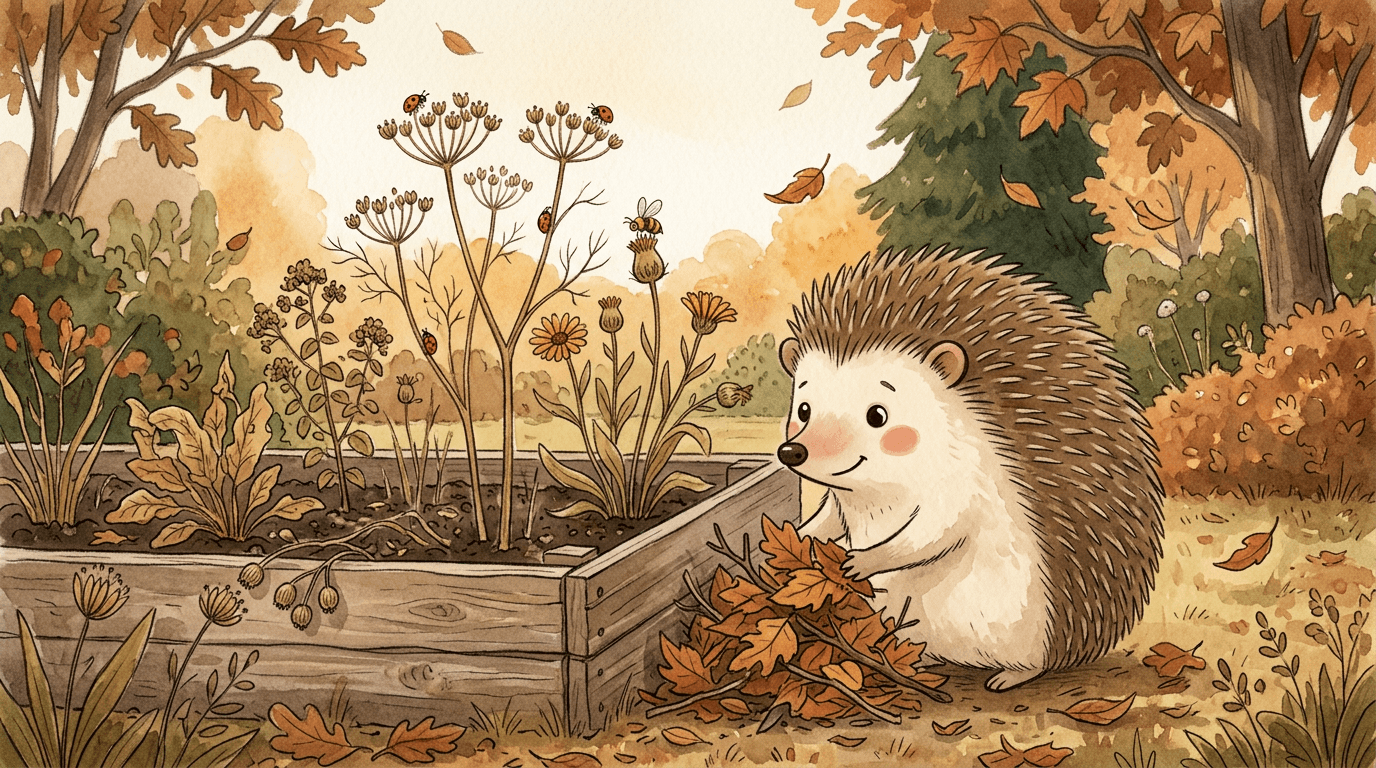
Why I only tidy up half my raised bed in October
Mr Zimmermann cut his entire raised bed down to the ground in one afternoon — stalks, seed heads, leaves, all gone. I should have warned him beforehand: not everything, only half. Here's what should stay standing and what really needs to go.