
October 31, 2026 · by Stachi · 3 min read
Winterising your garden tools: the 20-minute check before the shed door closes
Last November my garden fork stood dirty and wet in a corner for four months. By March the handle had gone soft and two prongs had rust pits that never came out again. Ever since, I do the check now, at the end of October, before everything goes into winter rest — 20 minutes that decide the next five years.
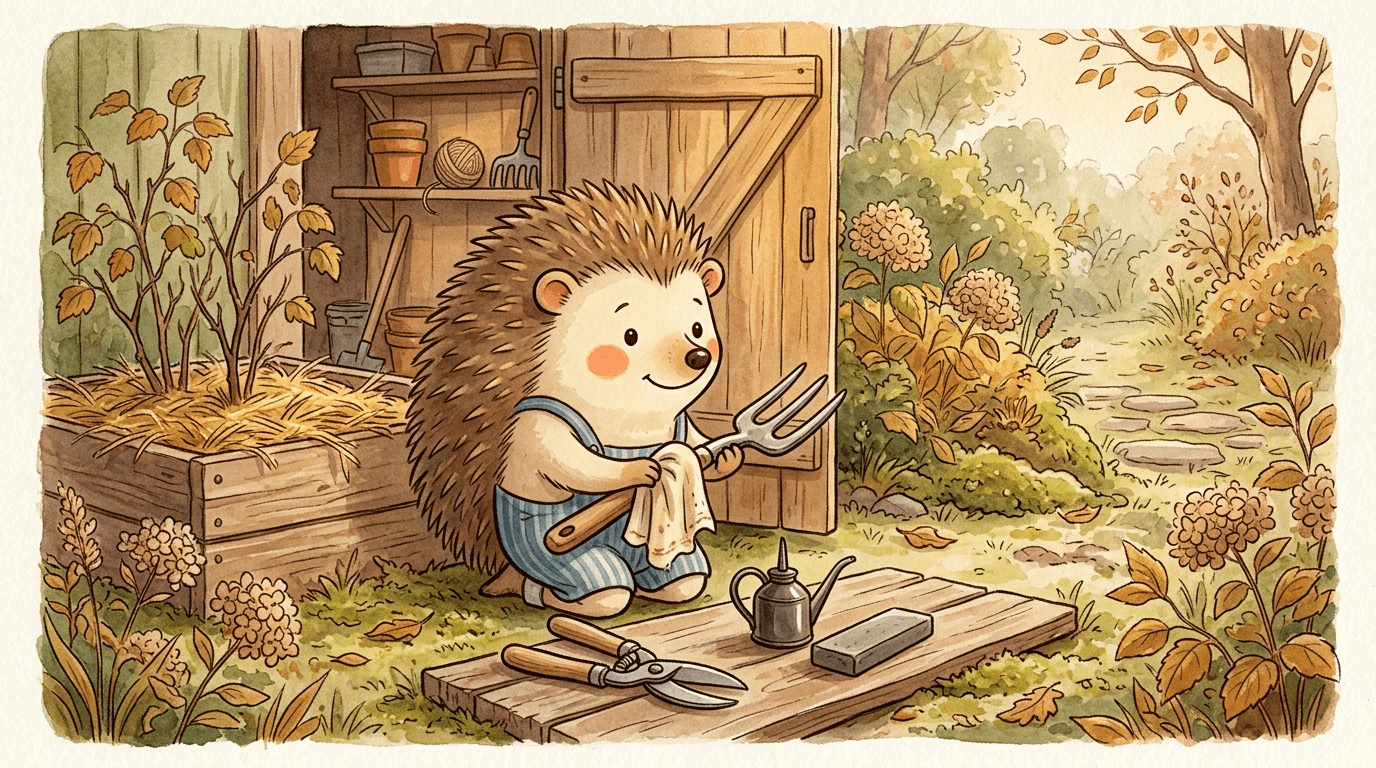
Last November I left my garden fork standing after the final harvest. Muddy, wet, in a corner of the shed, between flower pots and a bag of bark mulch. I forgot about it until March — and when I picked it up again, the wooden handle had turned grey and soft right where the soil had stuck to it. Two prongs had fine rust pits that no amount of scrubbing could remove. Nothing dramatic, the fork still works today. But it looks ten years older than it is, because of four months of wrong storage.
Since then I don't do the tool check in spring anymore, but now, at the end of October, right after the raised bed is tucked in for winter and the tools have had their last job for the season. The difference to the May check, which is about what I buy in the first place: here it's purely about getting what I already own through five months of standstill without it suffering.
Why tools break down in winter, not in summer
In summer, tools are constantly in motion — they dry out between jobs, and the friction of working keeps small rust spots at bay. In winter they sit untouched for weeks, often still damp from the last bit of soil, in a shed or basement that isn't dry itself. Damp soil plus metal plus standstill is exactly the combination rust wants. And uncleaned blades carry this year's fungal spores and bacteria from diseased plants through the winter with them — in spring you cheerfully cut right into the next season with them.
The 20-minute check, tool by tool
1. Brush off the soil completely, don't just knock it off. A wire brush or an old trowel for the coarse bits, then wipe dry. Leaving tools wet is the most common mistake — a tool can go into cleaning wet, but it should never go into storage wet.
2. Sharpen AND disinfect anything that cuts. Secateurs, pruning shears, the edge of a spade — ten strokes with a sharpening stone are enough for home use. Afterwards wipe the blade briefly with a cloth and high-proof alcohol, if this year you cut anything with blight or another fungal disease. A sharp, disinfected blade winters cleanly. A blunt, dirty one becomes a disease carrier come March.
3. Oil metal parts lightly. Once dry, a few drops of all-purpose oil on a cloth, rub thinly onto blades and metal handles. Not dripping wet — a thin film is enough to keep humidity out, without the tool feeling sticky in spring.
4. Don't forget wooden handles. Cracked, grey handles are almost always a moisture problem, not an age problem. A cloth with the same all-purpose oil, or linseed oil if you have it, rubbed onto dry wood soaks in, seals the surface, and stops exactly the greying that happened to my garden fork.
5. Store dry AND off the ground. Hanging on a wall or on a shelf, never directly on a concrete floor. Concrete pulls moisture out of the air and passes it on to anything standing on it — metal rusts at the contact point first, exactly where you don't notice it right away.
What else I sort out while I'm at it
The check is also the most honest moment to decide what's ready for the workshop or the scrapyard this winter. A handle with a crack, shears that won't take an edge anymore, a fork with a bent tine — better to replace it now, during the December sales, than in March when every hardware store is back to full price and you need it immediately.
What's different for me this year
The garden fork from last November is still my most-used tool, rust pits and all. But this year it's hanging dry, oiled, sharpened on the shelf, not in the damp corner between the flower pots. Twenty minutes on the last October weekend, before the first real frost — and in March I start again with a sharp, dry tool instead of a repair list.
🦔 Stachi
Note: the products linked in the cards are Amazon affiliate links. If you order through them, Erntezeit gets a small commission — the price stays the same for you. The all-purpose oil and the sharpening stone both live on my workbench.
Products mentioned in this post
- Ballistol all-purpose oil, 500 mlA splash on every metal part after cleaning keeps rust away for the whole winter, even in a damp storage spot.
- Norton sharpening stone for garden shearsTen strokes on the blade of the shears or pruner before it goes into the box. Blunt tools rust faster than sharp ones over winter.

More articles

November 20, 2026 · 4 min read
Build a hedgehog winter shelter: why this week is the deadline, not December
Last year I cleared the leaf pile behind my raised bed on December 2nd because it looked untidy. Three days later the first hard frost hit. It wasn't until spring that I realised what I'd actually destroyed. Here's what to do this week, before it's too late.
November 15, 2026 · 4 min read
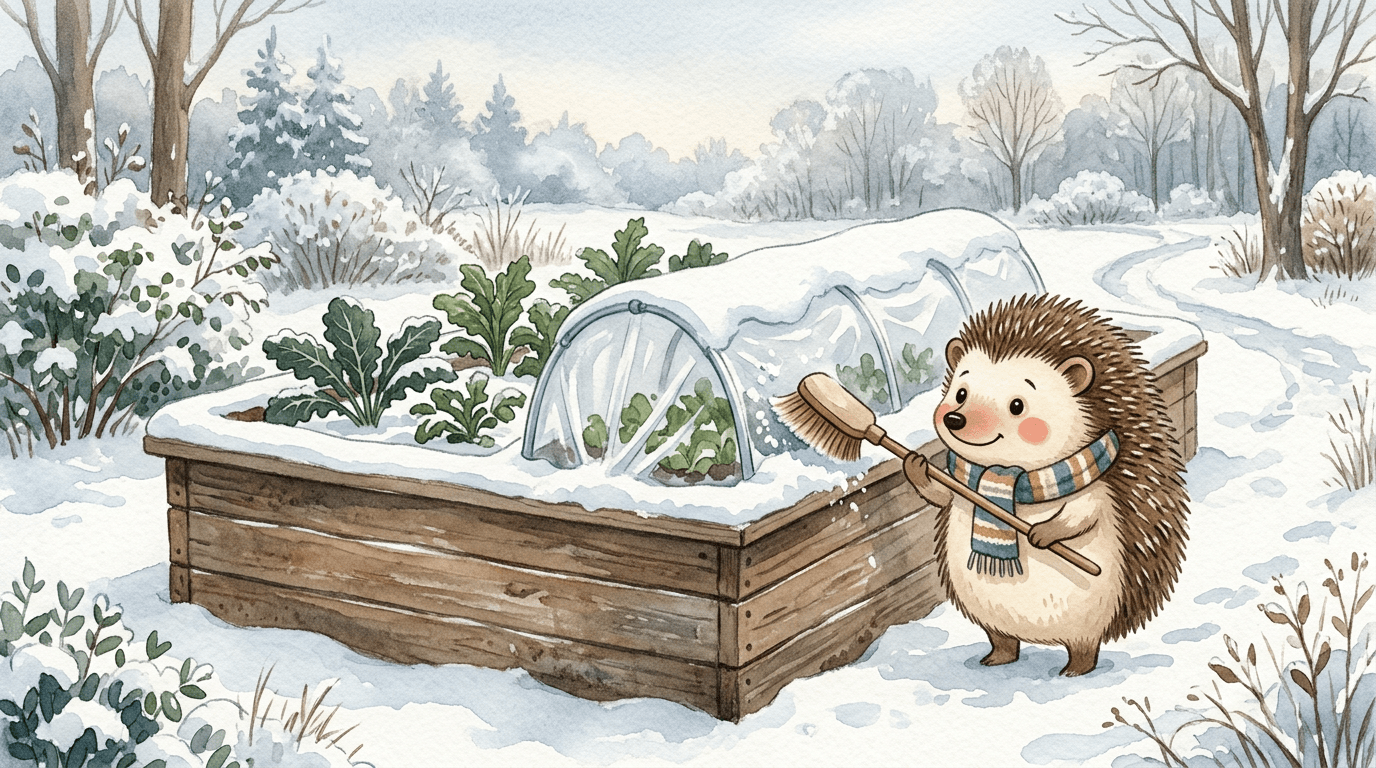
Snow on the raised bed: when it protects, and when it snaps a hoop
Two years ago I walked out one morning and my hoop tunnel over the kale had collapsed flat into the bed, two hoops snapped, the fleece underneath torn. The snow itself wasn't the problem — the exact same amount sat right next door on open soil and did exactly the right thing there. The only difference was whether it landed on earth or on a frame.
November 10, 2026 · 4 min read
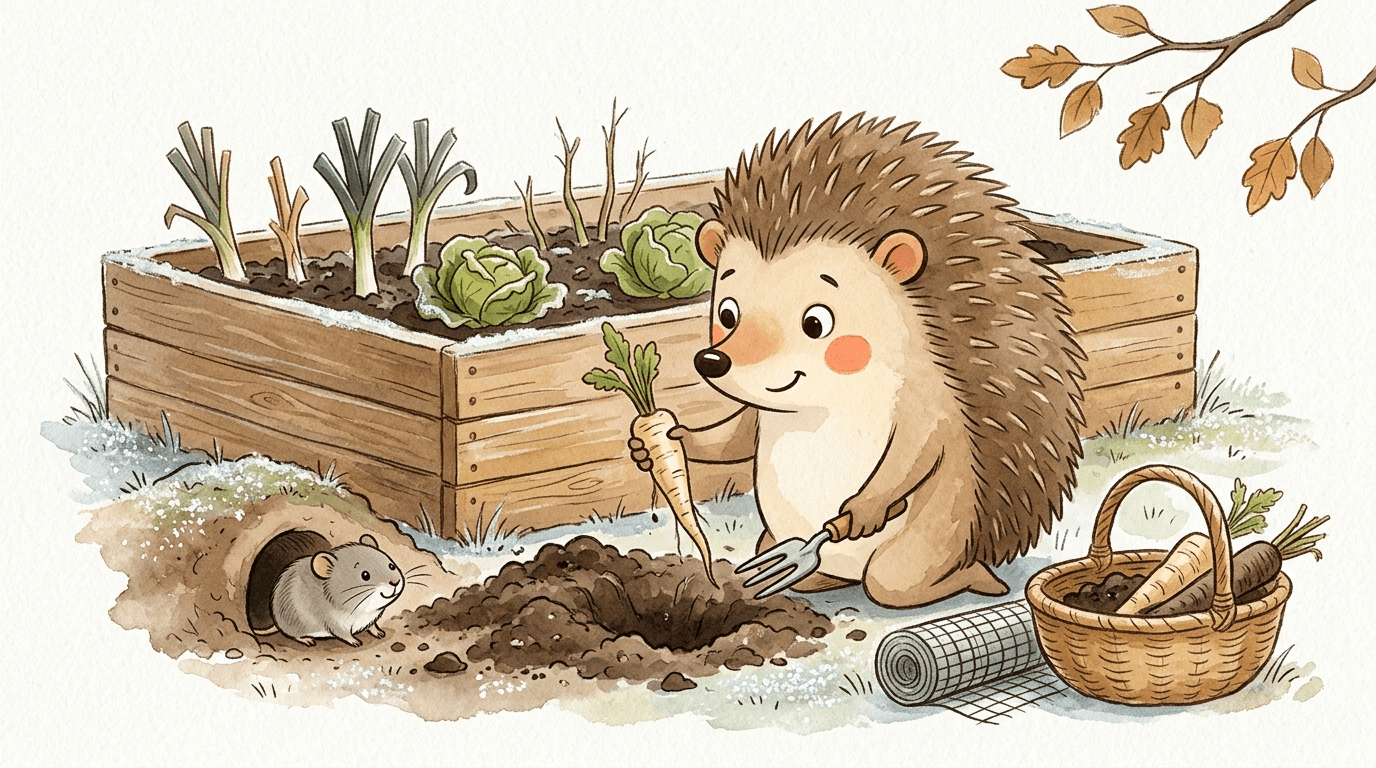
Voles in the winter raised bed: protecting what's still in the ground
Last December I went to dig up my parsnips and found mostly holes. No parsnip, no mound of earth, nothing — just a tunnel system, as if someone had sucked the roots out from underneath. Someone had, almost. Here's what matters right now, while root vegetables are still sitting in the bed.