
November 10, 2026 · by Stachi · 4 min read
Voles in the winter raised bed: protecting what's still in the ground
Last December I went to dig up my parsnips and found mostly holes. No parsnip, no mound of earth, nothing — just a tunnel system, as if someone had sucked the roots out from underneath. Someone had, almost. Here's what matters right now, while root vegetables are still sitting in the bed.
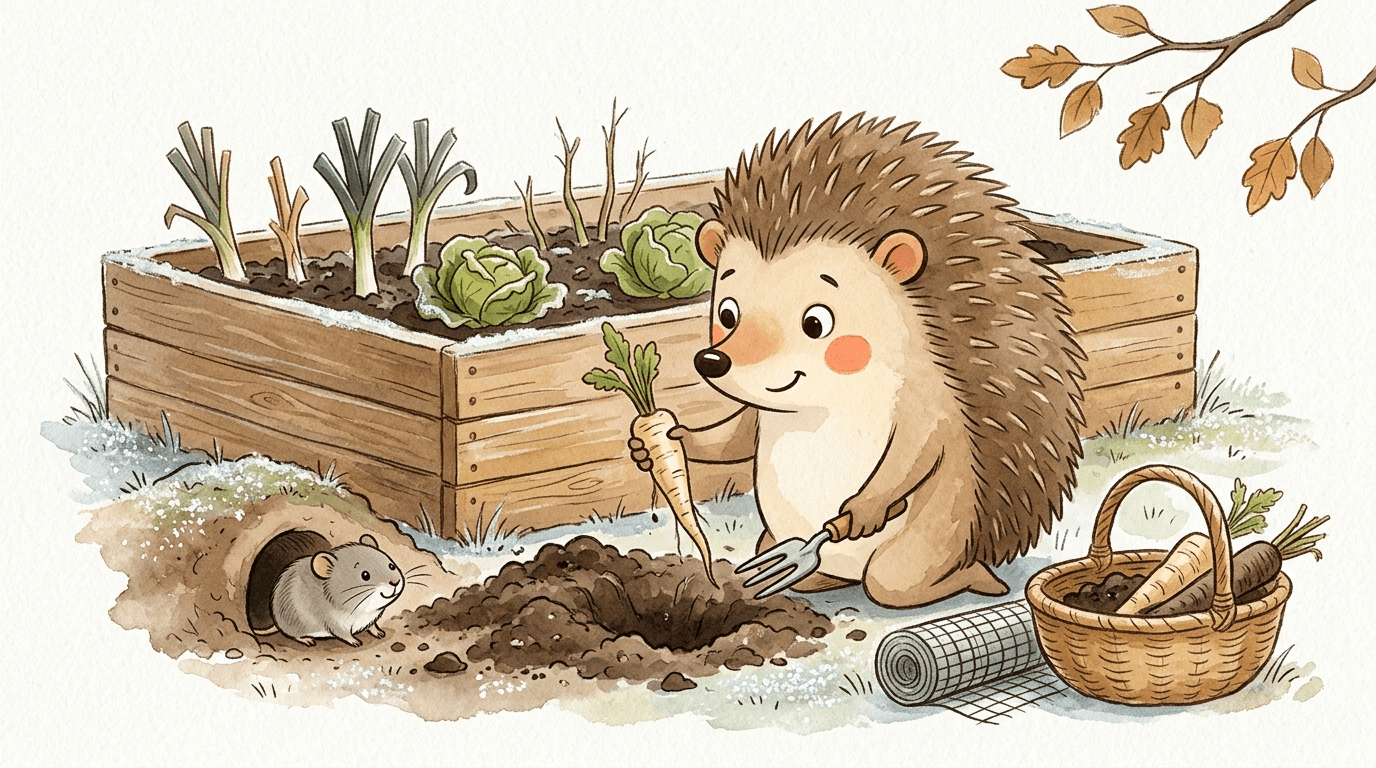
Last December I went out to the raised bed with a garden fork to dig up parsnips for a Sunday dinner. Back in September there were twelve healthy plants in there, plenty for three meals over winter according to the plan. I dug, and dug, and ended up with two half-eaten roots and a tunnel system that looked like a miniature railway line. No mound on top, no warning — just gone. My first thought was a mole. Wrong. Moles eat worms and grubs, not parsnips. The culprit was a vole, and it had been quietly working through my winter stash since October without leaving a single clue I'd noticed.
Why voles love a raised bed — especially right now
A raised bed is almost too good to be true for a vole. The loose, compost-rich soil is far easier to tunnel through than compacted garden ground. The raised position keeps the frost out longer, so the soil stays workable well into November even when everything around it has gone hard. And right now, in mid-November, many raised beds are holding their full winter stockpile: parsnips, Jerusalem artichokes, salsify, the last leeks — vegetables that are deliberately left in the ground because frost makes them sweeter and easier to store. For you, that's a clever trick. For a vole, it's a pantry with home delivery.
Learning to tell what's actually digging
Before you do anything, look at any mounds of earth you can see. A mole hill is round, volcano-shaped, with a visible hole in the middle, and a mole has zero interest in your roots. A vole leaves flatter, often kidney-shaped mounds, sometimes with chewed plant bits mixed in, and its tunnels run just under the surface rather than deep like a mole's. Most of the time in a raised bed you won't see a mound at all — the soil stays loose enough that the vole just burrows through without pushing anything up. The most reliable sign is a gnawed edge on a root you pull up to check, or a tunnel that sounds hollow when you press down gently with your foot.
What you can still do this week
- Harvest anything you don't strictly need to keep until February. This is the least glamorous but most effective move. Every root sitting in a crate of sand in the cellar instead of the bed is invisible to the vole. Leeks are done anyway, and parsnips and salsify tolerate an earlier harvest too — you just give up a little extra frost-sweetness. How to store the roots properly once they're out is covered in a separate post.
- Dig with a hand fork rather than a spade when you're lifting individual roots. A fork pushes soil aside instead of slicing through it, so you spot existing tunnels right away instead of cutting through roots sitting next to them. I picked up a stainless hand fork last year specifically for this — it still goes into half-frozen ground without the tines bending.
- Lay wire mesh loosely over the spots you're deliberately leaving in the ground. A piece of rabbit wire (mesh no wider than 1.3 cm — voles squeeze through surprisingly small gaps) laid flat over the remaining Jerusalem artichoke or salsify rows and weighed down with a couple of stones at least blocks access from above. It won't stop a tunnel coming in from the side, but every obstacle helps.
- Set a trap directly in an active tunnel if you've found one for sure. Classic vole traps (scissor or tunnel-style) only work placed right inside the tunnel, never set out on the surface — that's the most common mistake. Feel along the tunnel with a finger, open it carefully at one point, place the trap, cover it lightly again so no light gets in.
What actually prevents this next winter
The only thing that reliably keeps voles out is wire mesh laid across the bottom of the raised bed before it's filled — fine wire between the frame and the soil layer that seals it completely from below. Once the bed is fully built up, you can't retrofit that without emptying everything out. If you're restocking or topping up the soil in spring anyway, that's exactly the moment to lay the mesh in. I mentioned the same trick on a smaller scale for bulbs — for the whole bed, it's just the bigger version of the same idea.
This year I also planted a couple of crown imperial bulbs (Fritillaria imperialis) in two corners of the bed. The smell is supposed to drive voles off — whether it actually works I can only tell you in spring, but the flowers will look good next to the leeks regardless.
What Erntezeit does with this
Your yearly plan shows you at a glance which vegetables are sitting in the "leave in the ground, harvest later" window right now — exactly the ones worth keeping an extra eye on.
Build your raised-bed yearly plan →
🦔 Stachi
Products mentioned in this post
- Gardena Classic planting trowelQuality steel, corrosion-protected — bed all-rounder.
- Gardena flower trowel, large
- Bosch hand fork, stainless steel
- Draper sturdy hand fork, stainless steel
Related plants



More articles
November 20, 2026 · 4 min read
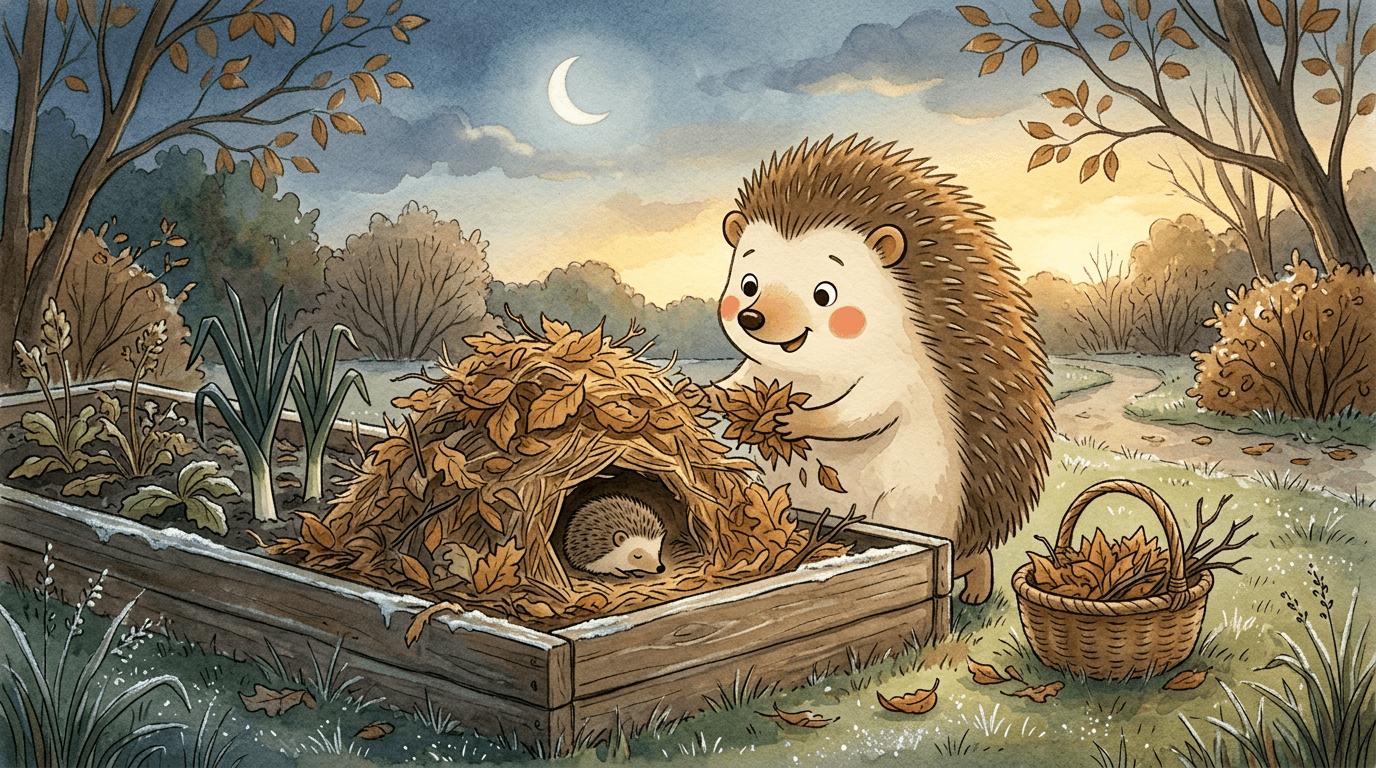
Build a hedgehog winter shelter: why this week is the deadline, not December
Last year I cleared the leaf pile behind my raised bed on December 2nd because it looked untidy. Three days later the first hard frost hit. It wasn't until spring that I realised what I'd actually destroyed. Here's what to do this week, before it's too late.
November 15, 2026 · 4 min read
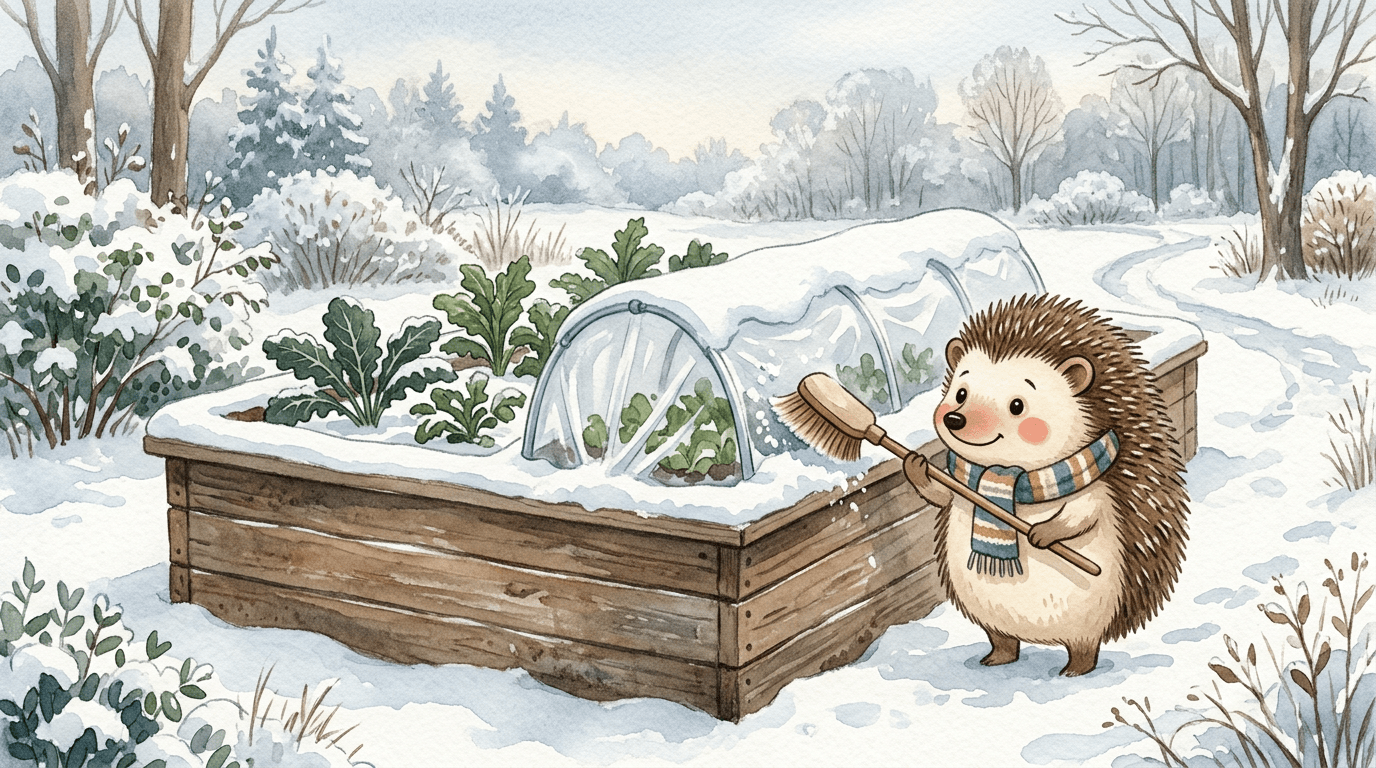
Snow on the raised bed: when it protects, and when it snaps a hoop
Two years ago I walked out one morning and my hoop tunnel over the kale had collapsed flat into the bed, two hoops snapped, the fleece underneath torn. The snow itself wasn't the problem — the exact same amount sat right next door on open soil and did exactly the right thing there. The only difference was whether it landed on earth or on a frame.
November 5, 2026 · 4 min read
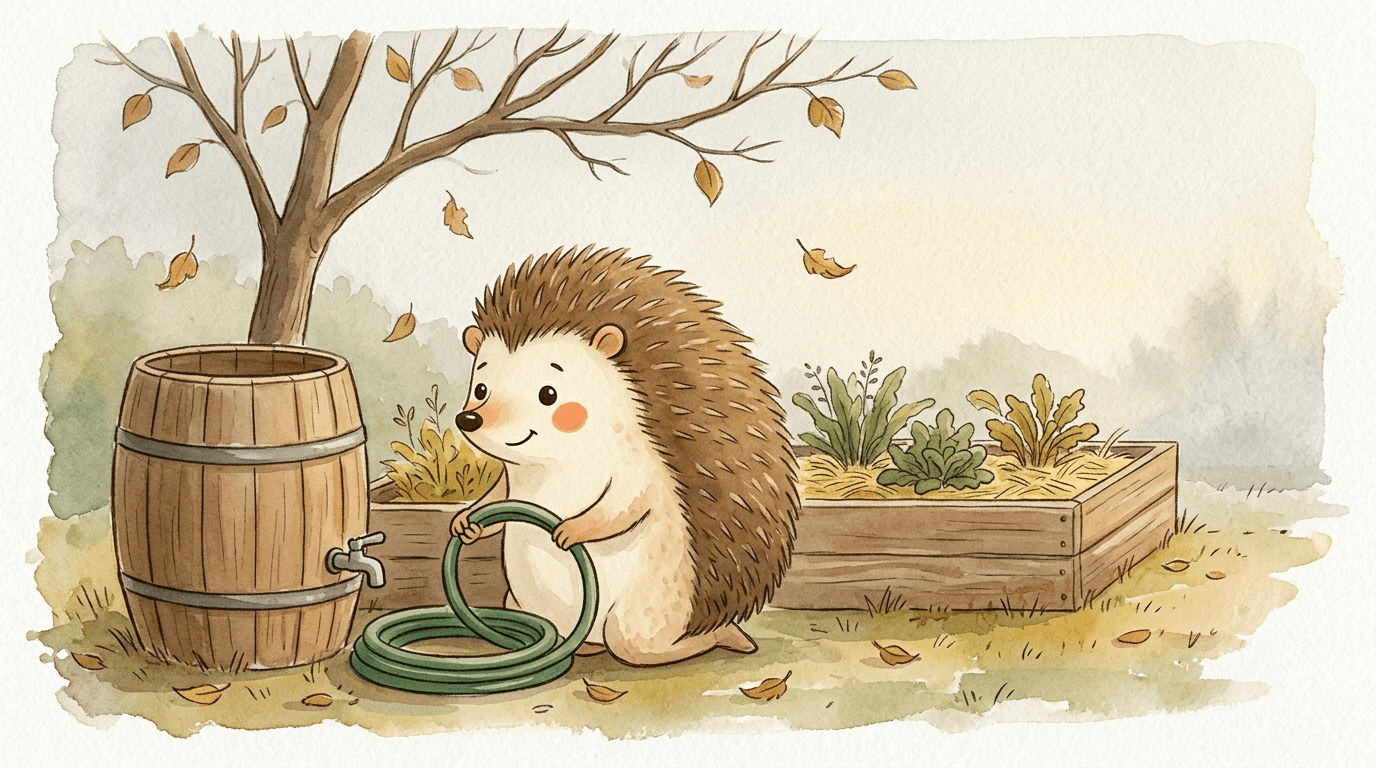
Winterising your rain barrel and hose before the first frost hits
Two winters ago I left my rain barrel standing in December, full to the brim, tap closed. In January there was a crack running the whole side wall, finger-wide, low on the left — exactly where you never look. Here's the 15-minute round I now do every year to stop that: barrel, hose, outdoor tap.