
November 20, 2026 · by Stachi · 4 min read
Build a hedgehog winter shelter: why this week is the deadline, not December
Last year I cleared the leaf pile behind my raised bed on December 2nd because it looked untidy. Three days later the first hard frost hit. It wasn't until spring that I realised what I'd actually destroyed. Here's what to do this week, before it's too late.
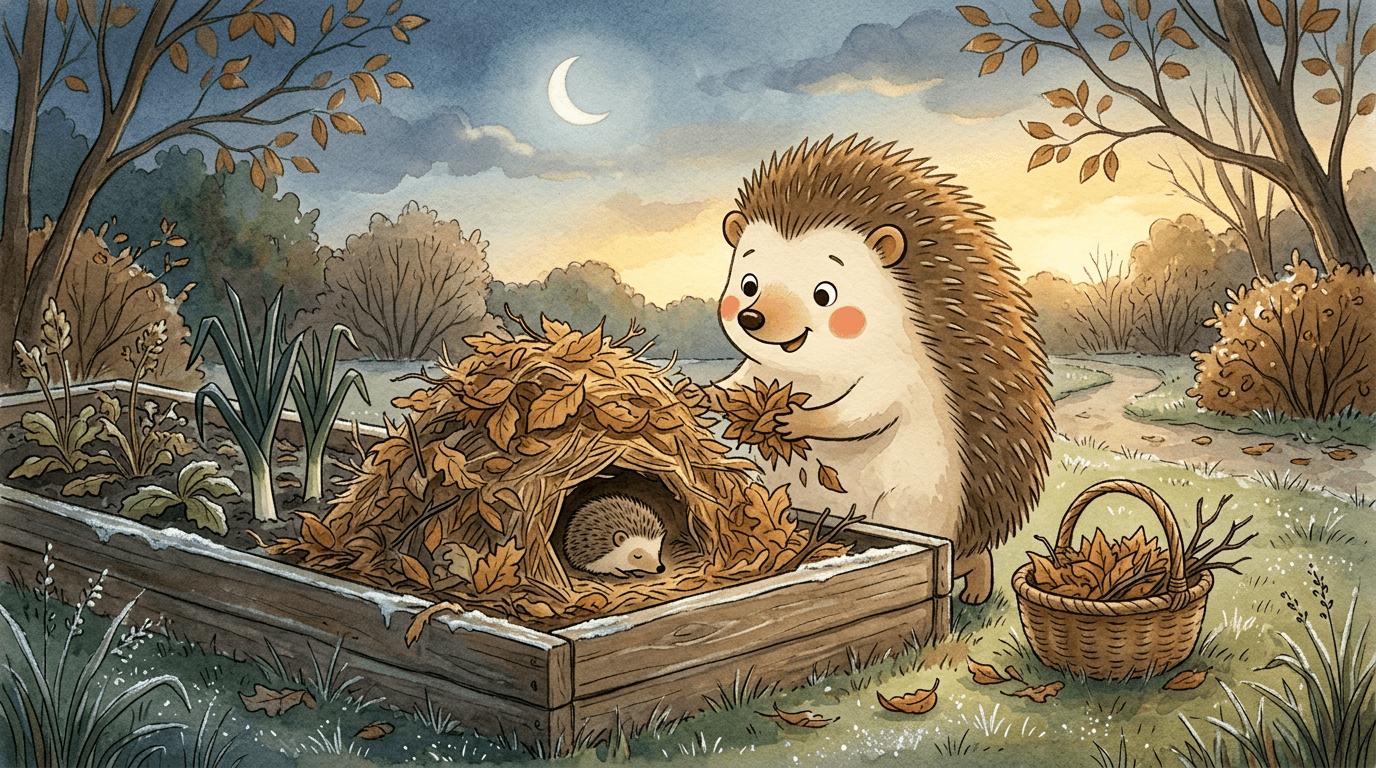
Last year, in early December, I cleared the leaf pile behind my raised bed. It had been sitting there since October, half-collapsed, with a few branches the wind had blown in. Looked like nothing, I thought, and my neighbour had already asked twice whether everything was okay back there. So out came the rake, twenty minutes, all of it onto the compost. Three days later came the first proper frost, minus six. It wasn't until March, when I was turning the compost, that it hit me what I'd cleared away: a clearly shaped, already fairly firm hollow in the middle of the pile, exactly the shape and size a hedgehog leaves behind after a winter in residence. Whether it survived, I still don't know. That was the moment I stopped treating those piles as mess and started treating them as a deadline.
Why right now is the cut-off
Hedgehogs don't go looking for a winter shelter in December, once it's already freezing — they look in the weeks before, when nights are regularly dropping below 5°C but the ground isn't hard yet. As of mid-to-late November, that's roughly right now. Anyone who hasn't found a sheltered spot by then often settles for worse alternatives — under a patio slab, in a shed that hasn't been sealed up yet, in loose brushwood right next to a path where the next dog walker startles it. A hedgehog that's already settled in for the winter and then gets disturbed wakes up, burns through a big chunk of the fat reserves it needs to survive, and often never finds a second shelter. The short window right now, between the first cold nights and the first sustained frost, is the only one in which a newly built shelter still gets taken up at all.
What a hedgehog actually needs — and what it doesn't
The ready-made hedgehog houses from the garden centre look charming, with their little pitched roof and tiny door, but most are too small, too well sealed against draughts, and sited exactly where nobody would choose to build a shelter if they had the option — slap in the middle of the lawn, right next to the shed. What a hedgehog is actually looking for is both simpler and more demanding: a quiet, dry hollow with plenty of loose insulation around it, somewhere that sees little activity within a few metres. The back of a raised bed offers almost exactly that without you doing anything — sheltered from wind by the bed wall, usually the least-trafficked strip in the entire garden, and often already holding a few branches or leftover cuttings. So you don't even need to clear space. You just need to stop tidying that particular spot.
The pile you already have counts for more than anything you'd buy
If you worked autumn leaves into the raised bed this year instead of binning them, there's probably a loose heap left over somewhere that's exactly enough for a shelter like this. And if back in October you deliberately left half the raised bed standing instead of cutting everything back, you likely already have dead stalks and brushwood at the bed's edge that can serve as the frame. From there, building it is just a matter of piling things together: a frame of branches with a hollow in the middle, at least 30 cm of leaves around and over it, a final layer of brushwood on top as a roof against rain and wind. No string, no nails, no tools. More important than the build itself is what comes after: hands off. No checking whether anyone's moved in, no restacking because it looks messy again. A shelter that hasn't changed in three weeks is probably occupied — disturbance is the bigger risk at this stage, not cold.
Three things I'm deliberately not doing right now
First: no leaf blower anywhere near garden corners, raised-bed backs, or under shrubs, not even briefly. A leaf blower on full power disturbs loose leaf litter hard enough to send a sleeping hedgehog flying before you've even seen it. Second: when turning a brushwood or compost pile, don't just plunge the fork in — lift it away by hand first and pause to check if anything moves, exactly the mistake I nearly made last year before I knew anyone was in there. Third: if netting against birds or slugs is left over a bed, pull it taut at ground level or take it off entirely, rather than leaving it loosely draped overnight — a hedgehog that gets tangled in it usually can't free itself.
What Erntezeit does with this
Your yearly plan shows you exactly which corners of your raised bed sit empty over winter anyway — those are the spots worth leaving as a shelter instead of a tidy bed edge.
Create a yearly plan for your raised bed →
🦔 Stachi

More articles
November 15, 2026 · 4 min read
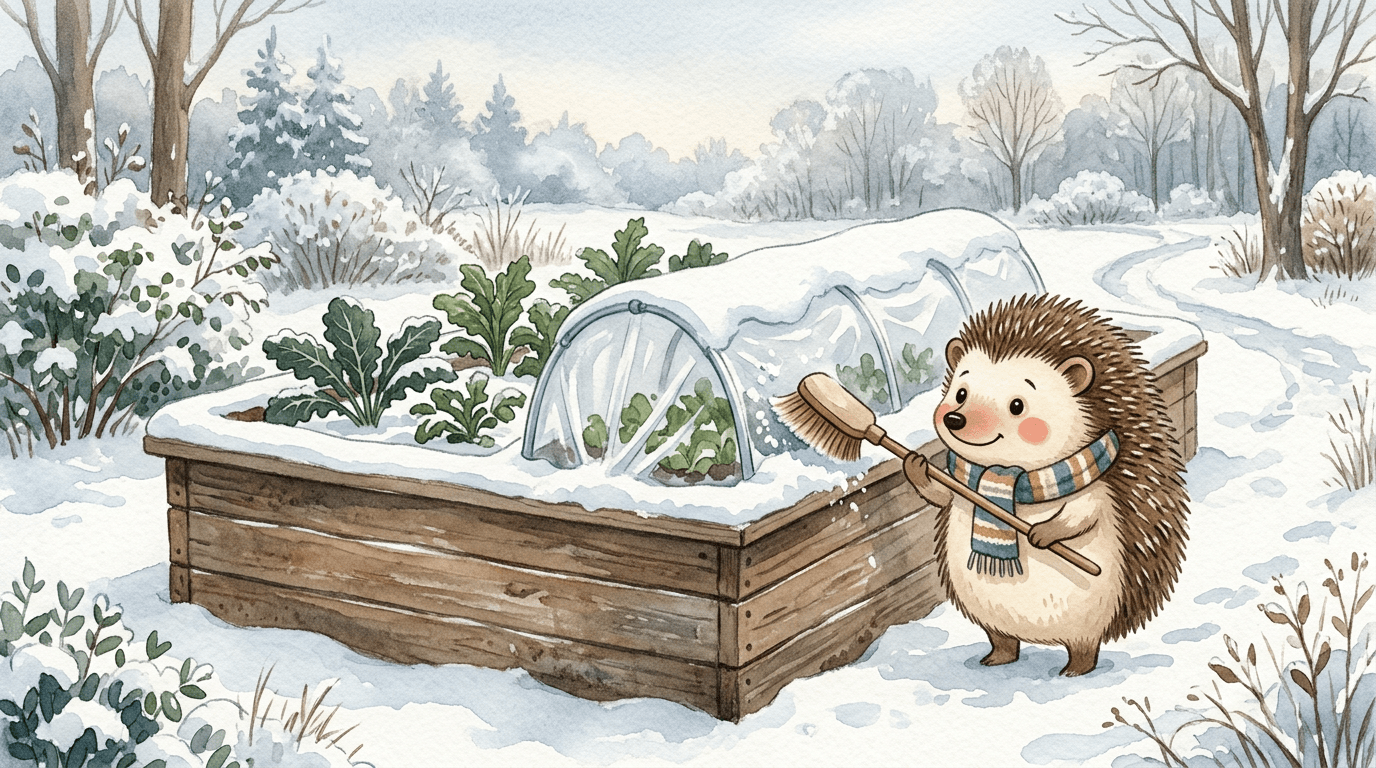
Snow on the raised bed: when it protects, and when it snaps a hoop
Two years ago I walked out one morning and my hoop tunnel over the kale had collapsed flat into the bed, two hoops snapped, the fleece underneath torn. The snow itself wasn't the problem — the exact same amount sat right next door on open soil and did exactly the right thing there. The only difference was whether it landed on earth or on a frame.
November 10, 2026 · 4 min read
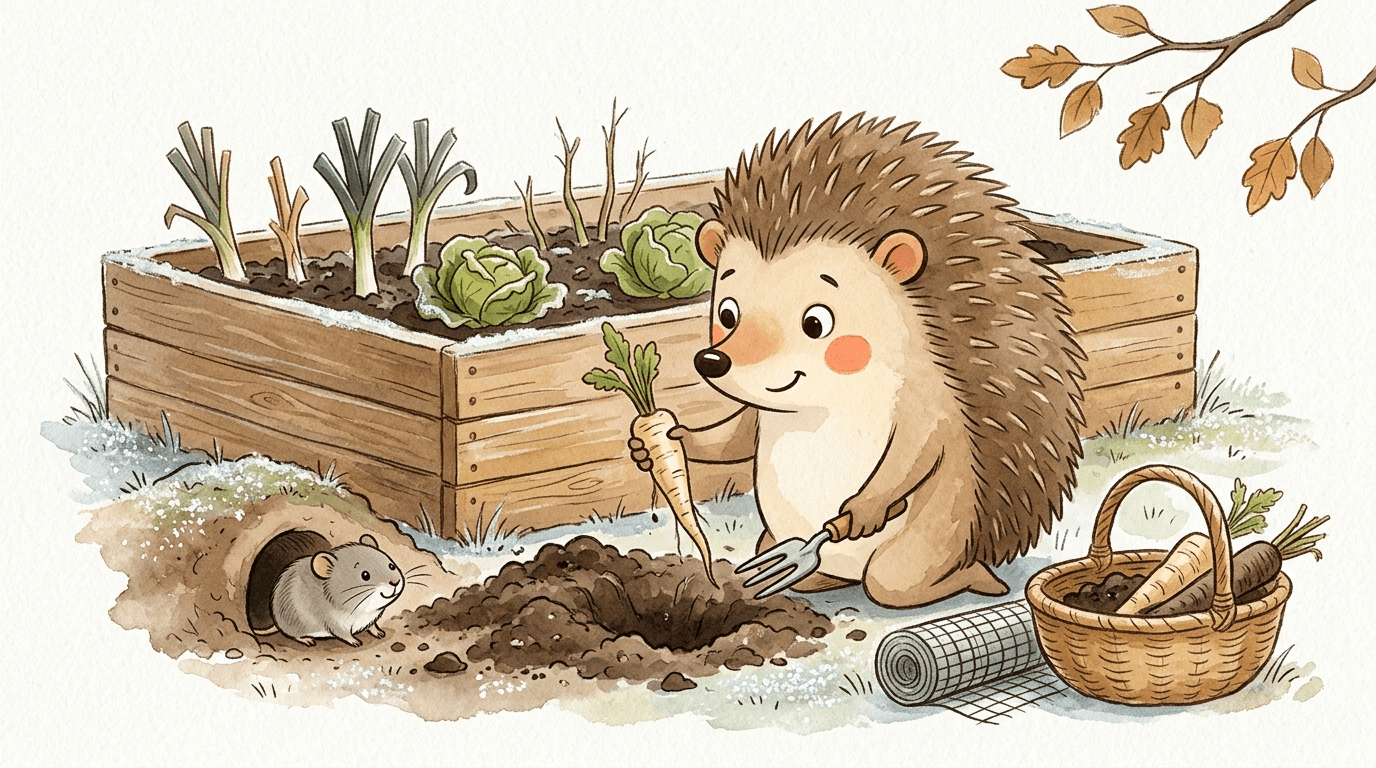
Voles in the winter raised bed: protecting what's still in the ground
Last December I went to dig up my parsnips and found mostly holes. No parsnip, no mound of earth, nothing — just a tunnel system, as if someone had sucked the roots out from underneath. Someone had, almost. Here's what matters right now, while root vegetables are still sitting in the bed.
November 5, 2026 · 4 min read
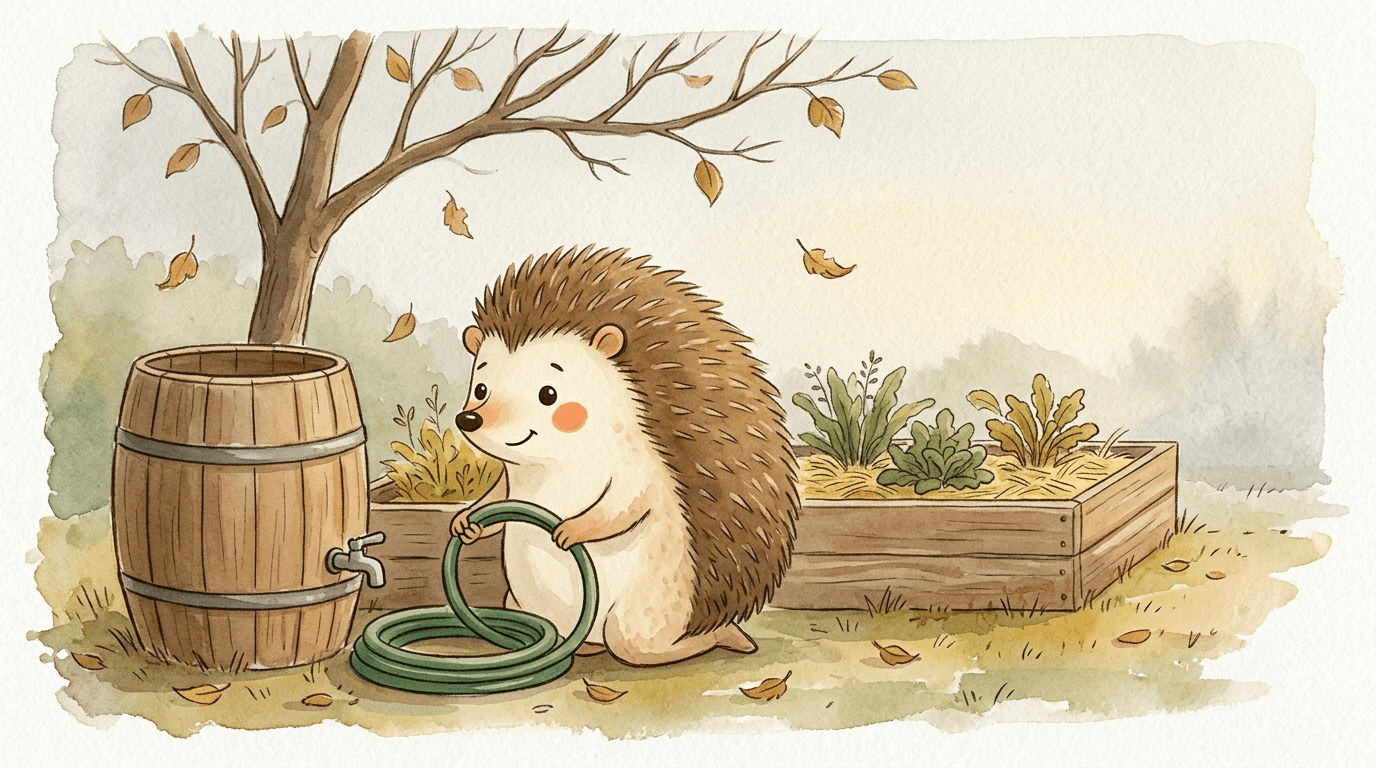
Winterising your rain barrel and hose before the first frost hits
Two winters ago I left my rain barrel standing in December, full to the brim, tap closed. In January there was a crack running the whole side wall, finger-wide, low on the left — exactly where you never look. Here's the 15-minute round I now do every year to stop that: barrel, hose, outdoor tap.