
November 15, 2026 · by Stachi · 4 min read
Snow on the raised bed: when it protects, and when it snaps a hoop
Two years ago I walked out one morning and my hoop tunnel over the kale had collapsed flat into the bed, two hoops snapped, the fleece underneath torn. The snow itself wasn't the problem — the exact same amount sat right next door on open soil and did exactly the right thing there. The only difference was whether it landed on earth or on a frame.
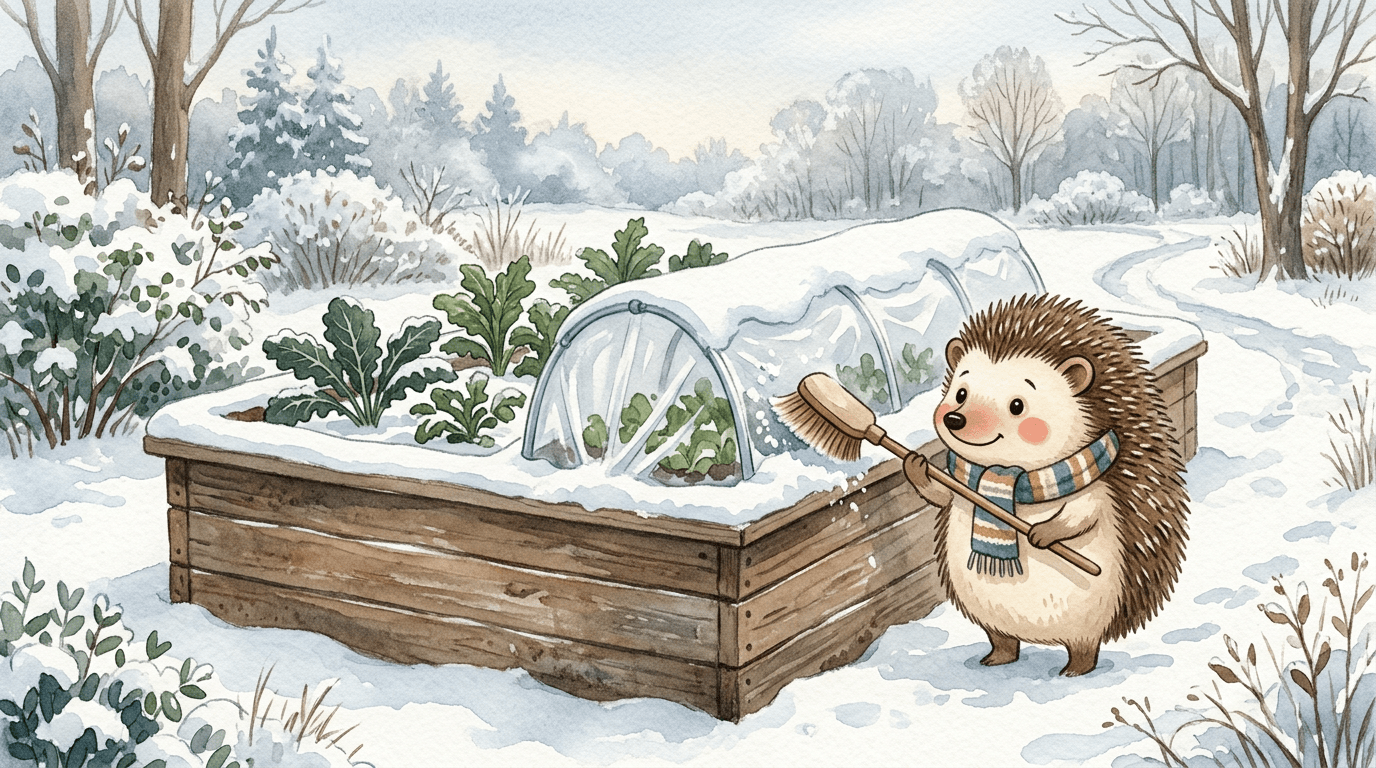
Two years ago I walked out on a Thursday morning, coffee still in hand, and my hoop tunnel over the kale was lying completely flat in the bed. Two of the three hoops had snapped, and the fleece underneath was torn at one corner. Overnight we'd had fifteen centimetres of snow — but not the light, dry kind. The heavy, wet sort that falls right around zero degrees and feels like damp sugar. Two metres away, on the open part of the same bed, the exact same amount of snow sat on bare soil over my lamb's lettuce. Nothing happened to it. If anything, it came through the winter in better shape underneath.
That's when it clicked for me that "snow on the raised bed" isn't one question. It comes down entirely to where it lands.
Snow on bare soil is a gift, not a threat
Sitting directly on the ground, snow does something that sounds backwards at first: it keeps things warmer. Not warm-warm, but a layer of snow is mostly trapped air, and air is a poor conductor of heat. Under ten centimetres of snow the soil surface often stays just below freezing even when the air above drops to minus ten or colder. For anything overwintering in the bed right now — kale, chard, leeks, the roots of parsley and chives — that's a natural frost brake no fleece delivers for free.
The mistake I used to make myself: clearing snow off the bed "so it doesn't get so cold." The opposite happens. A cleared bed sits exposed to direct cold and drying wind with nothing between it and the air. Leaving the snow where it is is almost always the right call — as long as it's genuinely resting on the ground, not on something that can give way underneath it.
Snow on a structure is a different calculation
The moment there's a gap between the snow and the soil — a hoop tunnel, a cold-frame lid, fleece on arched supports, netting over raspberry canes — insulation stops mattering and weight takes over. And the rule of thumb "a few centimetres is harmless" doesn't hold, because dry powder and wet snow weigh completely different amounts. Ten centimetres of fresh powder sits at roughly fifteen to twenty kilograms per square metre. The same depth of wet, half-melting snow easily runs three to four times that. That's the kind that took my tunnel down.
How to tell the dangerous sort without weighing it: does it pack easily into a snowball that holds together instead of falling apart? That's the heavy kind. Does it drift through your fingers more like icing sugar? That's usually fine to leave, as long as the structure underneath is reasonably sturdy to begin with.
The decision in three questions
- Is the snow sitting directly on the soil? Leave it. Insulation, for free.
- Is it sitting on a hoop, net, or lid — and is it the heavy, wet kind? Brush it off in layers with a broom or the flat of your hand, not with one hard knock, or you'll tear the fleece or netting right where it's already under the most tension. Work from the top down so you don't drag the covering material with it.
- Is it on a hoop, but dry powder under ten centimetres? Watching is enough — but check again after every fresh snowfall. Several thin layers add up to a heavy one faster than you'd expect.
Glazed cold-frame lids are a special case: here light matters as much as weight. A flat layer of snow blocks sunlight completely, and on a clear winter day that's often the only heat source a closed frame gets. Clearing the lid pays off more often than clearing an open fleece tunnel.
What happens once it melts
The second part of the equation only shows up once the snow thaws. A well-filled raised bed usually drains better than a bed dug straight into the ground — that's exactly what makes winter generally friendlier up there. It only gets tricky when the meltwater has nowhere to go: a rim of frozen soil or a crust of surface ice can stop water from soaking down, so it pushes sideways over the edge of the bed or just sits on top instead. After a thaw, it's worth a quick look — is water standing anywhere on the surface while the rest has already dried out? Poke a few holes through with a garden fork so it can drain, rather than waiting for the next freeze to turn it into a sheet of ice.
What Erntezeit does with this
Your yearly plan shows you at a glance which plants are currently sitting in the "overwintering in the bed" window — exactly the ones worth a second look after the next snowfall.
Create a yearly plan for your raised bed →
🦔 Stachi
Products mentioned in this post
- Gardena Classic planting trowelQuality steel, corrosion-protected — bed all-rounder.
- Gardena flower trowel, large
- Bosch hand fork, stainless steel
- Draper sturdy hand fork, stainless steel
Related plants



More articles
November 20, 2026 · 4 min read
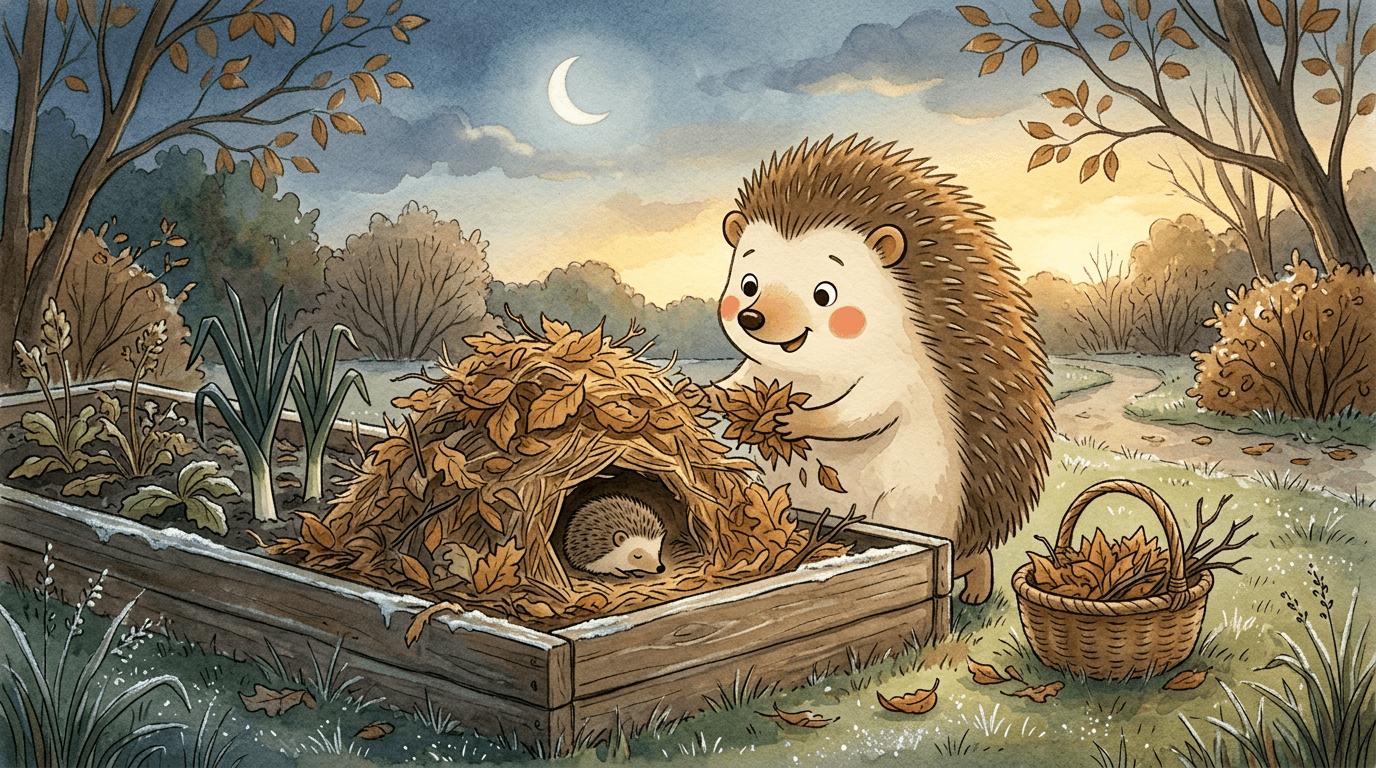
Build a hedgehog winter shelter: why this week is the deadline, not December
Last year I cleared the leaf pile behind my raised bed on December 2nd because it looked untidy. Three days later the first hard frost hit. It wasn't until spring that I realised what I'd actually destroyed. Here's what to do this week, before it's too late.
November 10, 2026 · 4 min read
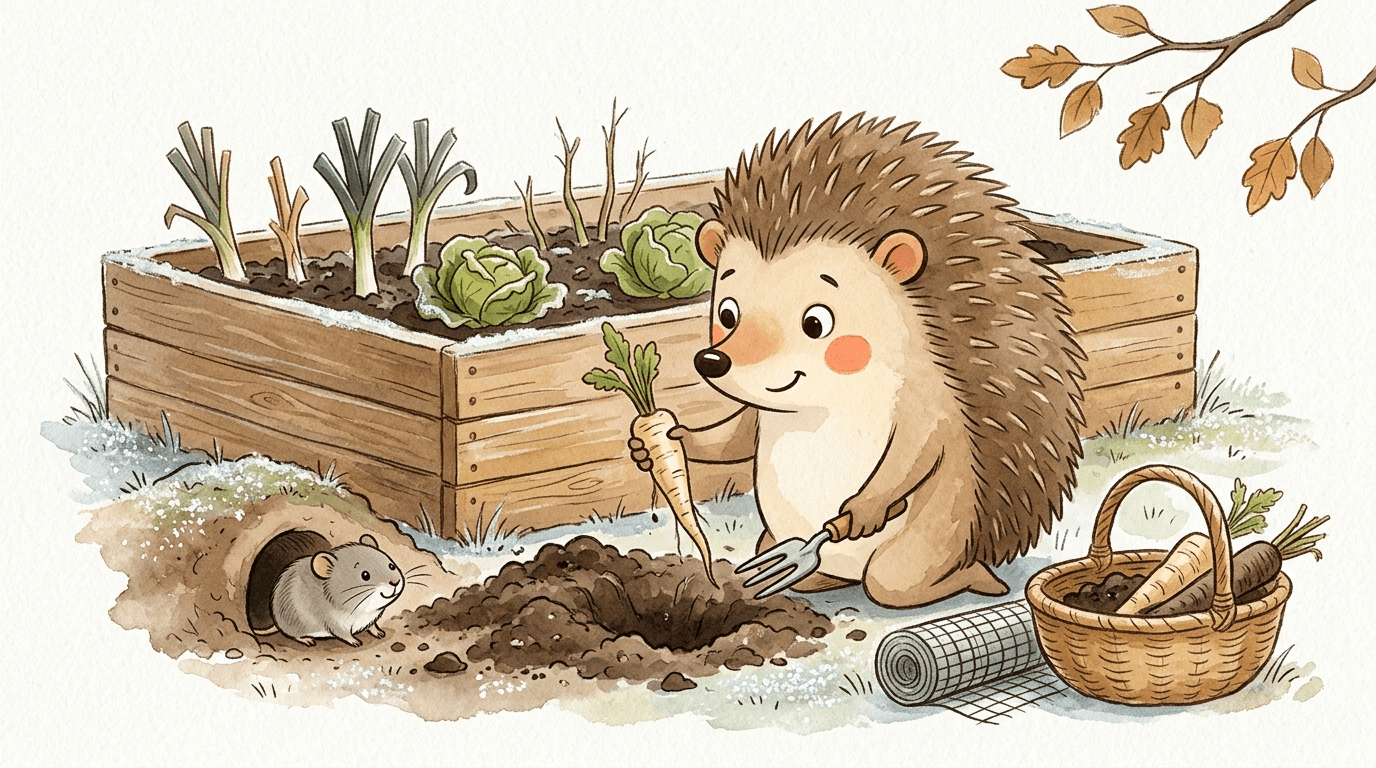
Voles in the winter raised bed: protecting what's still in the ground
Last December I went to dig up my parsnips and found mostly holes. No parsnip, no mound of earth, nothing — just a tunnel system, as if someone had sucked the roots out from underneath. Someone had, almost. Here's what matters right now, while root vegetables are still sitting in the bed.
November 5, 2026 · 4 min read
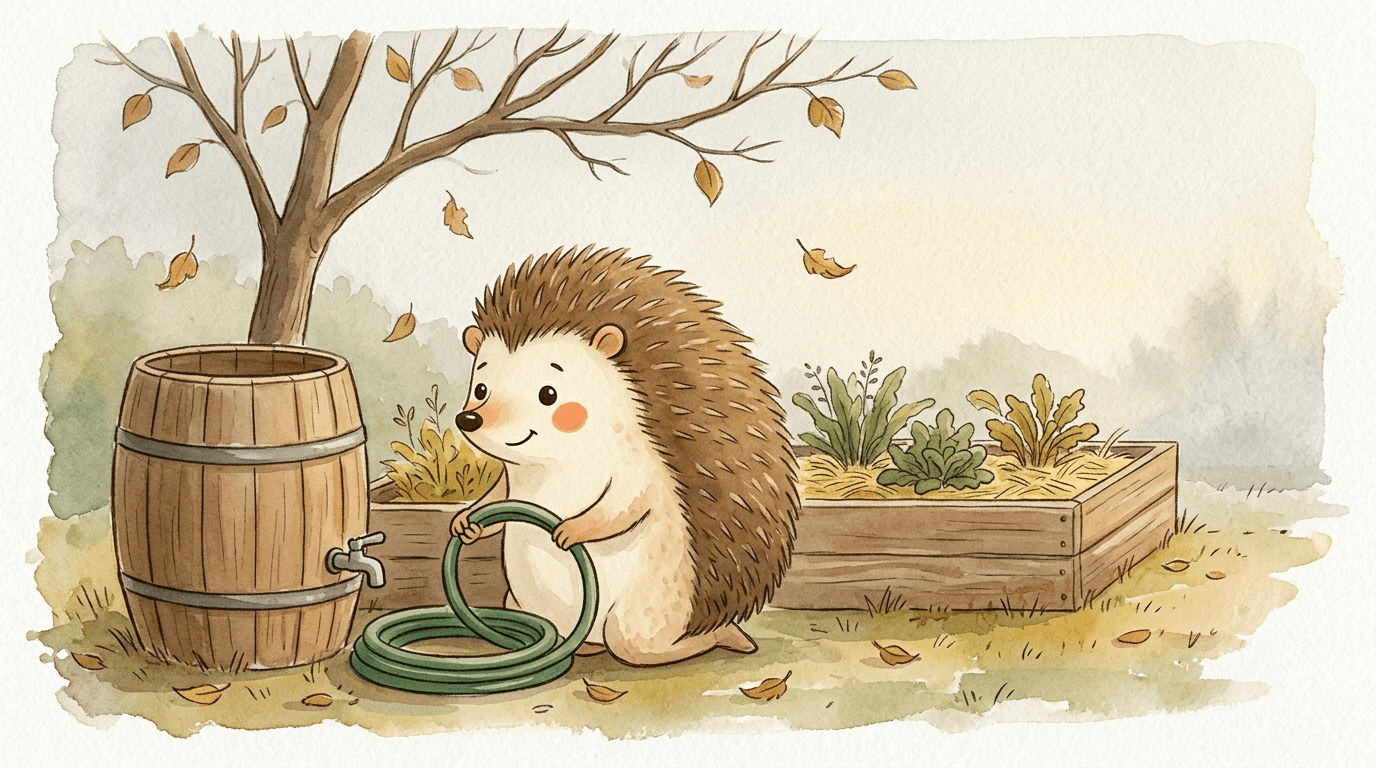
Winterising your rain barrel and hose before the first frost hits
Two winters ago I left my rain barrel standing in December, full to the brim, tap closed. In January there was a crack running the whole side wall, finger-wide, low on the left — exactly where you never look. Here's the 15-minute round I now do every year to stop that: barrel, hose, outdoor tap.