
March 15, 2026 · by Stachi · 2 min read
Raised-bed material: wood, metal or stone — what actually fits
Larch, Corten steel, natural stone — three materials with three very different lifespans and looks. What makes sense when.
The material question comes up in every bed consultation. Three realistic options, each with pros and cons. Ignore marketing claims ("lasts 30 years!") — reality is more sober.
Wood (larch, Douglas fir)
Lifespan: 8-15 years depending on climate and quality. Larch tends to last longer than Douglas. Big-box softwood (spruce, fir): 3-5 years, then rotted.
Pro: Looks (fits almost anywhere), low heat absorption (roots stay cool), cheap DIY
Contra: Rots from the inside (soil + moisture are aggressive). A liner inside extends life by 5-7 years but is microplastic.
Recommendation: Larch with an inner liner. Lasts ~15 years, DIY-friendly, looks warm.
Corten steel
Lifespan: 25-40 years. The rust layer seals itself within 12-18 months, then stable.
Pro: Very durable, industrial-modern look, maintenance-free
Contra: EXPENSIVE (4-5× wood price). Heats up in summer → can overheat the soil at the inner walls. First 12 months it "rusts" stains onto concrete/stones (plan placement, don't move).
Recommendation: If budget allows and the look appeals. Not in full south exposure without shade — heat issue.
Natural stone / dry-stone
Lifespan: unlimited (50+ years).
Pro: prettiest look (handmade), stones store heat (positive in spring), habitat for lizards and insects
Contra: VERY expensive (10× wood price), labour-intensive to build, hard to move if you want to relocate
Recommendation: If you'll leave it for a lifetime. Otherwise too much effort.
What I don't recommend
- Metal sheeting (galvanised): heats extremely in summer (50+ °C), roots burn. Only in full part-shade
- Recycled plastic boards: looks cheap, microplastic risk, brittle after 5 years
- Concrete planter blocks from the big-box: cold, frost-brittle, heavy
Maintenance per material
Wood: yearly visual check for fungus, every 5 years check liner (if present)
Corten: nothing. Truly nothing.
Stone: every 3-4 years re-set loose stones, otherwise nothing.
My quick guide
- Starting out, 200-400 € budget: larch kit from the garden centre. 8-15 trouble-free years.
- Want pretty and durable, 1500 €+: custom-cut Corten steel. 30 trouble-free years.
- Plenty of time, want zero maintenance forever: dry-stone natural stone. Lifelong.
Whatever material — plants grow in any of them. Sowing times and companion planting don't change. Stachi plans in the plant library and the planner material-agnostically.
Material is more taste than practice. Just don't build from pressure-treated lumber (toxic in soil) or thin metal sheet (heat). Anything else works.
🦔 Stachi

More articles
November 15, 2026 · 4 min read
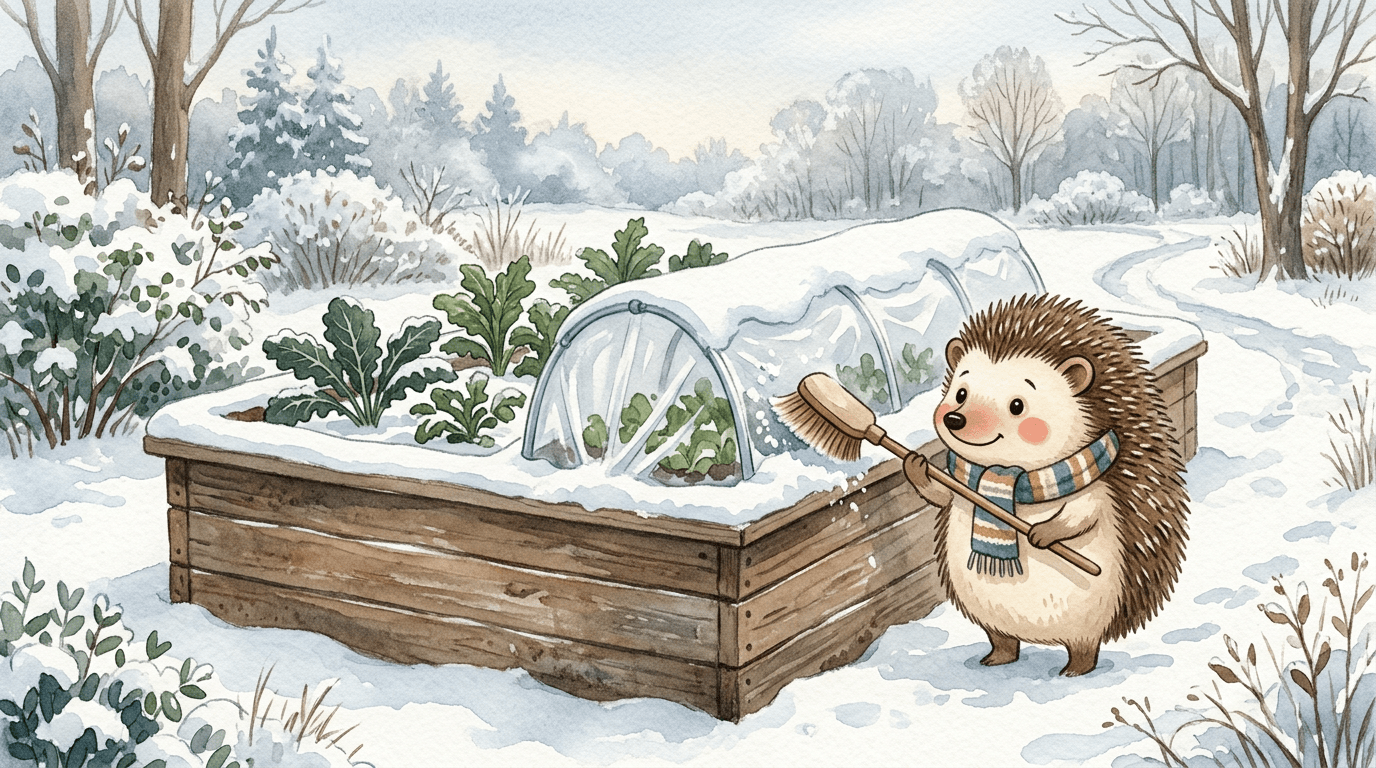
Snow on the raised bed: when it protects, and when it snaps a hoop
Two years ago I walked out one morning and my hoop tunnel over the kale had collapsed flat into the bed, two hoops snapped, the fleece underneath torn. The snow itself wasn't the problem — the exact same amount sat right next door on open soil and did exactly the right thing there. The only difference was whether it landed on earth or on a frame.
November 10, 2026 · 4 min read
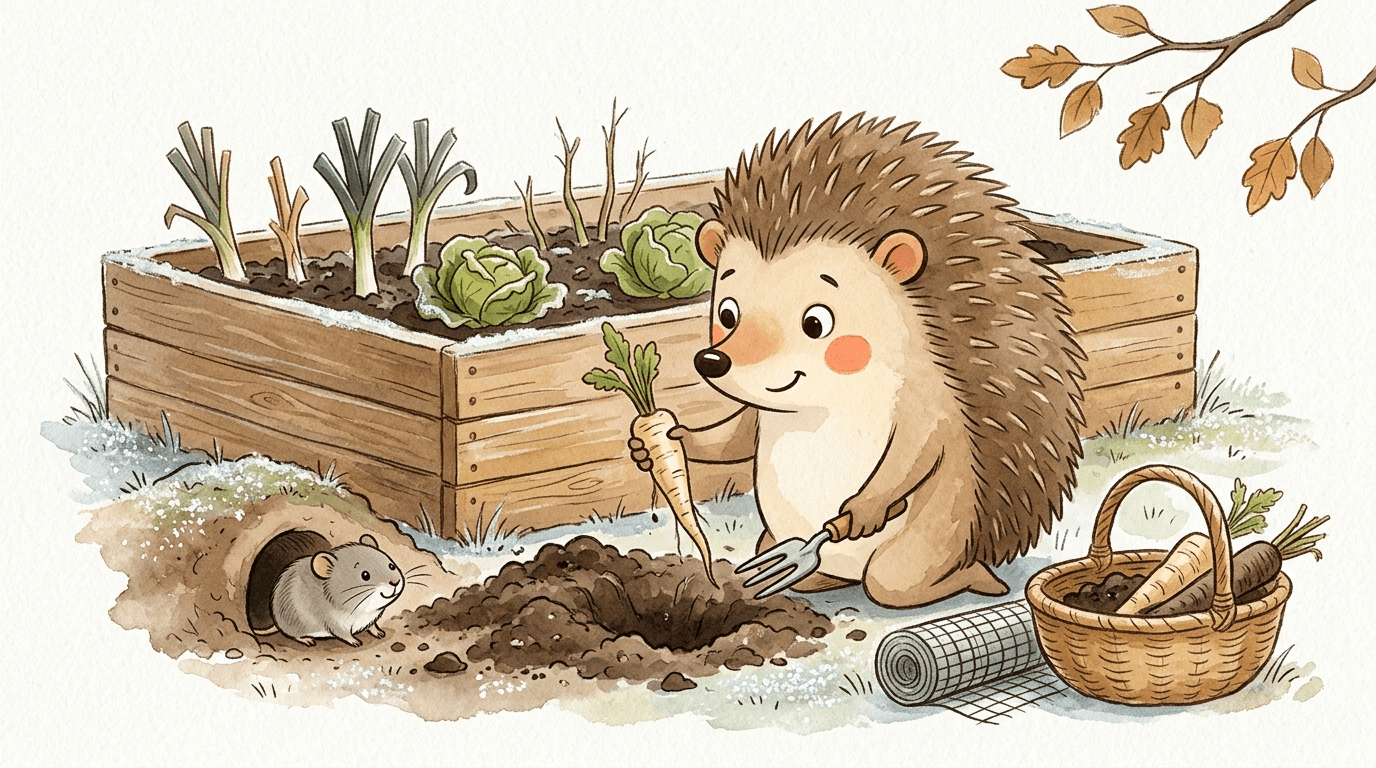
Voles in the winter raised bed: protecting what's still in the ground
Last December I went to dig up my parsnips and found mostly holes. No parsnip, no mound of earth, nothing — just a tunnel system, as if someone had sucked the roots out from underneath. Someone had, almost. Here's what matters right now, while root vegetables are still sitting in the bed.
November 5, 2026 · 4 min read
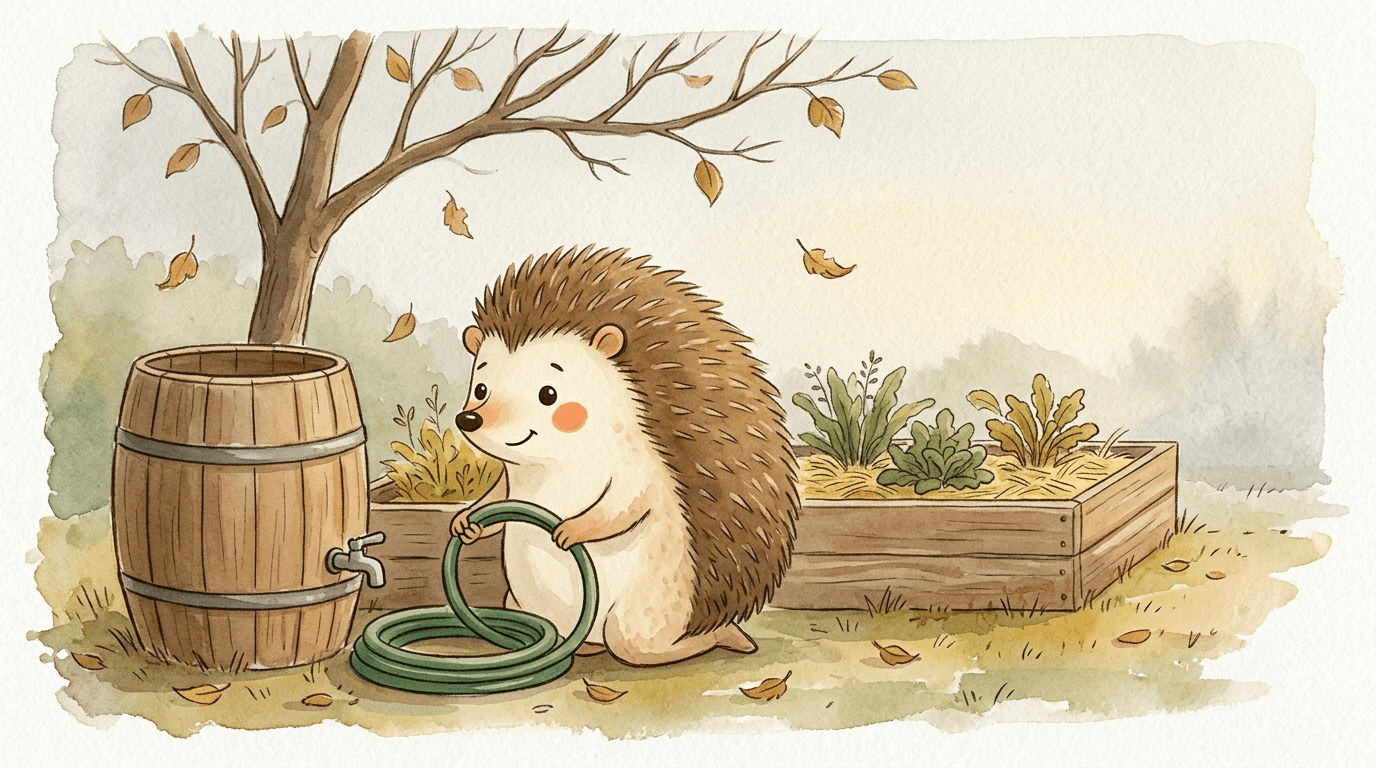
Winterising your rain barrel and hose before the first frost hits
Two winters ago I left my rain barrel standing in December, full to the brim, tap closed. In January there was a crack running the whole side wall, finger-wide, low on the left — exactly where you never look. Here's the 15-minute round I now do every year to stop that: barrel, hose, outdoor tap.