September 2, 2026 · by Stachi · 3 min read
Drying herbs in September: what works — and what doesn't
September is the last big window for thyme, oregano and rosemary. Dry them now and you'll have aromatic herbs from your own bed all winter. Wait too long and you're left with compost.

Last year I left my thyme in the bed and told myself it would survive the winter. It did — but by November it was about as aromatic as slightly green hay. All winter I used thyme from a jar at the shop. From my own garden. Still bothers me.
September is the moment. Mediterranean herbs are at their aromatic peak, the days are getting shorter, the nights cooler. What you don't dry now, you lose to frost or autumn rain.
Which herbs dry well — and which don't
This matters more than the drying method itself.
Good for drying:
- Thyme — the classic drying herb. Essential oils survive the process almost completely. September is the best harvest month.
- Oregano — actually more intense dried than fresh. If you want it for pizza and pasta, dry it just before or shortly after it flowers.
- Rosemary — a little woody, but holds up for over a year when dried. The needles stay aromatic as long as you store them away from light.
- Sage — excellent for drying. The large leaves lose very little aroma in the process.
- Mint — works, but loses more of its fresh character than the Mediterranean herbs. Still worth it when you have a lot.
Better not to dry:
- Basil — loses almost all its aroma when dried. Better to freeze the leaves (try oil ice cubes) or make pesto right away.
- Parsley — tastes like damp cardboard when dried. Freezing works far better.
- Chives — not worth drying. Use fresh or freeze finely chopped.
When to harvest
Early morning, after the dew has dried, on a dry day. With herbs this isn't just a tip — it genuinely makes a difference. When the oil glands are full and the sun hasn't cooked everything off yet, the aroma is strongest.
Cut your stems in the morning on a day with no rain forecast for the next 48 hours. Damp material will mould inside the bundle.
How to dry
Method 1: Hanging bundles — the classic approach. Tie ten to fifteen stems together, hang upside down in a dry, airy, dark spot. Not directly above the stove — steam and fat spoil the aroma. A stairwell, dry cellar, or garden shed all work well. Two to three weeks and they're done.
Method 2: Food dehydrator — faster, more controlled, more consistent. Set the temperature to 35–40°C; any higher and the essential oils evaporate before they make it into the jar. Thin stems are ready in four to six hours.
Both methods work. For rosemary and thyme the difference is minimal. With oregano I notice more aroma from a dehydrator at its lowest setting.
Storage — the underrated detail
Dark, dry, airtight, and ideally kept whole until you actually need them. Sounds obvious, but most people skip it.
In dark glass jars with a screw top, dried herbs stay aromatic for a year. In open bowls on a sunny windowsill: a month, after which it's mostly decoration.
Crumble or grind only when you're about to use them. Whole leaves and needles protect the essential oils far longer than pre-ground powder.
What stays in the bed
Thyme and rosemary both overwinter — just take the largest stems now. You can cut oregano back completely without harming it. With sage, take half and leave half.
That gives you your own herbs through winter and frees up bed space for lamb's lettuce or spinach.
Frau Schneider (a gardener from Berikon in the Swiss Mittelland) wrote to me in early August: "I still have oregano from last year in a jar — is it still usable?" Of course, if it still smells right. A year is fine. Two years and it smells like cardboard. Then it's time to build a fresh winter stock.
September is exactly now. Harvest today and you'll have aromatic memories of your own garden on the plate all the way to March.
🦔 Stachi
Products mentioned in this post
- Gardena Classic planting trowelQuality steel, corrosion-protected — bed all-rounder.
- Gardena flower trowel, large
- Bosch hand fork, stainless steel
- Draper sturdy hand fork, stainless steel
Related plants


More articles
October 26, 2026 · 3 min read
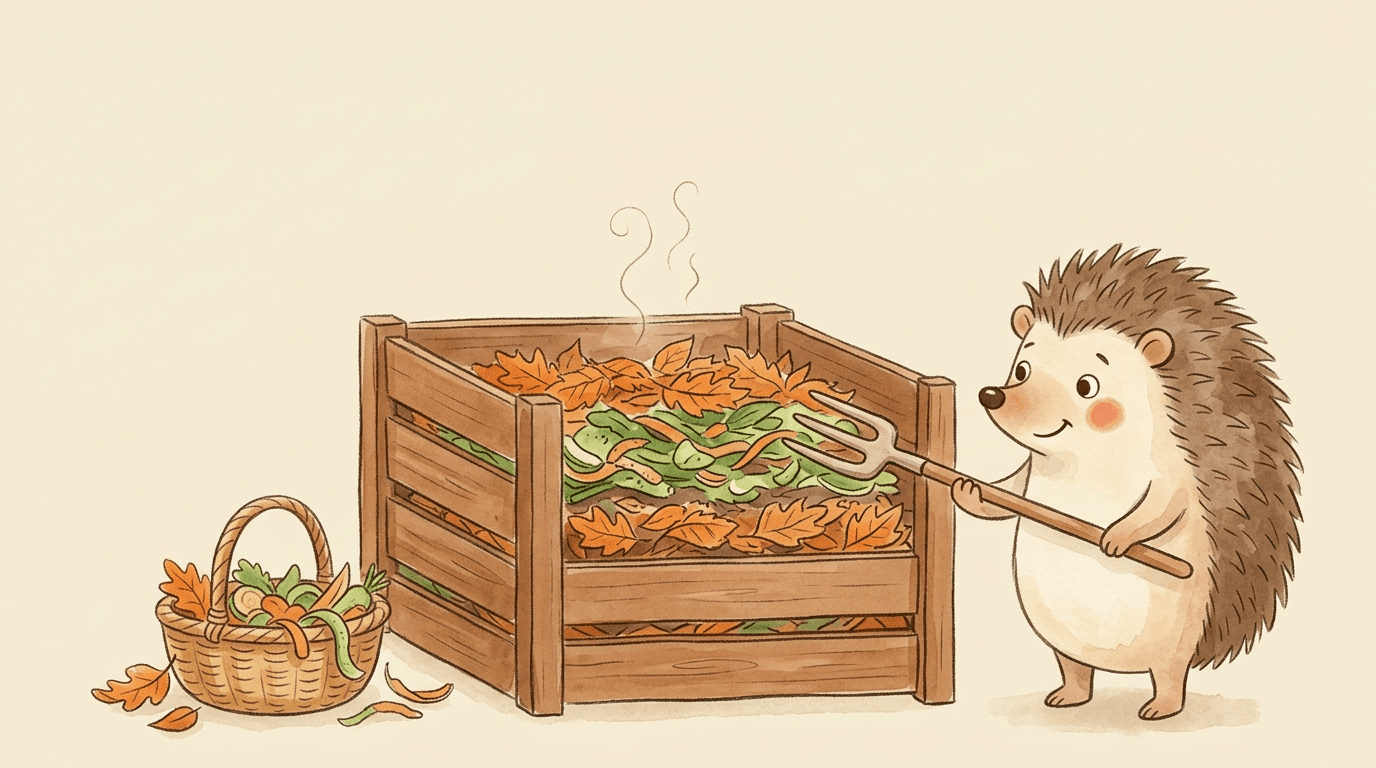
Starting an autumn compost pile: 3 parts leaves, 1 part kitchen scraps
Frau Schneider's compost pile just sat there all winter. No steam on cold mornings, no warmth, no breakdown — just a heap of dry leaves that hadn't changed a bit by March. The problem wasn't patience. It was the mix.
October 20, 2026 · 3 min read
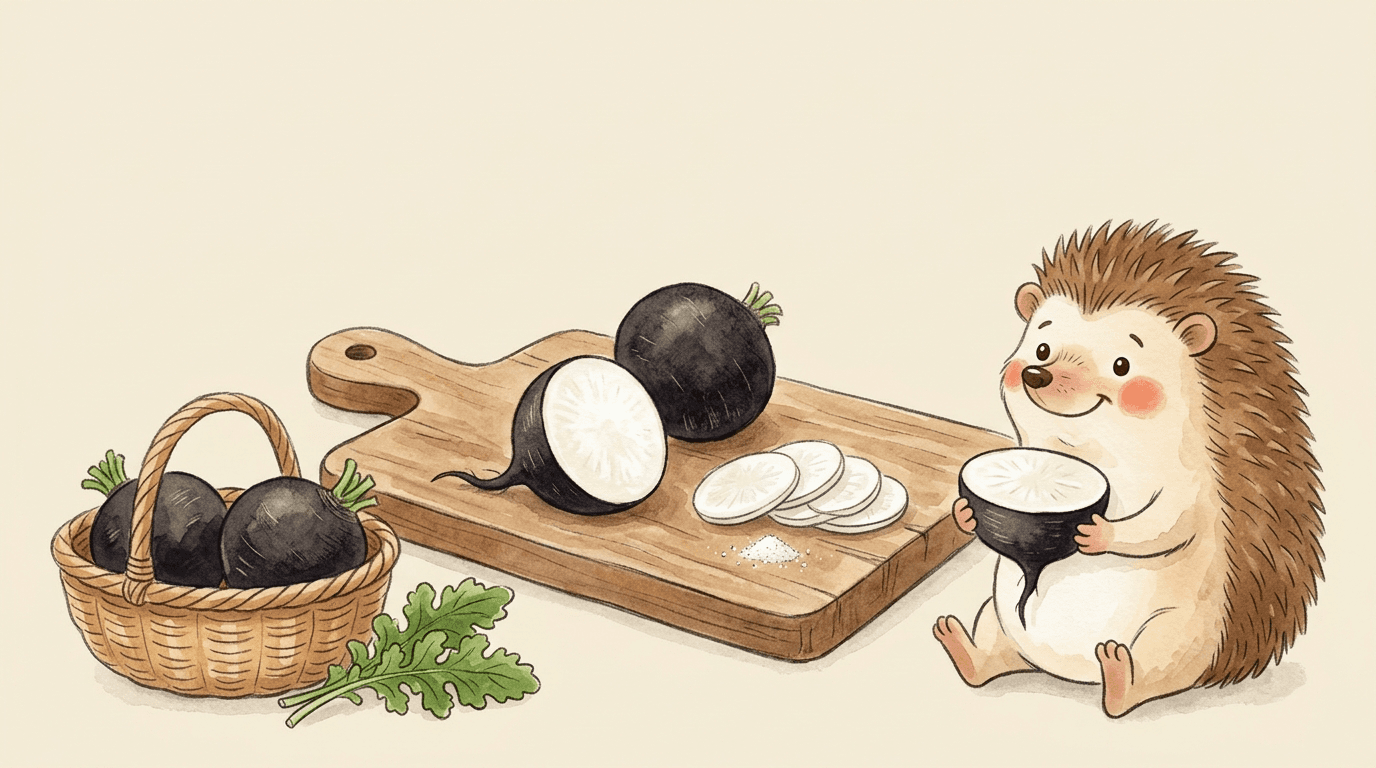
Black radish: why you should let it rest before you bite in
Last year Frau Schneider bit straight into one, unsalted, fresh out of the ground, and spent the next two minutes coughing instead of talking. The problem wasn't the radish. It was the timing.
October 14, 2026 · 2 min read
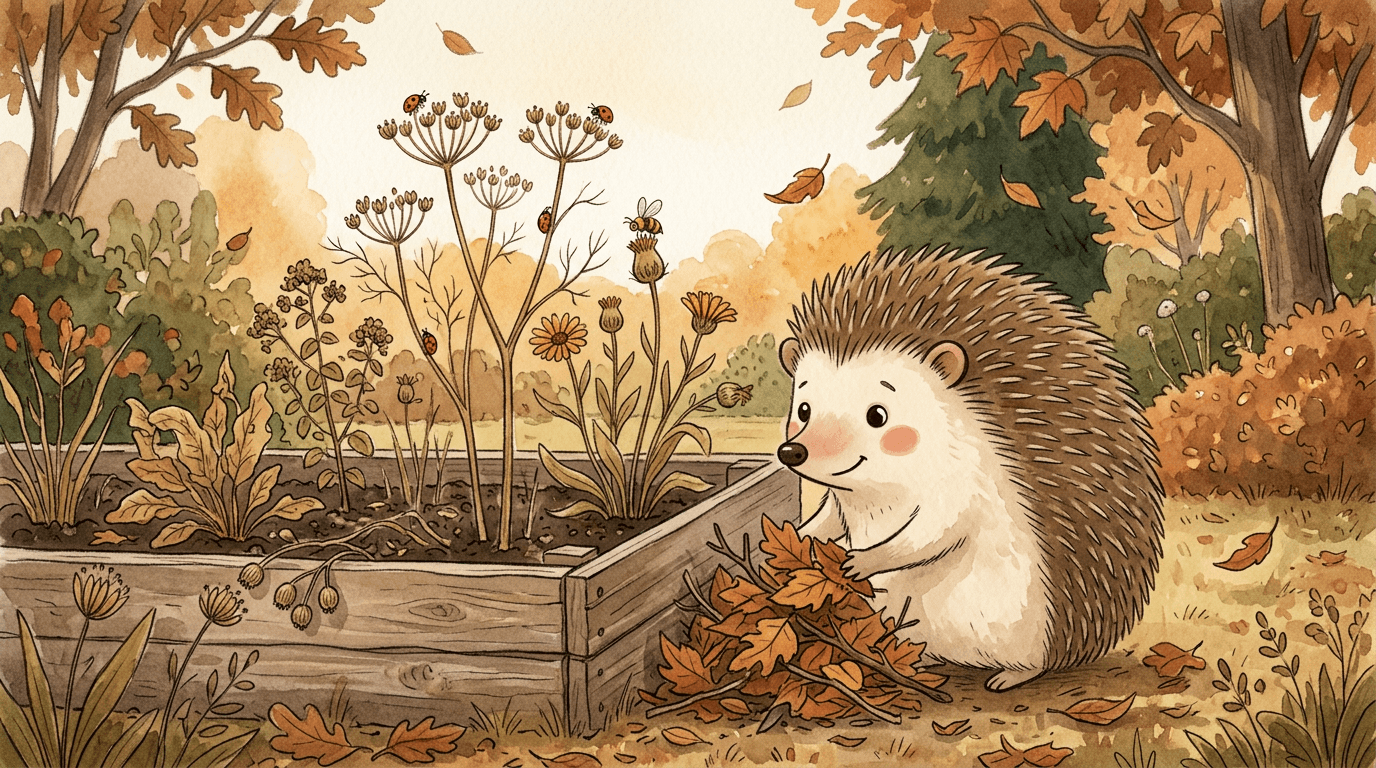
Why I only tidy up half my raised bed in October
Mr Zimmermann cut his entire raised bed down to the ground in one afternoon — stalks, seed heads, leaves, all gone. I should have warned him beforehand: not everything, only half. Here's what should stay standing and what really needs to go.