April 25, 2026 · by Stachi · 4 min read
The last centimetre in your bed — plants that fill every gap
Between the tomatoes, on the edge, in the row where nothing seems to fit: four plants that are fast, stay small, and improve your main crops along the way.
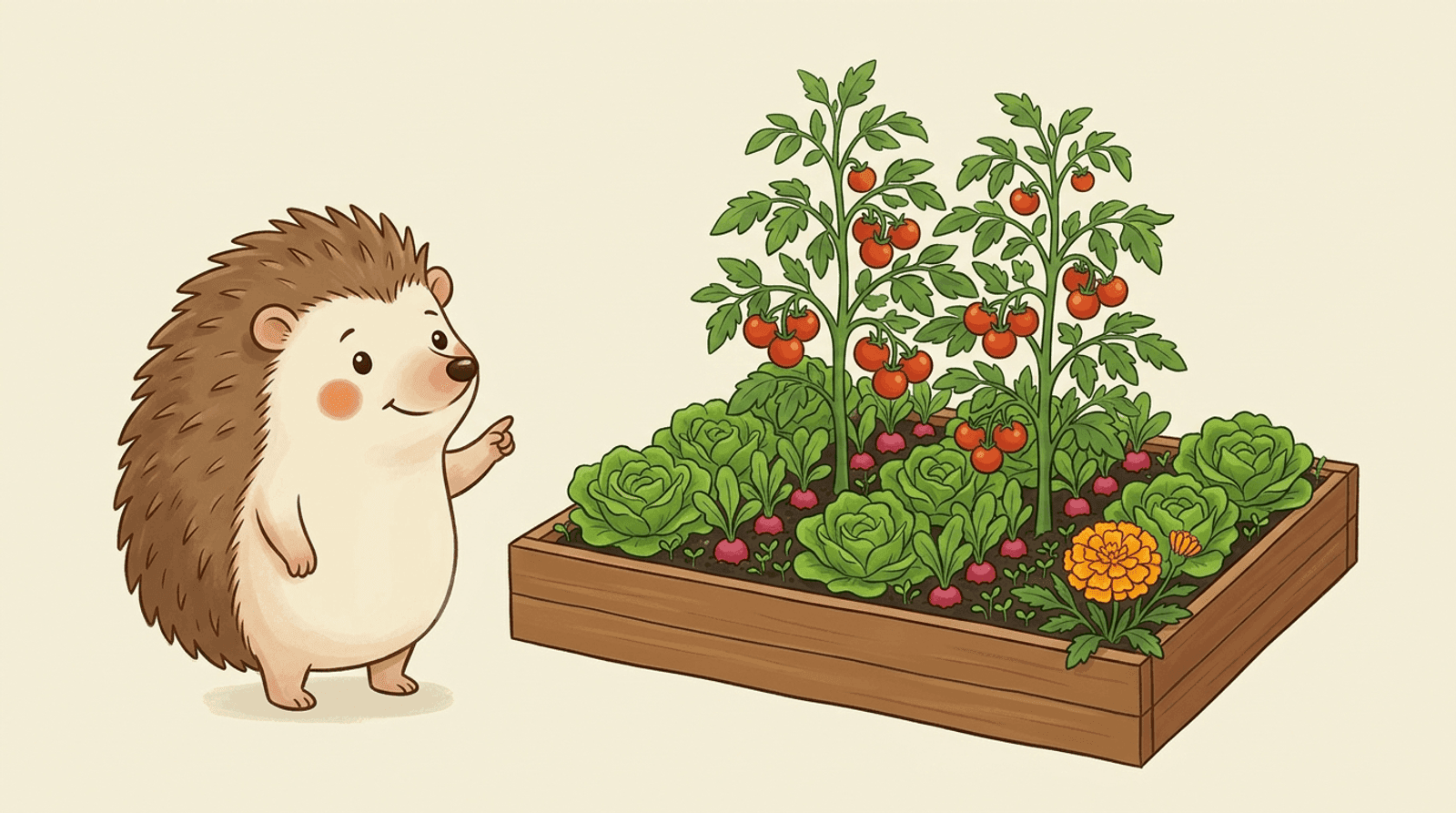
You've planted your bed. Tomatoes in the middle, lettuce on the edge, beans in the back row, a squash vine in the corner. The bed looks tidy. But between the plants there are a few square centimetres of soil that are... well, empty.
Those gaps aren't just an aesthetic problem. They're a missed opportunity. Per bed you might have 0.2-0.3 m² of gap — about 20% of the growing area producing nothing. Across the season that's 6-8 extra heads of lettuce or 200 radishes you didn't harvest, just because the space wasn't used.
Here are four plants that fill those gaps — fast, small, and improving your main crops along the way.
The principle: fast + small + useful
A filler plant needs three properties:
- Fast. Maximum 6-8 weeks from sowing to harvest. Otherwise it takes longer than your main crops need to fill the gap.
- Small. Maximum height 20-25 cm, root depth max 15 cm. Otherwise it competes with the main plants.
- Useful. Ideally it does something good — loosens the soil, attracts beneficials, supplies nitrogen.
1. Radishes — the classic
Already mentioned in the spring post; here in the gap-filler role.
Radishes need only 4 cm² per plant and harvest in 4 weeks. So: between two tomato plants planted in mid-April that won't be big until mid-June, you have exactly the window for a radish run.
Sow in the row: a seed every 3-4 cm, 1 cm deep. Harvest all after 4 weeks, before the tomatoes claim the space. A 50 cm row between two tomato plants gives you 12-15 radishes.
2. Asian greens / pak choi — the spring secret weapon
Asian greens (mizuna, tatsoi, pak choi) grow in 3-5 weeks, have shallow roots (10 cm), and the young leaves are welcome in any salad or wok.
Where: in spots that are only free for a few weeks. Pre-crop before tomatoes, intercrop between lettuces, post-crop after early potatoes.
Sow: from March to mid-April, then again from late August. In high summer they bolt too quickly, so skip then.
Cutting trick: from 10 cm height, harvest individual leaves. Plant pushes new ones. You get 3-4 mini-harvests per sowing.
3. Marigolds — beautiful and useful
Marigold isn't a food plant (well, you can eat the flowers, but that's not the main point). It's a pollinator magnet and a nematode deterrent.
Pollinators: hoverflies, wild bees, butterflies. They land on the marigold and then move to your tomatoes/beans/cucumbers. You significantly raise the pollination rate, which directly means more yield.
Nematodes: tiny worms in the soil that damage plant roots. Marigold roots release substances that drive nematodes off. Over 2-3 seasons, measurably better soil.
Sow: mid-April to mid-May, blooms from July through to frost.
Where: outer edges of the bed, where pollinators see them first. One marigold per 50 cm of bed edge is enough.
4. Cress (or salsify-young-leaf) — soil activation
OK, I'm cheating a little here — those are two plants.
Cress (garden cress, not watercress) grows to harvest in 6-10 days. Yes, one week. It's the fastest edible plant I know. You sow, you harvest, you re-sow. In high summer you can push 3-4 cress generations through a single gap.
Plus: cress roots release mild acids that activate the soil for following plants. A bed where cress has grown several times often has visibly more crumbly soil after 2 seasons.
Salsify (scorzonera, harvested young as salad leaf) is rarer and a bit more demanding, but it has taproots that loosen the soil deep — ideal after plants with shallow roots.
If you can't decide: cress. You have nothing to lose, it costs 5 cents per sowing.
Example: how I use it
My 80×120 cm bed in June:
- 3 tomatoes in the centre (60 cm spacing, each needs ~30 cm radius, so 2 m² used out of 0.96 m² bed — the overlap is the gaps)
- 4 lettuce heads at the front-right
- 6 bush beans at the back-left
The gaps between tomatoes and lettuce are about 10×30 cm each. There are 4 such gaps. Radishes go in there, sown in April, harvested late May. Before the tomatoes are big enough to claim the space.
On the outer edges: 4 marigolds — one per side. They draw the pollinators from July onwards, which helps my bean harvest.
Between the bean rows, in spring before beans are planted, a sowing of Asian greens. Harvested by 10 May, then beans go in.
Effective: the bed that the plan says holds 13 plants actually produces, across the season, those 13 main crops + ~30 radishes
- 2 Asian-greens mini-harvests + a pollinator boost from 4 marigolds. Yield gain: hard to quantify, but tangible.
What Erntezeit does for you
Currently Erntezeit calculates main crops — "you have room for 3 tomatoes, 4 lettuces, 6 beans". Gap optimisation comes with Pro in Phase 4: it detects the geometric gaps and proposes filler-plants that fit the season.
For now: plant your main crops as planned, and sow radishes, Asian greens or cress in the remaining gaps. Costs €5-10 in seed and gives you 20% more yield.
Try the bed planner — we give you the main plan, you fill the gaps.
🦔 Stachi
Related plants


More articles
October 26, 2026 · 3 min read
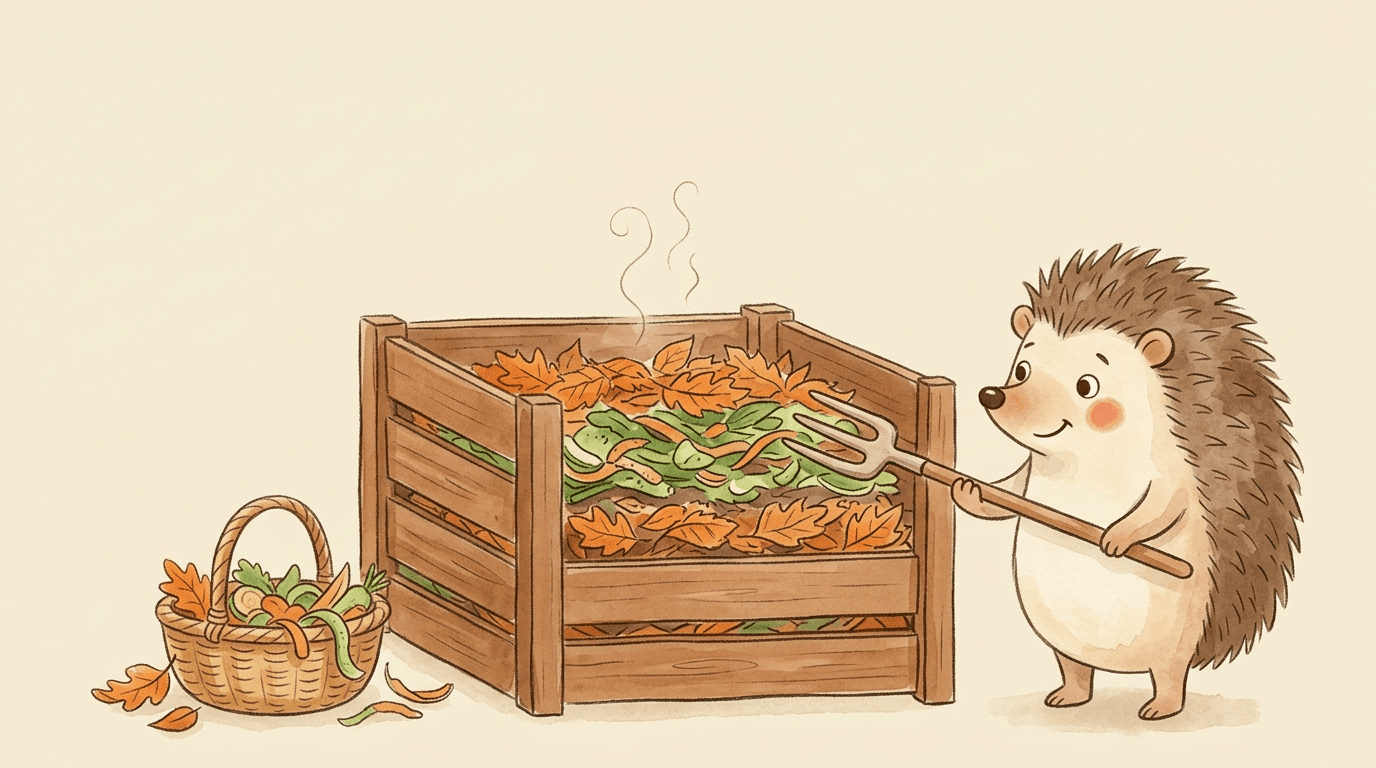
Starting an autumn compost pile: 3 parts leaves, 1 part kitchen scraps
Frau Schneider's compost pile just sat there all winter. No steam on cold mornings, no warmth, no breakdown — just a heap of dry leaves that hadn't changed a bit by March. The problem wasn't patience. It was the mix.
October 20, 2026 · 3 min read
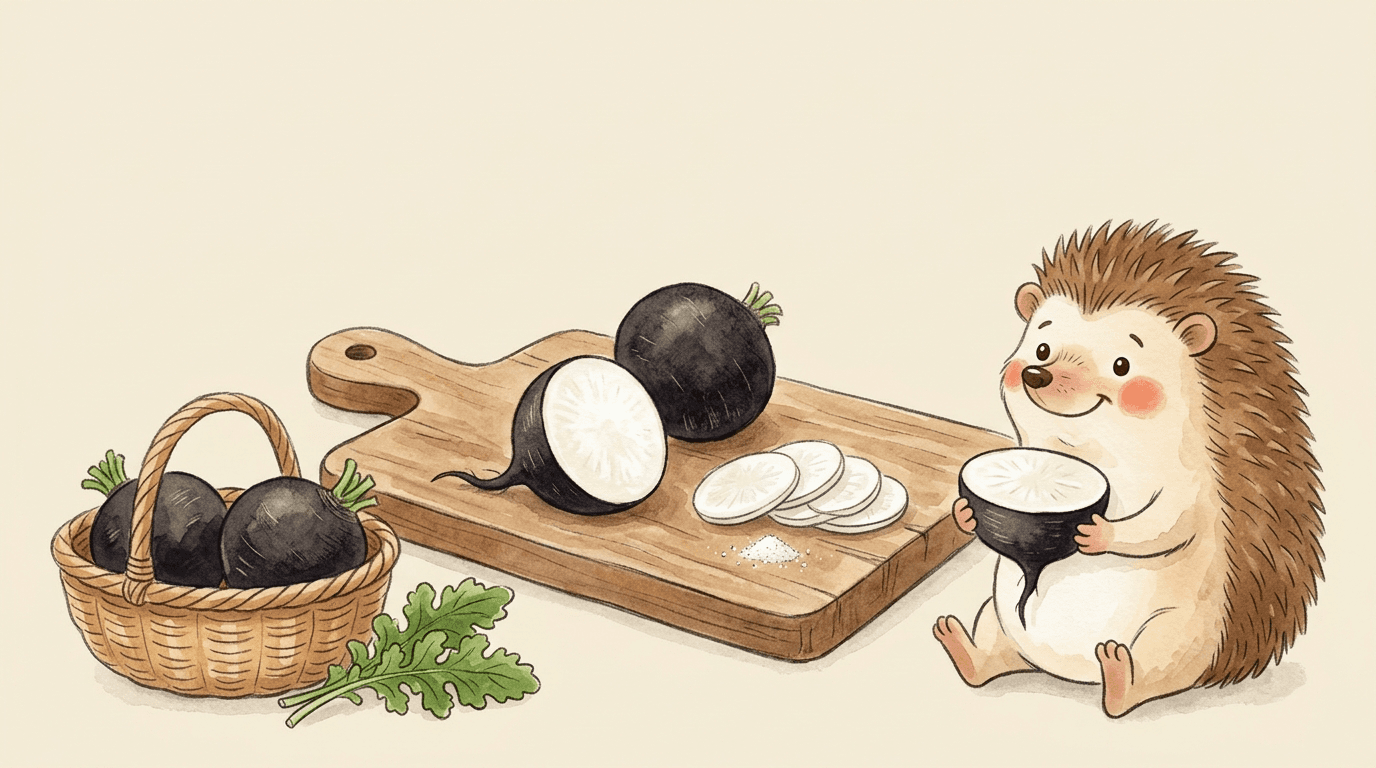
Black radish: why you should let it rest before you bite in
Last year Frau Schneider bit straight into one, unsalted, fresh out of the ground, and spent the next two minutes coughing instead of talking. The problem wasn't the radish. It was the timing.
October 14, 2026 · 2 min read
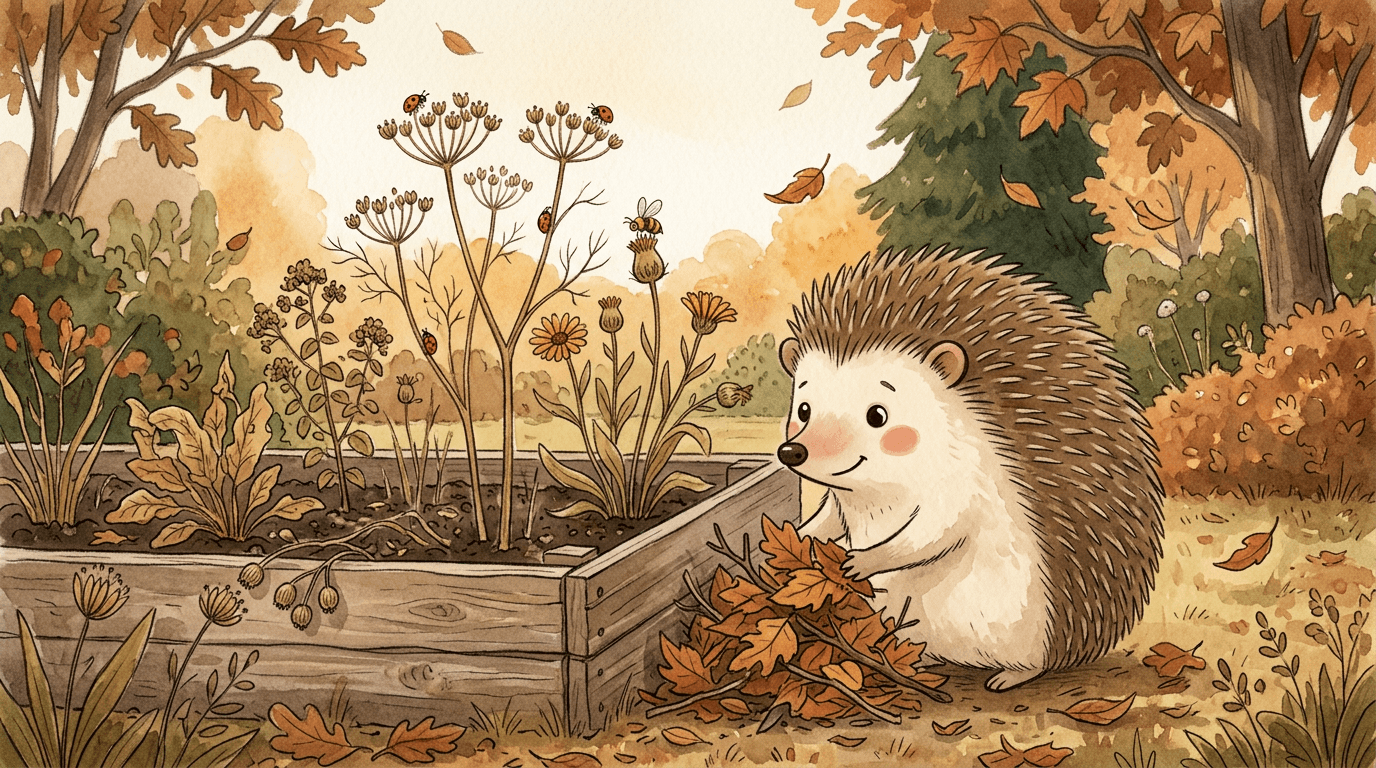
Why I only tidy up half my raised bed in October
Mr Zimmermann cut his entire raised bed down to the ground in one afternoon — stalks, seed heads, leaves, all gone. I should have warned him beforehand: not everything, only half. Here's what should stay standing and what really needs to go.