May 9, 2026 · by Stachi · 8 min read
How to prune tomato suckers: what, why, when — and my honest field test
Pinching out suckers sounds like garden folklore. It's actually five minutes of work per week that got me four kilos more tomatoes in 2024.

I had four "Andenhorn" tomato plants sitting side by side in my raised bed. I pinched out suckers on two of them religiously. The other two I left to do whatever they wanted — a proper experiment, because I wanted to know once and for all whether removing suckers actually makes a difference or whether it's just one of those things people repeat because their grandfather said so.
The result: 11 kg from the pinched plants. 7 kg from the unpinched ones. One of the unpinched plants also developed blight in August. The pinched plants stayed healthy until the first frost.
So — let me explain exactly why that happened, and how to do it right.
What is a tomato sucker, exactly?
Most guides skip this and just say "remove the side shoots" — which leaves you standing in front of the plant with no idea what you're actually looking for.
Precise anatomy first.
A tomato plant has a main stem. From the main stem grow leaves. At the exact point where a leaf joins the stem — the leaf axil — a new shoot can emerge. That shoot is the sucker (Geiztrieb in German).
A sucker is not a leaf. It's an entire new stem in the making. Left alone, it grows into a second main stem — with its own leaves, its own flowers, and eventually its own suckers. The plant branches indefinitely.
That sounds productive at first. More stems, more flowers, more tomatoes, right?
Not quite.
One clarification to make sure you're hitting the right spot: the sucker sits in the axil between the main stem and the leaf base — not between two leaves. And it's also not the flower truss — the flower truss grows directly on the stem between two leaves but has a completely different shape and texture. A flower truss has buds and smells like tomato. A sucker looks exactly like a tiny stalk with miniature leaves on it. If you're unsure: wait. If it keeps growing and sprouts little leaves, it's a sucker. If it develops buds, leave it alone.
Why bother removing suckers?
A tomato plant has a fixed energy budget. That energy can go into fruit or into bulk. Given free rein, the plant votes for bulk: lots of foliage, lots of small shoots, lots of flower buds that start but never quite finish before October.
Pinching out suckers means you make the decision for the plant. Energy goes into the fruit that's already forming — not into new stems.
Two more reasons that matter at least as much:
Airflow. A dense tomato bush with five stems creates a warm, humid microclimate inside. That's exactly what blight loves. One or two clean stems with space between them means air moves through, leaves dry faster, and the fungus has far less opportunity to take hold.
Harvest. A pruned plant is easier to monitor. Ripe tomatoes hang visibly. You miss fewer, and fewer fruits quietly go overripe and fall.
Determinate versus indeterminate: the one thing you must know first
Not all tomatoes should be pinched. This is the mistake that trips up most beginners.
Indeterminate tomatoes grow without a fixed endpoint — they keep going until frost kills them. Andenhorn, San Marzano, Roma, most cherry tomatoes, most classic greenhouse varieties — all indeterminate. These need stakes or strings for support, and they benefit hugely from removing suckers.
Determinate tomatoes (bush tomatoes) have genetically programmed growth. They reach a set height, stop growing, bloom all at once, and ripen their fruit within a compressed window. Classic examples: "Balkonstar", "Tumbler", most patio and container varieties. Do not pinch these. You'd be removing the pre-programmed fruiting shoots and drastically cutting your harvest.
If you're unsure: check the seed packet or plant label. "Determinate" or "bush type" = don't pinch. "Indeterminate" or "vigorous / tall growing" = pinch regularly.
When to start?
Early. As early as possible.
The ideal moment is when the first suckers appear and are 5 to 10 cm long. In Switzerland, depending on planting date and weather, that's usually from mid-June onwards — sometimes already late May if you planted early.
After that: check every week. Suckers grow fast. Skip one warm, wet week and a sucker can be as thick as a pencil before you notice. That means more work and more stress on the plant.
I do it on Sunday mornings when I'm watering anyway. Two to three minutes per plant if you stay on top of it.
How to remove suckers — two methods
Small suckers (thinner than a pencil): Use your fingers. Grip the sucker between thumb and index finger, twist gently back and forth, then pull. It snaps cleanly at the base. No open wound, no tool needed.
Larger suckers (pencil-thick or thicker): Use scissors or a sharp knife. Cut close to the stem — but not into the stem tissue itself.
And here's the part most guides omit:
Disinfect your scissors between every single plant.
Not once at the start. Before each plant. The reason: blight, mosaic virus, and other tomato diseases spread through fresh wound tissue. If one plant is infected and you use the same unsterilised scissors on the next one, you've just done the pathogen's distribution work for it.
70% isopropyl or ethyl alcohol on a cloth or tissue, quick wipe — done. Alternatively, pass the blade through a lighter flame and let it cool for a moment. More dramatic, equally effective.
I keep a small glass bottle of 70% alcohol and a few cotton pads in my garden basket. Costs nothing, takes five seconds per plant.
What to do if you're running late?
Sometimes you miss a week. Sometimes you come back from holiday and there's a sucker that's already 30 cm long with its own flowers. What then?
Don't panic. You can still remove it — the wound will just be bigger, and the plant will need a few days to recover. Use a sharp, disinfected pair of scissors. No brute force.
If it's already flowering or showing fruit, the decision gets slightly harder. Personally I still remove it — better a large wound now than an uncontrolled side branch for the rest of the season. Other gardeners keep it in that case and train it as a second stem. Both approaches work.
What you should not do: tear out a thick, half-woody sucker by hand. That rips bark off the main stem. Always use scissors.
Common mistakes and how to avoid them
Mistake 1: Confusing the sucker with the flower truss. Happens often, especially with young plants. Flower trusses have buds. Suckers have tiny leaves. If you're not sure, wait three days and see what develops.
Mistake 2: Forgetting to disinfect the scissors. I know gardeners who've skipped this for years with no problems. I also know ones who lost an entire row of tomatoes. The risk is real, the effort minimal. Don't skip it.
Mistake 3: Stopping too early. Many people pinch diligently in June and then stop in July — "the plant is big enough now." That's wrong. Suckers keep growing all season. In August, a neglected plant produces just as many new side shoots as it did in spring. Keep going until early October.
Mistake 4: Removing leaves as well. Occasionally I see plants where someone removed not just the suckers but also the main leaves — because they "get in the way" or "are yellowing at the bottom." This seriously weakens the plant. Remove suckers; leave leaves (except heavily diseased or dead ones).
How many stems to keep?
The classic answer is one stem. Largest fruit, earliest ripening. In a short Swiss summer — where the last frost can stretch past the ice saints in mid-May — one stem is often the safest bet because fruit ripens faster before autumn arrives.
The honest answer: one to two stems, depending on your space and preference. If you have a small raised bed and want maximum efficiency per square metre, stick to one. If you want slightly higher yield per plant and have a bit of experience, you can leave the very first sucker just above ground level to develop as a second stem — and remove everything else.
Three or more stems are rarely worth it in a raised bed situation. At that point you're basically growing a bush again.
My 2024 experiment: four Andenhorn plants
Same planting day, same spacing, same soil, same watering. One variable: pruned or not.
Plants 1 and 2 (consistently pruned, one stem each): Checked weekly, all suckers removed. First ripe fruit in August. Harvest wrapped up in late September, both plants healthy. Total yield: 11.2 kg combined, fruit uniformly large.
Plants 3 and 4 (unpruned, left alone): Dense and green through July, lots of foliage. In August, plant 4 showed early signs of blight in the lower sections — wet leaves packed together, minimal air movement. Fruit was smaller on average, and ripening dragged out noticeably later. Total yield: 7.1 kg combined, one plant with disease.
Four kilos of difference across four plants. That's not a measurement error.
One note specifically for raised beds
In a raised bed, removing suckers matters even more than in open ground — because space is limited. An unpruned tomato can take over an entire bed by August and shade out everything around it. That won't suit the basil next to it — basil needs sun, and basil is one of the best companions you can give a tomato.
If you want to plan your next tomato setup — how many plants, which varieties, what to plant around them — I can help with that:
Plan your bed for free → /en/planer/standort
Just enter your location and bed size, and I'll work out what fits together best. Companion planting, succession crops, correct spacing between your tomatoes — all included.
Removing suckers is five minutes of work per week. But it only pays off properly when the plants are in the right position to begin with.
🦔 Stachi
Related plants


More articles
October 26, 2026 · 3 min read
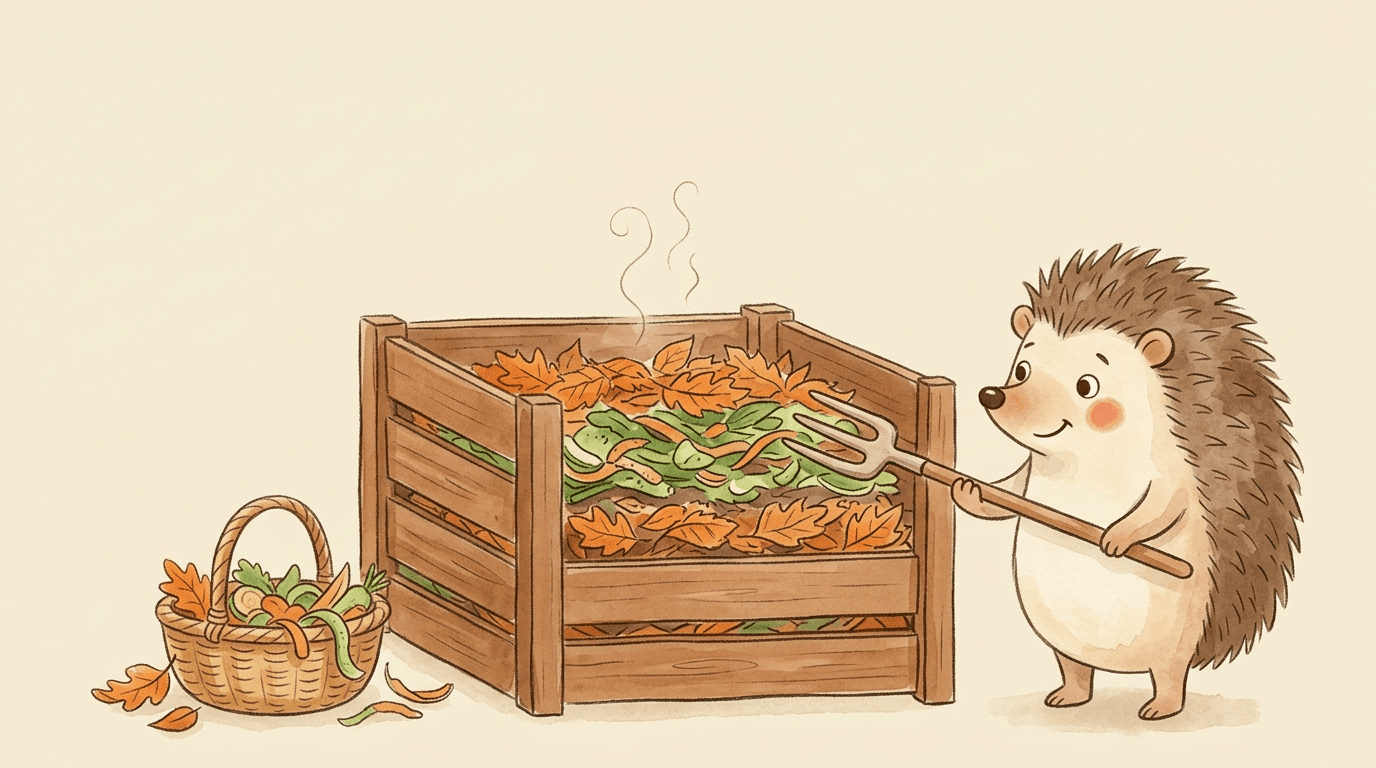
Starting an autumn compost pile: 3 parts leaves, 1 part kitchen scraps
Frau Schneider's compost pile just sat there all winter. No steam on cold mornings, no warmth, no breakdown — just a heap of dry leaves that hadn't changed a bit by March. The problem wasn't patience. It was the mix.
October 20, 2026 · 3 min read
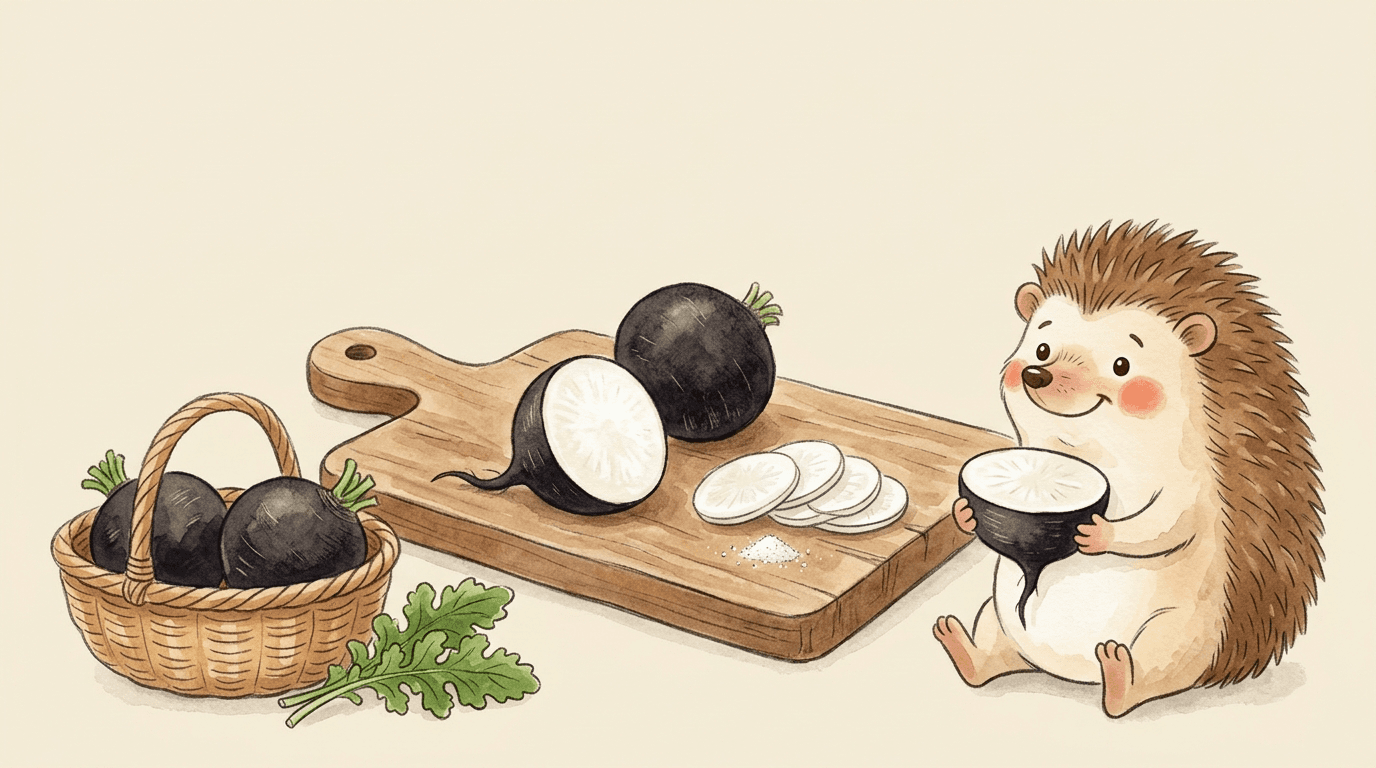
Black radish: why you should let it rest before you bite in
Last year Frau Schneider bit straight into one, unsalted, fresh out of the ground, and spent the next two minutes coughing instead of talking. The problem wasn't the radish. It was the timing.
October 14, 2026 · 2 min read
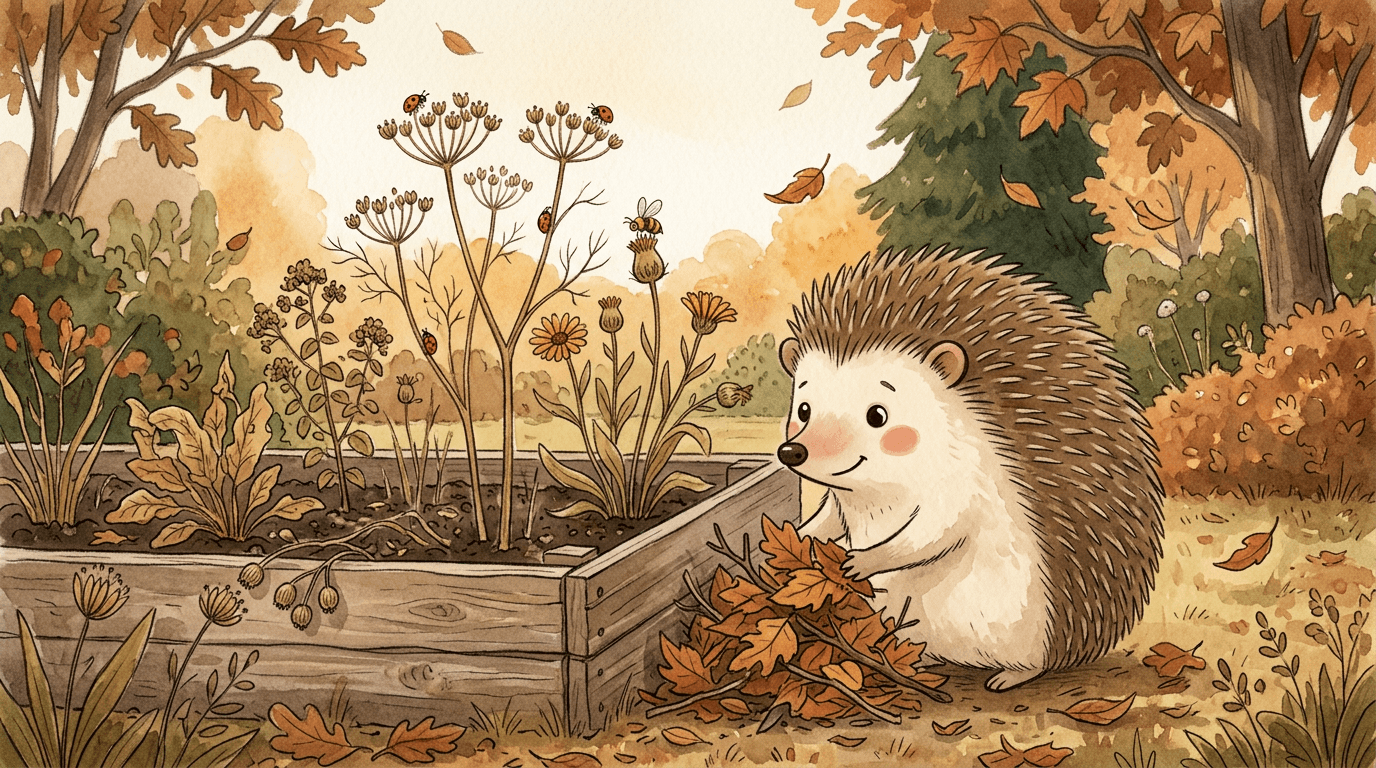
Why I only tidy up half my raised bed in October
Mr Zimmermann cut his entire raised bed down to the ground in one afternoon — stalks, seed heads, leaves, all gone. I should have warned him beforehand: not everything, only half. Here's what should stay standing and what really needs to go.