August 28, 2026 · by Stachi · 3 min read
Bell peppers in the raised bed: why they're still green in August — and what helps now
Mrs Schneider is standing in front of her raised bed and every single pepper is still green. End of August. What is she doing wrong? Nothing at all. But there are a few things that make a real difference right now — and a point after which waiting no longer makes sense.

Mrs Schneider is standing in front of her raised bed, looking at her peppers. End of August, lovely weather — and every fruit is green. Every single one. She writes: "My peppers have been the same size for weeks and there's not a hint of red. What am I doing wrong?"
Nothing. Absolutely nothing.
Peppers need time. That's the first thing to know. From flower to fully ripe, red fruit takes eight to fourteen weeks depending on the variety and temperature. Anyone who planted out in April tends to be too optimistic with their maths.
Why the colour takes so long to come
Peppers ripen in two stages: first the fruit grows to its final size, then the colour changes. This second phase needs warmth — at least 18 to 20 degrees, and fairly consistently.
By late July or early August, the first phase is usually complete. The fruits are full size. But colour change only kicks in when the temperature is right and the plant has enough energy to spare.
That means: a green pepper at the start of August isn't necessarily a problem. It can be bright red or vivid yellow in four to six weeks — if the autumn cooperates.
Where you can step in
You can remove leaves that are shading the fruit now. Light reaching the fruit does help it ripen — that's not a gardening myth. Be careful about it: only take off leaves that are sitting directly on top of large fruits, and never more than a third of the foliage at once.
Water: peppers like it evenly moist, not wet. Too much water in August means the plant puts energy into leaves rather than ripening fruit. Watering a little less than in July is the right call now.
Feeding won't help much at this point. The plant has what it needs. Nitrogen at this stage just makes more leaves — the opposite of what you want.
If you have a spot that gets more sun than your raised bed — a south-facing wall, a gravel area at the front of the house — you can lay green-harvested peppers there to ripen. The supermarket does exactly the same thing on an industrial scale, just in climate-controlled rooms.
Green now, or wait?
Green peppers aren't a failure. They taste different from red ones — fresher, slightly more bitter — but not worse. In the kitchen they work just as well.
Waiting is worth it if you still have four to six good warm weeks ahead. Red peppers have more sugar, more vitamin C, and a more intense flavour from the ripening process.
When frost comes knocking, waiting is over. Then you harvest everything that's there — green or red — and let the fruit ripen indoors. You don't need a cellar or any special setup for this. Just leave them on a windowsill at room temperature. In two to four weeks, many of them will have turned red.
What happens with frost
Peppers are frost-sensitive. One degree below zero is enough to turn the whole plant black and make the fruit mushy. There's no second chance.
Keep an eye on the forecast from mid-September onwards. Once nights drop below eight degrees, you can cover the plants — with horticultural fleece or an old blanket. This often extends the season by weeks.
If a frost does come: get everything out immediately. Green peppers that have been hit by frost will not ripen afterwards. They'll still taste fine, but they won't turn red.
Mrs Schneider wrote two weeks later: "I removed the leaves that were shading the fruits and watered a bit less. Now the first pepper is starting to turn yellow."
Good. Autumn still has time — but only if you let it work.
In the Erntezeit planner you can see how much of your pepper harvest window is still open — and get a reminder before the first frost arrives.
Check the harvest window and frost warning in your plan →
🦔 Stachi
Products mentioned in this post
- Gardena Classic planting trowelQuality steel, corrosion-protected — bed all-rounder.
- Gardena flower trowel, large
- Bosch hand fork, stainless steel
- Draper sturdy hand fork, stainless steel
Related plants


More articles
October 26, 2026 · 3 min read
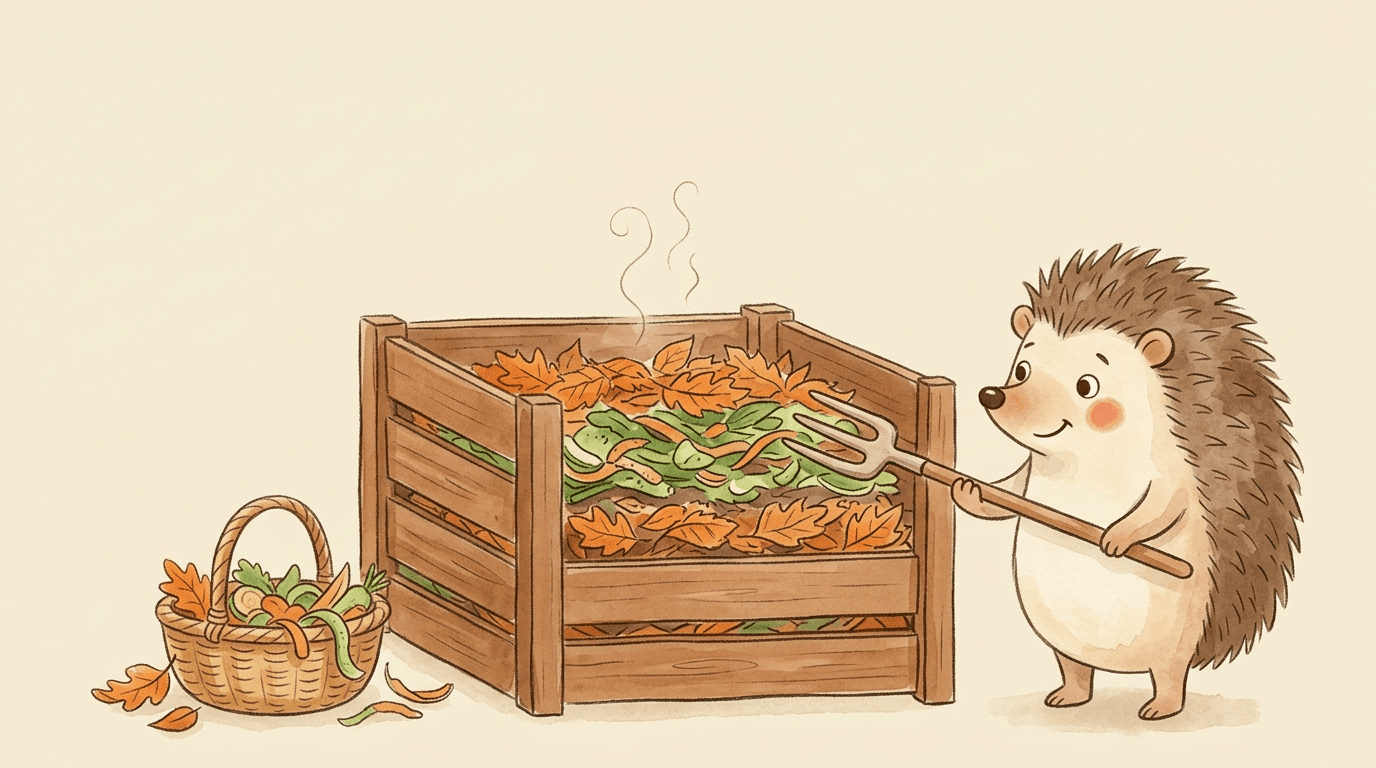
Starting an autumn compost pile: 3 parts leaves, 1 part kitchen scraps
Frau Schneider's compost pile just sat there all winter. No steam on cold mornings, no warmth, no breakdown — just a heap of dry leaves that hadn't changed a bit by March. The problem wasn't patience. It was the mix.
October 20, 2026 · 3 min read
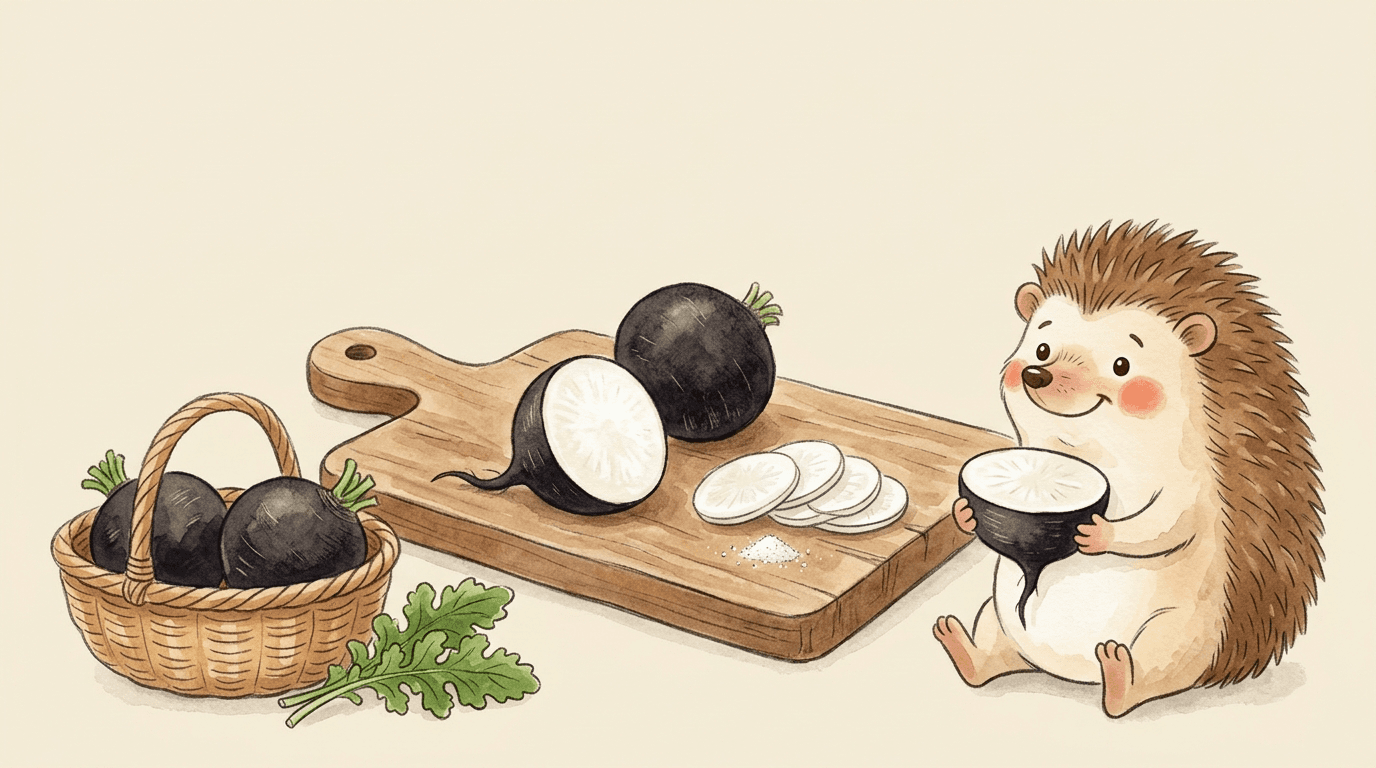
Black radish: why you should let it rest before you bite in
Last year Frau Schneider bit straight into one, unsalted, fresh out of the ground, and spent the next two minutes coughing instead of talking. The problem wasn't the radish. It was the timing.
October 14, 2026 · 2 min read
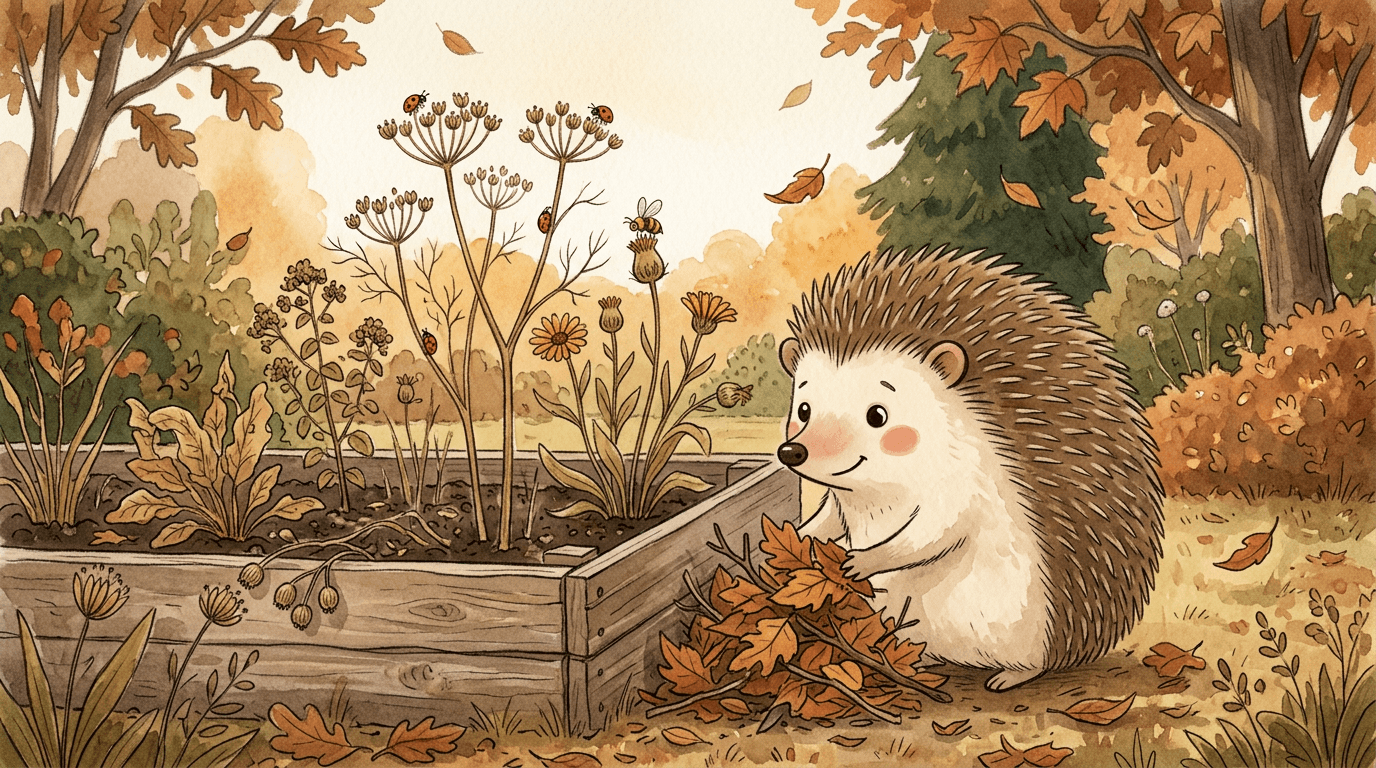
Why I only tidy up half my raised bed in October
Mr Zimmermann cut his entire raised bed down to the ground in one afternoon — stalks, seed heads, leaves, all gone. I should have warned him beforehand: not everything, only half. Here's what should stay standing and what really needs to go.