July 21, 2026 · by Stachi · 3 min read
Peppers in the raised bed: why the fruits are still green in July — and what actually helps
Peppers need patience — and a few specific things that make the difference in midsummer. Why the fruits are still green, what helps them turn red faster, and when to just harvest them green.
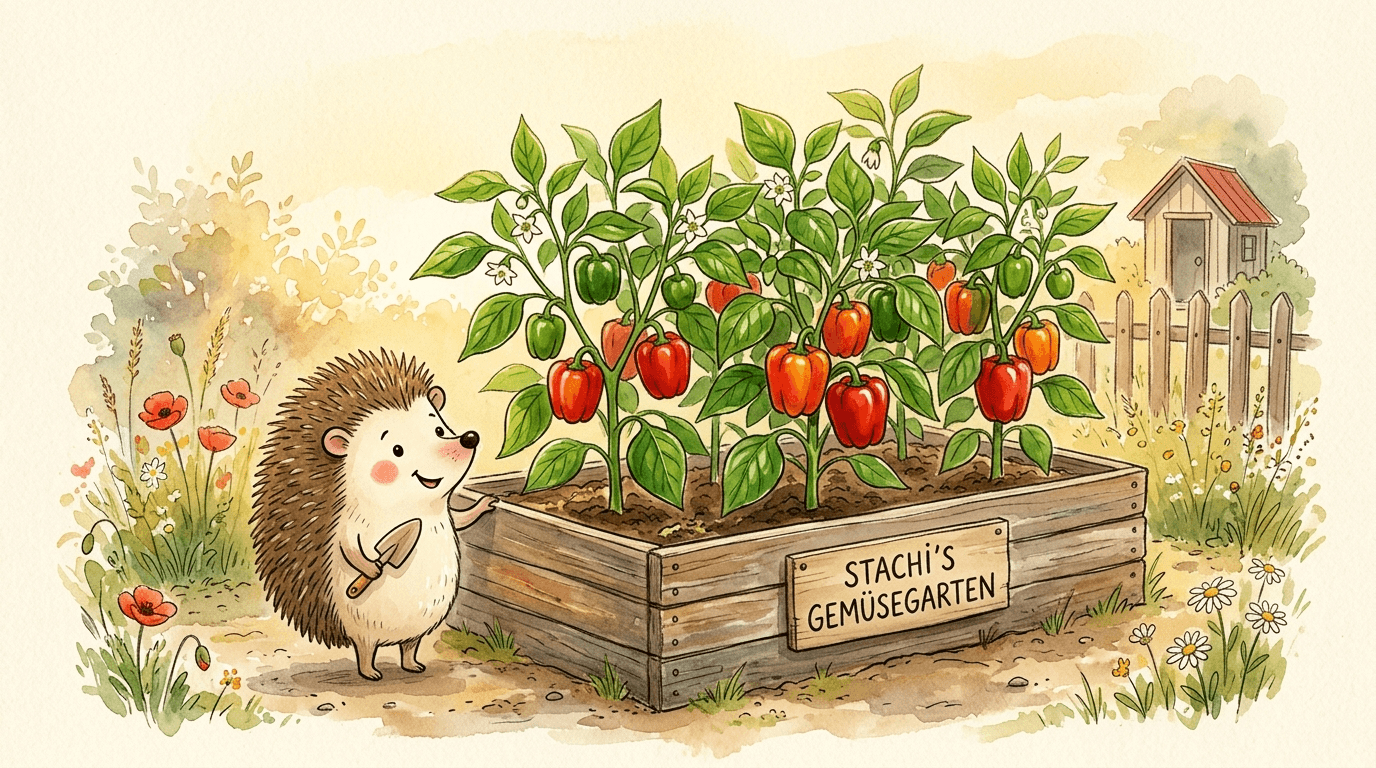
My pepper plants came into the raised bed in mid-May this year. By the end of July they have seven fruits — all green and firm. Frau Schneider from next door had said they'd be red by mid-July. Late July, and I'm standing in front of the bed wondering if I've done something wrong.
I haven't done anything wrong. Peppers are just slow.
Why peppers are still green in July
From seed to a fully ripe red pepper takes roughly 120 to 150 days. If you planted seedlings in May, you're landing in late July right in the phase where fruits have set but haven't started colouring yet. That's completely normal.
What slows things down:
Too much water. Peppers like consistent moisture, not wetness. In a raised bed with good substrate it's easy to overwater, especially after a hot stretch. Waterlogged roots mean the plant is fighting to survive rather than putting energy into ripening.
Not enough warmth at night. Daytime temperatures aren't the problem now. But in some spots — a Zurich balcony, or an exposed garden in Bern — nights can drop to 14 °C. That's the limit for peppers. Below 15 °C, ripening slows down significantly.
Too much nitrogen. If you fertilised again in June with a nitrogen-heavy feed, the plant is now happily making new leaves instead of ripening its fruits. A classic pattern with enthusiastic feeding.
What actually helps right now
Thin out the leaves. Remove a few of the larger lower leaves that are blocking light around the fruits. Don't overdo it — the plant still needs photosynthesis — but a bit of direct sun on the fruits visibly speeds up ripening.
Adjust your watering. Less frequent, but deeper. Let the top layer of the substrate actually dry out before watering again. Raised bed substrate holds more than garden soil, so this is easier than it sounds.
Stop fertilising. No more nitrogen from mid-July onwards. If you want to do one last thing, add some potassium — it promotes fruit development. Diluted tomato fertiliser works fine for this, it's potassium-heavy anyway.
Warm them up at night. If you know cold nights are coming: a fleece cover over the plant retains three to four degrees. For a raised bed on a balcony or in an exposed position, this can bring the ripening date forward by two weeks.
The ripeness test that actually works
Gentle pressure with two fingers. A ripe red pepper gives slightly — it's not rock hard like an unripe one. The skin should be glossy and the colour even, not patchy green-red.
Green-harvested peppers don't ripen afterwards. That's the difference from tomatoes, which do turn red after picking. If you pick the pepper green, it stays green.
One exception: you want green peppers. They're fully edible, have their own fresh flavour, and for many dishes are actually better than the red ones. That's not a defeat, that's a decision.
When to cut your losses — and still win
If September arrives and your peppers still aren't red, there's one trick: pull the plant out with some soil still on the roots, bring it into a warm, sunny spot indoors — a conservatory, a sunny windowsill, an unheated greenhouse. Many fruits will ripen there in the warmth.
That worked for me last year. By mid-October I had red peppers on the windowsill while it was already frosty outside.
What Erntezeit does for peppers
Peppers are more location-dependent than almost any other vegetable. In Geneva or Lugano the season is two to three weeks longer than in Zurich or Bern. Erntezeit calculates this: climate zone, average night temperatures, frost dates — and tells you exactly how much time your peppers have, and which variety suits your location.
My peppers in Berikon are still green. But I'm waiting calmly now. I know what I'm doing — and Frau Schneider has already asked how I managed it.
🦔 Stachi
Related plants


More articles
October 26, 2026 · 3 min read
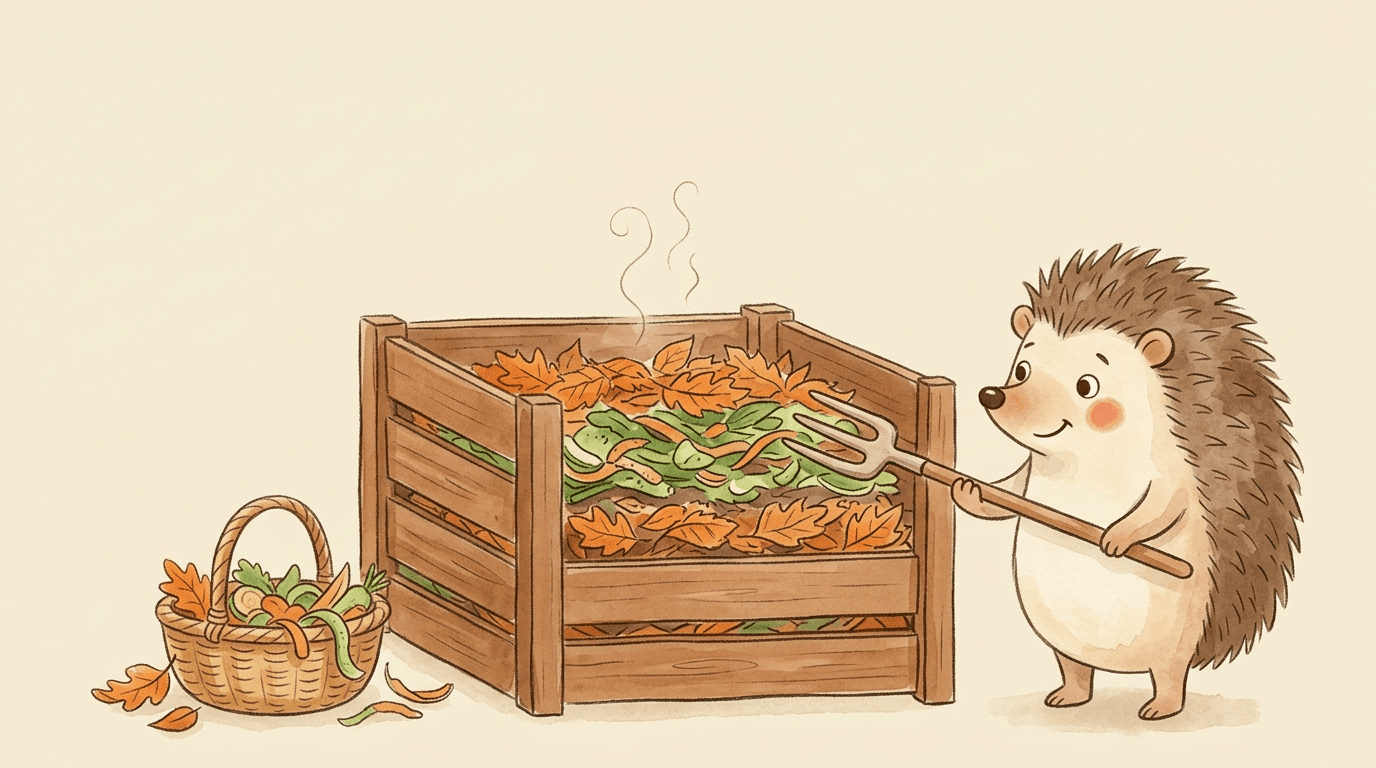
Starting an autumn compost pile: 3 parts leaves, 1 part kitchen scraps
Frau Schneider's compost pile just sat there all winter. No steam on cold mornings, no warmth, no breakdown — just a heap of dry leaves that hadn't changed a bit by March. The problem wasn't patience. It was the mix.
October 20, 2026 · 3 min read
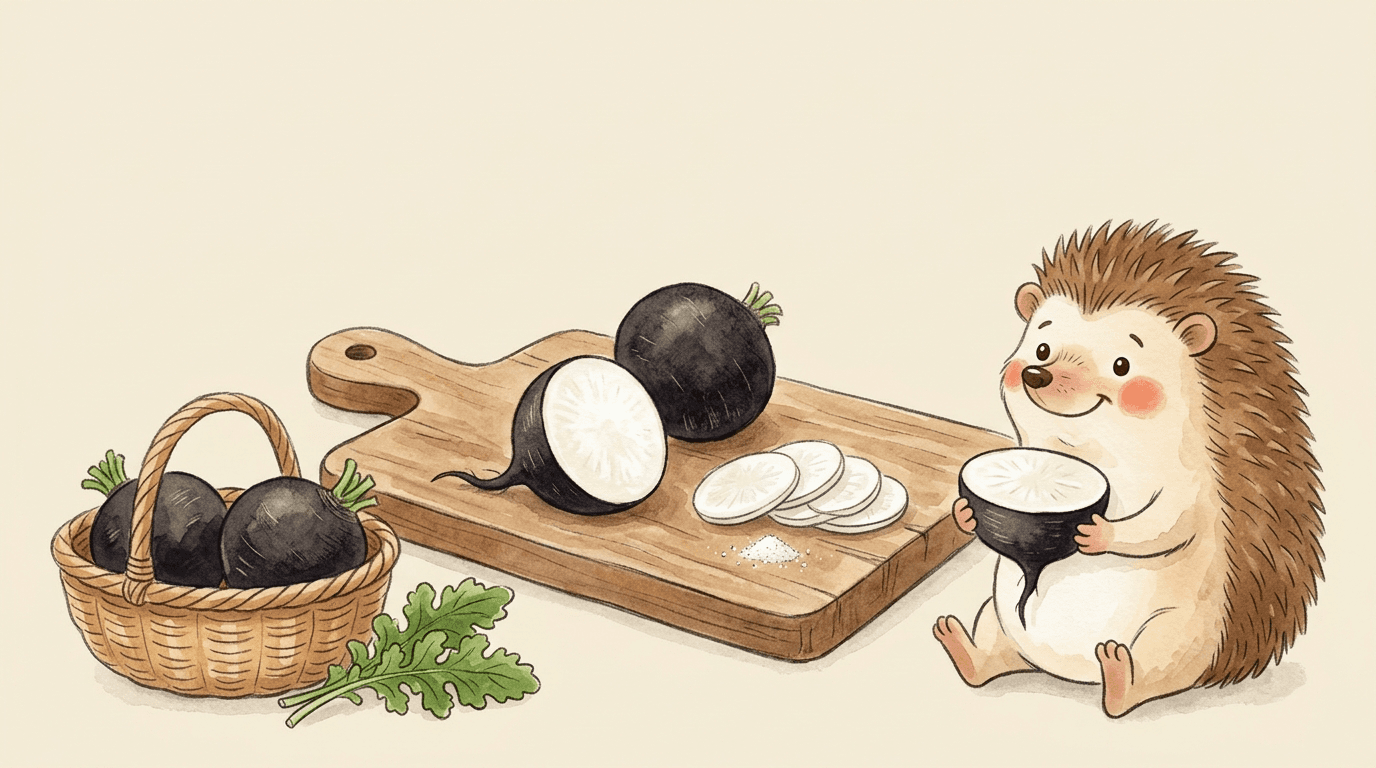
Black radish: why you should let it rest before you bite in
Last year Frau Schneider bit straight into one, unsalted, fresh out of the ground, and spent the next two minutes coughing instead of talking. The problem wasn't the radish. It was the timing.
October 14, 2026 · 2 min read
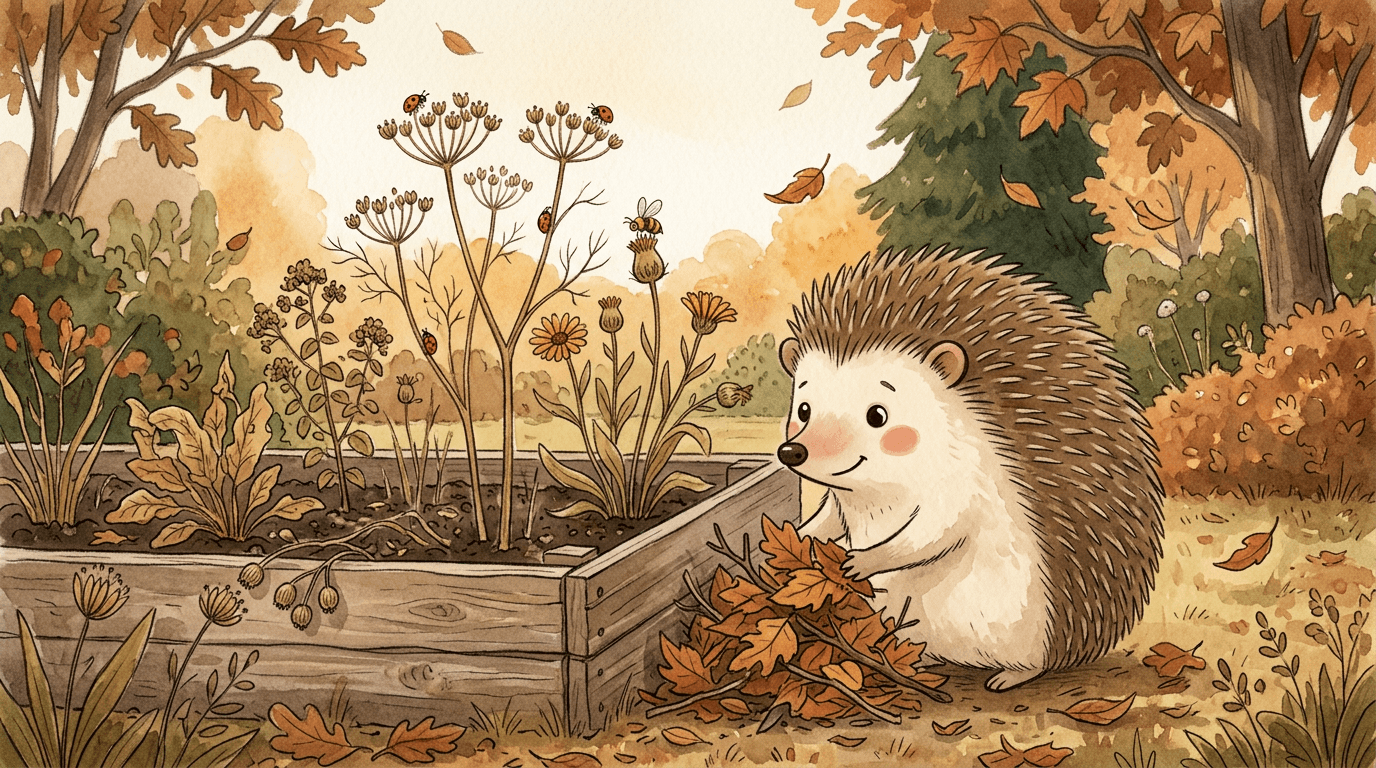
Why I only tidy up half my raised bed in October
Mr Zimmermann cut his entire raised bed down to the ground in one afternoon — stalks, seed heads, leaves, all gone. I should have warned him beforehand: not everything, only half. Here's what should stay standing and what really needs to go.