September 27, 2026 · by Stachi · 4 min read
Brussels sprouts: top the plant now so the sprouts fill out
Your Brussels sprout plants are tall, but the sprouts along the stem stay small and loose? One cut in late September stops the upward growth and sends all the energy into the buds. Now is exactly the right moment for it.
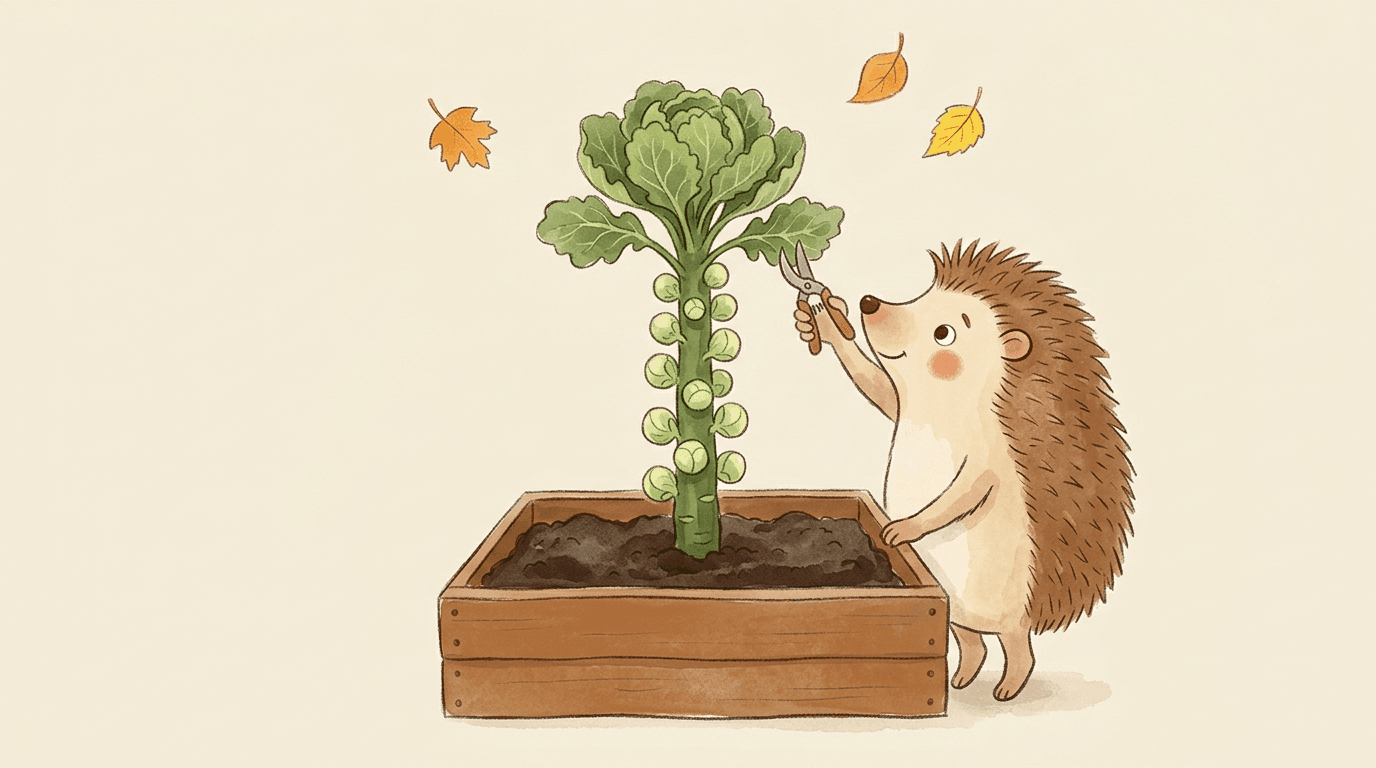
Mrs. Schneider called over the fence last week: "Stachi, my Brussels sprout plants are over a metre tall, but the sprouts lower down are tiny. Am I doing something wrong?"
No. She just hasn't taken one step yet — and now, in late September, is exactly the time for it.
Why Brussels sprouts keep growing upward instead of filling out below
Brussels sprouts are an ambitious plant. As long as the growing tip is intact, it keeps pushing upward and forming new leaves at the top. The sprouts sitting in the leaf axils below only get whatever energy is left over — and in September, with cooler temperatures and shorter days, that's no longer enough to fully develop them before the first hard frost.
The trick gardeners have used for generations: cut off the growing tip. Without a target to grow toward at the top, the plant switches strategy. All the energy that would otherwise have gone into new leaves and height now goes into the existing sprouts. They get denser, firmer, more even — instead of staying loose and pale.
The right timing
As a rule of thumb: four to six weeks before the first expected hard frost. Around Berikon and similar mid-elevation locations, the first real frost usually arrives in early to mid-November — so late September to early October is exactly the right window.
Topping too early doesn't help: the plant hasn't yet built enough leaf mass and sprout starts to benefit from the redirected energy. Topping too late doesn't help either: the sprouts won't have time left to grow noticeably before frost. The window isn't huge, but it's not razor-thin either — a week or two off either way is forgivable.
How to do it
- Look at the plant and find the topmost, youngest growing point — the small cluster of leaves at the very top where new growth keeps pushing out.
- Using clean, sharp secateurs, cut off exactly that tip. Two to three centimetres is enough — you don't need to remove the whole top, just the active growing point.
- Leave the rest of the leaves in place. You still need them: they keep feeding the sprouts with energy from photosynthesis until harvest.
- That's it. No wound sealant needed, no fleece, no follow-up treatment.
A clean, sharp cut matters — dull secateurs crush the stem and open an entry point for rot. If your secateurs have already had a busy season, now's a good time to sharpen or replace them.
What NOT to confuse this with
Topping the plant is not the same as removing lower leaves. Many guides also recommend gradually removing the lowest, already-yellowing leaves through autumn — but only once the sprouts at that point on the stem are nearly ready to harvest. Remove still-green lower leaves too early and you take away an important energy source before the sprouts there have benefited from it.
In short: top the growing tip now. Remove lower leaves individually only once the sprouts just above them are already firm and dense.
Why frost afterward is the finishing touch
Brussels sprouts behave like parsnips or autumn carrots: cold converts stored starch into sugar. A sprout picked before the first frost often still tastes a bit bitter or sharp. After two or three frosty nights, it turns noticeably milder and slightly sweet. That's also why many traditional recipes deliberately wait until November to use Brussels sprouts.
That's why Erntezeit's plant database deliberately keeps the Brussels sprouts harvest window long — from calendar week 40 all the way into February. You don't need to harvest everything at once — take the sprouts that are firm enough from the bottom up, and leave the rest of the plant standing for later.
Harvest order in the raised bed
Brussels sprouts ripen along the stem from the bottom up. The lowest sprouts mature first, the topmost last. In practice that means:
- Harvest the lower, firm sprouts first — twist them off sideways rather than pulling.
- Leave smaller, looser sprouts on the stem, even once their lower neighbours are already picked.
- After the first frost, you can cut the whole stem at once if you like and store it somewhere cool — the sprouts will stay fresh for several more weeks that way.
What to plant nearby
Brussels sprouts don't like sitting next to other brassicas — cauliflower, white cabbage, red cabbage, or savoy cabbage. The competition for nutrients is too high, and diseases spread more easily between them. Leeks, onions, or chives make better neighbours — they use the soil differently and their scent tends to keep pests at bay.
Mrs. Schneider topped hers yesterday. I'm curious how dense her sprouts get by November — and I'd bet she'll be calling over the fence again.
🦔 Stachi
Products mentioned in this post
- Gardena Classic planting trowelQuality steel, corrosion-protected — bed all-rounder.
- Gardena flower trowel, large
- Bosch hand fork, stainless steel
- Draper sturdy hand fork, stainless steel
Related plants


More articles

October 10, 2026 · 2 min read
Planting blackberries in a raised bed this autumn: why one plant can already be too many
Frau Schneider ordered three thornless blackberry plants for her kids – all three meant for one single raised bed. I had to tell her that even one of them will outgrow it eventually. Here's what actually matters for an autumn planting.

October 9, 2026 · 2 min read
Blanching endive: the trick against bitterness – and where rot is lurking
Frau Schneider tied up her endive on a rainy afternoon because she didn't have time to wait. A week later the heart was brown and slimy instead of pale and tender. Here's what actually matters when you blanch it.

October 8, 2026 · 2 min read
Overwintering artichokes: why they freeze faster in a raised bed than in open ground
Frau Schneider's artichoke grew real buds for the first time this summer – now she's worried the plant won't survive the first hard frost in her raised bed. She's right to worry: raised-bed soil freezes differently from garden soil. Here's how to protect the rootstock properly.