August 30, 2026 · by Stachi · 3 min read
Dividing chives: why August is the best time to do it
Chives eventually grow outward from the centre — the middle goes sparse, the shoots get smaller. That's the signal to divide them. And August turns out to be better for this than spring.

Mrs Schneider described her raised bed last week: "My chives look strange — the middle is almost bare, but the outer edges are still growing normally."
I know that one well. It's not a disease and it's not poor care. It's chives telling you: I could do with some help right now.
What happens to chives over time
Chives are a perennial — they come back year after year. But over time they spread outward from the centre: the bulbs divide, push outwards, and the middle of the original clump becomes hollow and sparse.
After two or three years, every chive clump looks more or less like Mrs Schneider's. Fewer shoots in the middle, finer stalks, less flavour. This isn't a failure of the plant. It's the signal that it's time to divide.
Why August specifically
Many people assume dividing is a spring task. For some perennials that's true. For chives, not so much — or at least not only.
August has a concrete advantage: the plant has the intense heat of midsummer behind it, and still gets four to six weeks of warm soil before autumn properly sets in. The divided pieces have time to put down roots and establish themselves before the first frost. In spring you often divide too early, when the soil is still cold and the chives have only just emerged from winter.
August also gives you a clear picture of how the clump is actually doing — better than in April, when everything still looks promising.
How to do it
Dig up the entire clump with a garden fork. Shake off the soil and see what you have: lots of small bulbs growing tightly together.
Divide the whole mass into sections of five to ten bulbs. Garden shears work well for this, or — if the clump is very matted — an old kitchen knife. It doesn't need to look tidy. What matters is that each piece has roots and a few green shoots.
Plant the sections ten to fifteen centimetres apart, about three to four centimetres deep. Water well. Within two weeks, new shoots will appear.
What to do with the extra pieces
After dividing you almost always have more than you need. Three good options:
Give them away. Chives make an easy and welcome gift. A small bag of divided clumps is more useful than a bunch of flowers.
Pot one up. Put a section in a small pot and bring it inside to a windowsill: you'll have fresh chives through winter until March. When the plant dies back after the first frost, just bring the pot indoors. In the warmth, it will sprout again before long.
Compost the rest. If neither option fits, composting is no waste. The plant material is rich in nutrients.
What you shouldn't throw away
The middle section. The sparse, hollow centre looks unpromising — but if you plant it in good, loose soil and water it regularly, it bounces back. Chives are tough. What looks weak right now can be growing strongly again by October.
What happens next
The freshly divided sections will look sorry for themselves during the first two weeks. That's completely normal. The energy is going into the roots, not the stalks.
Then — usually between the second and third week after dividing — the first new shoots appear. Thin and pale at first, then stronger.
If you divide now, you'll have fresh chives through to mid-October. Better than leaving a hardened, hollow clump to muddle along on its own.
Mrs Schneider wrote two days later: "I dug up my chives. Thought at first there was nothing left to save — but then I worked out six sections and replanted them. One of them is now in a pot on the terrace."
That's exactly it.
In the Erntezeit planner, you can see which herbs you can add or divide right now — with a full-year view of your raised bed.
See the herb plan for your raised bed →
🦔 Stachi
Products mentioned in this post
- Gardena Classic planting trowelQuality steel, corrosion-protected — bed all-rounder.
- Gardena flower trowel, large
- Bosch hand fork, stainless steel
- Draper sturdy hand fork, stainless steel
Related plants


More articles
October 26, 2026 · 3 min read
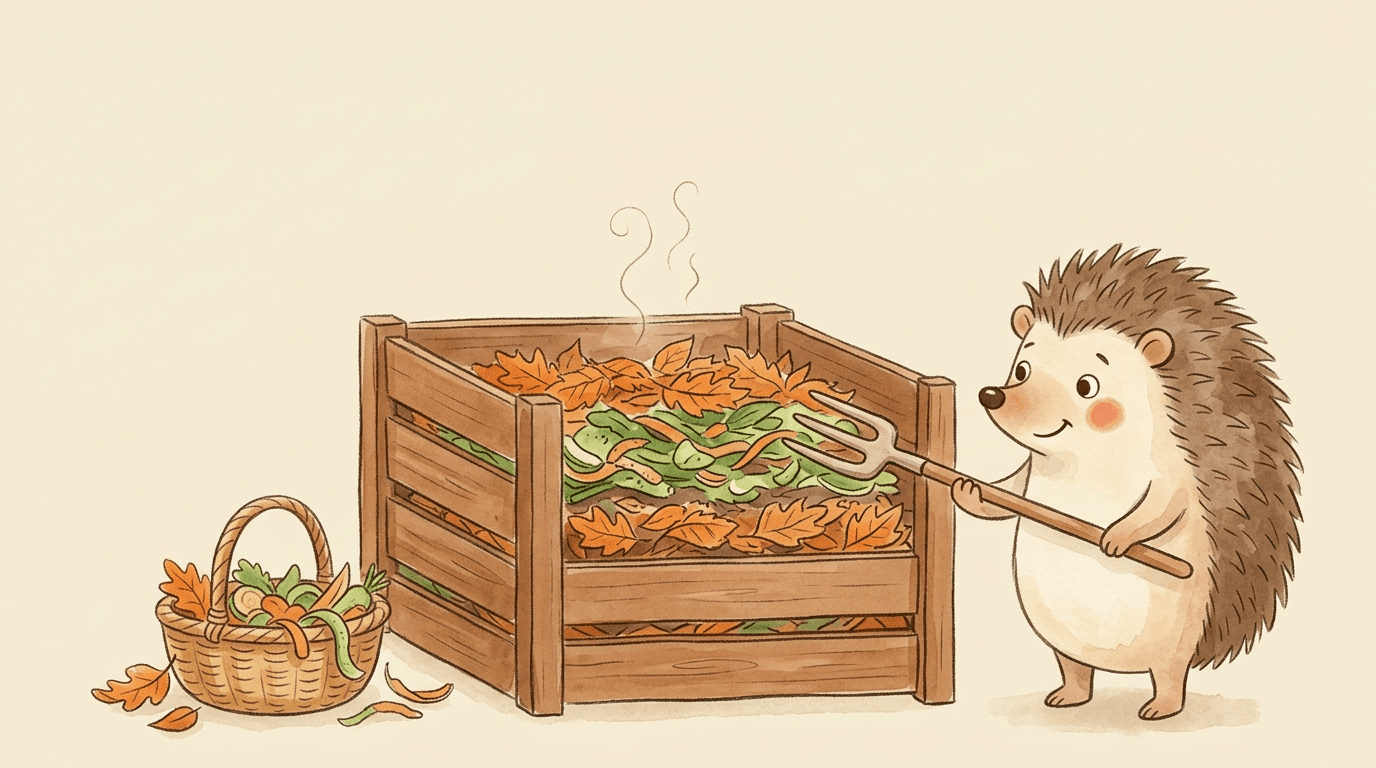
Starting an autumn compost pile: 3 parts leaves, 1 part kitchen scraps
Frau Schneider's compost pile just sat there all winter. No steam on cold mornings, no warmth, no breakdown — just a heap of dry leaves that hadn't changed a bit by March. The problem wasn't patience. It was the mix.
October 20, 2026 · 3 min read
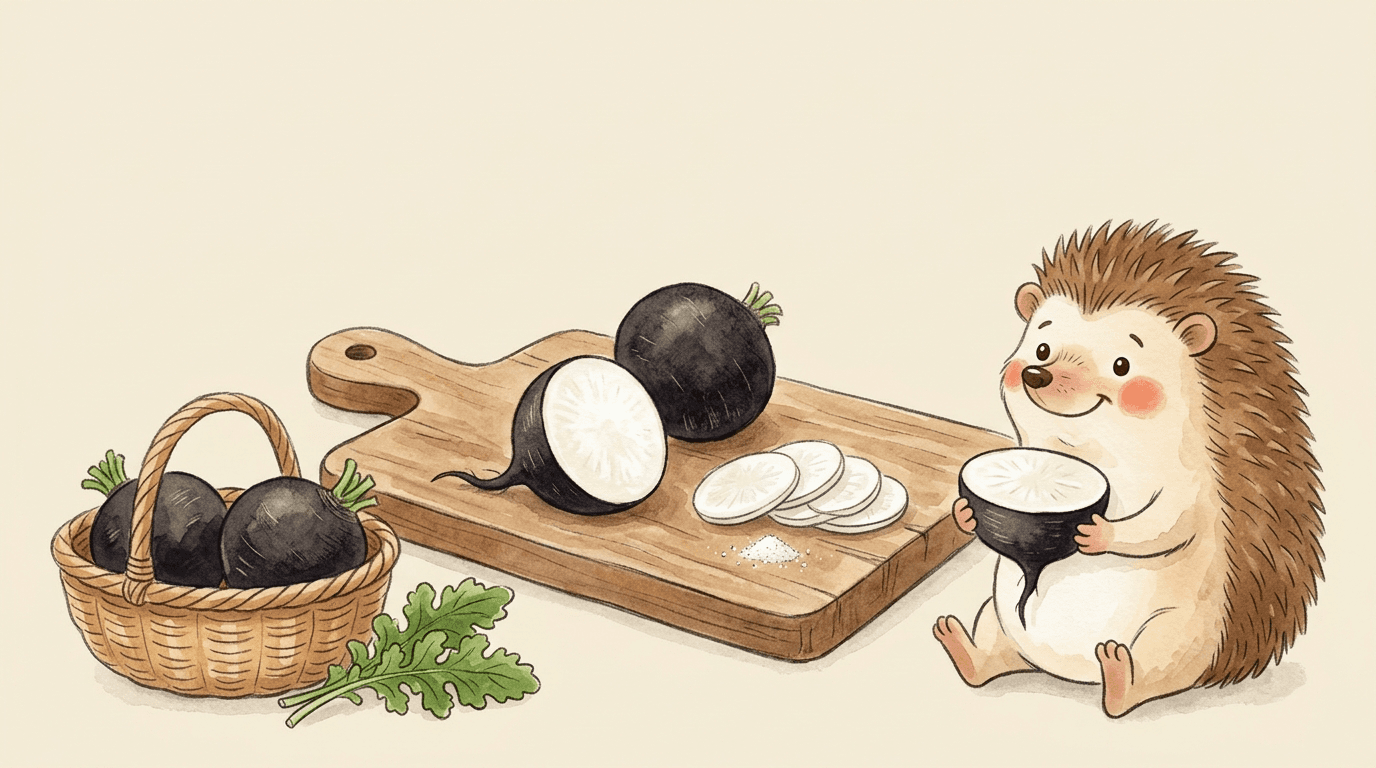
Black radish: why you should let it rest before you bite in
Last year Frau Schneider bit straight into one, unsalted, fresh out of the ground, and spent the next two minutes coughing instead of talking. The problem wasn't the radish. It was the timing.
October 14, 2026 · 2 min read
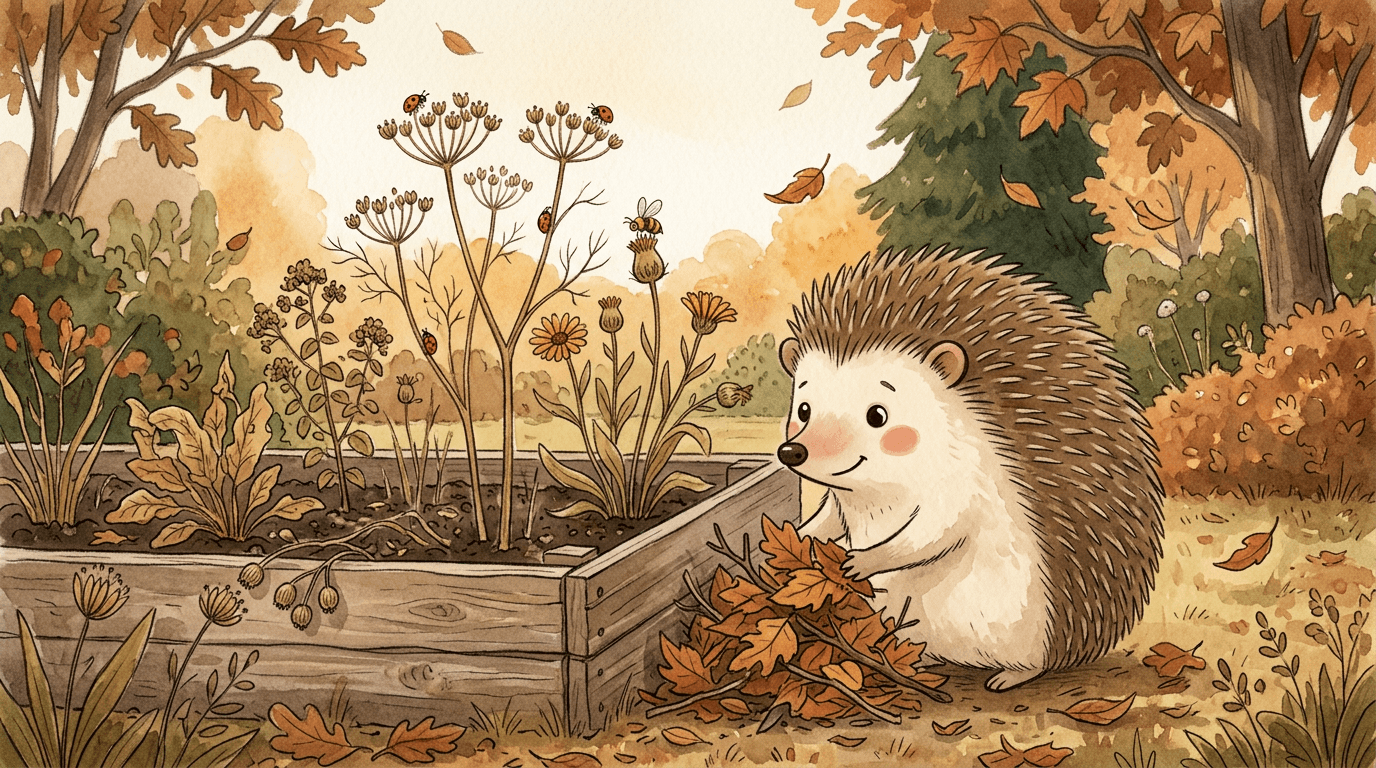
Why I only tidy up half my raised bed in October
Mr Zimmermann cut his entire raised bed down to the ground in one afternoon — stalks, seed heads, leaves, all gone. I should have warned him beforehand: not everything, only half. Here's what should stay standing and what really needs to go.