September 1, 2026 · by Stachi · 3 min read
Ripening tomatoes indoors: when to bring them inside in September
When nights turn cooler and the plant starts giving up, tomatoes stop ripening outdoors. What you do next decides between kilos of harvest — or compost.

Something shifts in the raised bed at the start of September. The tomatoes are still hanging heavy, but the plant looks exhausted. Leaves yellowing, a few stems already brown. And the green fruits are barely moving.
This is not a coincidence. This is the moment when you need to act.
What happens to tomatoes in September
Tomatoes need warmth to ripen — but not just sunlight. The key factor is night temperature. Once it regularly drops below twelve degrees Celsius, the lycopene process that turns fruit red and sweet comes to a halt. The tomato just sits on the vine and does nothing.
In the Swiss Mittelland, around Berikon for example, that's the normal state from mid to late September. But in cooler years it can start at the beginning of September. You can leave the tomato outside for three more weeks — it still won't turn red. Or you can bring it inside.
When exactly is the right time
There are three signals I watch for:
The plant is pulling back. Leaves turn yellow and fall, stems become leathery. This isn't disease — it's the plant's natural retreat. It has no more energy for the fruit.
Nights drop below twelve degrees. Check the overnight forecast. If you see several nights below that threshold, outdoor ripening stops working.
The first frost is forecast. That's the hard stop. Frost makes tomatoes instantly unusable — the cells burst, the fruit turns watery and rots quickly.
You don't need to wait for all three signals. One is enough.
How to bring green tomatoes indoors
Pick every fruit that is at least cherry-sized and firm. Tomatoes that are still tiny or completely white won't ripen — use them for green tomato jam or compost them.
Important: not on the kitchen windowsill. Direct sunlight isn't what ripens tomatoes. It's warmth. A dark storage room at twelve to sixteen degrees is better than a sunny windowsill with cold draughts.
Lay the fruit on newspaper, side by side, not stacked. Check every two to three days. Take out the ripe ones; leave the rest.
How long does it take
A tomato that's still noticeably green takes about two to three weeks at fifteen degrees to ripen fully. One that's already slightly brownish or orange might need only five to seven days.
That sounds long. But you'll be surprised how good the fruit tastes. Not quite like a summer-afternoon tomato straight from the vine — but far better than anything you'd buy in a shop come October.
Mrs Schneider (my neighbour back in Berikon) wrote to me last year: "I was still eating tomatoes from the cellar in October that were green in September. My neighbour doesn't believe me."
I believe her.
What to do with the empty plant
Once all the fruit is gone, the plant comes out. Tomato plants that look healthy can go into the compost. If you see signs of late blight — brown, blotchy patches — put them in the bin, not the compost. Late blight spores survive in the heap and come back to attack next year's crop.
The freed-up bed is now ready for lamb's lettuce, spinach, or a green manure cover crop to hold the soil through winter.
What I learned
I waited too long for years. Always "let's check in another week," always "maybe it'll warm up." Then a frost came, and I had twenty kilos of compost instead of tomatoes.
Now I bring them in as soon as the signals are there. Even if the plant still looks green. The cellar does the rest.
🦔 Stachi
Related plants

More articles
October 26, 2026 · 3 min read
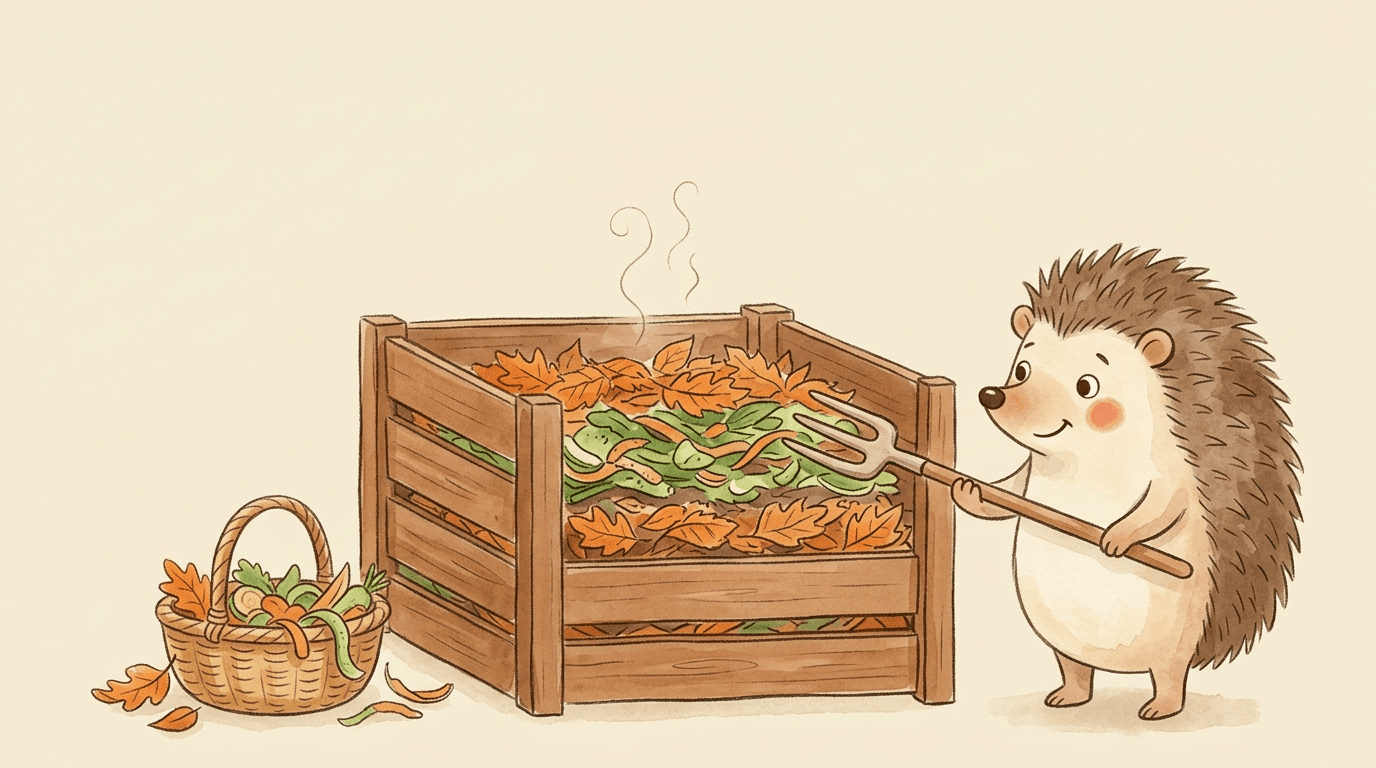
Starting an autumn compost pile: 3 parts leaves, 1 part kitchen scraps
Frau Schneider's compost pile just sat there all winter. No steam on cold mornings, no warmth, no breakdown — just a heap of dry leaves that hadn't changed a bit by March. The problem wasn't patience. It was the mix.
October 20, 2026 · 3 min read
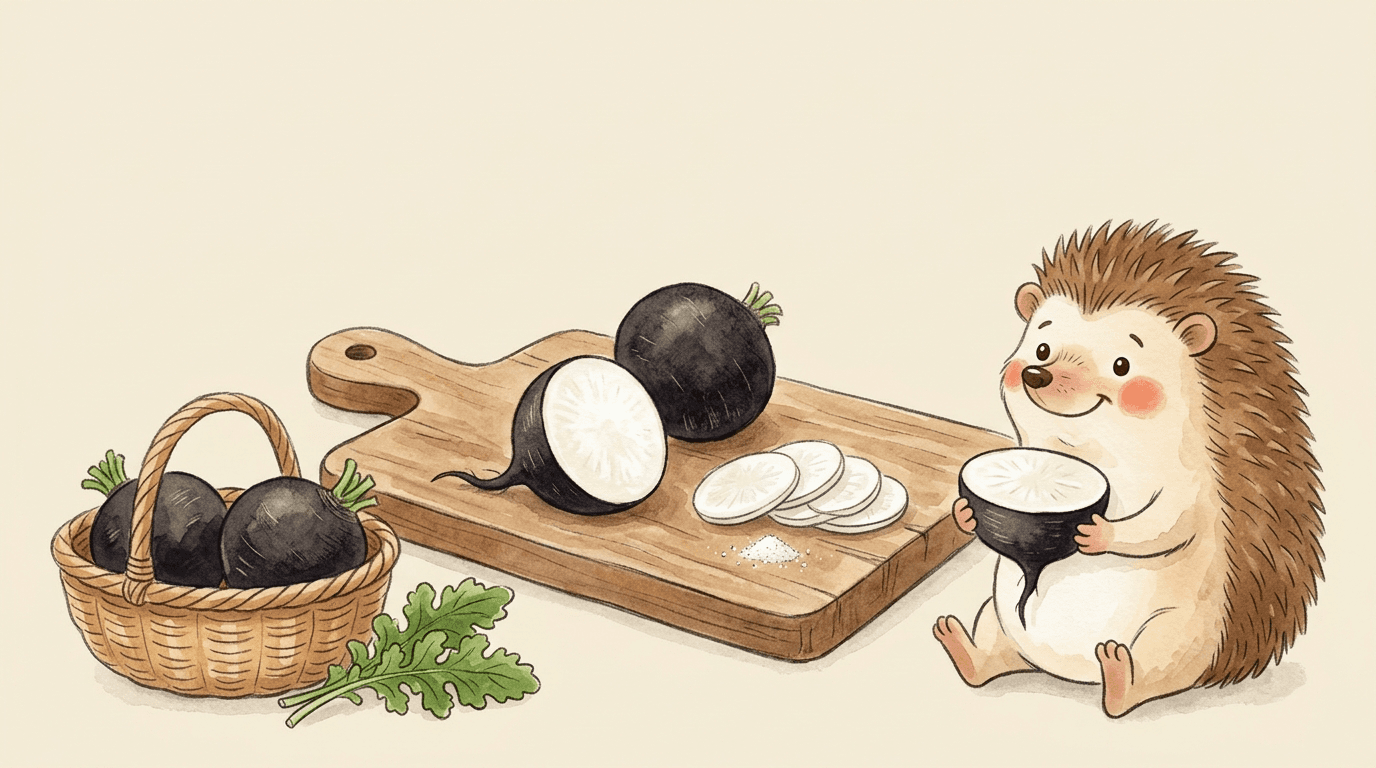
Black radish: why you should let it rest before you bite in
Last year Frau Schneider bit straight into one, unsalted, fresh out of the ground, and spent the next two minutes coughing instead of talking. The problem wasn't the radish. It was the timing.
October 14, 2026 · 2 min read
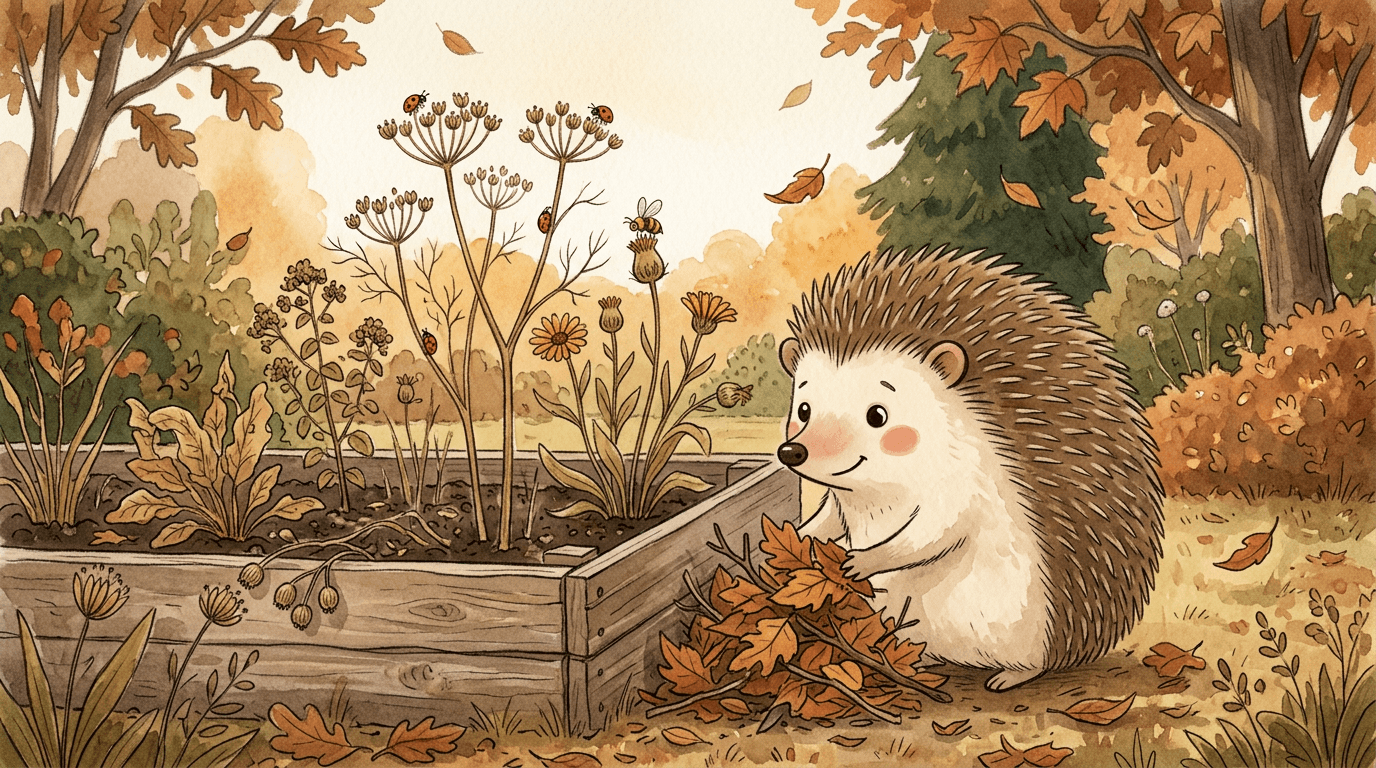
Why I only tidy up half my raised bed in October
Mr Zimmermann cut his entire raised bed down to the ground in one afternoon — stalks, seed heads, leaves, all gone. I should have warned him beforehand: not everything, only half. Here's what should stay standing and what really needs to go.