May 23, 2026 · by Stachi · 3 min read
Drip irrigation for your raised bed — when it's worth it
In May still no big deal, in July no fun: every evening with the watering can through the garden, an hour at a time, because the raised bed needs 5 litres a day. Here's when drip irrigation really pays off, which system fits which bed size — and where not to fall into traps.
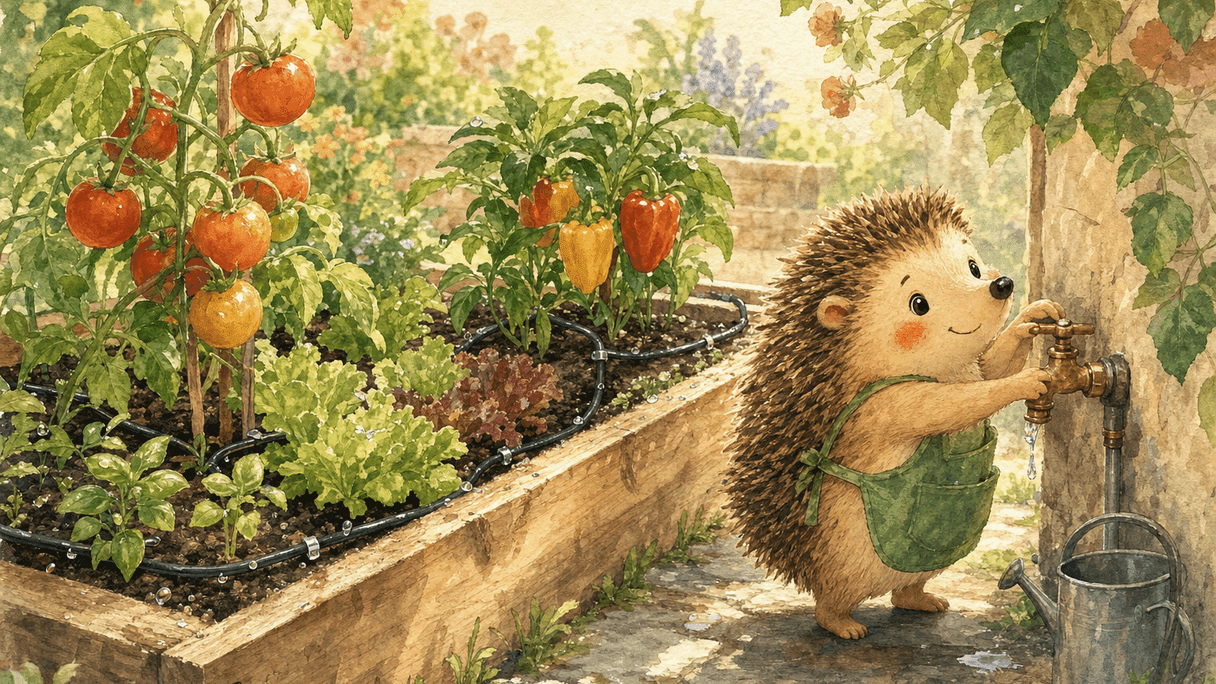
Frau Schneider, my neighbour in Berikon, has watered by hand every evening for 12 years. She says it's meditative. I say it's an hour of life per day, from June through September. That's 100 hours per season. Four full work days.
If you don't mind — perfect, stop reading here. If you'd rather spend those hours sitting in the garden than lugging a can around, then drip irrigation is the topic now. And "now" means end of May, before the heat hits.
When drip actually pays off
Drip irrigation makes sense when three things are true:
- You have more than one bed, or a bed bigger than 80×60 cm. For a single balcony planter, the watering can is faster and simpler.
- You're sometimes away 3–5 days in summer. Drip + timer = relaxed weekend trips without asking the neighbours.
- You want consistent moisture. Drip delivers steady, soil-level moisture. Plants measurably grow better than with sporadic bursts from a can.
If none of these apply: can is enough. If one applies: think about it. If two or more: do it.
Which system for which size
For a single raised bed (up to ~40 plants): The Gardena Micro-Drip set for raised beds (35 plants, art. 13455-20)* is built exactly for this. Pre-fabricated, you snap the parts together, hook it to the tap, done. No tinkering, no calculations. Lasts 5–8 seasons.
For multiple beds or a vegetable garden (up to 40 m²): Gardena Micro-Drip vegetable/flower bed (40 m², 13450-20)* — same tech, more area, larger reserves of tubing + emitters. I have this at home, it covers 3 raised beds + one in-ground bed. Setup time: one and a half hours once, then never touch again.
For balconies (up to 15 plants): Gardena Micro-Drip balcony (15 plants, 13401-20)* — works with any tap, including the bathroom one. Hose through a tilted window, timer attached, done. Completely changes balcony gardening.
If you want to expand: The Gardena 1399-20 Micro-Drip start set* is the bare basic unit — pressure reducer + distributor. If you already know what you need and just want the core components without the full kit. For tinkerers.
What you need to know about setup
Three things nobody mentions:
- Pressure reducer is mandatory. Household water runs 3–6 bar, Micro-Drip needs 1.5 bar. Without a reducer the tubes burst. Comes with all the sets above, but watch out when expanding.
- Emitter spacing: 30 cm. Close enough so every plant gets an emitter. Wider makes it uneven.
- Timer separately. The Gardena sets don't include one. A simple watering timer for 15–25 Euros from the hardware store is enough. Schedule: 2× a day (morning 6, evening 19), 10 minutes each, longer in heat waves.
What surprised me
My first year with drip, cucumber harvest was 40 % higher than before. Not because I got smarter, but because the plants had constant water instead of just one evening burst. Plants like consistency. We humans like spontaneity — plants don't.
Investment: 50–100 Euros one-off depending on system. Time saved: 100 hours per season. You do the maths on what your hour is worth.
🦔 Stachi
Note: Links marked with * are Amazon partner links (amazon.de). If you order through them, Erntezeit earns a small commission — the price for you stays the same. All four systems above I either have at home or have set up for testing.
Related plants


More articles
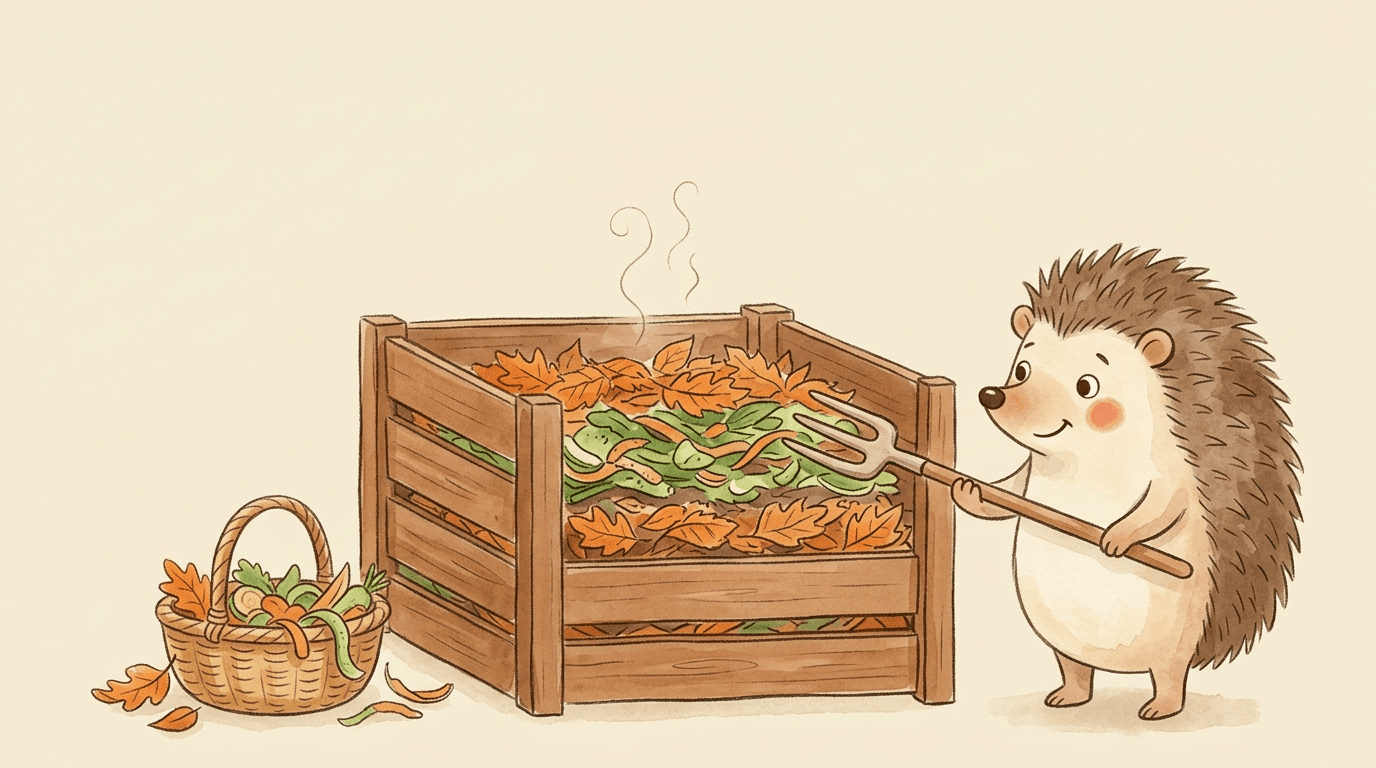
October 26, 2026 · 3 min read
Starting an autumn compost pile: 3 parts leaves, 1 part kitchen scraps
Frau Schneider's compost pile just sat there all winter. No steam on cold mornings, no warmth, no breakdown — just a heap of dry leaves that hadn't changed a bit by March. The problem wasn't patience. It was the mix.
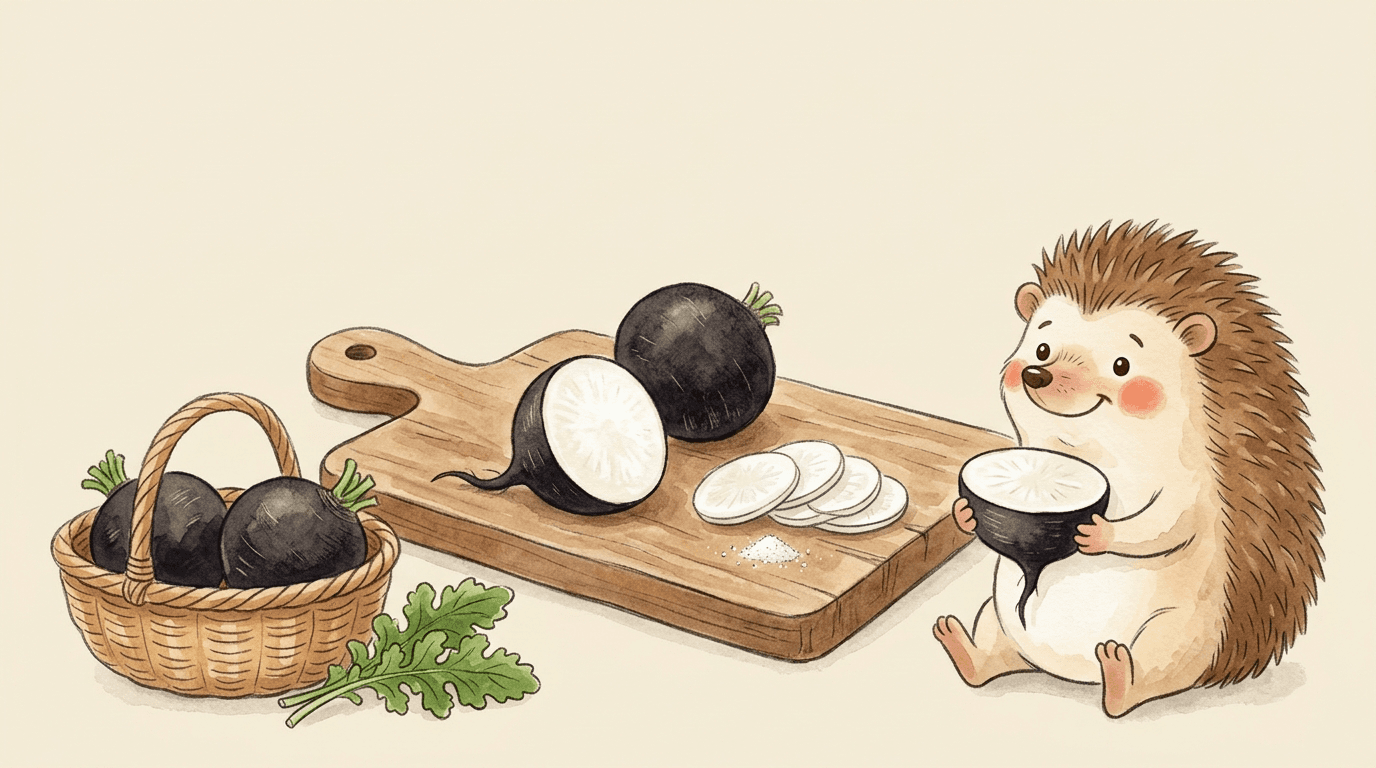
October 20, 2026 · 3 min read
Black radish: why you should let it rest before you bite in
Last year Frau Schneider bit straight into one, unsalted, fresh out of the ground, and spent the next two minutes coughing instead of talking. The problem wasn't the radish. It was the timing.
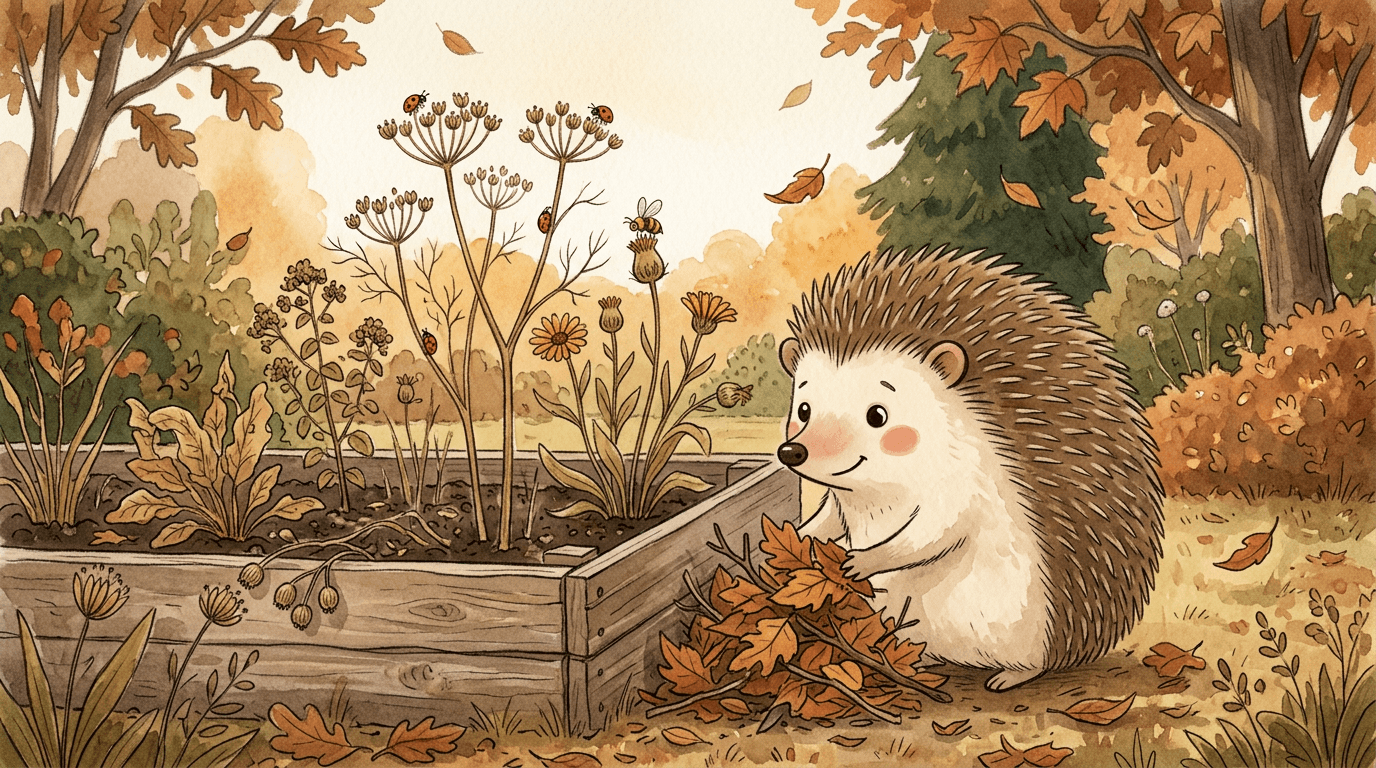
October 14, 2026 · 2 min read
Why I only tidy up half my raised bed in October
Mr Zimmermann cut his entire raised bed down to the ground in one afternoon — stalks, seed heads, leaves, all gone. I should have warned him beforehand: not everything, only half. Here's what should stay standing and what really needs to go.