July 25, 2026 · by Stachi · 3 min read
Harvesting and drying onions: when to pull them — and how to store them for months
My neighbour Frau Schneider pulled her onions too early last year. Instead of drying out, they started to rot. The difference between an onion that keeps until February and one that turns mushy in October comes down to a single sign.
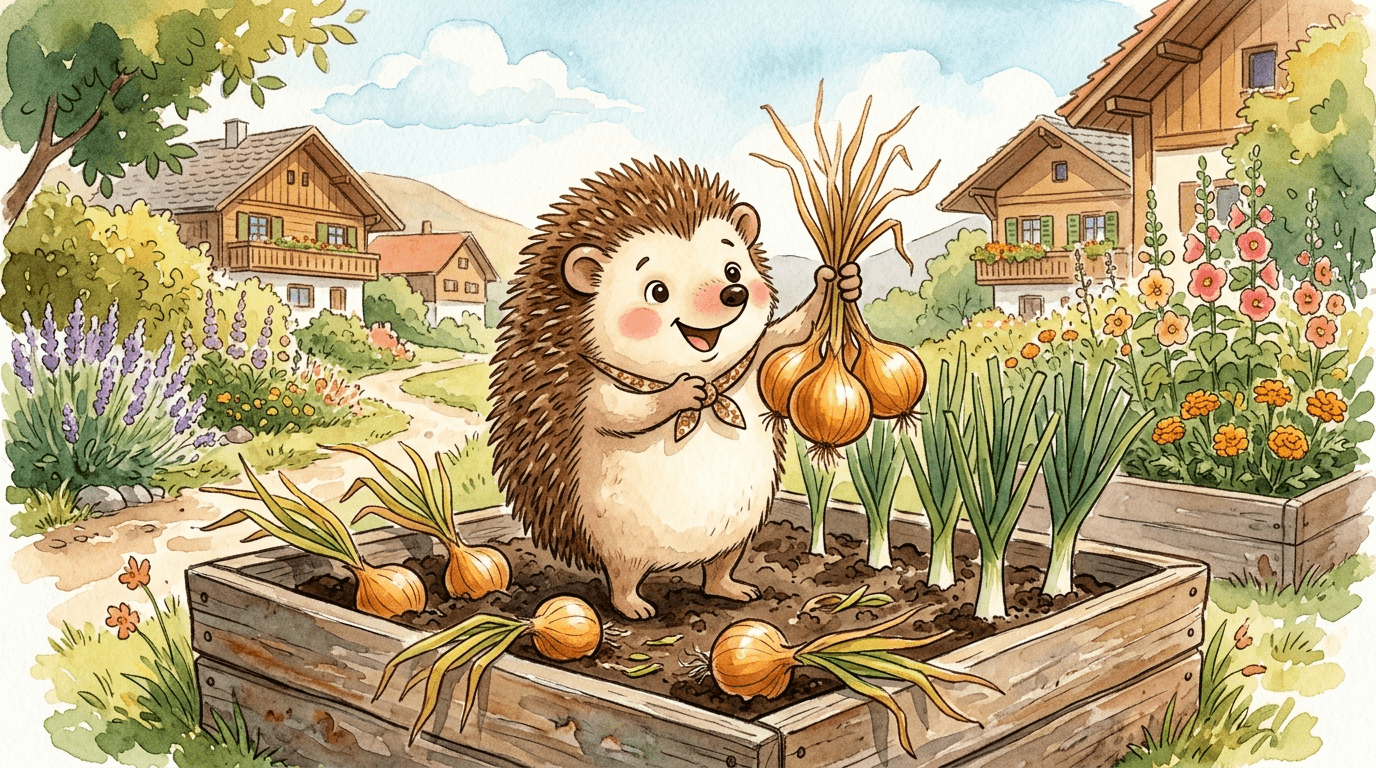
Last year, Frau Schneider harvested her onions at the end of June. She put them in a box and carried them down to the cellar. In October she opened the box and threw half of them on the compost heap. They were soft, some of them mouldy — not edible anymore.
"I thought you harvest onions while the leaves are still green," she said. "That's how my mother did it."
I know the mistake. I made it myself. And I can explain exactly why it happens — and how to avoid it.
The sign you're waiting for
Onions tell you when they're ready. You don't need to guess, you just need to look.
The foliage — those hollow green tubes — will topple over at some point. Not individual leaves, but the whole stem just bends and falls. It happens by itself, without any help from you. When roughly half to two thirds of your onions have keeled over, the harvest window is open.
Here in Berikon, near Zurich, that's usually mid to late July, in a warm year sometimes early July. In higher-altitude spots or a cooler summer, it can stretch into August.
What you should not do: deliberately knock the stems over to speed things up. It sounds tempting, like you can force the process along. But the onion needs those last few days to draw everything from the foliage down into the bulb. Cut that short and you get an onion that isn't fully developed and won't store well.
Harvesting: dry, careful, in the morning
Harvest on a dry day, ideally after two or three days without rain. The onions should come out dry, not coated in wet soil.
I pull them out gently by hand or loosen the soil first with a fork. I leave the foliage attached — it helps during the drying phase. Any onion with a cut or damaged skin goes straight to the kitchen, not into storage: it rots first and spreads to the others.
Morning is better than evening. The onions are still cool and dry out more easily during the day.
Drying: the step that makes or breaks storage
This is where most people go wrong — they either skip drying entirely or do it in a way that doesn't work.
Onions need air and warmth, but not direct, blazing sun. I lay them out in a single layer — not stacked, not in a box — on old newspapers or a wooden grid under the covered part of the carport. Three to four weeks, depending on the weather.
A good sign: the outer skin becomes paper-dry and rustles when you touch it. The foliage shrinks down and turns straw-like. The skin may crack slightly. All of this is normal and exactly what you want.
A bad sign: the onion still feels damp after two weeks, or the skin looks wet and shiny. Either it needs more time, or the spot is too humid.
Drying directly in the cellar rarely works — it's usually too dark and too moist. Better: a covered, airy spot outside, or a dry attic.
Storing until February
Well-dried onions keep for months at room temperature or in a cool cellar — comfortably until February, sometimes longer. The conditions: dry, dark, a bit of airflow. No plastic bags, no sealed boxes — those trap moisture.
I store mine in an old mesh bag or an open wooden crate on a shelf in the cellar. Every few weeks I take a quick look. Any soft onion comes out immediately, before it infects the neighbours.
Onions with thin necks store worse than those with thick, firm necks. If you notice soft or moist necks when harvesting — use those first, don't put them in storage.
What to plant now that the space is free
After the onion harvest, a nice patch opens up. Late July is still a good time for:
- Lamb's lettuce (mâche): Sow now or in early August. It germinates quickly and delivers in October and November.
- Spinach: Sow from mid-August for a reliable autumn harvest.
- Radishes: Still fine for September — three to four weeks to harvest.
- Winter purslane: Not widely known, very easy, frost-tolerant.
The Erntezeit planner shows you exactly what still fits your location and timeline — enter your area and it tells you what's realistic before the first frost.
🦔 Stachi
Related plants


More articles
October 26, 2026 · 3 min read
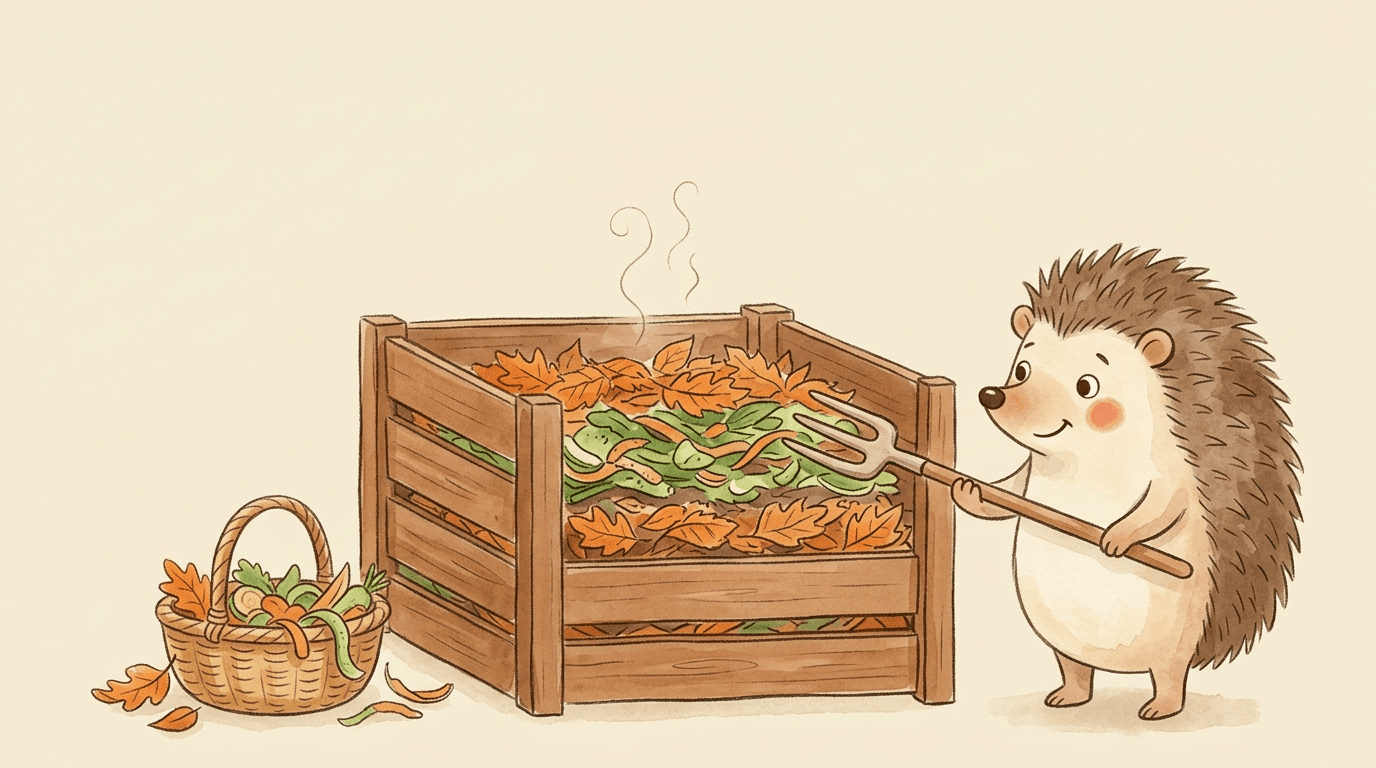
Starting an autumn compost pile: 3 parts leaves, 1 part kitchen scraps
Frau Schneider's compost pile just sat there all winter. No steam on cold mornings, no warmth, no breakdown — just a heap of dry leaves that hadn't changed a bit by March. The problem wasn't patience. It was the mix.
October 20, 2026 · 3 min read
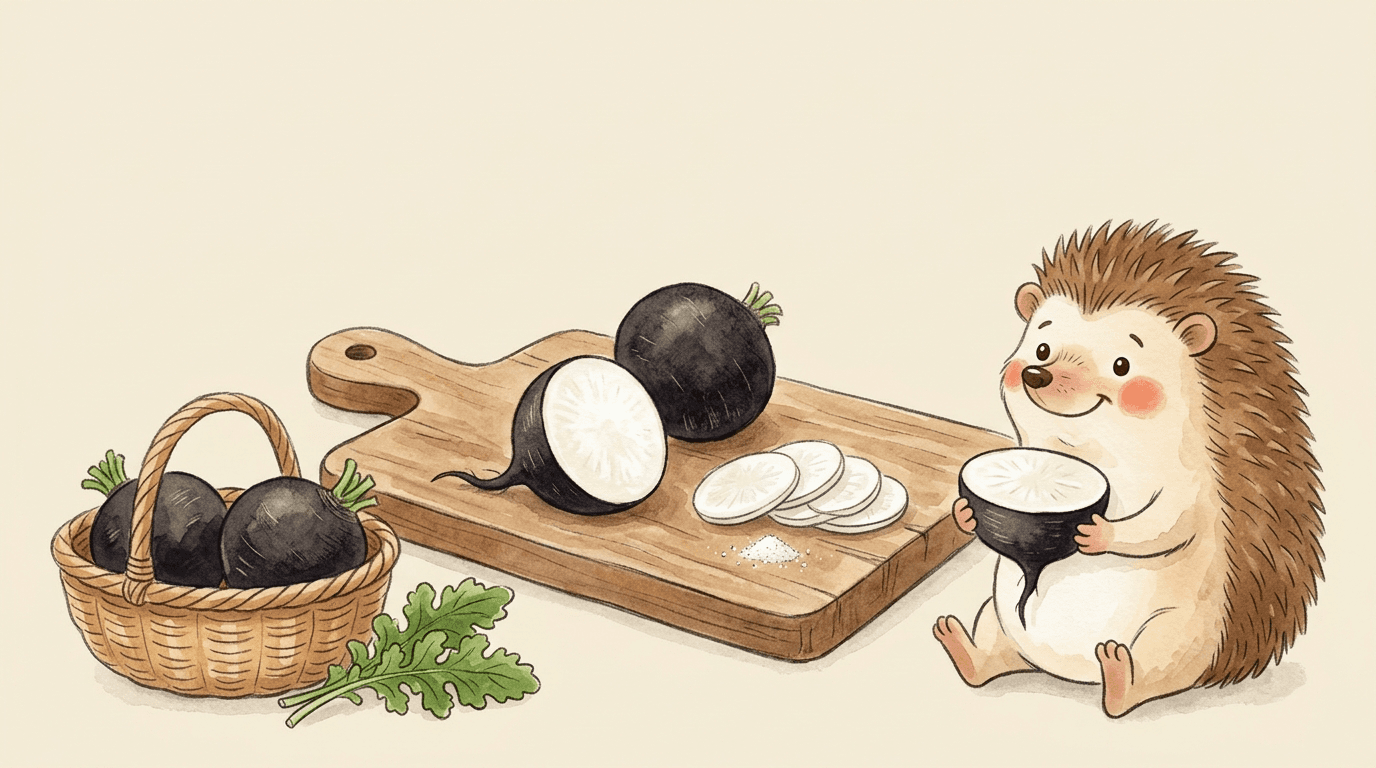
Black radish: why you should let it rest before you bite in
Last year Frau Schneider bit straight into one, unsalted, fresh out of the ground, and spent the next two minutes coughing instead of talking. The problem wasn't the radish. It was the timing.
October 14, 2026 · 2 min read
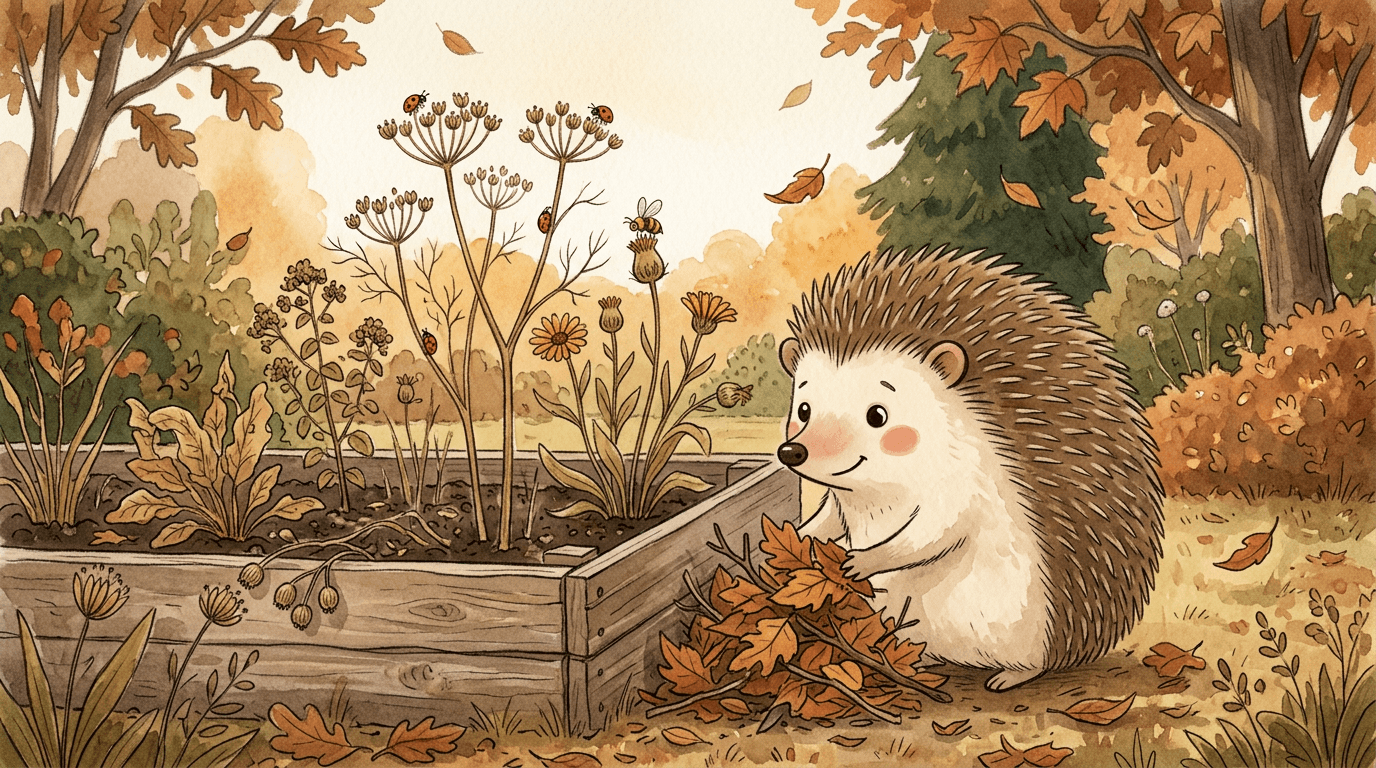
Why I only tidy up half my raised bed in October
Mr Zimmermann cut his entire raised bed down to the ground in one afternoon — stalks, seed heads, leaves, all gone. I should have warned him beforehand: not everything, only half. Here's what should stay standing and what really needs to go.