April 10, 2026 · by Stachi · 2 min read
Welcome to Erntezeit
Why we think gardening should be radically simple — and what you'll find on this blog in the future.
Hi, glad you're here.
If you're reading this, you probably fall into one of three groups:
- You have a bed and last year something went sideways — the cucumbers did nothing, the tomatoes bullied the basil, or you forgot to plant half of what you meant to.
- You're planning your first bed and staring at a wall of spreadsheets, companion-planting lists, and contradictory advice from seventeen different garden influencers.
- You've been gardening happily for years, but you have this feeling it should be even simpler.
Erntezeit is for all three of you.
Why we're building this
A few years ago I started tending a garden bed. What should have been relaxing turned into a spreadsheet: sowing dates, companion planting checks, pre- and post-crops to plan, harvest times to remember. All on pieces of paper that rotted in the garden shed.
In the second year I tried three different gardening apps. Each one wanted to be my journal, each one wanted daily entries, each one felt like a chore after three weeks. By April I was out.
The problem wasn't the garden. The problem was: too much app, not enough plan. What I actually wanted was to sit down once in spring, type in three things, and walk away with a single sheet in my hand that said: "If you don't forget anything in May, this'll be a good year."
Nothing more, nothing less.
What we're building
Erntezeit is an annual planner for your bed — radically simple.
You tell us three things:
- Where you live — we know your climate and when your last frost usually ends.
- How big your bed is — length × width, that's it.
- What you want to grow — from over 100 varieties, chosen visually.
You get a complete annual plan: sowing, planting, and harvest dates, companion planting automatically factored in, pre- and post-crops where it makes sense. As a printable PDF for the shed, and (in the Pro version) as a digital calendar with weather data.
No daily chores. No pop-ups. No push notifications telling you your tomato needs attention.
What you'll read on this blog
This won't be a classic garden blog with "10 tips against slugs." There's enough of that. Here we write about:
- Stories from the bed — what worked for us, what didn't, what we got wrong.
- Behind the scenes of Erntezeit — why we chose certain plants, how our climate logic works, what's coming next.
- Companion planting explained — why tomatoes love basil and hate cucumbers, and what happens if you try it anyway.
- Conversations with bed gardeners — what beginners learn, what experts miss.
Honest, personal, without SEO filler. If you're not planning to grow anything right now, you don't need to read this.
What happens next
Erntezeit has been live since spring 2026. I send one email a month on garden topics — if you want it, the form is on the home page. No ad-spam, no push notifications. One email. Nothing else.
Until then: have fun in the bed, and if you have questions, write to hallo@erntezeit.app. We answer personally.
🦔 Stachi
Related plants


More articles
October 26, 2026 · 3 min read
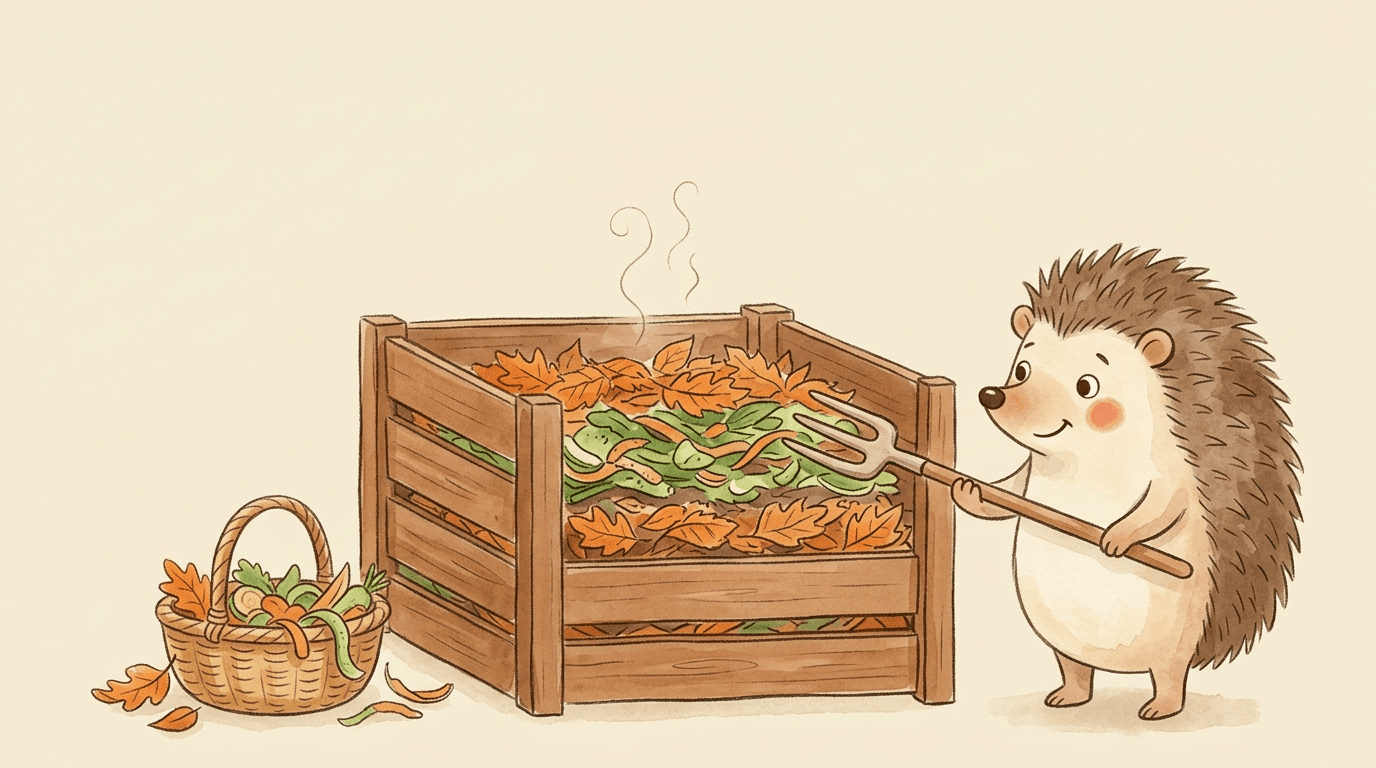
Starting an autumn compost pile: 3 parts leaves, 1 part kitchen scraps
Frau Schneider's compost pile just sat there all winter. No steam on cold mornings, no warmth, no breakdown — just a heap of dry leaves that hadn't changed a bit by March. The problem wasn't patience. It was the mix.
October 20, 2026 · 3 min read
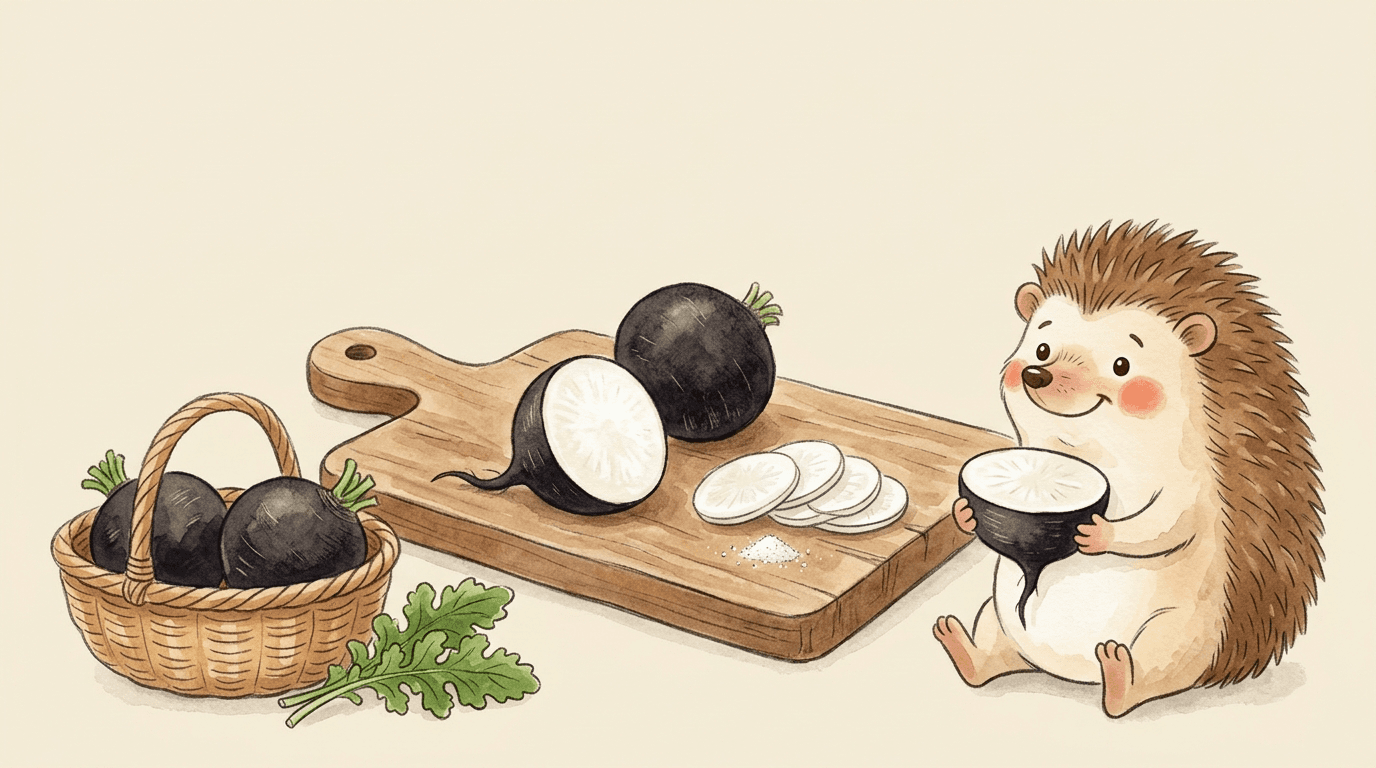
Black radish: why you should let it rest before you bite in
Last year Frau Schneider bit straight into one, unsalted, fresh out of the ground, and spent the next two minutes coughing instead of talking. The problem wasn't the radish. It was the timing.
October 14, 2026 · 2 min read
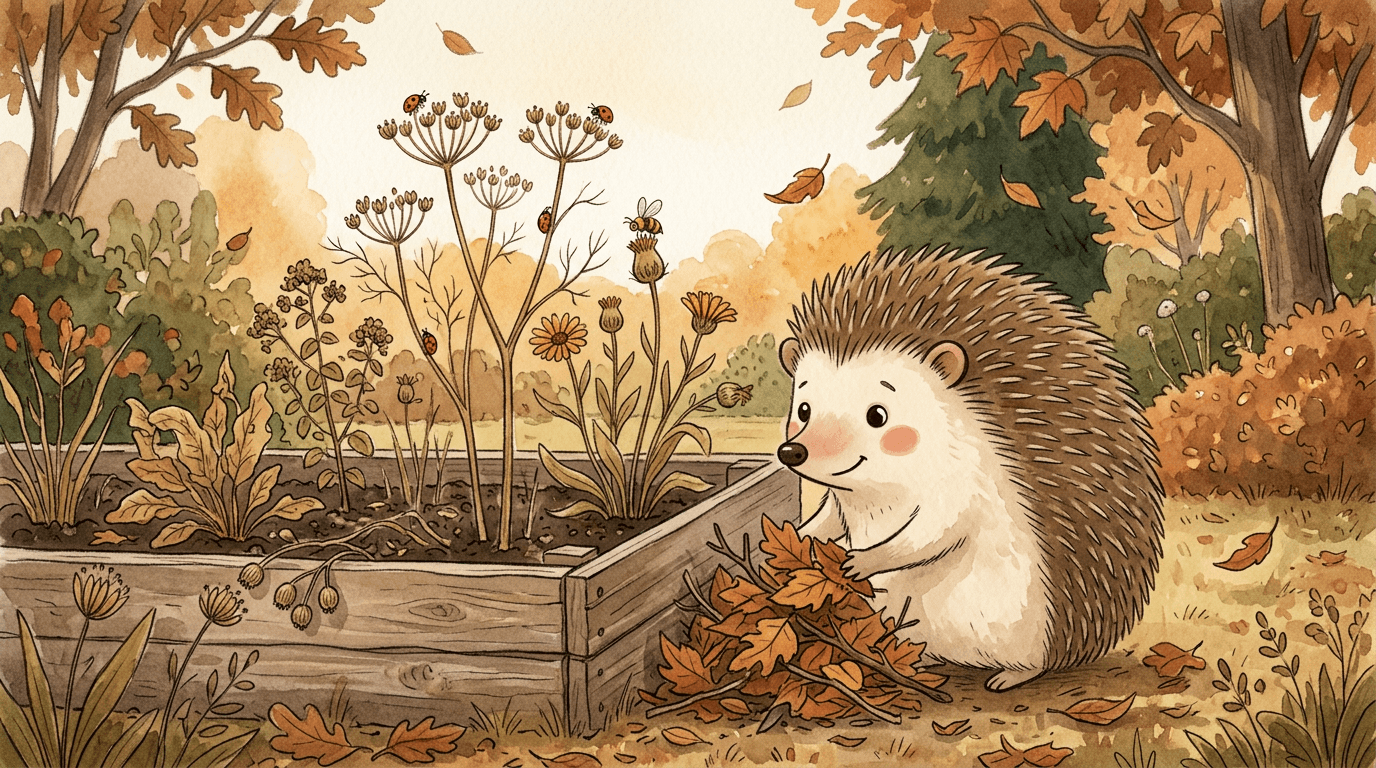
Why I only tidy up half my raised bed in October
Mr Zimmermann cut his entire raised bed down to the ground in one afternoon — stalks, seed heads, leaves, all gone. I should have warned him beforehand: not everything, only half. Here's what should stay standing and what really needs to go.