July 22, 2026 · by Stachi · 3 min read
French beans in the raised bed: why you need to pick every two days
Beans stop producing the moment the first pods go too ripe. Miss a week of picking and the plant thinks it's done. How it happens, how to spot it, and why two minutes every other day makes all the difference.
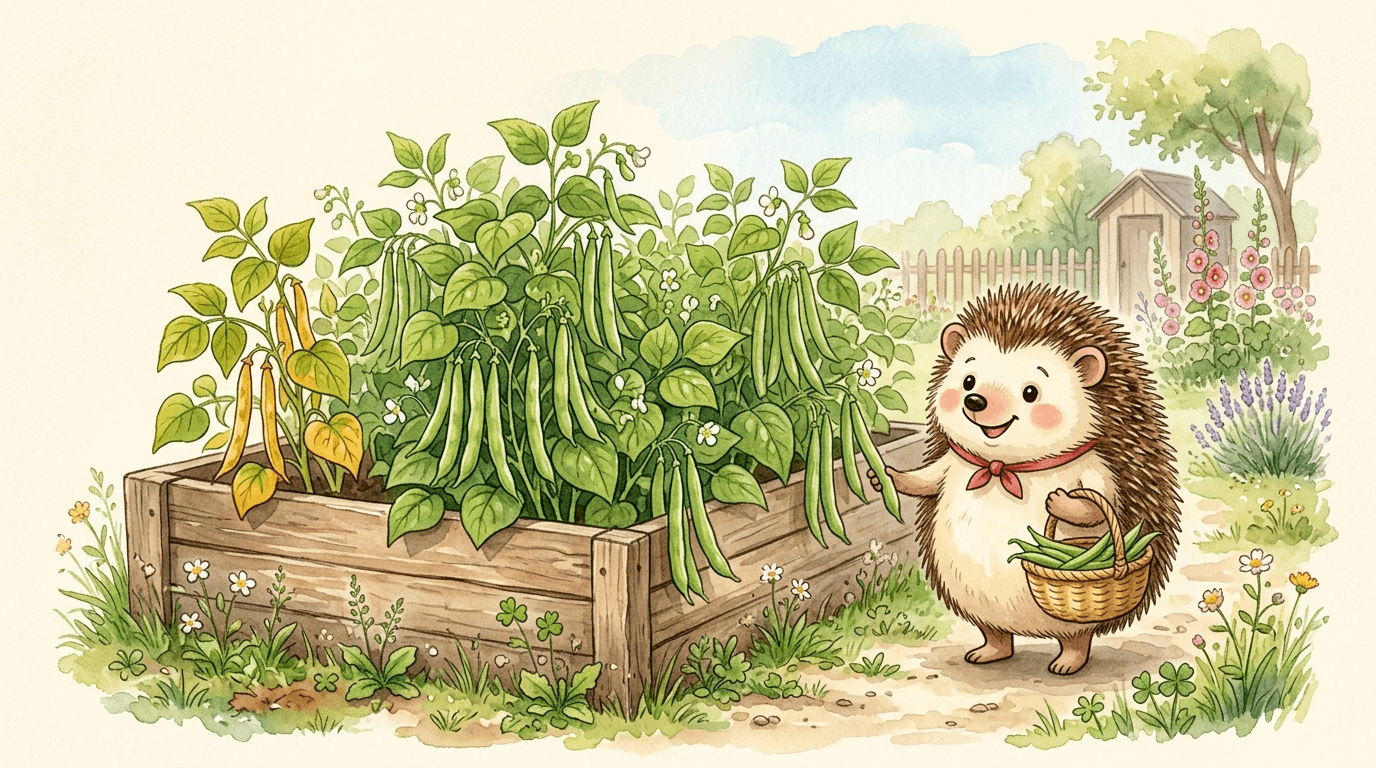
I was away for ten days. My neighbour Frau Schneider watered the tomatoes, but nobody picked the beans. When I came back: fat, yellowing pods everywhere — some already browning at the tips, almost dried out. New flowers: zero. New small pods: zero.
The plant had decided it was done.
Why beans stop producing if you don't pick them
Bush beans, climbing beans, runner beans — they all run on the same principle. The plant produces pods to pass on its seeds. Once those seeds are ripe, its job is finished. Any remaining energy goes into the already-mature pods, not into making new flowers.
It doesn't happen overnight. First week without picking: you might still see a handful of flowers. Second week: noticeably fewer. After that: nothing.
Ten days away, and mine had stopped completely.
How to tell a bean is ready to pick
The right moment is earlier than most people think.
Size: The pod should be around 10–12 cm long, rounded and firm. With most varieties you'll see slight bulges where the seeds are sitting — but the pod shouldn't look like it's about to burst. If you can clearly feel each seed through the skin, it's already at the edge.
The snap test: Gently bend the pod. It should snap clean. If it just bends without breaking, it's too mature — the fibres have already toughened up.
Colour: Green, yellow or purple depending on the variety — but even. Yellow patches on a green pod: don't wait any longer.
Leave it another week past these signs and the pod turns stringy. Fine for a long-cooked stew, but nothing you'd want to eat fresh.
What to do with overripe pods
If you come home to what I came home to: pull every overripe pod off immediately. The yellowing ones, the browning ones, the almost-dried-out ones. Everything mature or past-mature needs to go so the plant can start investing again.
Then: wait. After stripping back to just green growth, the plant usually needs a week to ten days before new flowers appear. Sometimes not at all, if it's already mid-August and the nights are cooling down.
Mine recovered. Eight days later: new white flowers. Another three weeks of picking, until the first frost ended things.
The rhythm that works
Peak season in July and August: every one to two days. That sounds like a lot, but it's two to five minutes.
I walk out to my bed in Berikon in the morning, check the beans, take what's ready. Three times a week just about works. Twice a week doesn't.
When I'm away, I now ask Frau Schneider specifically. Not "keep an eye on it" — that means watering to her, not picking. I show her what a ready pod looks like and ask her to pick twice a week. No more production stops since.
Getting more out of it: sowing in succession
If you sow another handful of bush bean seeds right now in July, you'll have a second flush in September. Bush beans need only 50 to 60 days from sowing to first harvest. Sow late July — first pods late September. That works in most places across Germany, Austria and Switzerland if no frost comes early.
I do it every year. The second flush often tastes better to me — cooler nights seem to make the pods more tender.
What Erntezeit does with this
Your year plan shows exactly when the main bean harvest starts for your location, and whether a late sowing still makes sense. Frost data for your specific bed in Zurich or Salzburg or Freiburg is included — and you can see whether sowing in early August is still worth it or already too late.
My beans in Berikon are recovering. This morning I counted five new flowers. Frau Schneider got a bag of beans — the overripe ones. She's making soup with them. Nothing wasted.
🦔 Stachi
Related plants


More articles
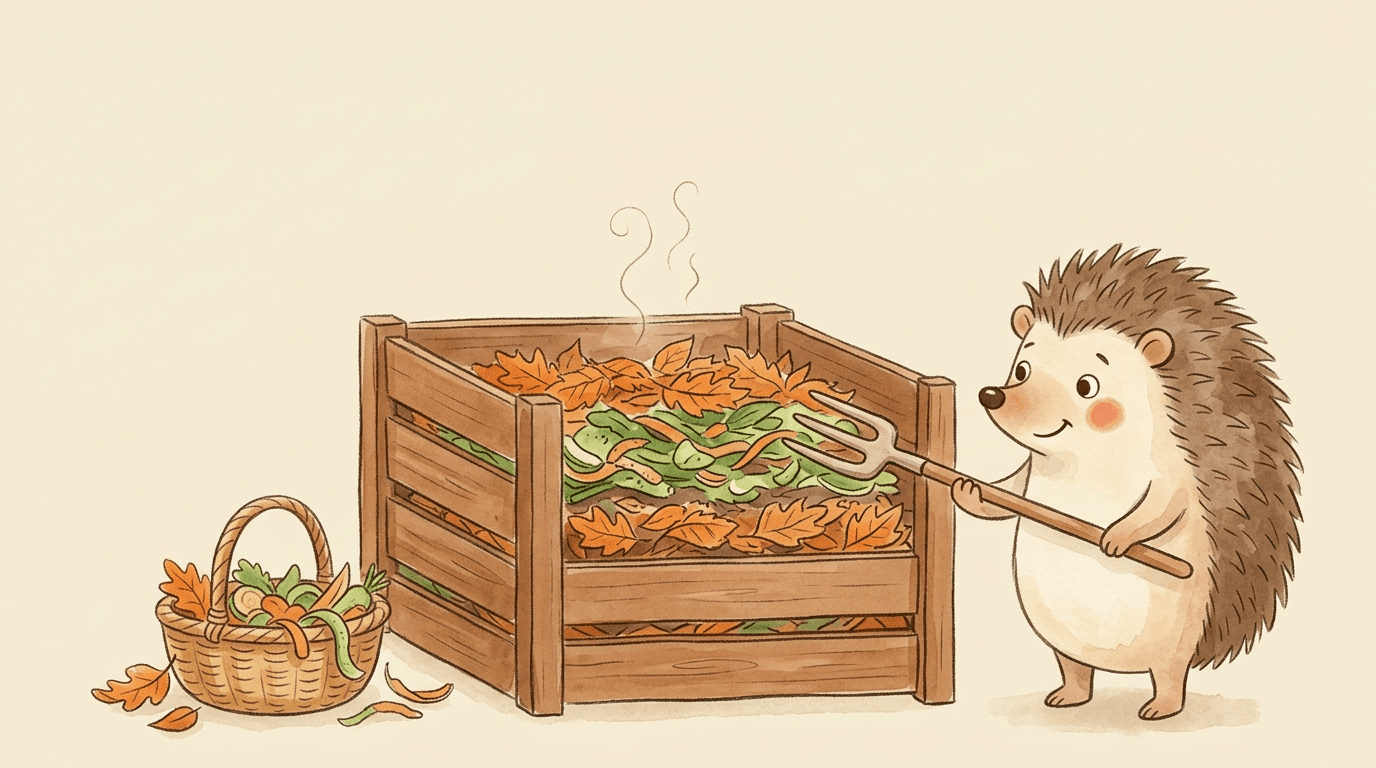
October 26, 2026 · 3 min read
Starting an autumn compost pile: 3 parts leaves, 1 part kitchen scraps
Frau Schneider's compost pile just sat there all winter. No steam on cold mornings, no warmth, no breakdown — just a heap of dry leaves that hadn't changed a bit by March. The problem wasn't patience. It was the mix.
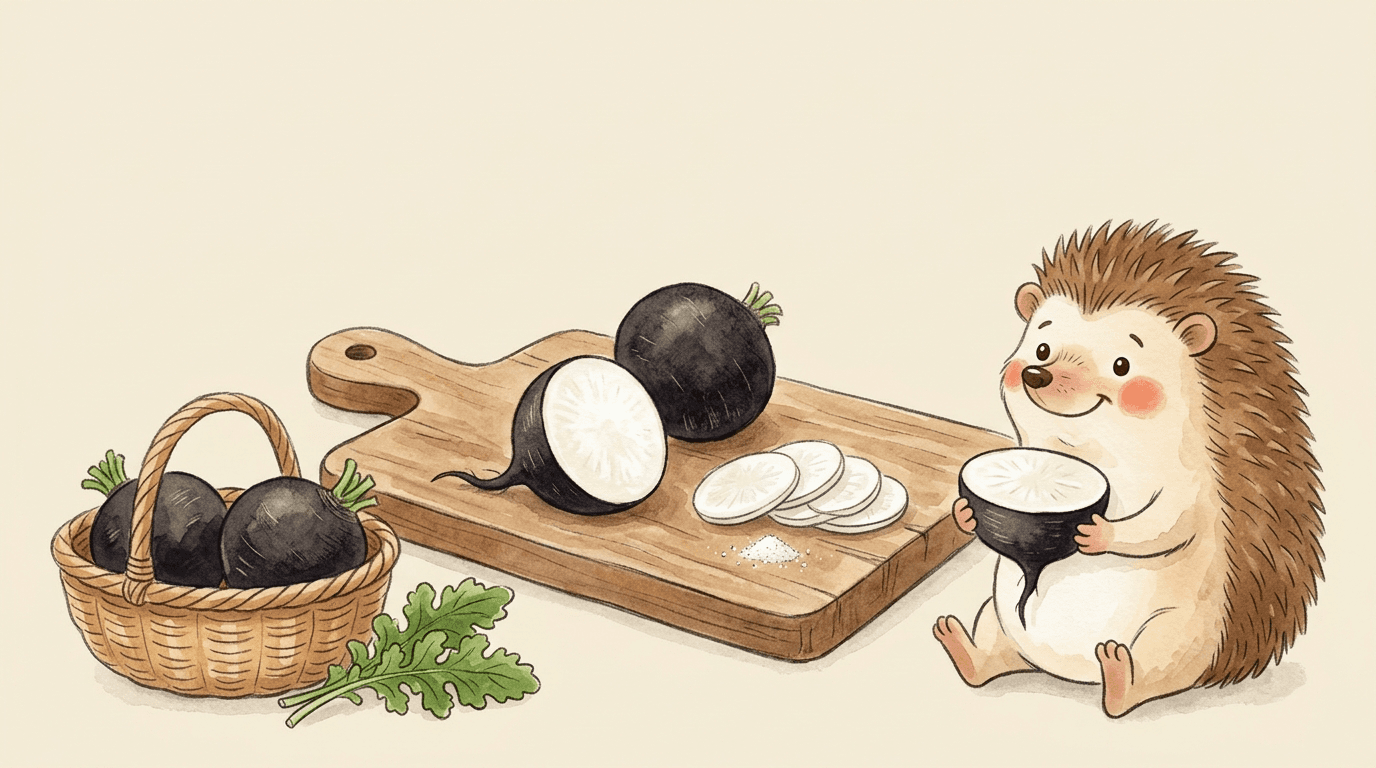
October 20, 2026 · 3 min read
Black radish: why you should let it rest before you bite in
Last year Frau Schneider bit straight into one, unsalted, fresh out of the ground, and spent the next two minutes coughing instead of talking. The problem wasn't the radish. It was the timing.
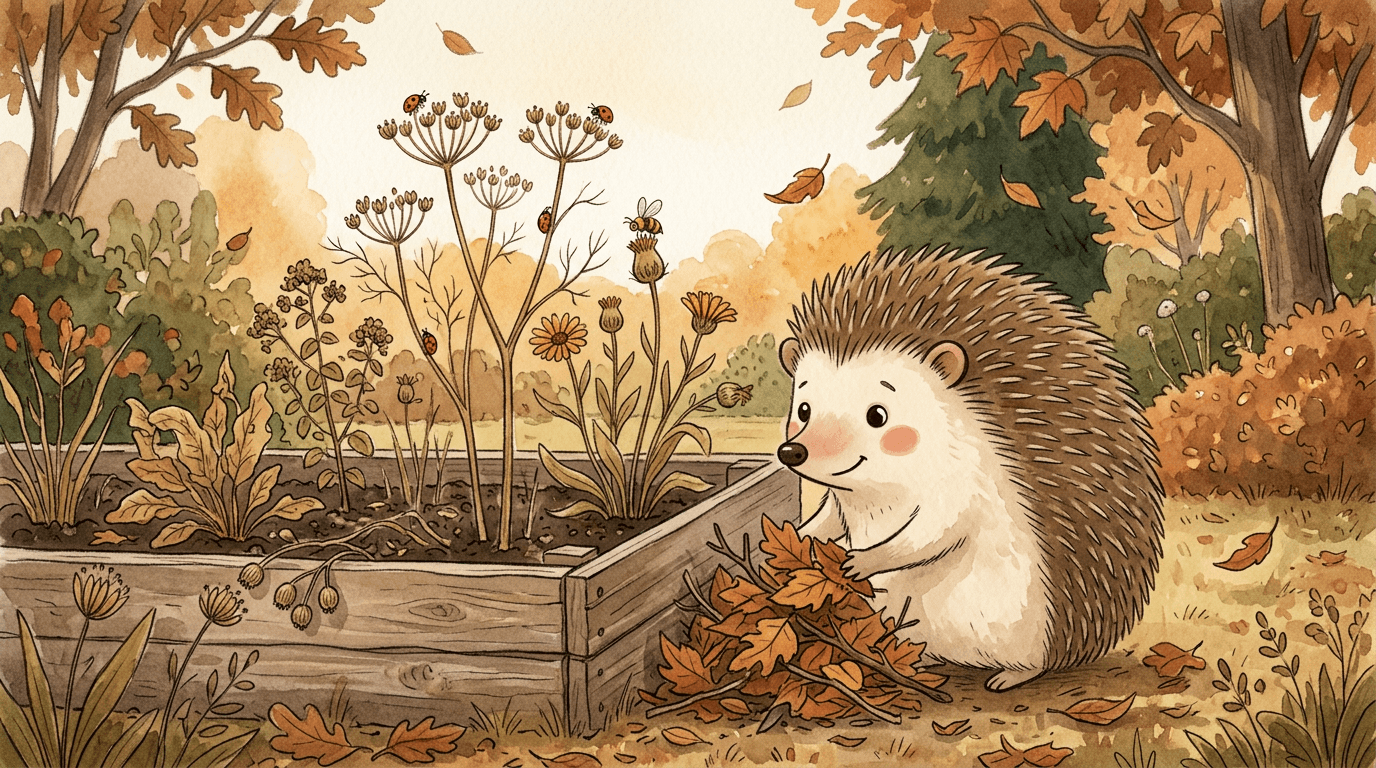
October 14, 2026 · 2 min read
Why I only tidy up half my raised bed in October
Mr Zimmermann cut his entire raised bed down to the ground in one afternoon — stalks, seed heads, leaves, all gone. I should have warned him beforehand: not everything, only half. Here's what should stay standing and what really needs to go.