March 25, 2026 · by Stachi · 4 min read
Five plants that always work in a garden bed
If you don't want your first bed year to break your spirit, plant these five. They forgive beginner mistakes, they grow fast, and you actually eat them.
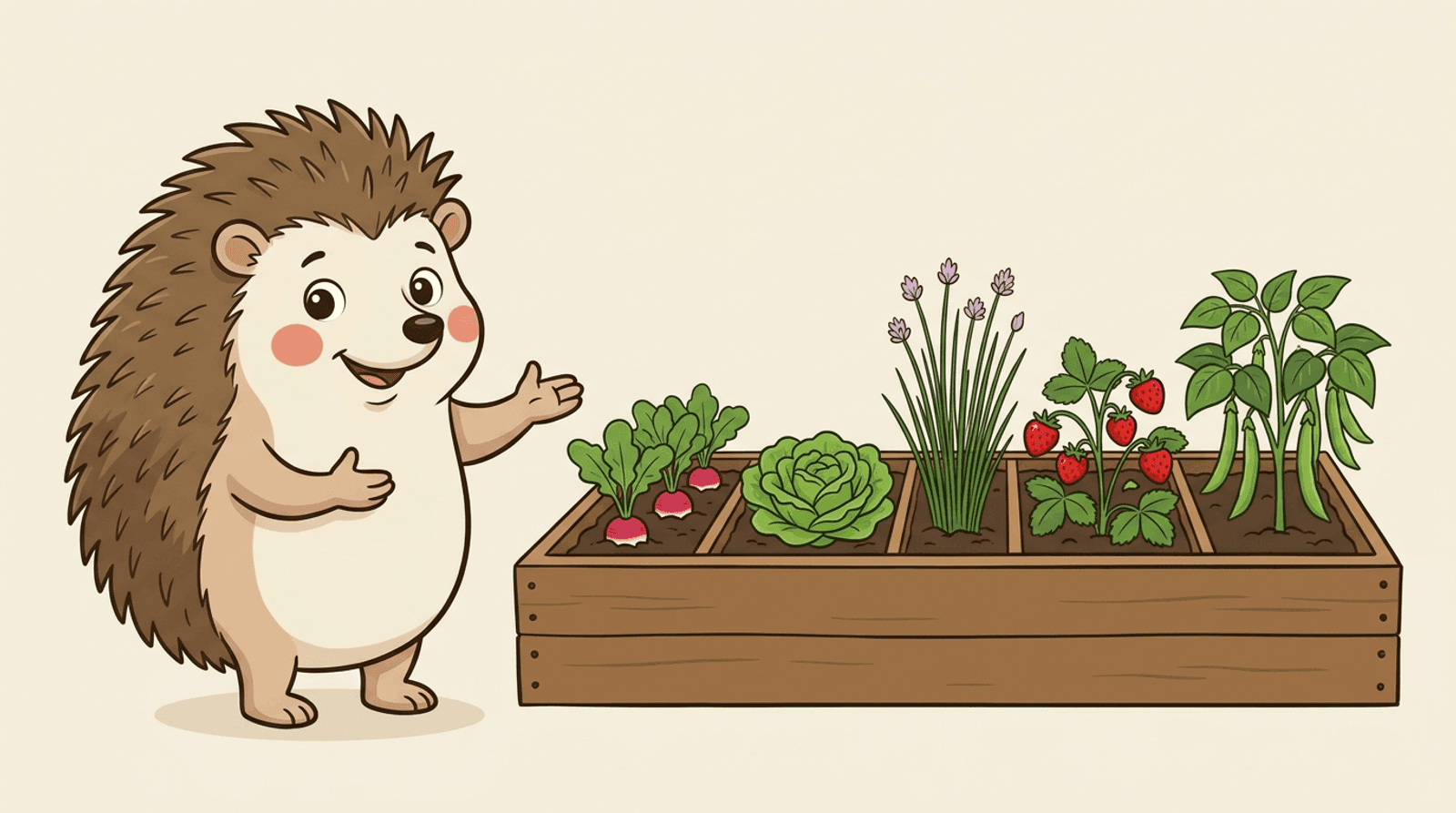
My first summer with a garden bed was a tragedy. Tomatoes: late blight. Peppers: never ripened. Eggplant: three seedlings, zero harvest. Courgette: too much, all at once, I didn't know what to do with it. Basil: gnawed away by snails by early June.
What worked? Radishes. Lettuce. Chives. Strawberries. Bush beans.
Those five carried me through the summer while I figured out what went wrong with the others. They're the five I now tell every beginner: "Start with these. If those don't work, nothing's going to."
Here they are, one by one.
1. Radishes — the beginner's miracle
Sow: from mid-March directly into the bed. Germinates in 4-6 days. Harvest-ready in 4 weeks. You can re-sow every 2 weeks and have fresh ones until October.
What they forgive: almost everything. Too little water → they get a bit spicy, but they taste fine. Too much water → a bit watery, but fine. Sown a bit too deep (1cm ideal, 2cm works) → slower to sprout but still come up. Half-shade instead of full sun → a bit smaller, but fine.
What they don't forgive: planting too close (at least 3-4 cm between, or they grow thin and pencil-shaped) and water-stress during the main growth phase (days 14-20 after sprouting — let them dry out then and they go woody instead of crunchy).
Frau Schneider says about radishes: "You can't lose your confidence with these." She's right.
2. Lettuce — the constant harvest
Cut-and-come-again lettuce (Lollo Rosso, Lollo Bionda, oak-leaf) is the gold mine. You plant one seedling, you harvest individual leaves for 6-8 weeks. The plant grows back. Only when it bolts (flowering stem in high summer) is it done.
Plant: from mid-April with seedlings, repeat every 3 weeks for constant harvest. Spacing 25 cm.
What works: half-shade is OK, even good. Full shade and they grow slower but more tender. Water every other day, no more.
What doesn't: drought (immediately triggers bitter compounds and bolting), and snails — if you have snails, you need slug pellets or a copper band around the bed.
Cutting trick: always take outer leaves, leave the inner rosette. That way you harvest for weeks.
3. Chives — the plant that never leaves
Chives are perennial. You plant once, they come back every year, in April with the first warm days. Cut with scissors, they grow back. In a bed they need ~30×30 cm, half-shade is great, full sun also OK.
What they need: a watering after each cut. In high summer two or three times a week. That's it.
What they never do: disappoint you. There's no season where chives don't work. Genuinely.
Bonus: the purple flowers from June are edible and look like little watercolour pearls in salad.
4. Strawberries — the runner trick
Strawberries are perennial. Plant once in spring with 4-6 plants ("Mara des Bois" for flavour, "Korona" for sturdiness), give them 30 cm spacing and half-shade or sun, and you harvest from June.
What they do: after harvest they produce runners (long shoots with mini-plants on the end). You can cut these in mid-August and pot them — next year you have free new plants. Strawberries multiply themselves.
What they don't like: waterlogging. Bed drainage is good, so usually no problem. And old plants from year 4 onwards — they become unproductive. Replace every 3-4 years with self-grown runners, costs nothing.
In winter: just cover with straw or fleece below -10°C. Otherwise, nothing.
5. Bush beans — summer bounty without a stake
Pole beans need a climbing frame. Bush beans don't. They grow 30-50 cm tall, stand on their own, and produce constantly from July onwards.
Sow: directly into the bed from 15 May (don't push ahead before the ice saints — frost-sensitive). 3 cm deep, 8 cm spacing in a row, 30 cm between rows. In an 80×120 bed you fit 2 rows of 8 plants each, so 16 total.
What they do: 60-70 days after sowing you start harvesting. Then every 2-3 days for 4-6 weeks. One plant gives 200-300g of beans. 16 plants = 3-5 kg of beans over the season.
What they don't need: fertiliser. Beans are nitrogen fixers — they improve your bed soil for next year. Plant cabbage or lettuce after beans, they love the leftover nitrogen.
What they hate: waterlogging (red bean diseases) and cold early- summer nights (wait until after the ice saints, honestly).
When you have these five
You have all summer:
- Radishes for salads
- Lettuce for itself
- Chives for everything
- Strawberries as the afternoon sweet
- Beans as a side dish for 4 solid weeks
Plus: a successful gardening year that motivates you to try tomatoes or peppers next year. With the confidence from five easy wins.
What Erntezeit does for you
You tick these five in the wizard, and Erntezeit tells you
- When exactly (based on your location)
- How much space in the bed (based on your bed size)
- Which two don't get along (strawberries next to bush beans is fine, chives next to beans isn't — chives stunt bean growth)
- When to re-sow (for lettuce and radishes)
Try the bed planner — we make the plan, you make the salad.
🦔 Stachi
Related plants


More articles
October 26, 2026 · 3 min read
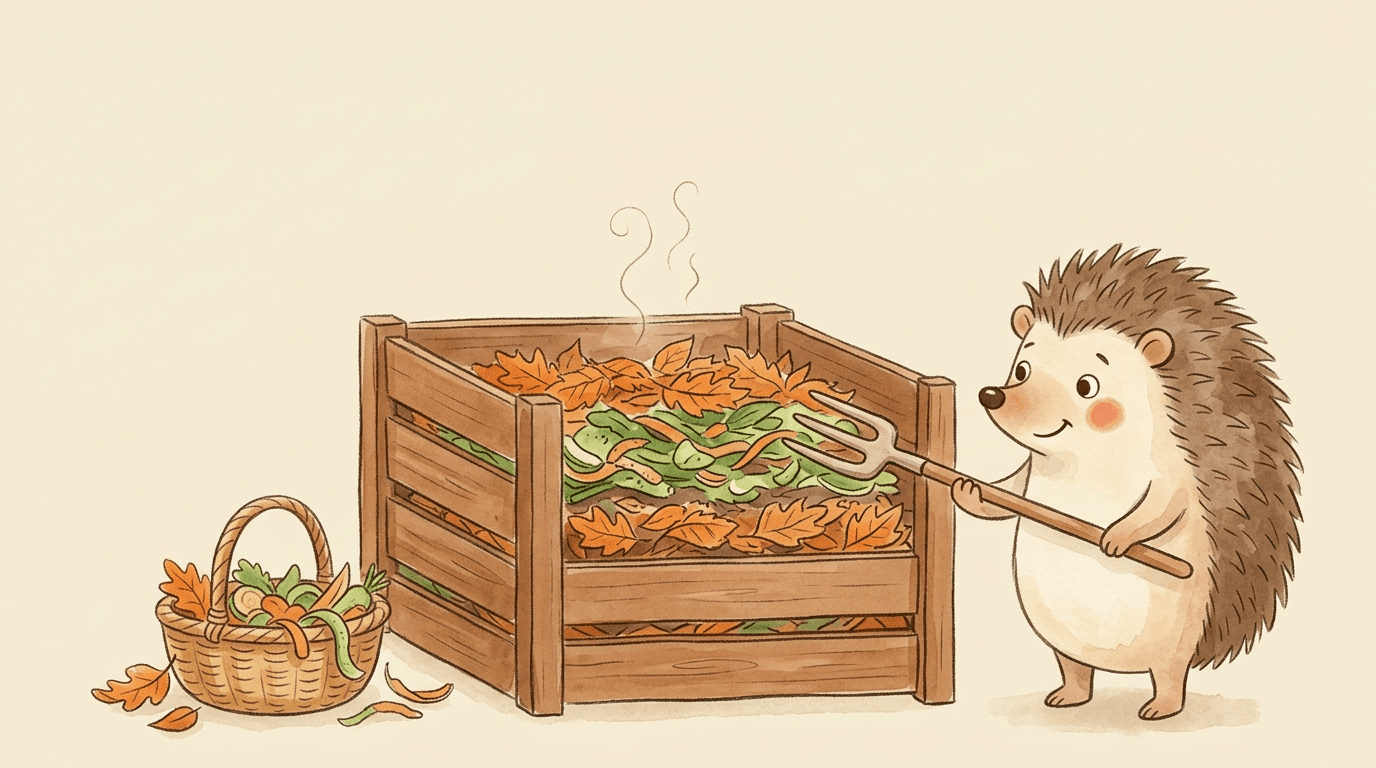
Starting an autumn compost pile: 3 parts leaves, 1 part kitchen scraps
Frau Schneider's compost pile just sat there all winter. No steam on cold mornings, no warmth, no breakdown — just a heap of dry leaves that hadn't changed a bit by March. The problem wasn't patience. It was the mix.
October 20, 2026 · 3 min read
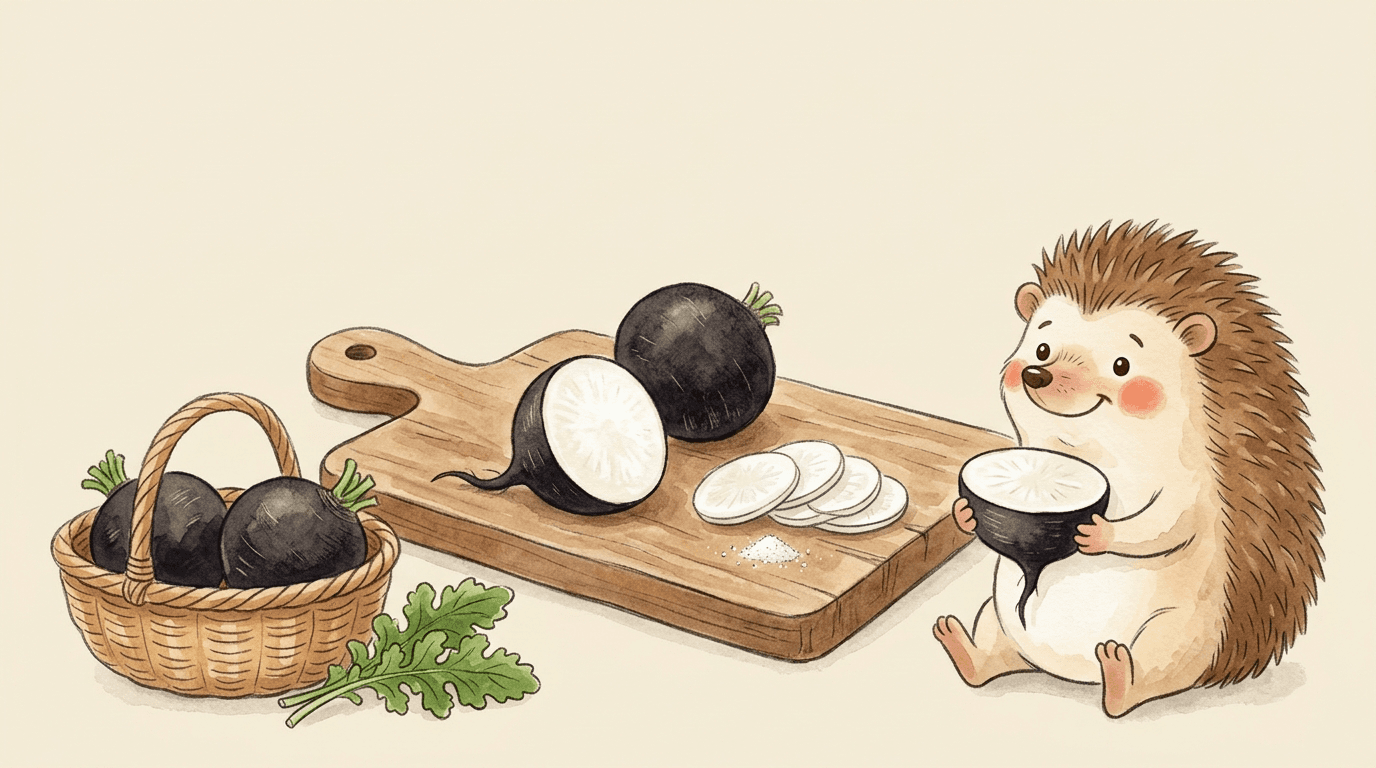
Black radish: why you should let it rest before you bite in
Last year Frau Schneider bit straight into one, unsalted, fresh out of the ground, and spent the next two minutes coughing instead of talking. The problem wasn't the radish. It was the timing.
October 14, 2026 · 2 min read
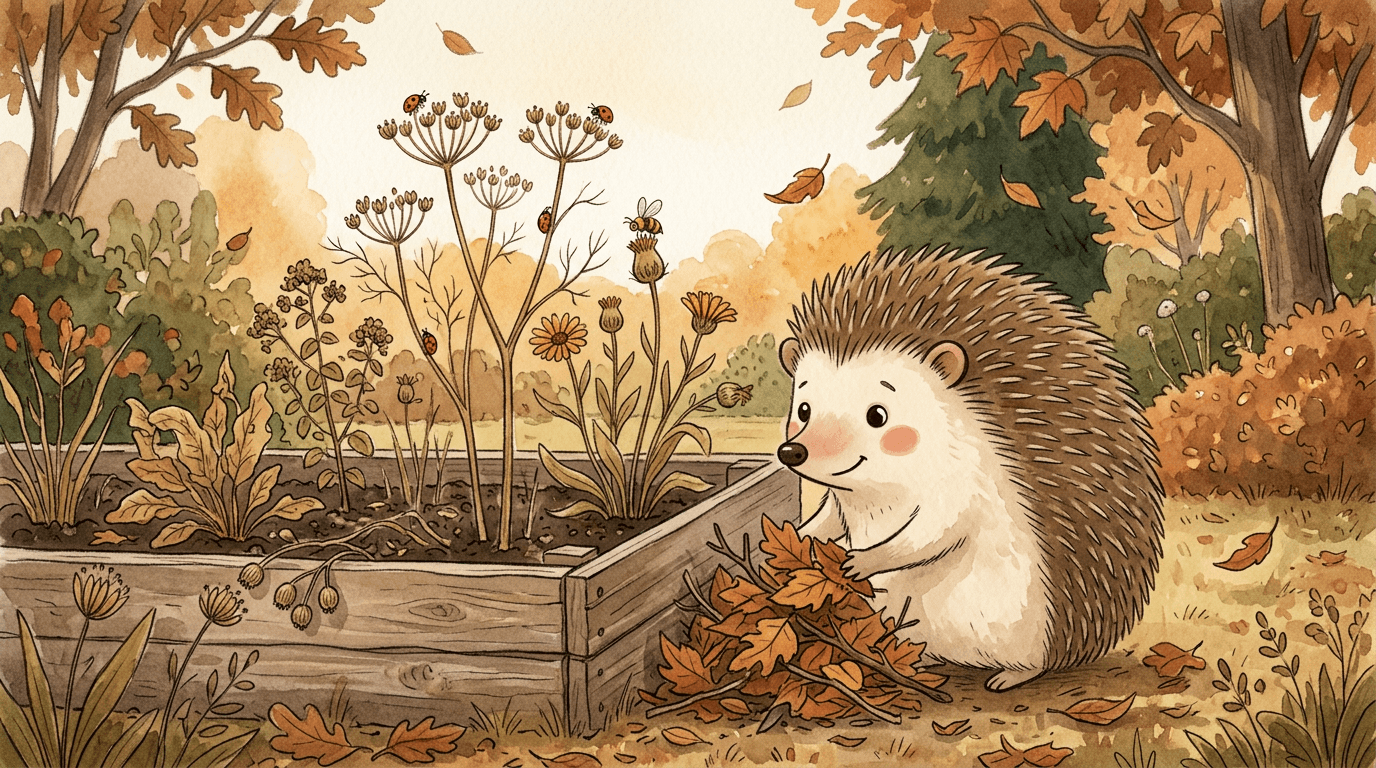
Why I only tidy up half my raised bed in October
Mr Zimmermann cut his entire raised bed down to the ground in one afternoon — stalks, seed heads, leaves, all gone. I should have warned him beforehand: not everything, only half. Here's what should stay standing and what really needs to go.