May 18, 2026 · by Stachi · 3 min read
Planting a raised bed — the 3-step beginner guide (compact)
The short version: location, bed size, plant choice. One page, three steps, one rule of thumb per step. To print and pin to the shed.
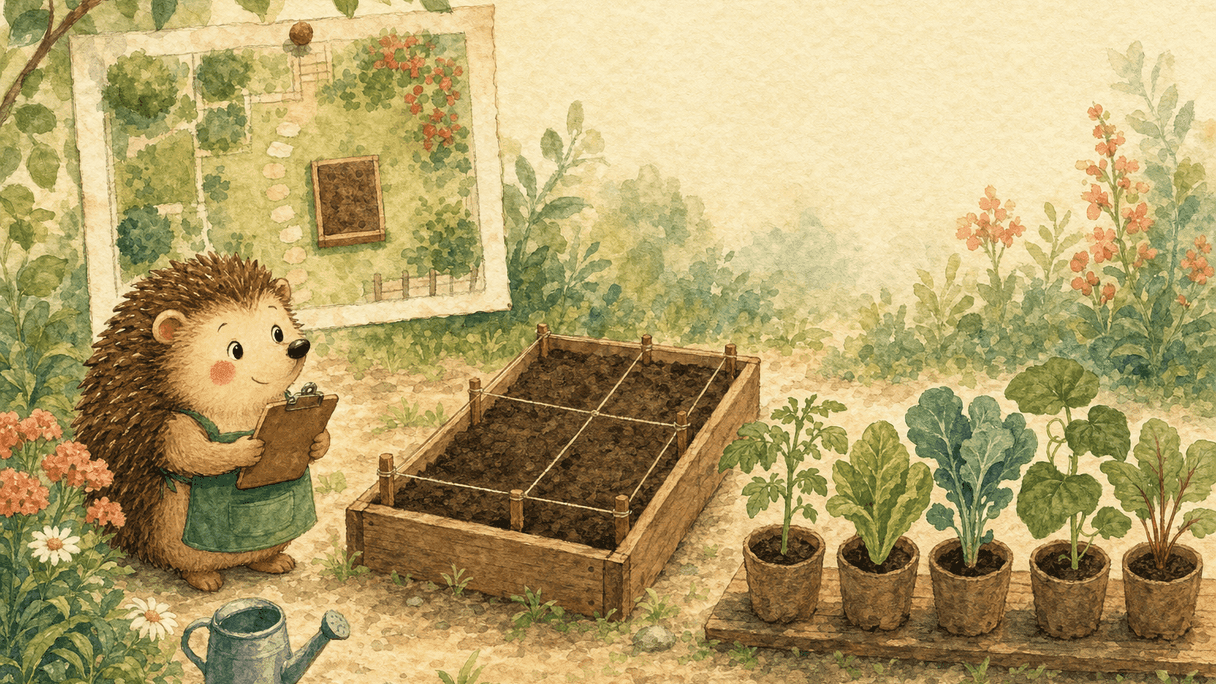
You're standing in front of the empty raised bed with a trowel and 20 minutes. No time for a 2,000-word article. Here's the short version — three steps, one rule of thumb per step, done.
(If you want the long version with stories and reasoning: that exists too. This is the one for the shed.)
Step 1: Location — one number you must know
Rule of thumb: know your last frost date, not the calendar month.
The last frost depends on the place, not the date in the magazine. In Zürich-Affoltern it's around 10-15 May, in Munich into 20 May, in Krems an der Donau already early May. A calendar from a generic gardening magazine is, with high probability, a week off for you.
What to do: look up your postcode on a USDA hardiness map, note zone + average last frost date. When in doubt, be conservative: a week too late beats three days too early and everything frozen. The ice saints (around 11-15 May, traditional late-frost benchmark days) are the safe boundary for heat-loving plants in DACH.
Step 2: Bed size — one calculation
Rule of thumb: at most one big fruiting vegetable per 60×60 cm.
Tomato, cucumber, courgette, pumpkin, pepper are big fruiting vegetables. In April the bed looks huge. In July the tomato is 1.80 m tall and 80 cm wide. Plant too tight and you harvest half of everything.
What to do: work out bed area in m², divide by 0.36 (= 60×60 cm). The result is the maximum number of big fruiting vegetables. Example: 80×120 cm = 0.96 m² → 0.96 / 0.36 ≈ 2 big plants, plus 4-6 small tenants (lettuce, radish, herbs) in the gaps.
Step 3: Plant choice — three filters
Rule of thumb: what you eat, what gets along, what suits the location.
- What do you actually eat? Not 6 lettuce heads if half ends up on the compost.
- What gets along? The five rules that get 80 % of the effect:
- ✅ Tomato + basil
- ✅ Carrot + onion
- ✅ Lettuce + radish
- ❌ Tomato + potato (both blight)
- ❌ Bean + onion
- What suits the location? Aubergine needs warmth, pak choi needs cool. A local variety recommendation from the garden centre beats the generic online shop.
When to sow, when to plant?
- February-April, indoors: start tomato, pepper, aubergine (long growing time, need a head start)
- March-May, direct into the bed: sow cold-tolerant crops — radish, spinach, pea, lettuce, carrot. A raised bed warms up faster than a ground bed, so a few days earlier is possible.
- After the ice saints (from around 16 May): plant out what you started + bought seedlings (cucumber, courgette, pumpkin). Never before — one frost night kills 6 weeks of indoor growing.
After the harvest: the second sowing
When the peas come out in June, the bed is empty. Don't leave it empty: re-sow carrots. Peas leave nitrogen behind, the soil is loosened, carrots harvest-ready by October. Same area, double harvest, no extra work. Similarly: spinach after spring lettuce, lamb's lettuce after tomatoes.
The three beginner mistakes
- Too early into the bed. April sun lies, May frost kills seedlings.
- Companion planting ignored. Tomato next to potato = blight for both.
- Too much on too little area. The most common reason for disappointing harvests.
The one-page summary
| Step | Rule of thumb | Concretely |
|---|---|---|
| 1 Location | Know frost date, not month | Note USDA zone + last frost |
| 2 Size | 1 big fruiting veg / 60×60 cm | m² ÷ 0.36 = max big plants |
| 3 Plants | Eat + compatibility + location | Remember 5 companion rules |
Erntezeit does exactly these three steps in 5 minutes: postcode in → climate zone and frost out, bed size in → plant count out, make your choice → companion check and a year plan on one sheet. But this page works without me too. Print it. Plant boldly.
Plant something nice.
🦔 Stachi
Related plants


More articles
October 26, 2026 · 3 min read
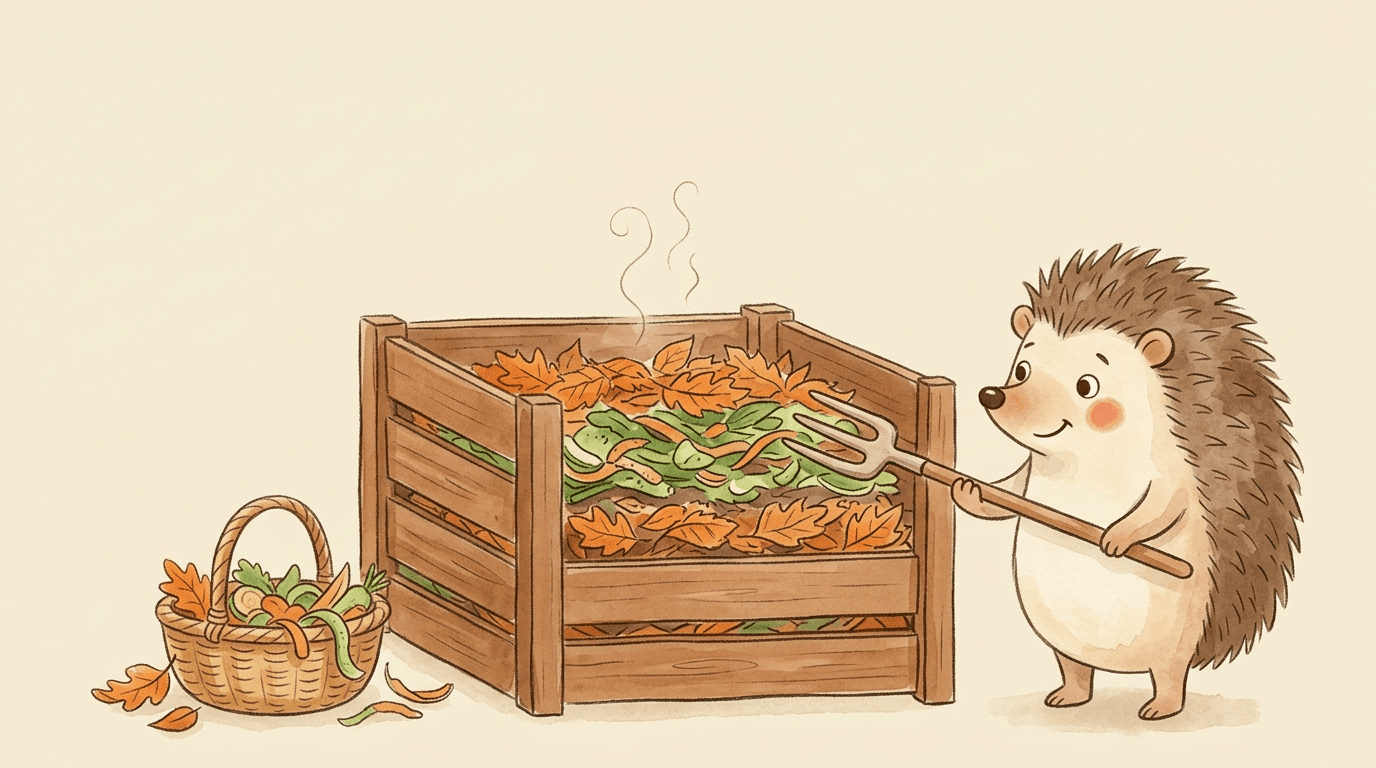
Starting an autumn compost pile: 3 parts leaves, 1 part kitchen scraps
Frau Schneider's compost pile just sat there all winter. No steam on cold mornings, no warmth, no breakdown — just a heap of dry leaves that hadn't changed a bit by March. The problem wasn't patience. It was the mix.
October 20, 2026 · 3 min read
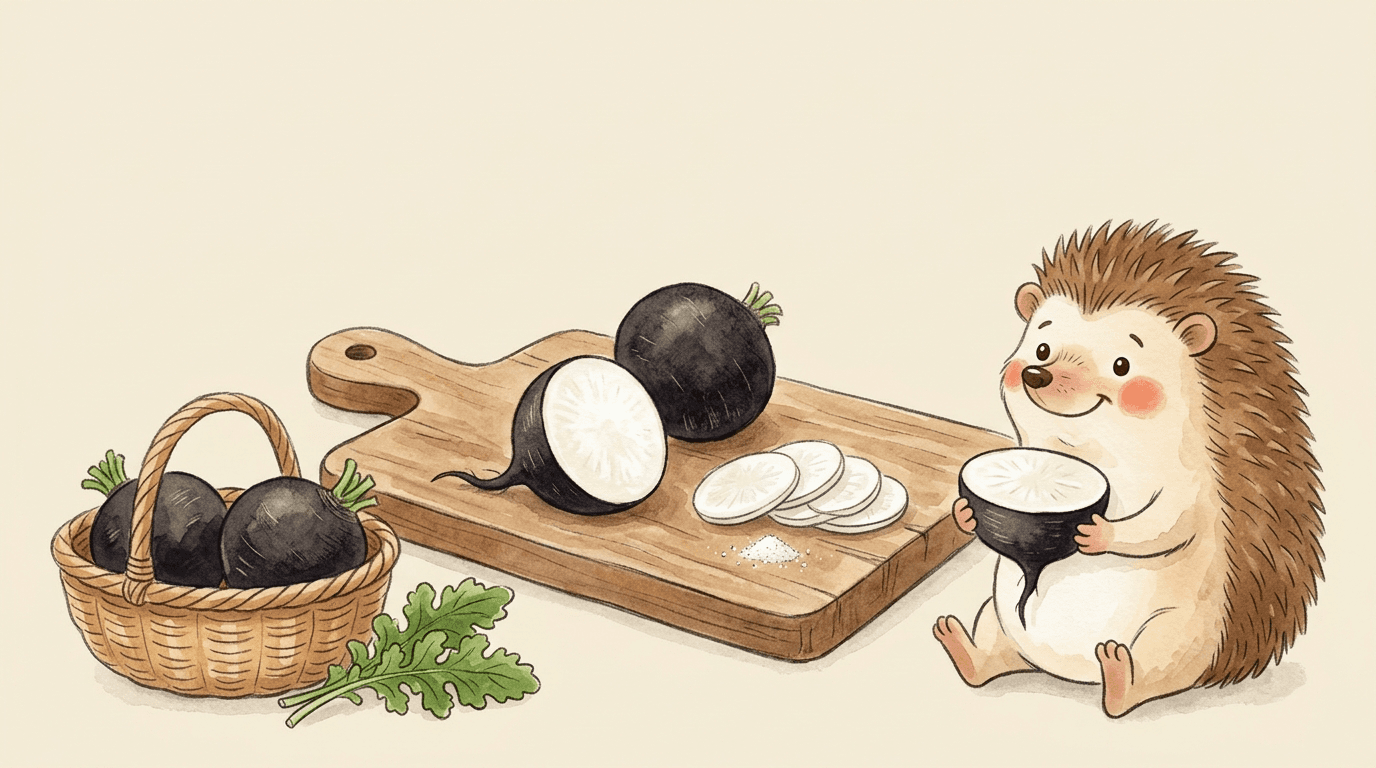
Black radish: why you should let it rest before you bite in
Last year Frau Schneider bit straight into one, unsalted, fresh out of the ground, and spent the next two minutes coughing instead of talking. The problem wasn't the radish. It was the timing.
October 14, 2026 · 2 min read
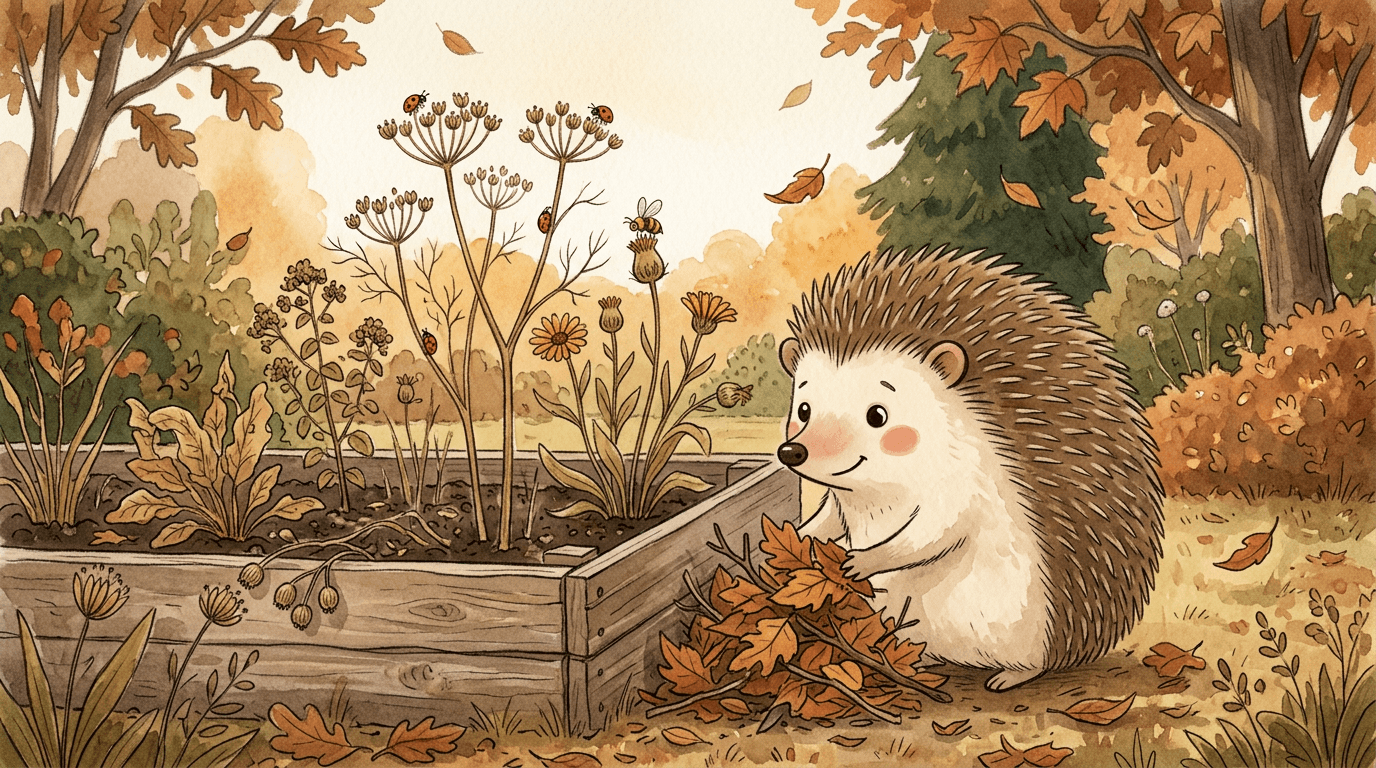
Why I only tidy up half my raised bed in October
Mr Zimmermann cut his entire raised bed down to the ground in one afternoon — stalks, seed heads, leaves, all gone. I should have warned him beforehand: not everything, only half. Here's what should stay standing and what really needs to go.