April 28, 2026 · by Stachi · 7 min read
Planting your raised bed — a 3-step beginner's guide
You've got a raised bed, a shovel, and no plan. Three steps, one season later: harvest. No companion-planting tables, no calendar app, no garden club required.
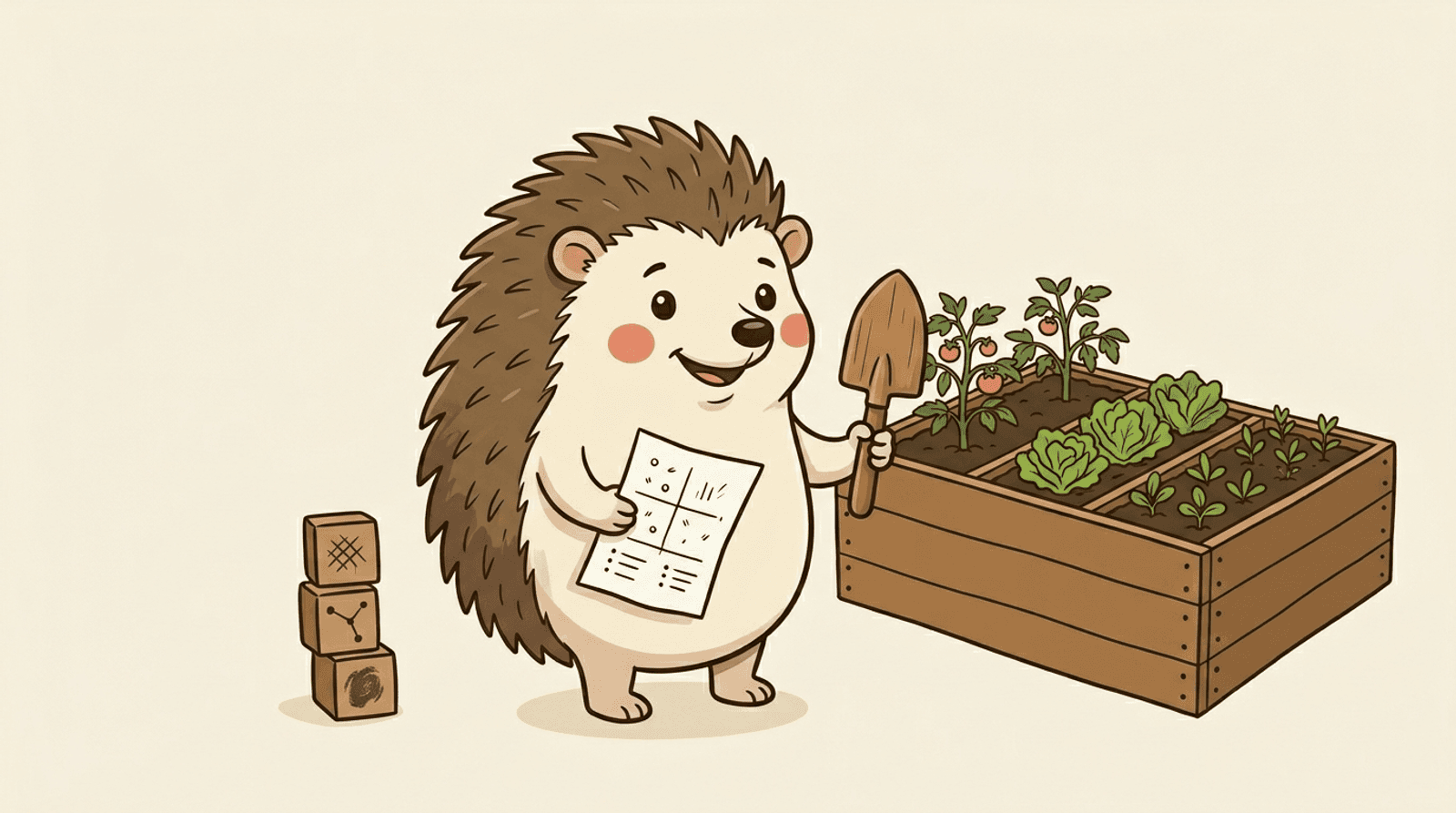
You're standing in front of your empty raised bed in April. It's warm. The sun is out. On Instagram everyone is showing their tomato seedlings. You've got a shovel, a bag of soil, and no idea where to start.
My neighbour in Zürich-Affoltern packed 14 plants into his 80×120 cm raised bed last year. Tomatoes, cucumbers, courgettes, peppers in between, lettuce around the edge, a pumpkin as a statement piece. By July it looked like a jungle. By August a third was brown, the lettuce had never gotten enough light, and the tomatoes next to the potatoes (his "I've still got room in the back" move) had late blight.
That story isn't rare. It's the standard. Raised beds work with a plan and fail without one. But: the plan isn't as complicated as everyone makes out. Three steps. That's it.
Why three steps and not seventeen?
Because nobody does seventeen.
If you download a raised-bed app and it asks you for soil temperature, pH, sunlight hours, rainfall over the last four weeks, your favourite vegetable, your garden-club membership status, and "do you have one or several beds?" — you don't follow through. I tried six apps myself, six different ways to lose track.
Three steps is what a person without garden experience can stick with: location, bed size, plants. That's enough for a workable first plan. The rest you learn by doing.
Step 1: Understand your location
Where your bed sits decides two things: when the soil is warm enough for which vegetable, and when the last frost arrives. Both depend on place, not the calendar.
Concretely: in Zürich-Affoltern (zone 8a, slightly above the lake) the statistical last ground frost falls between 10 and 15 May. In Munich (zone 7b) only between 15 and 20 May. In Krems on the Danube (zone 8a, but pannonian climate) as early as the start of May.
What does that mean in practice? If you live in Krems and your sowing calendar from a German gardening magazine says "plant out tomatoes mid-May", you're planting a week too late. You lose a week of growth you can't catch up in high summer. Other way round in Munich: if your Swiss calendar says "from 10 May", you're a week too early, and a late frost kills your seedlings.
Solution: know your location. Postcode or place name is enough. Open-Meteo gives you the soil temperatures and frost data for any point on earth, free, last 10 years. From that you calculate the statistical last frost to the day — not to the month.
I use Erntezeit for this, but the principle works manually: look up your postcode on a USDA hardiness map, note the zone and the average last-frost date, work with it. Tip: be conservative. A week too late beats three days too early and everything dead.
Step 2: Estimate bed size realistically
The most common beginner trap: a bed that looks roomy in April is a jungle by July.
Rule of thumb to memorise: at most one large fruiting vegetable per 60×60 cm. Tomato, cucumber, courgette, pumpkin, pepper — those are large fruiting vegetables. One tomato. 60×60 cm. Period.
Yes, in April that looks generously empty. You think: "I could squeeze a cucumber in there." You can't. By July the tomato is 1.80 m tall and 80 cm wide, the cucumber climbs into its branches, and you end up harvesting half as many tomatoes and zero cucumbers.
On an 80×120 cm bed (a typical mid-format) that means: two large fruiting vegetables, plus 4-6 small companions. Lettuce, radishes, herbs — they barely use light and fill the soil between the larger plants.
On a 200×80 cm bed: three large, plus 8-10 small.
On a 40×20 cm balcony box: a herb planter, or four lettuce heads, or two radish rows. No tomato. Tomatoes need real root space; a balcony box becomes too small.
I do this calculation for you in Erntezeit, but if you're working without a tool: write down the rule, divide your bed's square-metre total by 0.36 (= 60×60 cm), and don't allow yourself more large fruiting vegetables than the result says. Even when it hurts.
Step 3: Pick plants — and not all of them
You've got 30+ options — tomatoes, cucumbers, lettuces, radishes, carrots, chard, kohlrabi, pak choi, peas, beans, pumpkin, courgettes, peppers, aubergine, plus herbs. Which?
Three filters:
1. What do you actually like to eat? Sounds banal, but it's filter number one. No point planting six lettuce heads if you only eat lettuce because it sounds healthy. Plant what you like eating — otherwise half ends up on the compost.
2. What goes well together? Companion planting is biochemistry, not folklore. Some plants like each other, some don't. The most important pairs:
- ✅ Tomato + basil — basil repels pests
- ✅ Carrot + onion — mutual pest defence
- ✅ Lettuce + radish — radish loosens, lettuce shades
- ❌ Tomato + potato — both nightshades, both get late blight
- ❌ Bean + onion — beans dislike allium roots nearby
Dozens of such rules exist, but if you only remember these five, you've got 80% of the effect.
3. What suits your location? Not everything grows everywhere. Aubergines need heat; in a Swiss-Mittelland summer they sometimes don't make it. Pak choi wants cool; in a pannonian summer in Vienna it turns bitter. Erntezeit filters this for you by climate zone — manually, that means: get local variety advice from a garden centre near you, not from a generic seed shop online.
When do you sow, when do you plant?
Three phases per season, in this order:
Indoor sowing (February-April, on a windowsill) — heat-loving plants with long growth times (tomatoes, peppers, aubergines) start in pots indoors. Tomatoes from mid-February, peppers as early as start of February (very slow). 6-8 weeks indoors, then out after the ice saints.
Direct sowing (March-May, in the bed) — anything cold-tolerant goes straight into the raised bed. In March: radishes, spinach, peas, pak choi, carrots. In April: lettuce, chard, root vegetables, beans (late April). Soil temperature should be 5-10°C — a raised bed warms faster than flat ground in spring, so you can start a few days earlier than in a regular garden.
Transplanting out (after the ice saints, around 16 May DACH) — your indoor-grown tomatoes/peppers/aubergines come out now. Plus: seedlings you buy at a garden centre (cucumbers, courgettes, pumpkin). NEVER transplant before the ice saints, no matter how inviting the April sun is. One frost night destroys 6 weeks of indoor growing.
The "ice saints" (11–15 May) are a DACH gardening anchor — five traditional name-days at which late frost is statistically still possible. Mid-May serves as the practical last-frost benchmark across most of Central Europe.
What happens after the harvest?
This is where the invisible 50% extra harvest hides: the second sowing.
When you harvest peas in June, the bed is empty — a 60×30 cm hole in your raised bed. Most beginners leave it like that. Three months of fallow soil until autumn.
What you can do instead: sow carrots after. Carrots need 12-16 weeks; sown mid-June → ready early October. Plus: peas leave nitrogen in the soil, carrots love it. Plus: carrots want loose soil, pea roots have already loosened it. Three plus-effects from one simple follow-up planting.
Similarly: spinach after spring lettuce. Lamb's lettuce after tomatoes (in September). Pak choi after peas. More harvest, same area, zero extra effort.
In Erntezeit you get these pre- and follow-up suggestions automatically. Manually: write down each harvest plant + date, look up a follow-up table (search "crop rotation raised bed"), plant accordingly.
Common beginner mistakes
Three things almost everyone gets wrong in their first season:
Mistake 1: Too early into the bed. April sun lies. Ground frost in the first week of May happens every other year in DACH. One single frost night kills your indoor-grown tomatoes — and that's the season, because indoor sowing in May is too late.
Mistake 2: Ignoring companion planting. "I'll just plant everything together, it'll grow somehow" — it won't. Tomatoes and potatoes side by side = late blight for both. Beans next to leek = beans struggle. Cabbage next to strawberries = cabbage pests eat strawberry leaves too.
Mistake 3: Too much on too little surface. Already mentioned, but it's the main cause of disappointing harvests. Squeezing a pumpkin between your tomatoes = half the tomatoes plus a sad pumpkin. Discipline: only as many plants as the 60×60 rule allows.
Bonus mistake 4: Forgetting to water. Raised beds dry out faster than ground beds because wind hits from all four sides. In high summer they need water every 1-2 days, in the evening, at the root (not over the leaves — that gives mildew). A drip-irrigation kit with a timer for €60 saves you 30 minutes a day.
What Erntezeit takes off your plate
Erntezeit is my attempt to wrap these three steps into 5 minutes. You enter postcode → I fetch climate zone and frost data. You enter bed size → I work out how many large fruiting vegetables fit. You pick from 110 varieties → I filter for companion-planting compatibility, suggest pre- and follow-up crops, and warn you when two plants don't get along.
Result: an annual plan on one sheet. Print it for the garden shed, calendar subscription on your phone, PDF to share.
I'm in beta and I'll write to you when we go live. Until then: what you've read in this post works without me too. Three steps. Note down your location, bed size, plant choice. Plant boldly.
Plant something nice.
🦔 Stachi
Related plants


More articles
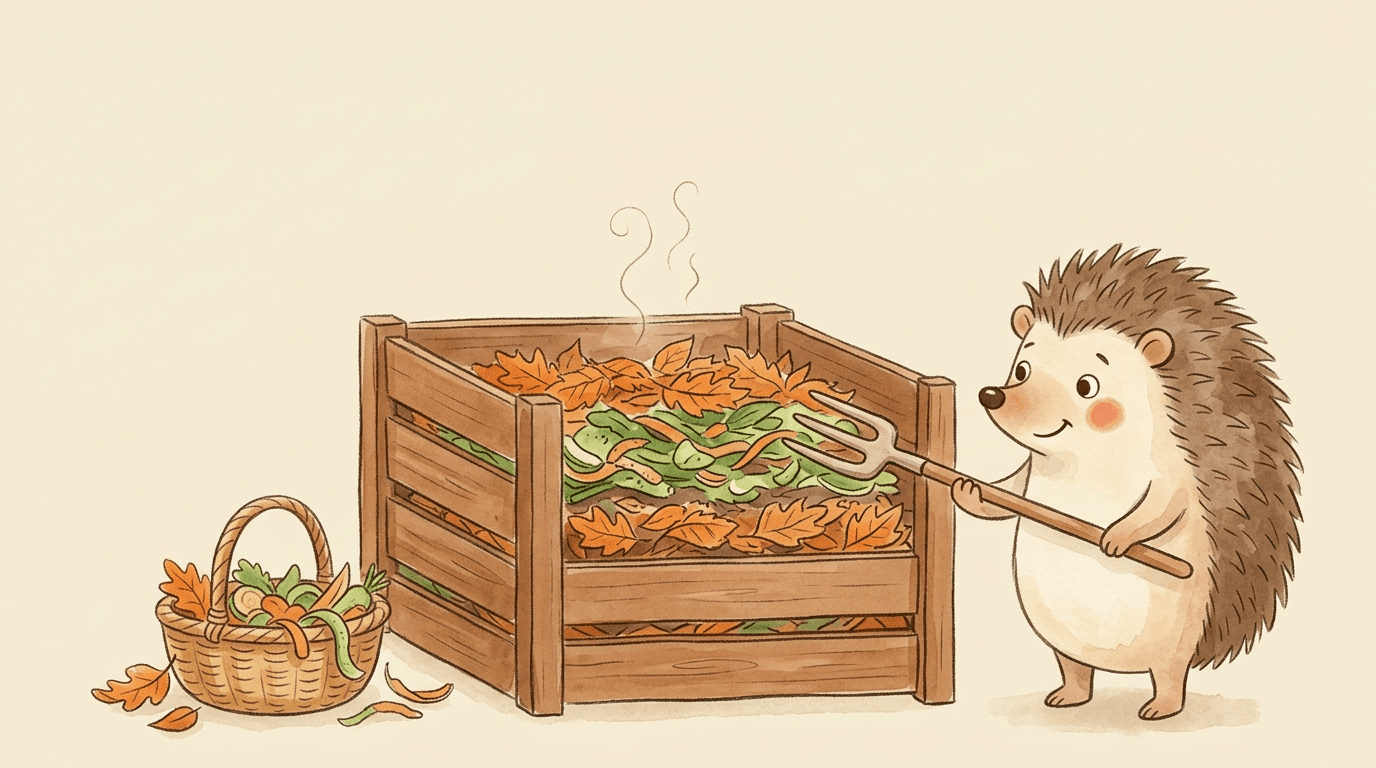
October 26, 2026 · 3 min read
Starting an autumn compost pile: 3 parts leaves, 1 part kitchen scraps
Frau Schneider's compost pile just sat there all winter. No steam on cold mornings, no warmth, no breakdown — just a heap of dry leaves that hadn't changed a bit by March. The problem wasn't patience. It was the mix.
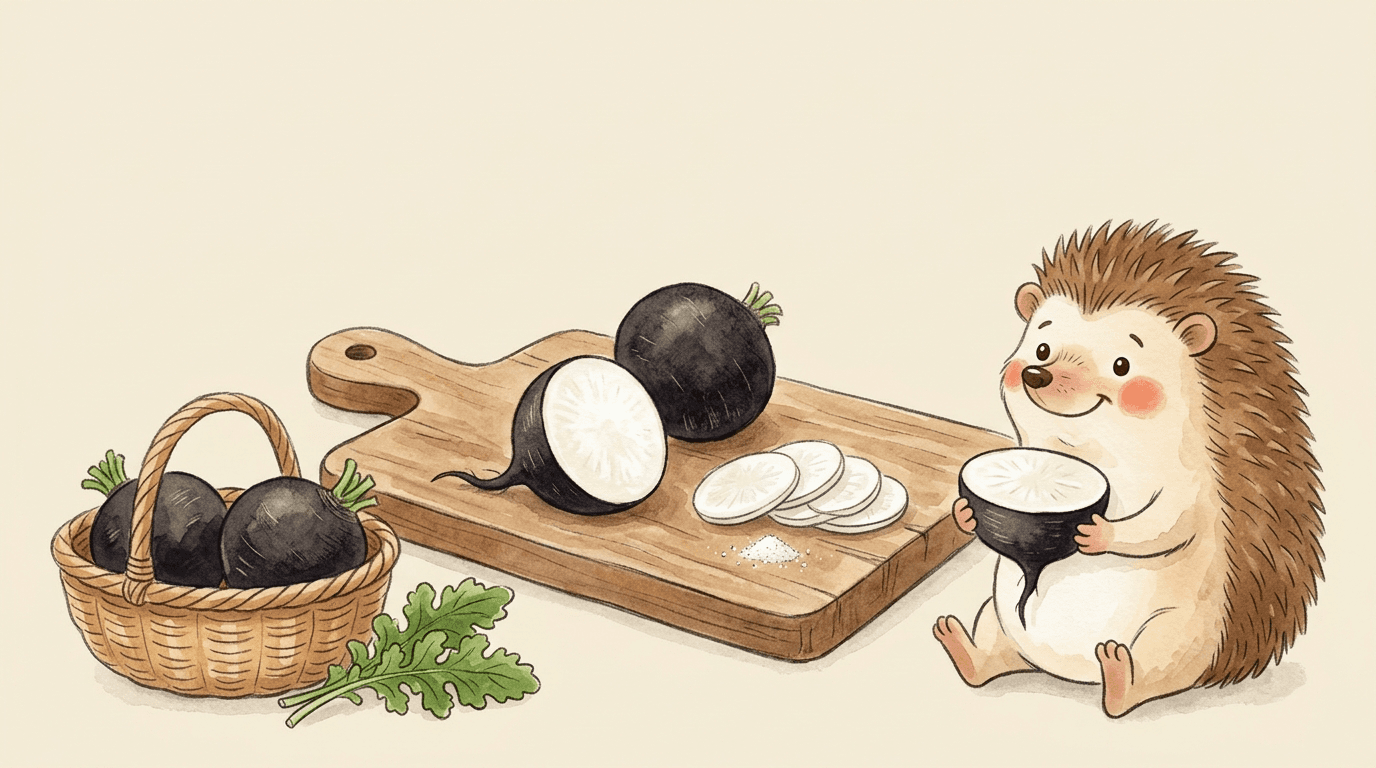
October 20, 2026 · 3 min read
Black radish: why you should let it rest before you bite in
Last year Frau Schneider bit straight into one, unsalted, fresh out of the ground, and spent the next two minutes coughing instead of talking. The problem wasn't the radish. It was the timing.
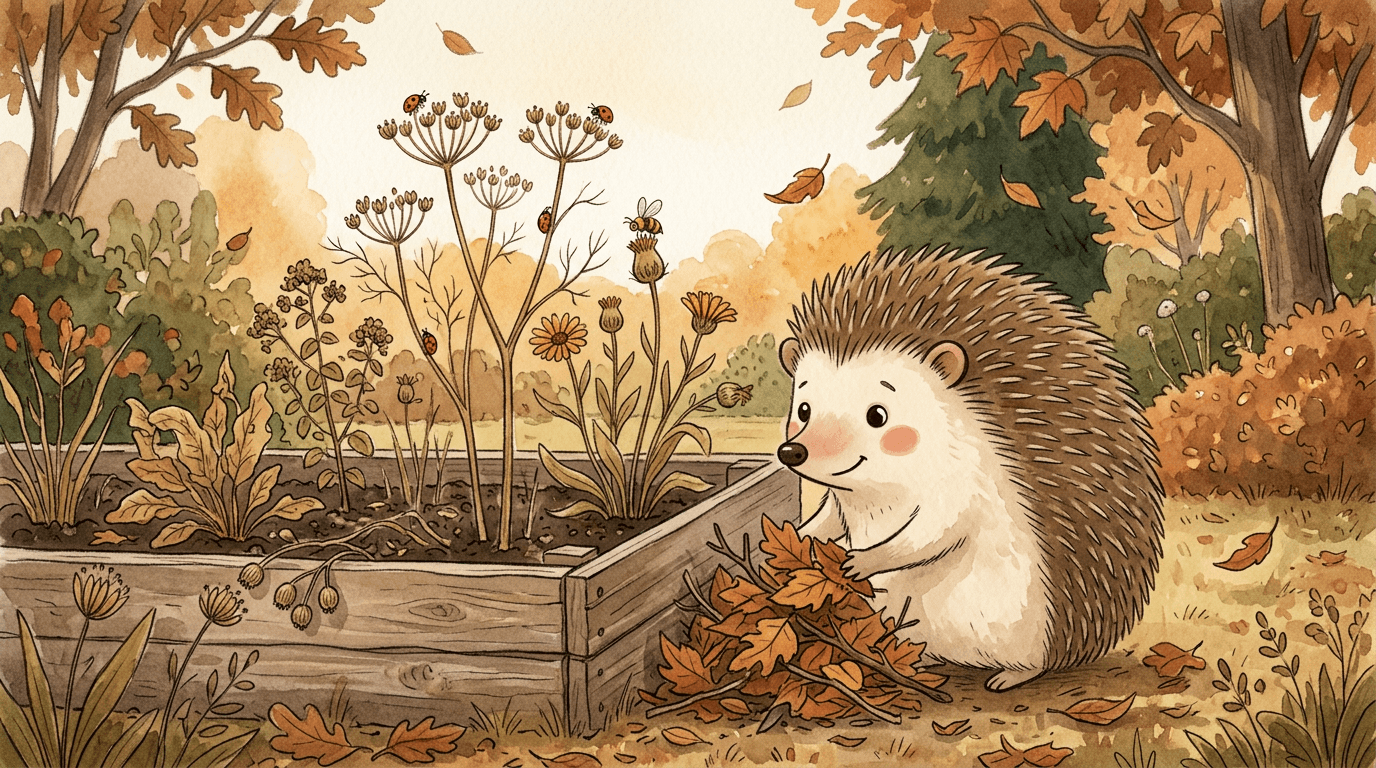
October 14, 2026 · 2 min read
Why I only tidy up half my raised bed in October
Mr Zimmermann cut his entire raised bed down to the ground in one afternoon — stalks, seed heads, leaves, all gone. I should have warned him beforehand: not everything, only half. Here's what should stay standing and what really needs to go.