June 16, 2026 · by Stachi · 2 min read
Harvesting herbs the right way: cut, don't pluck — then they keep coming all summer
Basil that's bare after three weeks. Parsley that won't come back. Usually it isn't the plant, but the way it's harvested. The difference is a single cut.
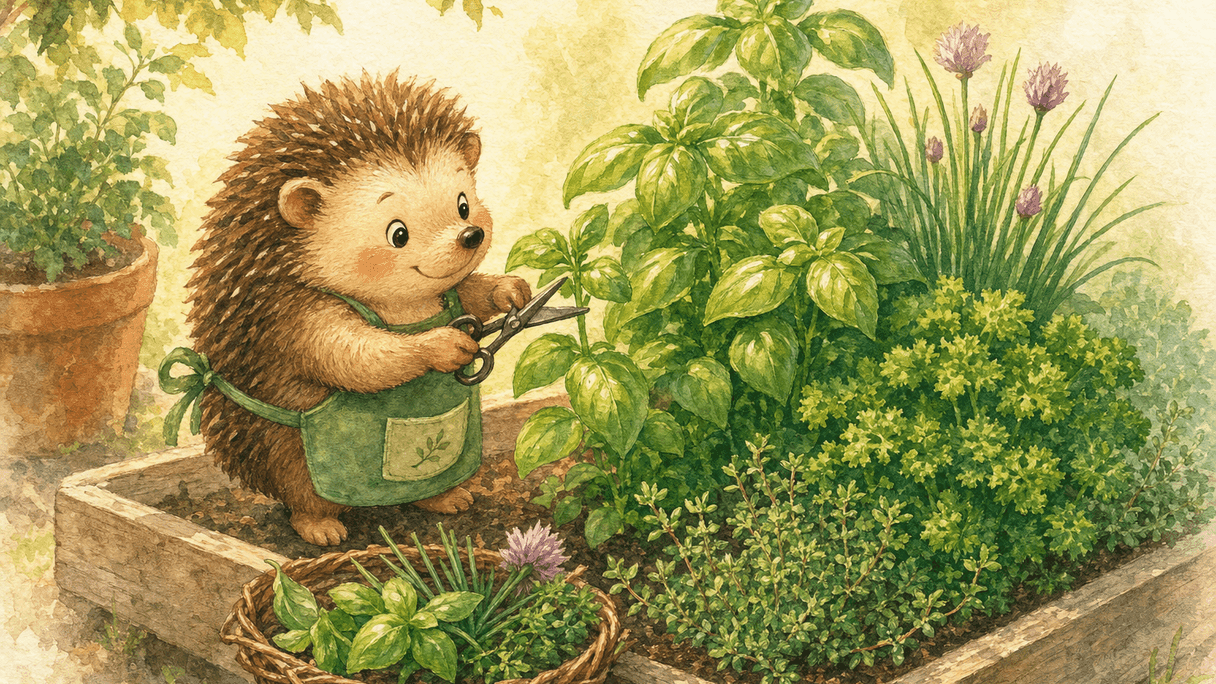
My first basil was a sad stalk with two leaves on top after three weeks. I had harvested it the way you pick strawberries: always the nicest big leaves from the bottom. Exactly the wrong way round.
Harvesting herbs isn't plucking. It's a cut that tells the plant where to keep growing.
Basil: cut above a leaf pair, never pluck single leaves
Basil grows from the tips. If you pluck off the big lower leaves, you're left with a single long shoot up top that eventually flowers and then turns woody.
Do it the other way round: cut the whole shoot off just above a pair of leaves. From that pair, two new shoots sprout. The plant grows bushy instead of long. One plant gives you two or three harvests over the summer instead of one.
And as soon as flower buds show up top: cut them away. A flowering basil puts its strength into the flower, not the leaves.
Parsley and chives: from the outside, never the heart
Parsley and chives grow back from the middle. So always harvest the outer, older stalks right at the bottom, and leave the heart in the centre standing. Tear off the tips up top and you're left with bare stems, and the plant doesn't know where to carry on.
Chives you can boldly cut a hand's width above the ground. They come back like a lawn.
Mint and oregano: the cut is also the care
Mint and oregano forgive almost anything, but here too: cutting above a leaf pair keeps them bushy. A hearty trim in June brings you fresh, tender foliage right through to September instead of woody stems.
With mint this has another side effect: regular cutting curbs its urge to spread a little. It won't fully tame it. For that it belongs in its own pot. Why is in perennial herbs in the raised bed.
Harvest in the morning, not at midday
The best moment is the early morning, when the leaves are still plump and the essential oils are at their strongest. At midday in the heat the plants are limp and the aroma is flatter. For me that means: cutting herbs goes with the coffee, not with the end of the day.
Better a little, often
The rule of thumb across all herbs: never take more than a third at once. Harvest a little regularly and you keep the plant young and growing. Strip it bare once and you'll be waiting a long time afterwards.
What Erntezeit does about it
You tell me which herbs are in your bed, I remind you of the right moment: when the first trim is due, when basil should be cut back before flowering, when the mint can take a cut. Free for one bed.
My basil today looks like a little bush. I've already harvested from it three times. The difference was a cut above the leaf pair.
🦔 Stachi
Related plants


More articles
October 26, 2026 · 3 min read
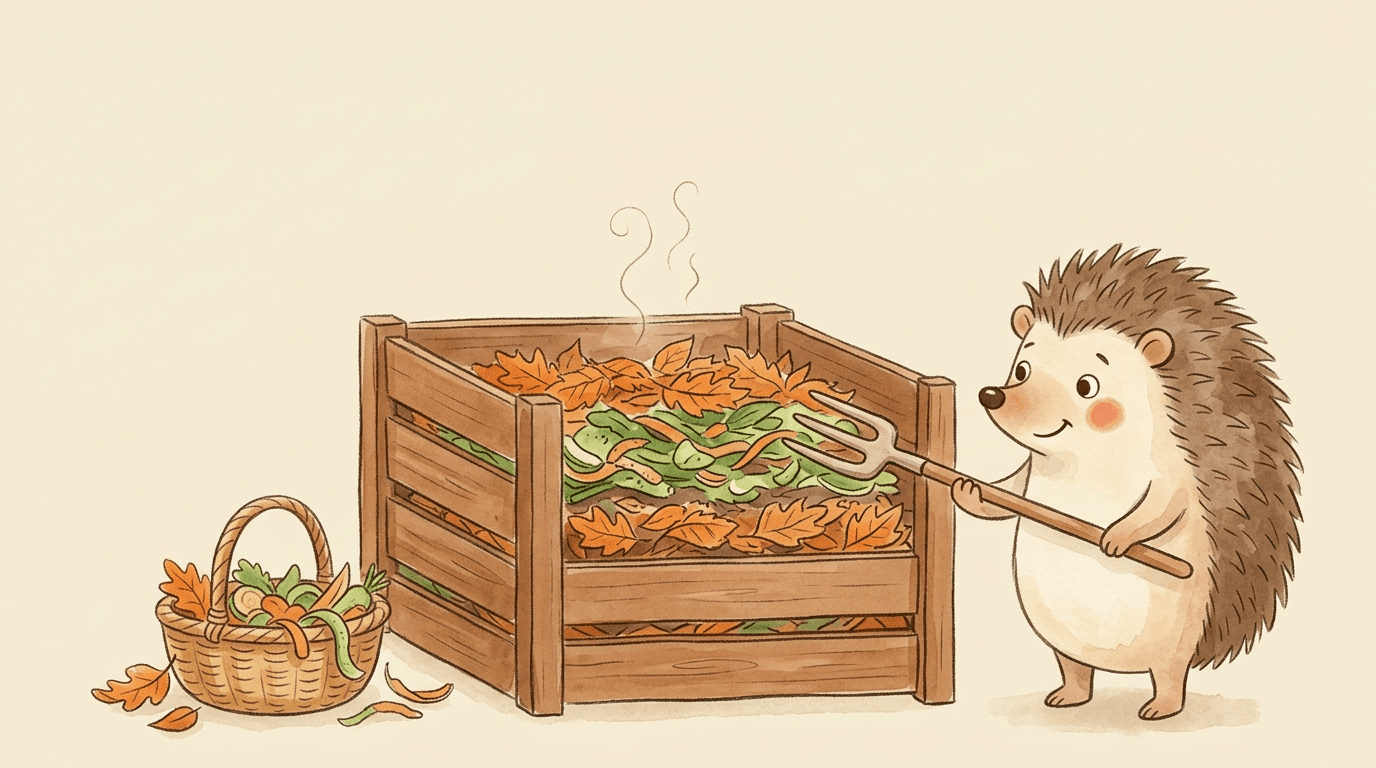
Starting an autumn compost pile: 3 parts leaves, 1 part kitchen scraps
Frau Schneider's compost pile just sat there all winter. No steam on cold mornings, no warmth, no breakdown — just a heap of dry leaves that hadn't changed a bit by March. The problem wasn't patience. It was the mix.
October 20, 2026 · 3 min read
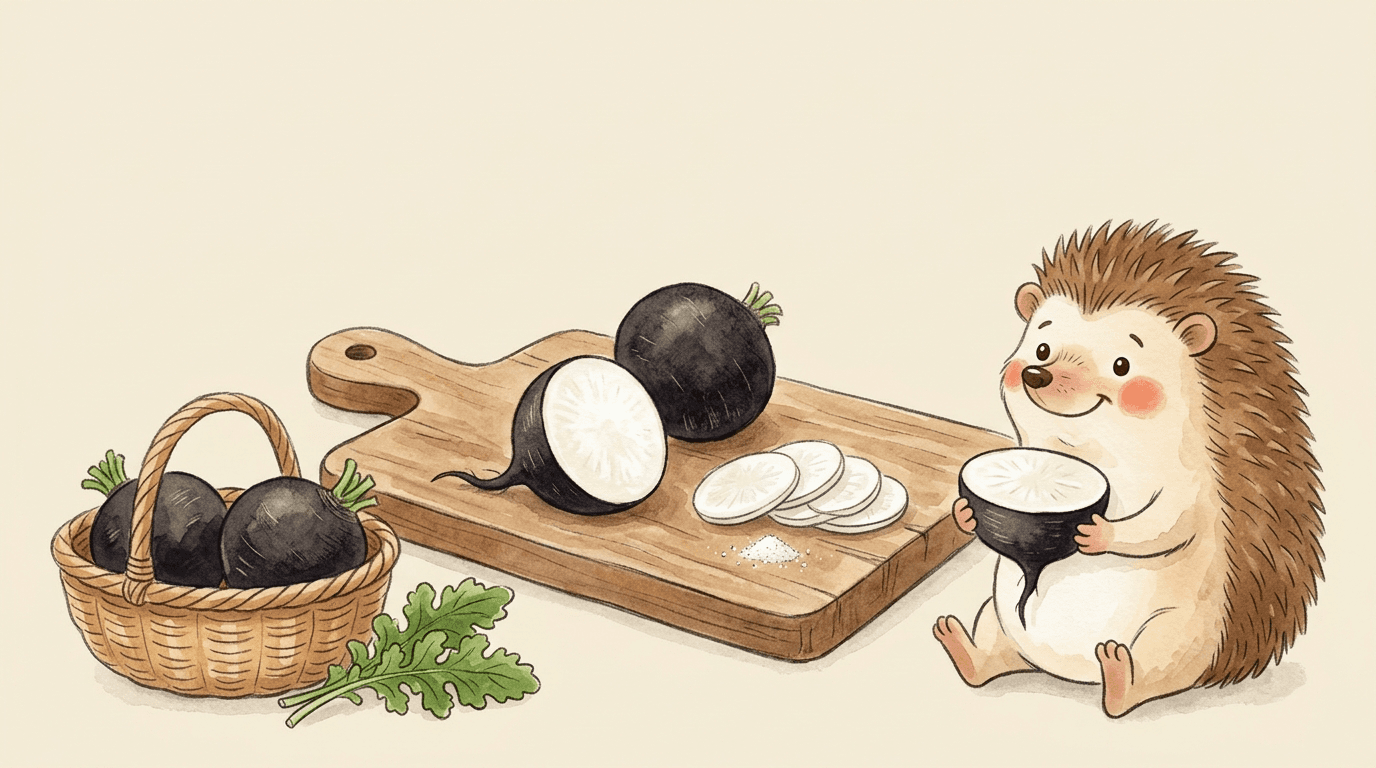
Black radish: why you should let it rest before you bite in
Last year Frau Schneider bit straight into one, unsalted, fresh out of the ground, and spent the next two minutes coughing instead of talking. The problem wasn't the radish. It was the timing.
October 14, 2026 · 2 min read
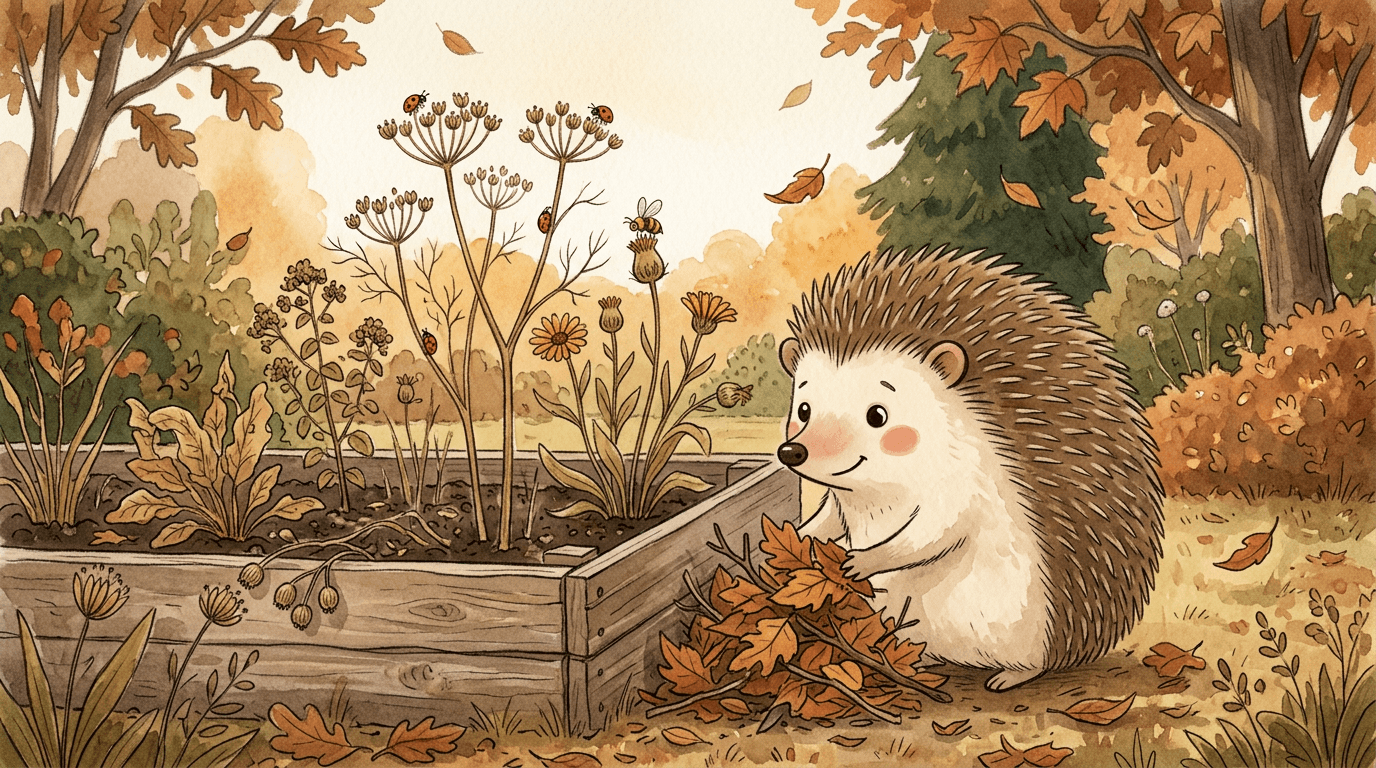
Why I only tidy up half my raised bed in October
Mr Zimmermann cut his entire raised bed down to the ground in one afternoon — stalks, seed heads, leaves, all gone. I should have warned him beforehand: not everything, only half. Here's what should stay standing and what really needs to go.