August 27, 2026 · by Stachi · 3 min read
Harvesting squash: how to tell when it's truly ripe
Your squash has been hanging on the vine for weeks and looks great — but is it ripe yet? Most gardeners cut too early or wait too long. Five signs that tell you the right moment has come.

Mrs Schneider wrote to me last week: "My Hokkaido squash is orange. Can I cut it now?"
My counter-question: "How hard is the skin?"
Silence. Then: "I've never actually pressed on it."
That's exactly the problem. Squash colour alone tells you very little. A Hokkaido can be bright orange when it's only half ripe. The skin is still soft at that point — and a squash with soft skin will rot in storage within a few weeks.
The first sign: the skin
The most reliable sign of ripeness is a skin that your fingernail can no longer dent.
Press firmly with your thumbnail on the side of the squash. If you leave a dent or the skin gives way: not yet. If your nail slides off without leaving a mark: it's ready.
This works for all varieties — Hokkaido, butternut, muscat, spaghetti squash. The skin needs to feel woody and hard, not rubbery.
The second sign: the stem
Look at the stem connecting the squash to the plant.
An unripe squash has a green, moist stem. A ripe squash has a stem that's beginning to lignify — brownish, dry, with a cork-like texture. With some varieties, it shrivels.
That's not a problem. That's the plant telling the squash: "You're done."
The third sign: what happens underneath
Gently tip the squash — without cutting it — and look at the underside where it rests on the ground.
On a ripe squash, this surface is yellowish or light brown, dry, and slightly corked by contact with the soil. On an unripe squash, it's still greenish or pale green and moist.
This sounds like a small detail. It's actually a more reliable indicator than colour.
The fourth sign: the tap test
Knock on the squash with your knuckles — the same way you'd test a watermelon.
A ripe squash sounds hollow and dry. An unripe squash sounds dull and full. The flesh of an unripe squash is still water-dense and compact; in a ripe squash it has begun to dry and contract slightly.
The tap test takes some practice. If you're just starting out, do it every time you visit your beds — you'll develop a feel for how the sound changes over time.
The fifth sign: the plant itself
The plant often tells you more than the squash does.
When the leaves turn yellow, stems die back, and the foliage starts to shrivel, the growing phase is over. The plant is no longer investing energy in new fruit — it's finished. That's the moment you can harvest, even if the other signs aren't all fully clear yet.
A first light frost speeds up this process. Frost won't harm the squash on the ground — but if a frost comes that kills the plant, the squash must be harvested immediately.
How to cut
Never twist or pull at the stem. Always use a sharp knife or garden shears — and leave five to ten centimetres of stem attached to the squash.
The stem is not decoration. It's a natural cork that prevents mould and rot from entering from the top. A squash without a stem will rot at that point within a few weeks.
Hokkaido and butternut store particularly well. With a good stem and a cool storage spot, they'll keep for three to six months.
What comes after harvest
Place the squash in the sun or a warm, dry room for one to two weeks — this is called curing. The skin hardens further, small cuts and scratches cork over, and storage life increases significantly.
After that, it goes somewhere cool and dark: a cellar, pantry, or unheated conservatory. No plastic bags, no humidity. Just lay it down, don't stack.
Mrs Schneider wrote two weeks later: "I did the nail test. The Hokkaido holds firm. I'll wait a little longer."
Right call. Two weeks later she harvested it — stem lignified, skin hard, underside beige-brown. Now it's sitting in the cellar until November.
In the Erntezeit planner, you can see the planned harvest window for each variety — and get a reminder when the moment arrives.
See the harvest window for your squash in the planner →
🦔 Stachi
Products mentioned in this post
- Gardena Classic planting trowelQuality steel, corrosion-protected — bed all-rounder.
- Gardena flower trowel, large
- Bosch hand fork, stainless steel
- Draper sturdy hand fork, stainless steel
Related plants


More articles
October 26, 2026 · 3 min read
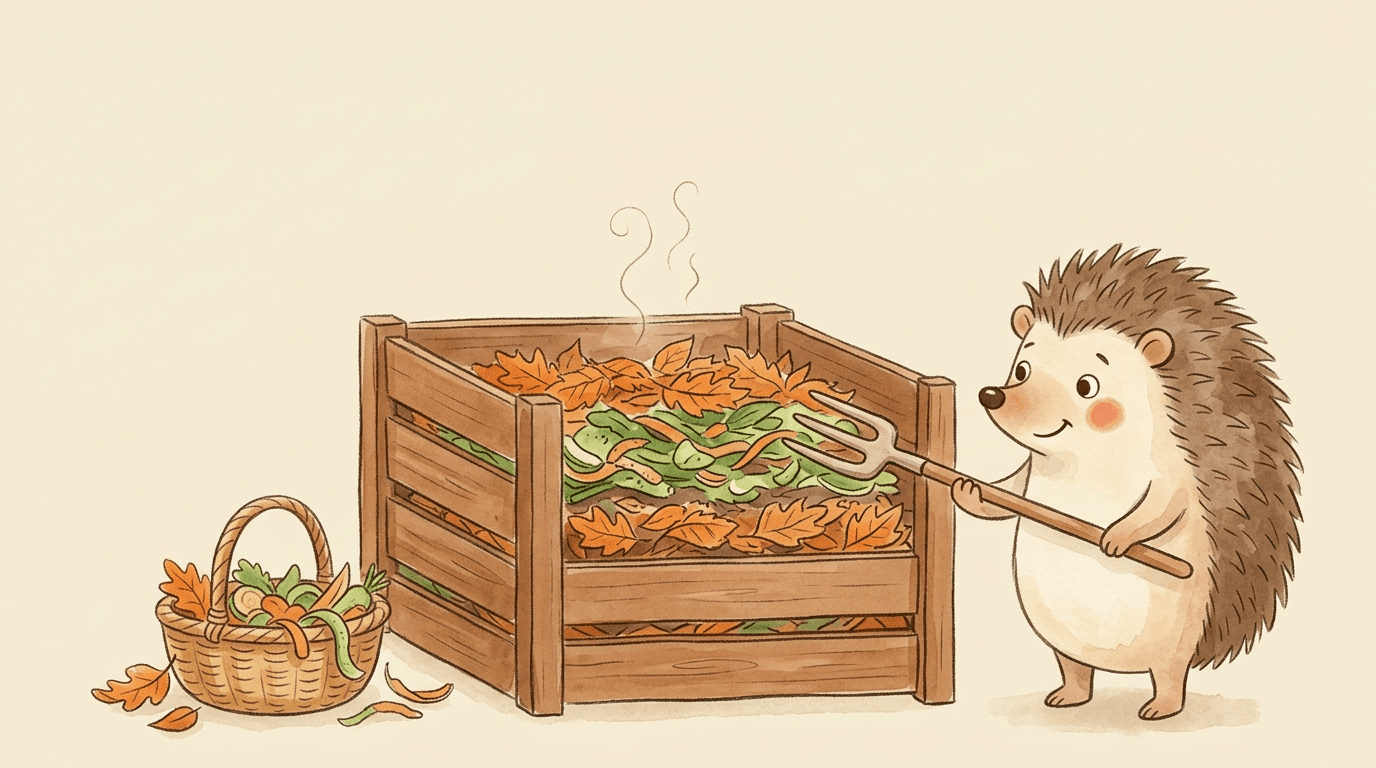
Starting an autumn compost pile: 3 parts leaves, 1 part kitchen scraps
Frau Schneider's compost pile just sat there all winter. No steam on cold mornings, no warmth, no breakdown — just a heap of dry leaves that hadn't changed a bit by March. The problem wasn't patience. It was the mix.
October 20, 2026 · 3 min read
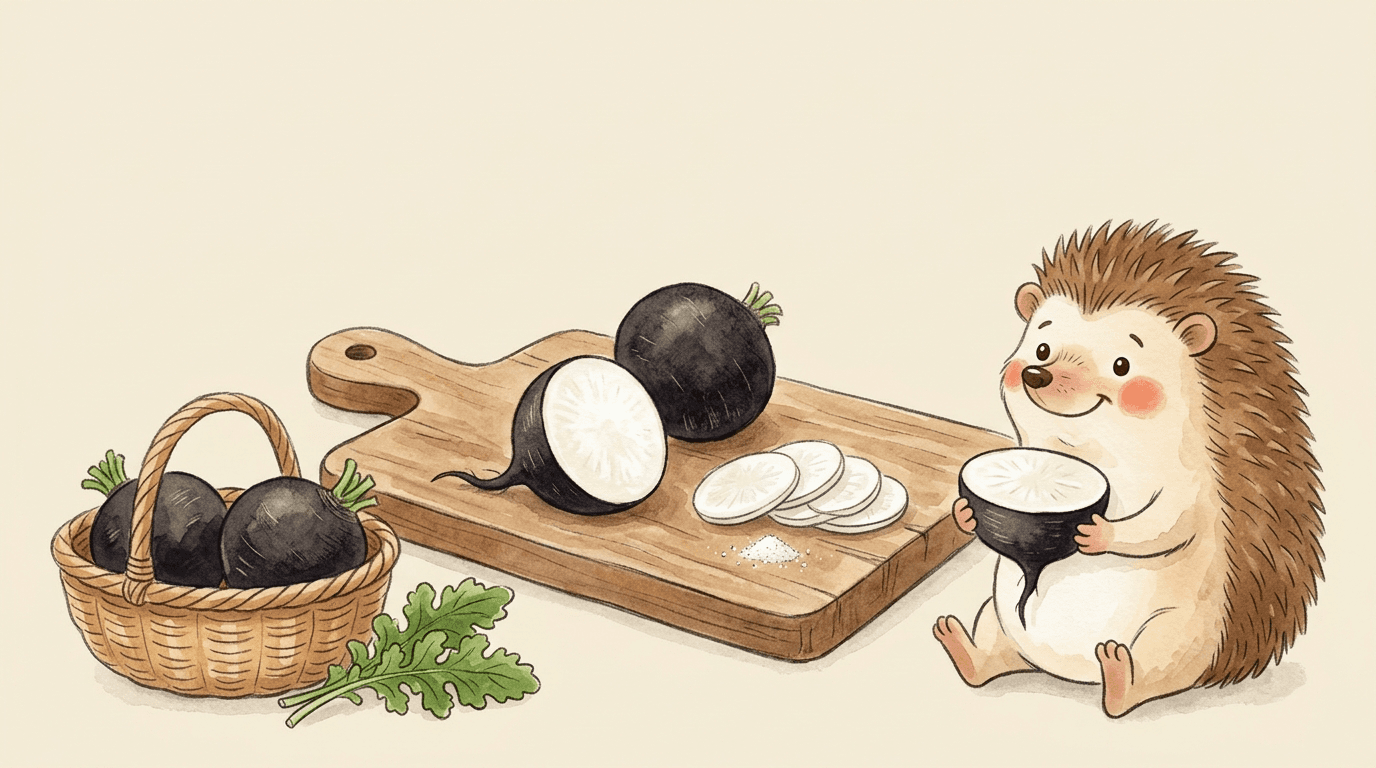
Black radish: why you should let it rest before you bite in
Last year Frau Schneider bit straight into one, unsalted, fresh out of the ground, and spent the next two minutes coughing instead of talking. The problem wasn't the radish. It was the timing.
October 14, 2026 · 2 min read
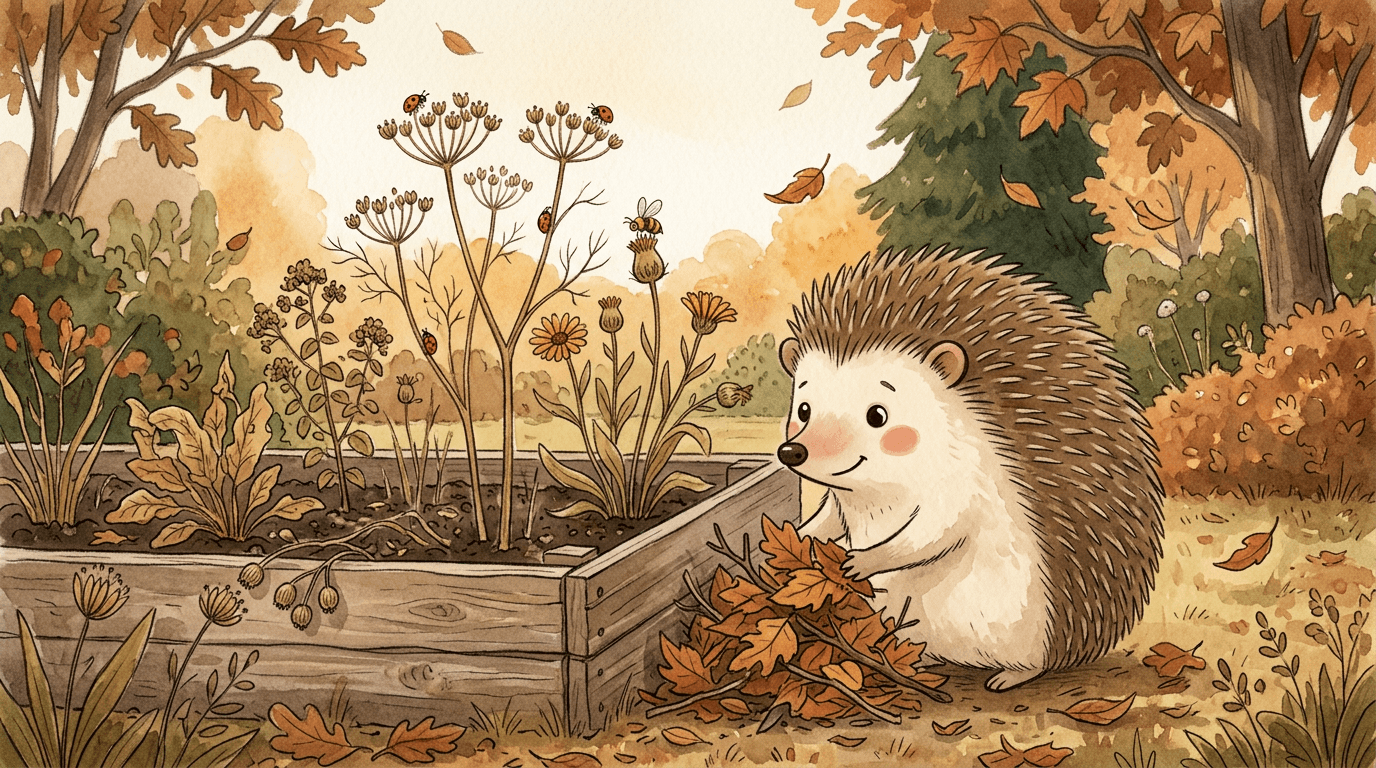
Why I only tidy up half my raised bed in October
Mr Zimmermann cut his entire raised bed down to the ground in one afternoon — stalks, seed heads, leaves, all gone. I should have warned him beforehand: not everything, only half. Here's what should stay standing and what really needs to go.