August 26, 2026 · by Stachi · 4 min read
Earthing up leeks: the trick for white shafts in your raised bed
Frau Schneider has let her leeks grow untouched since May. By August they're waist-high but green almost all the way down to the soil — like giant spring onions. It's not the wrong variety. She just skipped a step almost nobody tells you about: earthing up.

Frau Schneider sent me a photo last week. Her leeks — in the bed since May, watered faithfully, never once sick — looked like a row of oversized spring onions. Thick, healthy, strong. And green. Green from the tip almost all the way to the ground.
"At the shop they're white at the bottom," she wrote. "Did I buy the wrong variety?"
She didn't. She just skipped a step nobody mentions the first time you grow leeks: earthing up.
Why leeks turn white at all
The white shaft you know from the supermarket isn't a variety trait. It's the result of darkness. Plant tissue that never sees light doesn't build chlorophyll — it stays pale, tender, and mild instead of tough and sharp. Gardeners call this blanching, and with leeks you engineer it on purpose: as the plant grows, you keep mounding soil up around the stem so more and more of it sits in the dark.
Leave a leek alone, the way Frau Schneider did, and it still grows fine. It doesn't taste bad either. But the edible white part stays limited to whatever was already underground, and the green above it is tougher and sharper than the shaft you actually want.
When to start
Once the plants are pencil-thick — here in Berikon that's usually late July or early August, depending on when they were transplanted — you can hill for the first time. Right now, in late August, is when most raised beds are due for their second or third round, if you already started in July. If you haven't started at all: better late than never. Every centimetre of white you still get is more than you had before.
The technique — and what can go wrong
Here's how it works:
- Loosen the soil gently around the plant so it mounds easily. A hand fork is plenty — with a 15 cm spacing between plants, you don't have room for anything bigger anyway.
- Pull soil up from the sides, not down from above. You want a cone of earth wrapping the stem, not a cap dumped on top.
- Only up to just below where the leaves fan out. Get soil between the leaves and it lodges in every groove — that's why store-bought leeks sometimes still taste gritty between the leaves even after a rinse. Once it's in there, only a thorough wash gets it back out.
- In stages, not all at once. Two to three centimetres every two to three weeks beats dumping ten centimetres on in one go. The stem needs time to grow up through the new layer, or you choke the plant instead of blanching it.
- Water afterwards. Freshly mounded soil dries out on the surface faster than the rest of the bed.
If your bed is already full and you don't have spare soil to mound with: slip cardboard tubes or split cardboard rolls around the stem instead. Less photogenic, same principle — darkness instead of soil.
What I got wrong my first year
The first time I tried this, I pulled the entire soil layer up in one go — five centimetres at once — because I thought doing it all at once would save me work. Result: two of eight plants stalled, the heart leaves couldn't push through the thick layer anymore. I've done it in small steps ever since, and I haven't lost a single plant in three years.
Leeks and their neighbours
Leeks get along well in a raised bed with carrots — the classic pairing, because carrot scent confuses the leek moth and leek scent keeps carrot fly away. Two problems solved by one bed, no extra work.
What to avoid: beans and peas planted right next to them. Both legumes struggle next to alliums like leek — growth suffers on both sides. If you already planned your bed with Erntezeit, this is already accounted for; if you're placing plants by hand, just leave a row of distance.
How long they can stay in the ground
The nice thing about leeks: they're frost-hardy. Unlike almost everything else in a raised bed, they don't need to come out before the first frost. You can start harvesting from September, stalk by stalk as you need them in the kitchen, and leave the rest standing right through winter. In mild winters here in Berikon I've pulled fresh leeks out from under a layer of snow as late as January. As long as the ground isn't frozen solid, you can still get to them.
That makes leek one of the few crops where you can stretch the harvest over weeks without anything going bad or bolting. No race against the clock the way there is with radishes or lettuce.
What if you forgot to earth up entirely
No disaster. The leek is still perfectly edible, just with a smaller white portion. You can use the green part too — finely sliced into soups or as the base for a stock, it works beautifully, even if it's too fibrous for a classic leek-and-potato bake. Nothing goes to waste, you just cook with it a little differently.
What Erntezeit tracks for you
In your yearly plan you can see roughly when your leeks should be pencil-thick — and therefore when earthing up actually makes sense, instead of guessing by feel. And because Erntezeit knows what's growing right next to your leeks, the plan flags it if you accidentally put beans in the neighbouring row.
Frau Schneider now earths up every two weeks. Last week she sent me a second photo: the bottom ten centimetres of her leeks are flawless white now. "Looks like the shop," she wrote. Better, actually — hers is still in the ground.
🦔 Stachi
Products mentioned in this post
- Draper sturdy hand fork, stainless steelFor loosening the soil around the bed before you mound it up against the stalks.
- Floragard organic raised-bed soil, 40 LWhen three rounds of earthing up have noticeably lowered your bed's soil level.
- Organic vegetable seed set, 10 varietiesFor anyone who wants to try growing leeks for the first time next spring.
Related plants


More articles
October 26, 2026 · 3 min read
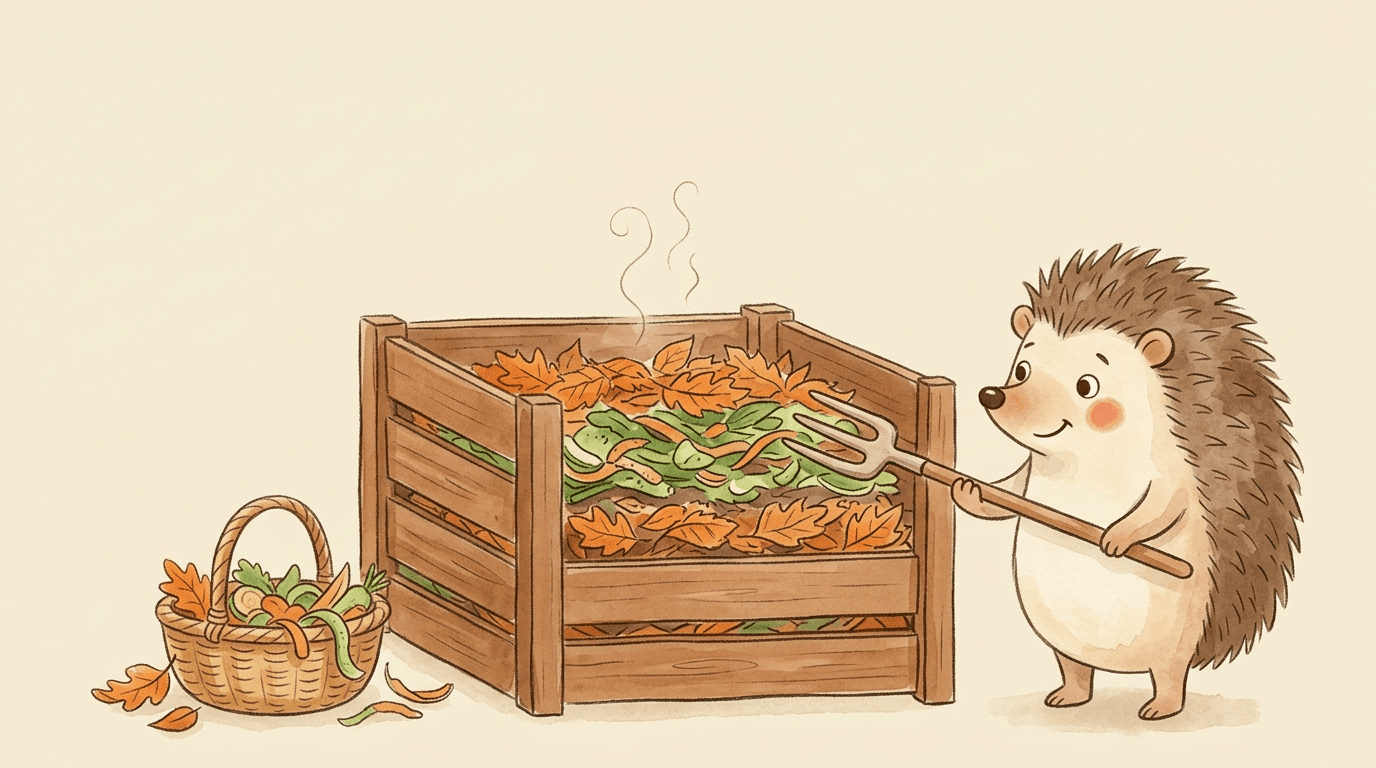
Starting an autumn compost pile: 3 parts leaves, 1 part kitchen scraps
Frau Schneider's compost pile just sat there all winter. No steam on cold mornings, no warmth, no breakdown — just a heap of dry leaves that hadn't changed a bit by March. The problem wasn't patience. It was the mix.
October 20, 2026 · 3 min read
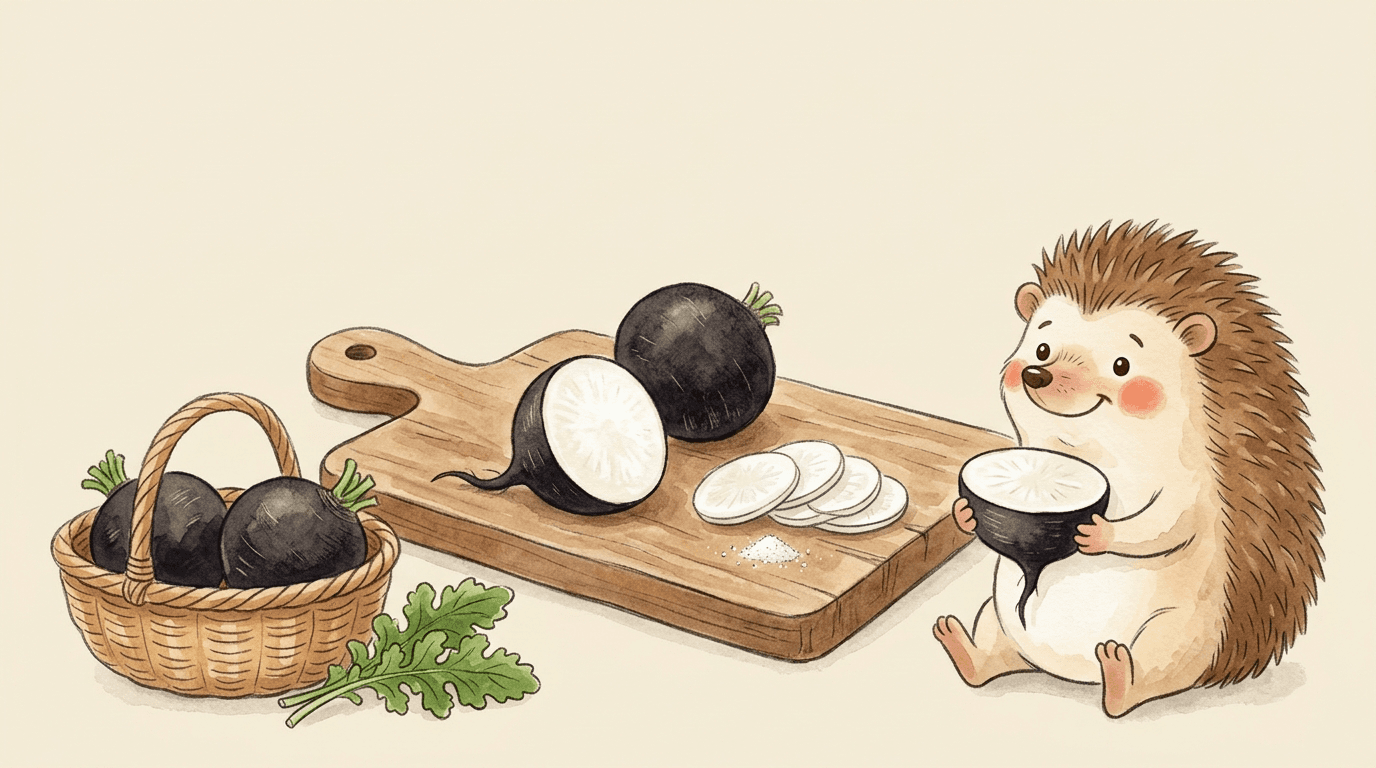
Black radish: why you should let it rest before you bite in
Last year Frau Schneider bit straight into one, unsalted, fresh out of the ground, and spent the next two minutes coughing instead of talking. The problem wasn't the radish. It was the timing.
October 14, 2026 · 2 min read
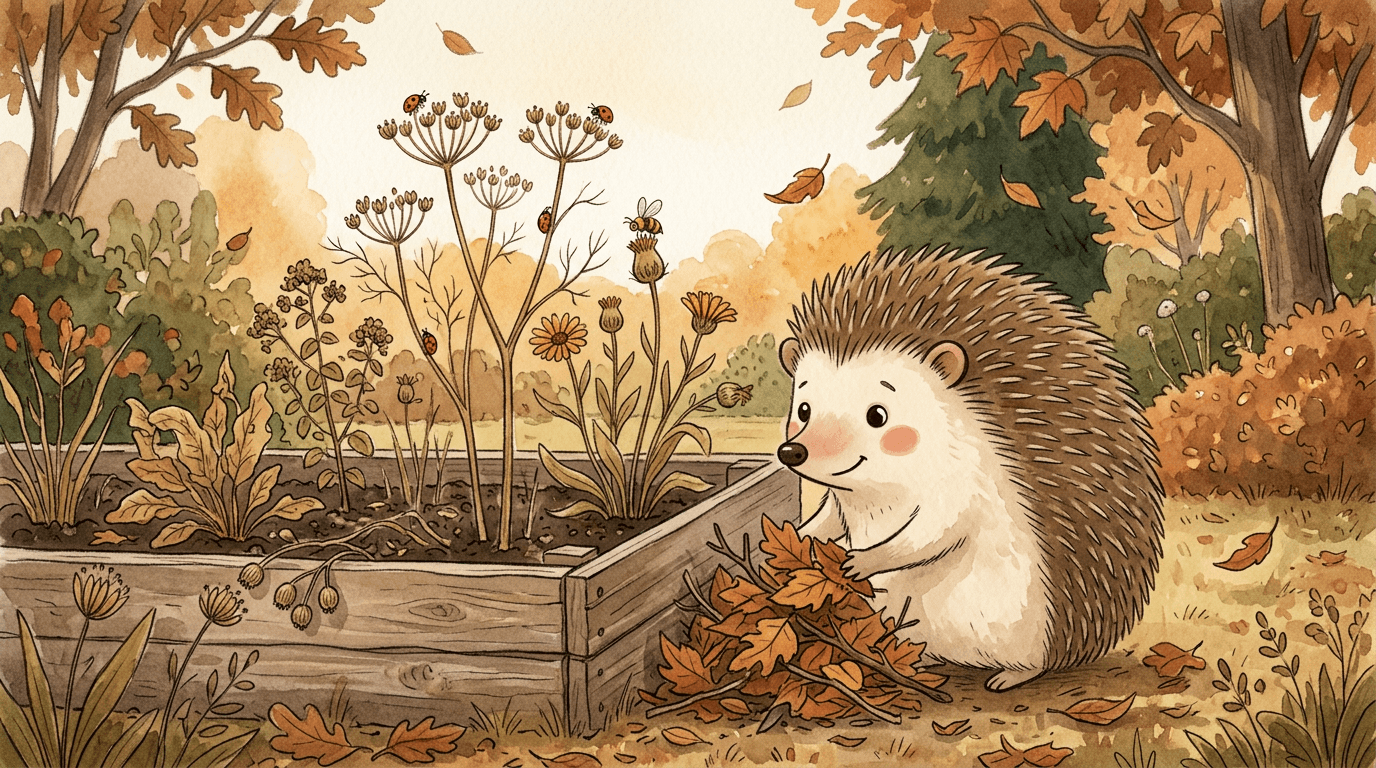
Why I only tidy up half my raised bed in October
Mr Zimmermann cut his entire raised bed down to the ground in one afternoon — stalks, seed heads, leaves, all gone. I should have warned him beforehand: not everything, only half. Here's what should stay standing and what really needs to go.