September 7, 2026 · by Stachi · 4 min read
Overwintering chard in your raised bed: decide now, harvest till December
If you don't pull your chard out now, you can keep harvesting well into November and December. Chard is hardier than its reputation. Here's what to do — and what to leave alone.

Last week, Mrs. Schneider asked me whether she should pull her chard out now. It was still growing beautifully, but the first cool nights were coming and she assumed that was that for the year.
I told her: don't pull it. Leave it. We'll talk again in December.
Chard is tougher than you think
Chard has an undeserved reputation as a summer vegetable. In fact, it's one of the hardiest leafy greens you can grow in a raised bed. Mature plants survive temperatures down to minus ten degrees Celsius, and some varieties down to minus fifteen, without fleece or any protection at all.
What stops: growth. Below ten degrees, not much new leaf appears.
What stays: the existing leaves. And those can be harvested — through October, November, and in mild years well into December.
The thing about chard is that it has no internal schedule that says "done on October 31st." It stops when it truly freezes. Not before.
What to do right now, in early September
Make a decision. If you want to overwinter your chard, there are a few things to do — and a few things to leave alone.
Do this:
Remove any yellow, damaged, or very old outer leaves. In wet autumn weather, these become rot traps when they lie on the soil. Cut them cleanly at the stem.
Gently loosen the soil around the plants if it's compacted. Waterlogging is chard's biggest winter enemy — not cold.
Spread a thin layer of straw or autumn leaves around the root zone, but not over the central growing point. Ten centimetres is enough. Mulch keeps soil temperatures more stable and protects roots during freeze-thaw cycles.
Don't do this:
Fertilise. No nitrogen from September onwards. Soft, fast-grown leaves are more vulnerable to frost. Let the plant slow down naturally.
Cut it back hard. Removing a few old leaves is fine. Cutting chard down to ten centimetres because you read "cut back before winter" weakens the plant. Overwintering plants need their leaf mass to store energy.
When fleece becomes worth it
For most locations in the Swiss Midlands, chard manages without fleece well into October. If the forecast shows below minus five degrees across several nights, it's worth covering — not mainly for the large leaves, but for the young heart leaves in the centre. Those are more frost-sensitive than the outer growth.
A basic vegetable fleece (17 g/m², the standard for autumn crops) is enough. No tunnel greenhouse, no glass. The fleece holds four to five degrees of warmth and shields against wind. It can stay on during the day since chard still needs light in autumn.
If you're further north, or above 600 metres altitude: cover earlier, perhaps mid-October rather than late.
Which varieties overwinter best
Not all chard is equally frost-tolerant. Classic varieties with thick, fleshy ribs overwinter better than thinner salad-chard types.
Growers with good overwintering results tend to recommend:
- Fordhook Giant — large, robust plants, very frost-hardy
- Lucullus — yellowish-white ribs, versatile, widely grown in Switzerland
- Perpetual Spinach — technically a leaf beet, very persistent, ideal for overwintering
- Bright Lights — the colourful varieties are slightly less frost-hardy than green types, but beautiful in an autumn bed
If you don't know which variety you planted: just try it. It usually works.
How to keep harvesting until December
Chard grows more slowly in autumn, but it does grow. And more importantly: what's already there stays there.
When you harvest, always take the outer, large leaves. Leave the young heart leaves alone. As long as you do that, the plant keeps going — even if growth in November drops to one or two new leaves a week.
Chard actually tastes better in autumn than in summer. Light frosts make the leaves slightly sweeter. You might recognise this from kale.
Mrs. Schneider experienced this for the first time last year. At the end of November, there was still enough chard for a good stir-fry. She wrote to me: "I thought it was gone since October." It wasn't. It was just waiting.
What happens in spring
If your chard makes it through winter — and in most years it does — it starts growing again in March. These spring plants come back faster than freshly sown chard, because they already have a developed root system.
That means: fresh harvests in mid-March, while newly sown chard still needs weeks to get going.
Somewhere in April or May it will bolt. Then the seed stalk appears — and you decide whether to keep it for seed or pull the plant and sow fresh.
But that's a spring problem. Right now, in early September, you have months ahead of you.
🦔 Stachi
Products mentioned in this post
- Gardena Classic planting trowelQuality steel, corrosion-protected — bed all-rounder.
- Gardena flower trowel, large
- Bosch hand fork, stainless steel
- Draper sturdy hand fork, stainless steel
Related plants


More articles
October 26, 2026 · 3 min read
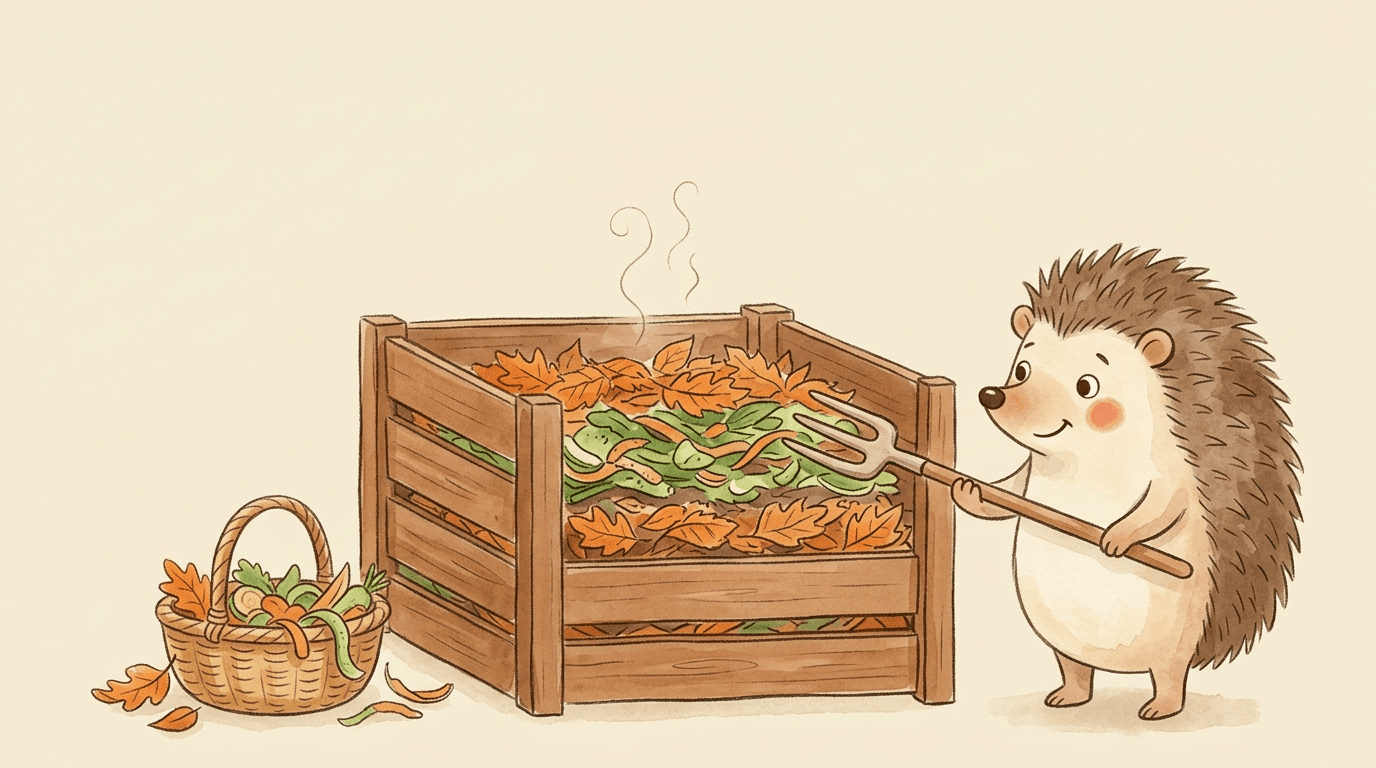
Starting an autumn compost pile: 3 parts leaves, 1 part kitchen scraps
Frau Schneider's compost pile just sat there all winter. No steam on cold mornings, no warmth, no breakdown — just a heap of dry leaves that hadn't changed a bit by March. The problem wasn't patience. It was the mix.
October 20, 2026 · 3 min read
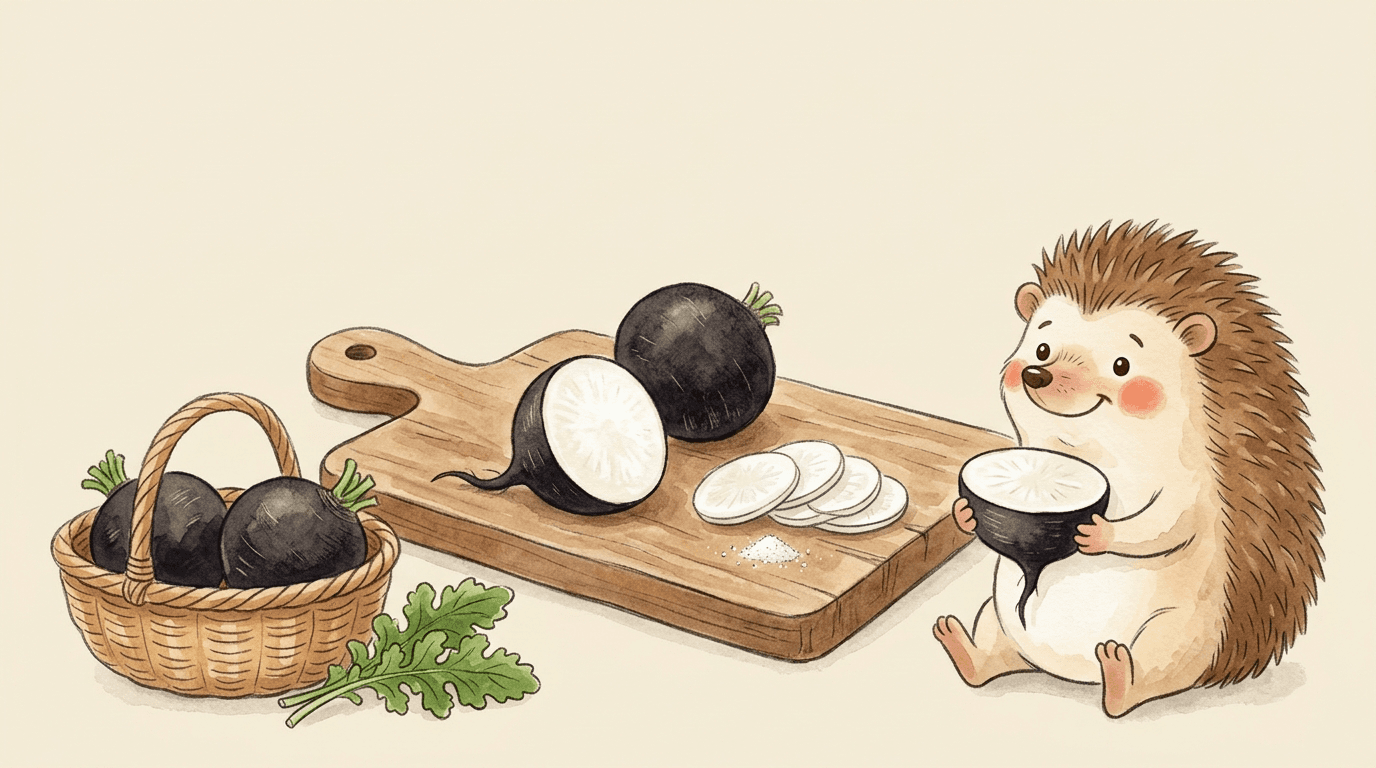
Black radish: why you should let it rest before you bite in
Last year Frau Schneider bit straight into one, unsalted, fresh out of the ground, and spent the next two minutes coughing instead of talking. The problem wasn't the radish. It was the timing.
October 14, 2026 · 2 min read
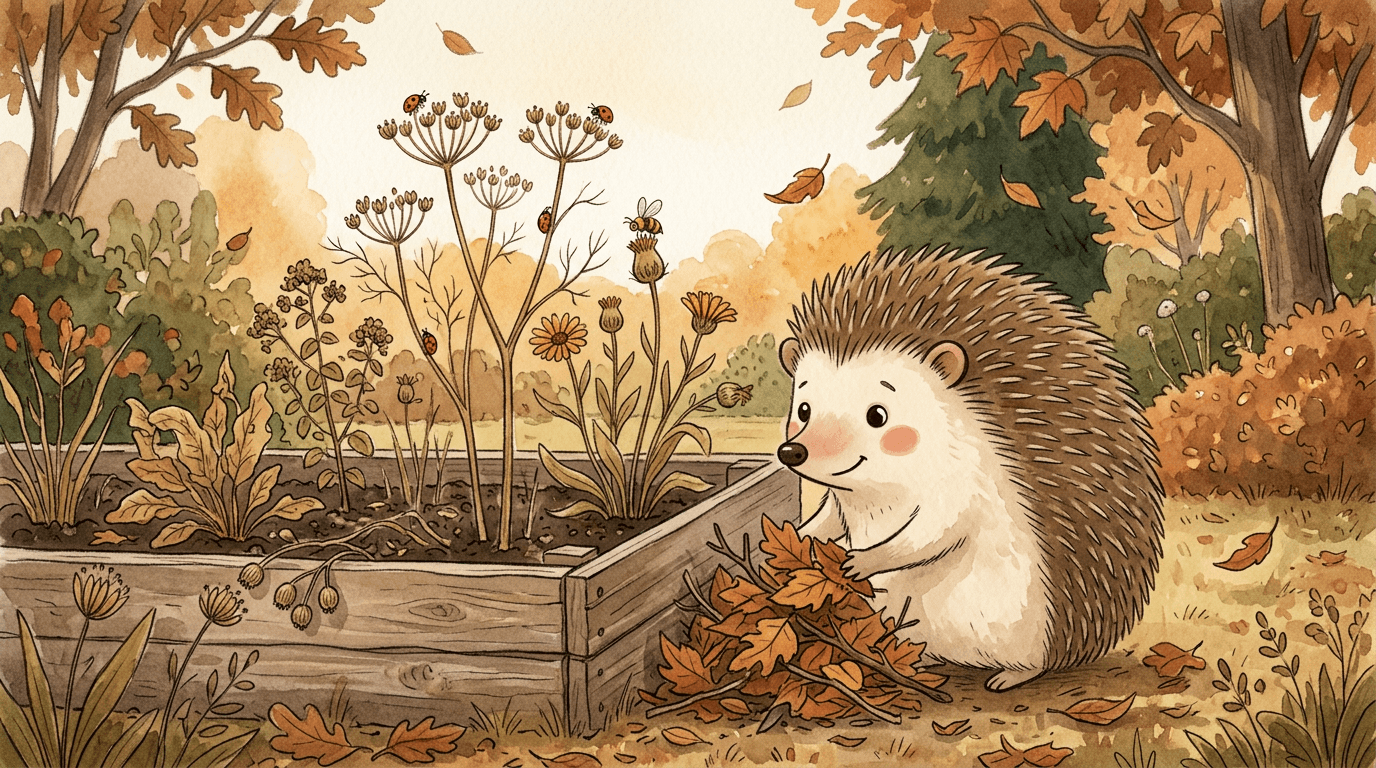
Why I only tidy up half my raised bed in October
Mr Zimmermann cut his entire raised bed down to the ground in one afternoon — stalks, seed heads, leaves, all gone. I should have warned him beforehand: not everything, only half. Here's what should stay standing and what really needs to go.